Sunset Over the Mekong River

Showing posts with label Fabaceae. Show all posts

Saturday, April 20, 2019

Flambouyant Memories


Recently, as we were driving back from Fao Rai district, where we were teaching English and guitar, we passed a beautiful tree.  The tree goes by a couple names, royal poinciana and, very appropriately, flamboyant.
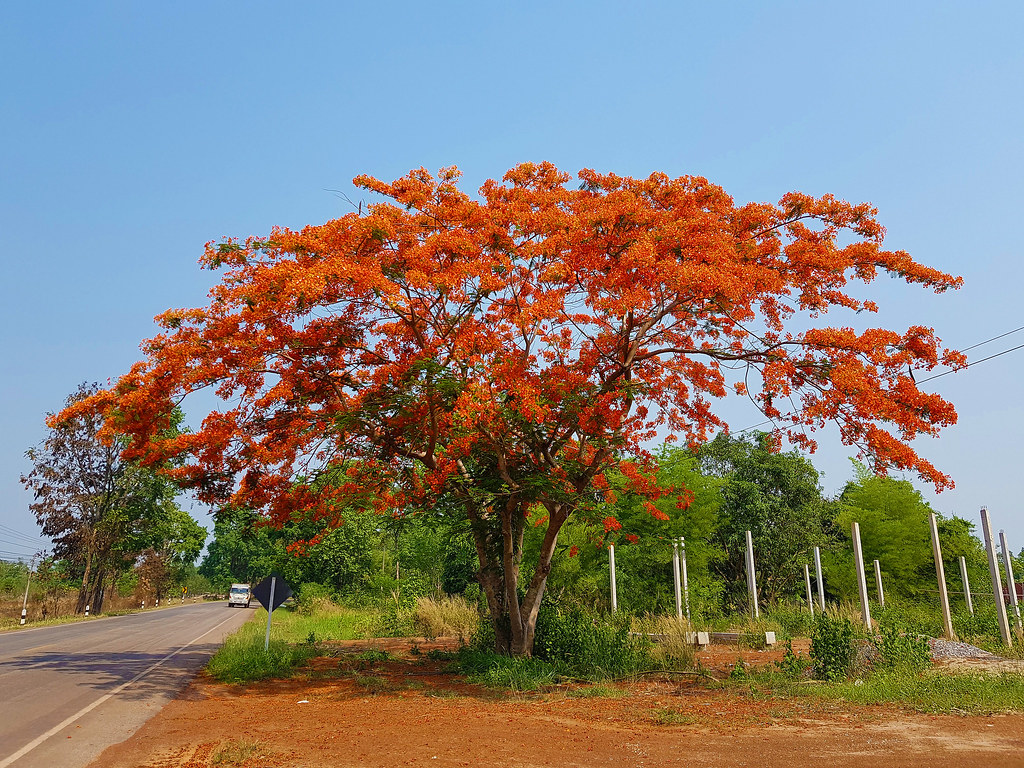
Delonix regia (Hook.) Raf. Fabaceae Caesalpinioideae-flambouyant, royal poinciana, หางนกยูงฝรั่ง

Viewed up close, the flowers are especially pretty. The white "banner" petal tends to turn more yellow as the bloom ages, giving the tree an orangeish hue as in the picture above.
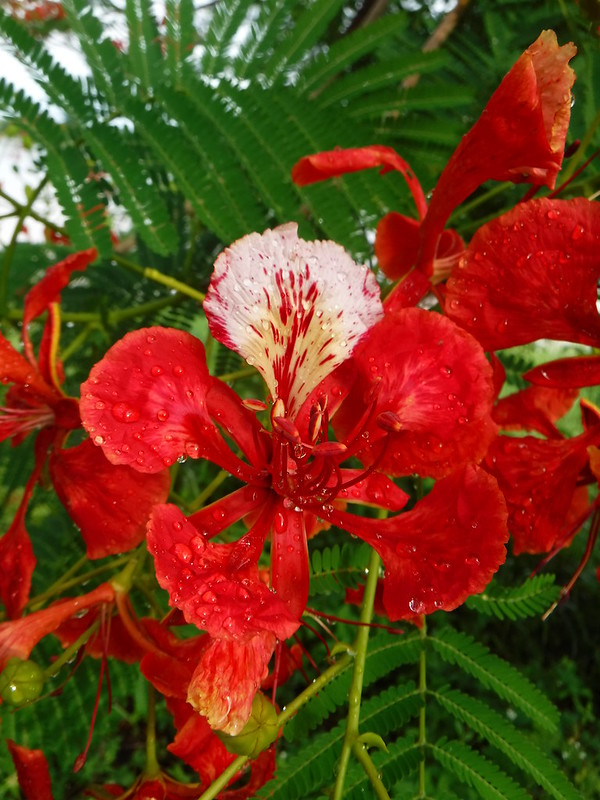
Delonix regia (Hook.) Raf. Fabaceae Caesalpinioideae-flambouyant, หางนกยูงฝรั่ง

Occasionally, one might see and orange-flowered variety.
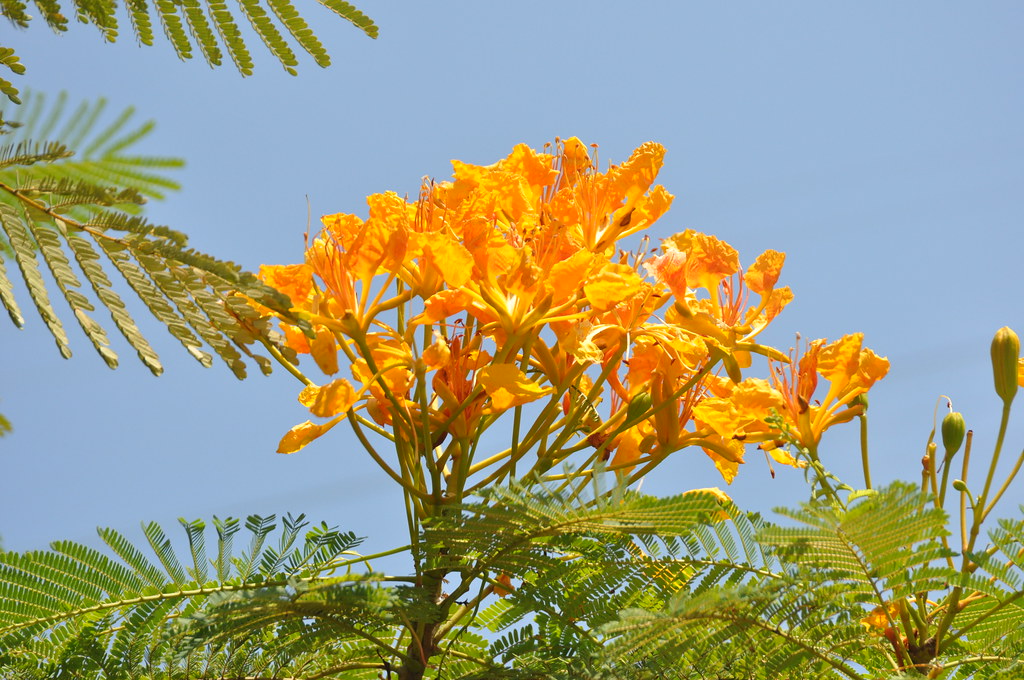
Delonix regia (Hook.) Raf. Fabaceae Caesalpinioideae: flambouyant, หางนกยูงฝรั่ง

The seed pods are quite large (that is my size 14 foot).  The pods can be carved as handicrafts.  They can be used as musical shakers when dry.  The seeds are very hard and are used as beads.
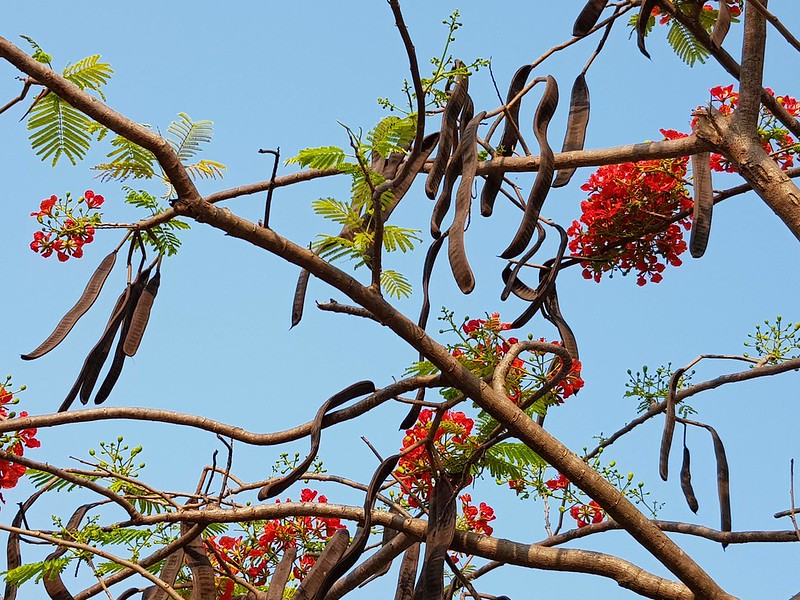
Delonix regia (Hook.) Raf. Fabaceae Caesalpinioideae-flamboyant, หางนกยูงฝรั่ง


Delonix regia (Hook.) Raf. Fabaceae Caesalpinioideae: flambouyant, หางนกยูงฝรั่ง


But what struck me today was a memory of the first time I ever saw a flamboyant tree.  In 1981, we would drive past a flamboyant tree on the way to Amani-y beach near the town of Saint Marc in Haiti.
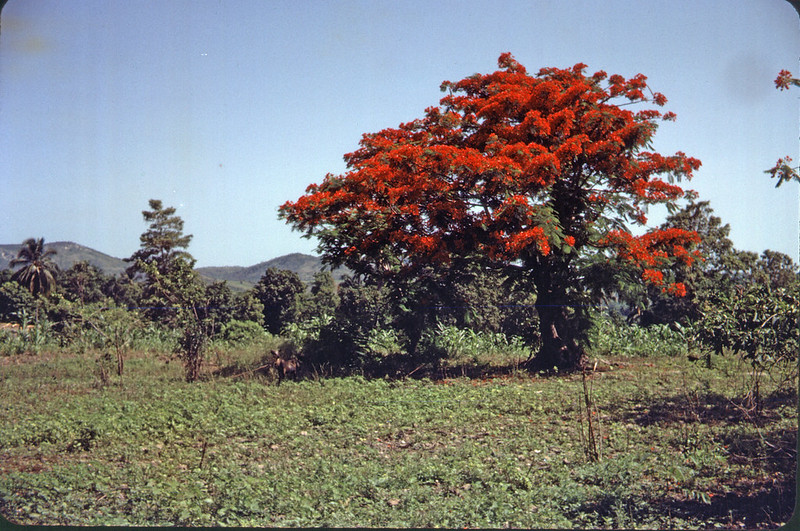

Delonix regia (Hook.) Raf. Fabaceae Caesalpinioideae-flamboyant, royal poinciana, Haiti Aug 1981 หางนกยูงฝรั่ง
Flambouyant Tree on the Way to Amani-y Beach


This beach was a place our team would go on occasion to take a break from working in a village above the town of Saint Marc.
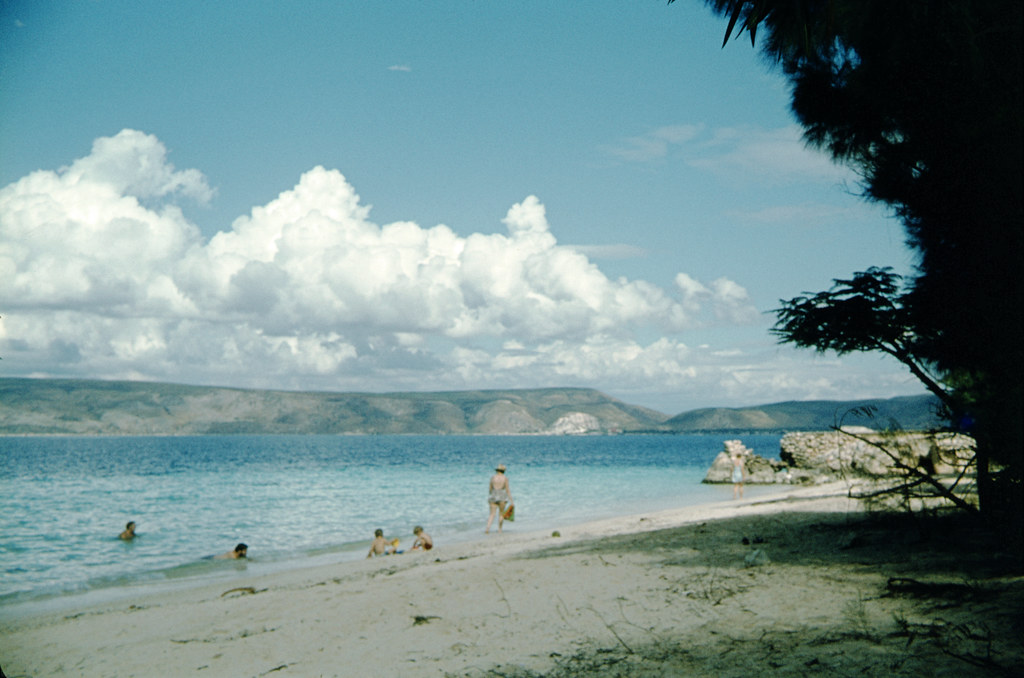

Amani-y Beach January 1981 Agfachrome
Amani-y Beach


The infrastructure was not well maintained, but there were always people nearby to sell a soft drink or make lunch. Casuarina trees (Australian pine) had been planted which gave a little shade.
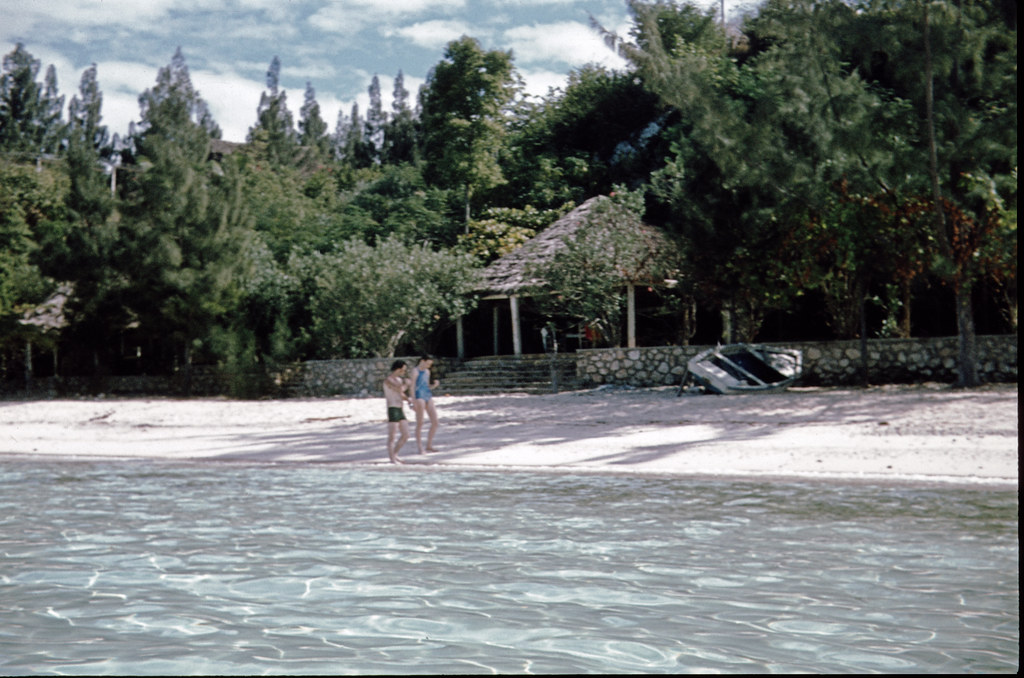

Amani-y Beach January 1981 Agfachrome


One of the amazing things about this beach, was that it was right on the edge of the bay.  The bay is quite deep and the water at the time was very clear.  At the north side of the beach, there is an underwater cliff and the water goes from about 2 meters deep to 25 meters or more deep.  In spite of the depth, you could still see the bottom.  I loved to snorkel over the top of the bluff.  The dark blue water in the background of the first photo is where the water depth changed.


Ingrid at Amani-y April 1981 Kodachrome
Best thing about the beach was the pretty girl


I have no idea what condition the beach is in these days.  When we returned to Haiti about 5 years after these photos were taken, the water was already getting cloudy from the soil being washed off the mountains.  But I'm glad to have memories of the time when the water was still nice.

Not only has Haiti changed a lot in the last 40 years, we have as well.  My hope is that, instead of worsening with time, we would become better.

Better is the end of a thing than its beginning, and the patient in spirit is better than the proud in spirit.  Ecclesiastes 7:8 (ESV)

Saturday, May 7, 2016

Put It In Your Pocket

It was probably the year 1992. We had taken a trip in our Ford F-150 to visit one of the Baptist Haiti Mission churches near St Michel de L' Atalaye, Haiti. Some people there were wanting some advice about capping a spring.

While I was I the area, I stopped at an open market.A woman was selling what appeared to be large seeds. I asked what they were, but the name, kakòn, meant nothing to me. I asked what they were for, and she told me they were for treating hemorrhoids. Intrigued, I asked, “how do they work?” She replied, “you carry them around in your pants pocket.

If you don’t ask, you never know.

I bought a seed from the woman and I probably still have it in storage in California.

This past week, Ingrid and I went bike riding down a track through a forest.

Off the beaten track
Cycling in the forest
Ingrid spotted the remnants of a very large bean pod lying on the ground. I busted a piece open, and there it was—the magical method for treating hemorrhoids.

Entada phaseoloides (L.) Merr. Fabaceae Mimosoideae-snuffbox bean, สะบ้า
I don't know if they really cure hemorrhoids or not, but if you swallow this thing, you might get them.

I have since found out that the bean is known as “snuffbox bean” or "sea bean" (Entada phaseoloides). Apparently, the beans were used for toting around one’s stash of snuff in days of yore.

Entada phaseoloides (L.) Merr. Fabaceae Mimosoideae-snuffbox bean, สะบ้า
Snuffbox bean pod, high up in a tree--about 2 feet long


Some of the tribal peoples of Northern Thailand use the large seeds for games or for medicinal purposes.

I've never tested the hemorrhoids treatment (and I hope I never have to want to), so I can't say for certain that it doesn't work.  But field of ethnobotany (the study of how indigenous people use the plants around them) has always fascinated me.  God gave us an amazing variety plant resources for us to use for food, tools, medicine and other things.  How people even came to know the beneficial properties of plants is amazing.  And it saddens me when I see these plants lost to needless destruction.  Many plants may have properties which can be used in the world of medicine, but if those plants become extinct, the resources are lost.

Recently, a verse in Revelation 22 caught my attention for the first time.  The Tree of Life, we read in Revelation 22:2, has leaves that are used "for the healing of the nations."  What an interesting picture.  The old world is gone and there is a new heaven and a new earth.  But there is still water and there are still trees that contain healthful benefits for mankind.  (I'm not sure why the nations will still need healing in New Earth but I'm sure it's related to a metaphorical aspect to this passage.)

From the very beginning, God gave us plants for our health and well-being (Genesis 1:29, 30).  And in the New Earth, He does the same.

Praise God for the amazing way he provides for us.