Sunset Over the Mekong River

Showing posts with label plants. Show all posts

Wednesday, August 1, 2018

She said it would take a while

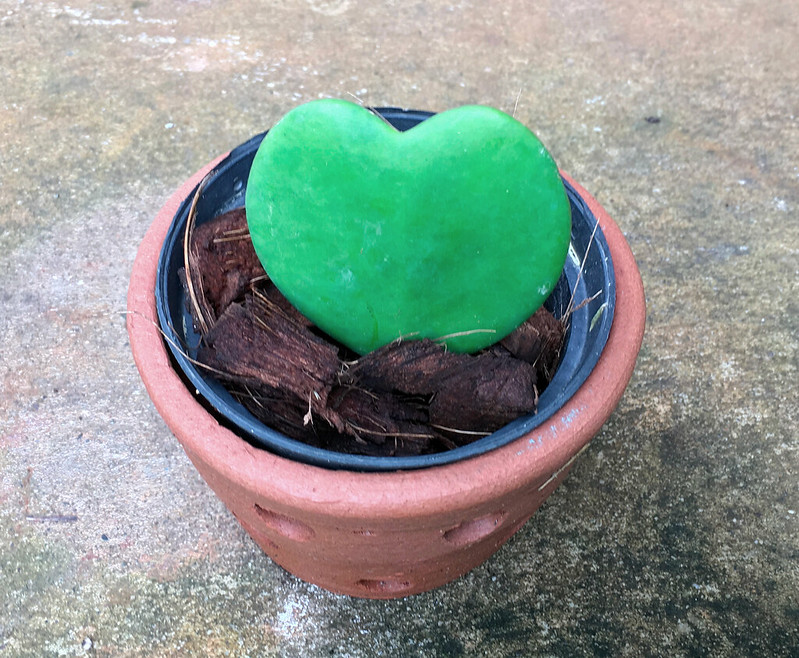
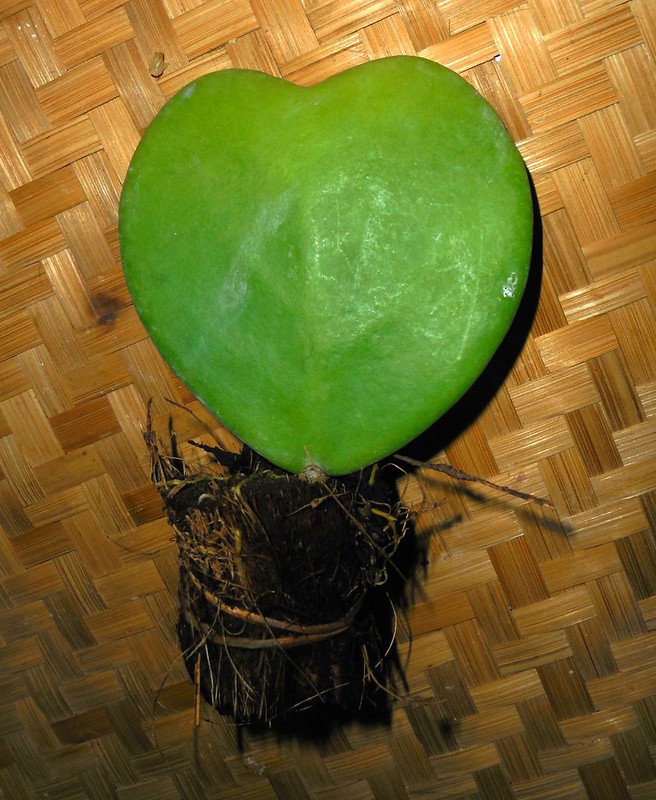
About 3-1/2 years ago, when we lived in northern Thailand, we bought some interesting heart-shaped plants at the Chiang Rai Flower show.

Hoya kerrii Craib Asclepiadaceae (Apocynaceae)-sweetheart plant, luck heart, หัวใจทศกัณฐ์

We asked the person selling them if the leaves would actually grow.  She said they would, but it would take a while.

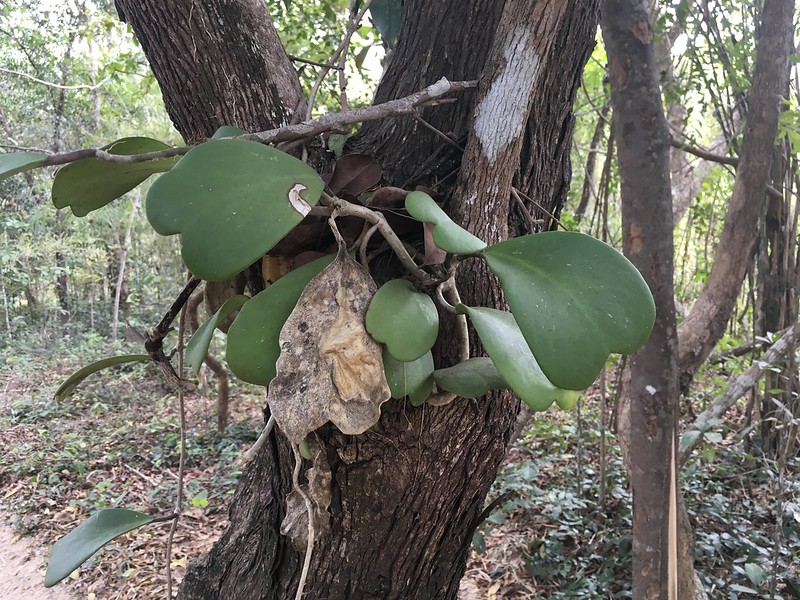
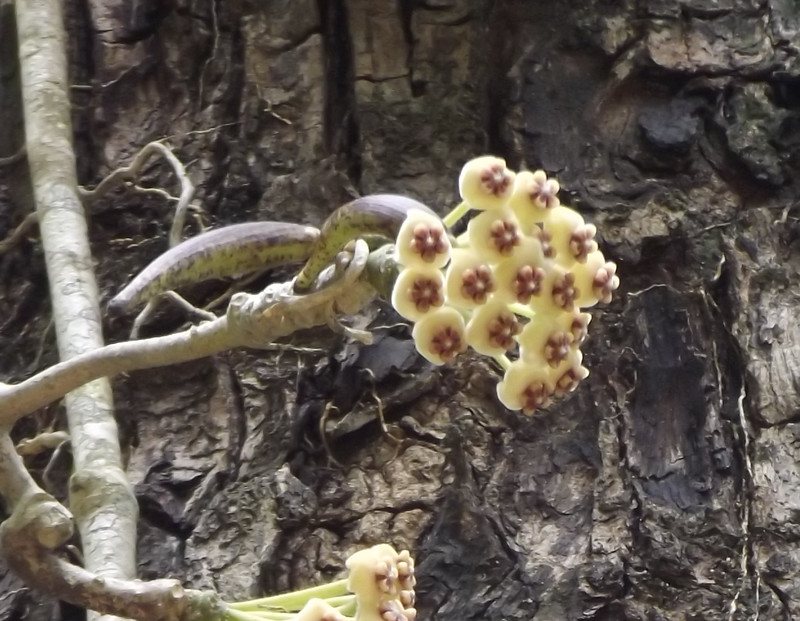
We found out the plant is called sweetheart plant (Hoya Kerrii).  It is an epiphytic vine. We've seen it in the wild and it looks like this:


Hoya kerrii Craib Asclepiadaceae (Apocynaceae)-sweetheart plant, luck heart 3

One of the plants died while we were still in Wiang Kaen.  The other survived, and we brought it to Phon Phisai.  Last September (2 years and 8 months after we bought it), it looked like this:

Hoya kerrii Craib Asclepiadaceae (Apocynaceae)-sweetheart plant, luck heart หัวใจทศ

It's amazing that a plant could be around that long, still be alive, but not change at all.

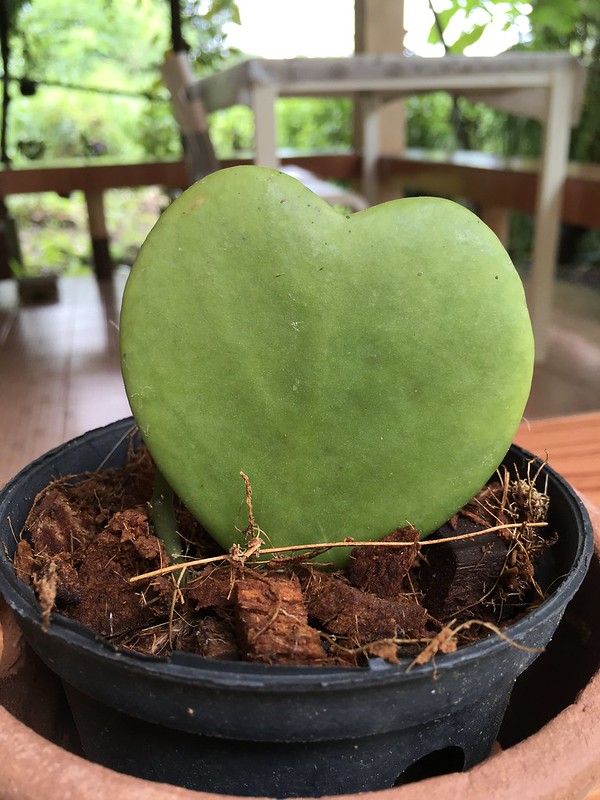
Finally, after 3-1/2 years, it looks like this:

Hoya kerrii Craib Asclepiadaceae (Apocynaceae)-sweetheart plant, luck heart, หัวใจทศกัณฐ์

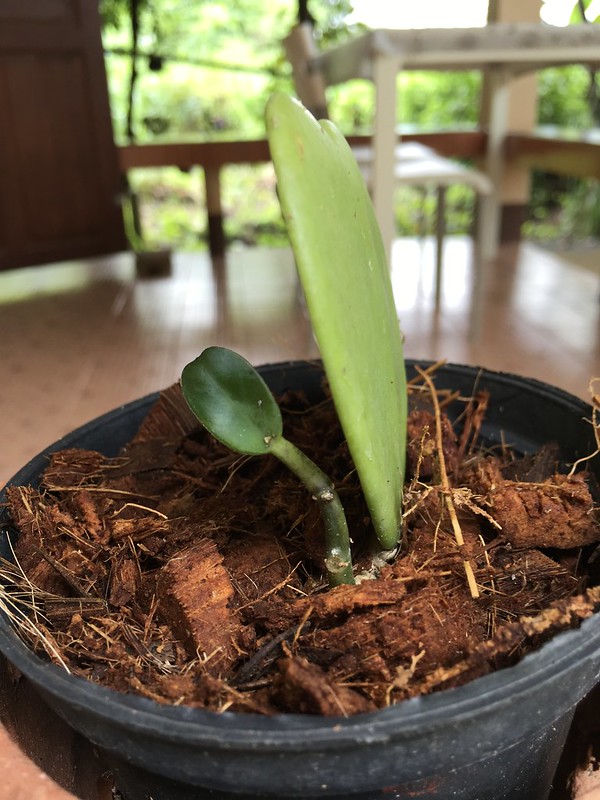
While the looks pretty much the same as it did, there is a surprise in the back.

Hoya kerrii Craib Asclepiadaceae (Apocynaceae)-sweetheart plant, luck heart, หัวใจทศกัณฐ์


Now that a vine is finally starting to grow, I wonder how long it will be before it flowers.  Most species of Hoya are grown for their flowers.  Maybe it will flower before we retire.

Hoya kerrii Craib Asclepiadaceae (Apocynaceae)-sweetheart plant, luck heart, หัวใจทศกัณฐ์


I'm not always very good at the waiting thing, and I have been tempted in the past to just get rid of the Hoya.  But it takes minimal care, so we just hung onto it.  After all, the heart-shaped leaf is cute.

And waiting can be a good thing.

We who put our hope in Jesus are eager for His return.  We wonder why Jesus tarries.  We're tired of living in a world corrupted by sin.  I read the news each day and silently ask, "How long, O Lord?"  How long must we put up with violence?  How long must we put up with destructive disregard for God's creation?  How long will people continue to hate?  How much exploitation must we endure?  Rapes and robberies.  Idolatry.  Greed. Pollution. Immorality.

How long will God even put up with my own sin?

As Paul writes:

We know that the whole creation has been groaning as in the pains of childbirth right up to the present time.  Not only so, but we ourselves, who have the first fruits of the Spirit, groan inwardly as we wait eagerly for our adoption as sons, the redemption of our bodies. (Romans 8:22, 23 NIV)

But waiting can be a good thing.  While we who wait for Jesus are eager for His return, those who do not yet know him will get no benefit from an early arrival.  For them, it is better if Jesus tarries.

The Lord is not slow to fulfill his promise as some count slowness, but is patient toward you, not wishing that any should perish, but that all should reach repentance. (2 Peter 3:9 ESV)

This will probably take longer than the 3-1/2 years I have waited for my Hoya to start growing.  But however long it ends up being, it will be worth the wait.


Friday, May 25, 2018

Resurrection

I have to confess that I have couple of weaknesses.

I have a hard time walking past a bookstore.

And I have a hard time walking past a plant nursery.

I like plants.  And flowers.  My yard will never be big enough for all the different flowers that I would like to plant.  Last year we acquired a couple of exotic plants.  (I call them exotic only because I am not from here.  They are actually native to Thailand.)  Both of these plants are in the ginger family (Zingiberaceae).  I have to admit I have a special fondness for plants in this family.

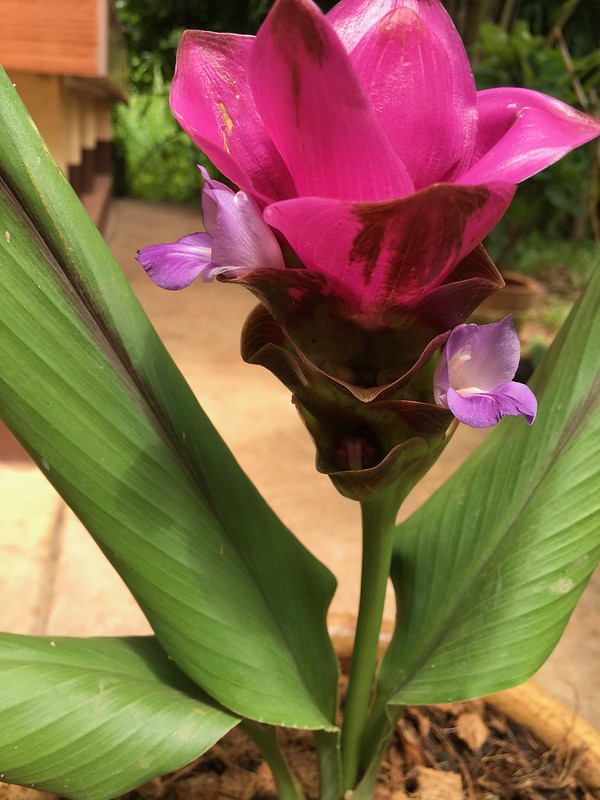
Lotus ginger (Curcuma alismatifolia) is typically grown as an ornamental.  Several of its close relatives are grown as herbs, mostly unknown outside of SE Asia, except for tumeric (Curcuma longa). We first encountered this plant at a flower garden in Chiang Mai back in 2011.  But there are places in Isaan where there are large fields of lotus ginger that bloom at this time of year.

Curcuma alismatifolia Gagnep. Zingiberaceae Zingibereae-Lotus Ginger, ปทุมมา
Lotus ginger - Curcuma alismatifolia


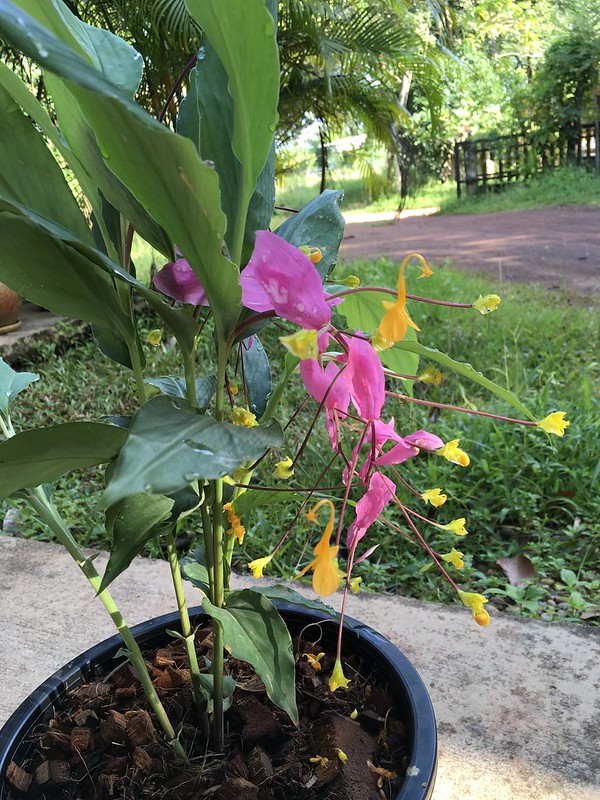
The other plant we acquired is Globba winitii (I don't know of any English name for this plant.)


Globba winitii C.H. Wright-Zingiberaceae Globbeae-หงส์เหิน 5
Globba wingtip


There are several species of Globba that grow in Thailand, usually as forest understory plants.  Some species are fairly common.  Most species do not have the pink (or white) bracts like the one in the picture above.

The problem with many plants in the ginger family is that, come dry season, they die.

Well they don't really die, but it seems like it.  The blooms fall off and the leaves dry up and all that is left is a pot full of potting soil.

I had never grown these species before, so I wasn't sure exactly what to expect.  I tried not to give up.  Do I water the "empty" pot or leave it alone?  I figured that the plants are adapted to dry season, so I left them alone.  I only had to remember which of my empty pots weren't really empty.

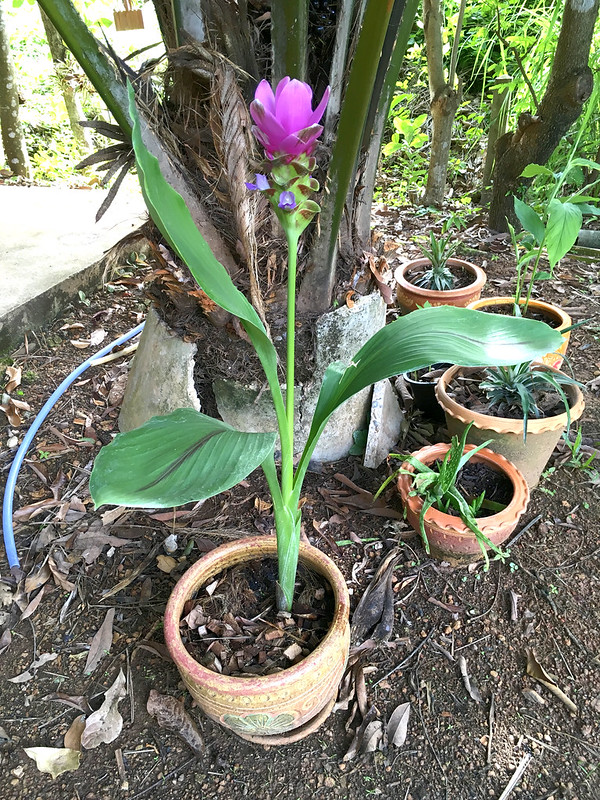
Finally, my patience was rewarded.  Little green shoots started breaking through the brown soil.  The lotus ginger wasted no time in sending up a flower shoot. (I'm still waiting for the Globba to flower.). The bloom is even richer in color than last year.


Curcuma alismatifolia Gagnep. Zingiberaceae Zingibereae-Lotus Ginger, ปทุมมา
Lotus ginger - year 2


At any rate, I am very happy.  That which was dead has come back to life.

So it is with us who believe.  One day, if Jesus tarries, these bodies of ours will die.  That which was once alive will be placed in the ground.  To human eyes, this patch of ground where the body is placed may appear lifeless.  But one day, that which was planted will come to life again.  It will come back to life even better than it was before.

As Paul writes:

But there is an order to this resurrection: Christ was raised as the first of the harvest; then all who belong to Christ will be raised when he comes back. - 1 Corinthians 15:23 (NLT)

We look forward to that day when we will bloom again with new life after Christ returns.

Friday, February 3, 2017

Planting Out

I like plants.

If you've spent anytime in this blog, you've probably figured that out already.

When it comes to growing plants, sometimes I appear to have a green thumb and at other times that thumb seems to have been amputated. But I do enjoy taking some seeds, tenderly caring for them in their infancy, then growing it out to a container of some kind and then eventually planting it out.

Guaiacum officinale L. Zygophyllaceae: ironwood, แก้วเจ้าจอม
Lignum Vitae plants just emerging

Persea americana Mill.  Lauraceae-avocado, อะโวคาโด, อะโวคาโด้
An avocado plant getting almost too big for its pot


Plants are kind of like people.  It seems they need a lot of care when they are really young.  The moisture has to be just right.  An single small insect can take them out in a single blow. But as they mature they can withstand a bit more stress and eventually they can get by with no help from us.

One thing I have seen is that if you keep a plant in a pot or bag too long, you can do permanent damage to the plant. It may not die, and when you plant it out it will continue to grow.  But often such plants never get as big as they otherwise could.  They become stunted.

Perhaps in this way, people are a bit like plants. As kids grow up, they eventually get to where they can make it on there own.  But sometimes the parent doesn't want to plant out the child .  When this happens, the child may be almost like the plant that is permanently stunted.

Letting go can be hard. And the best time and technique varies from person to person. A parent needs a lot of wisdom in this.

This concept also seems to apply to churches as well. Someone or a group of people make an effort  to plant a church.  They coddle it. They nurture it.  They help it get through all of the dangers of the seedling stage. They gradually put it in bigger and bigger pots.  But eventually it comes time to take the plant out of the pot so it can flourish in the native soil.  But this releasing process can be hard.  We like having the pot in our front yard where we can see it from our window.  We enjoy the activity of watering and fertilizing the pot.  But if we keep the plant in the pot too long, there is the danger that it will never thrive.

It's been wonderful to watch some of our churches in Thailand grow up. But the "letting go" part is tricky.  When is the best time?  How do we do it and do it well?  And like raising children to adulthood, there can be pain and hurt feelings along the way.  But with grace, wisdom, and help from God, it can be done.  And it is wonderful to see the churches say, "Yes! We can do this!"

Point your kids in the right direction—
when they're old they won't be lost. (Proverbs 22:6 MSG)

Saturday, December 31, 2016

Top 12 2016

This is my annual review of the past year, choosing a favorite photo from each month.  Though I confess that this year I included two in some months that included being in more than one country, so it actually comes out to "Top 15"

January

Pleasure Cruise
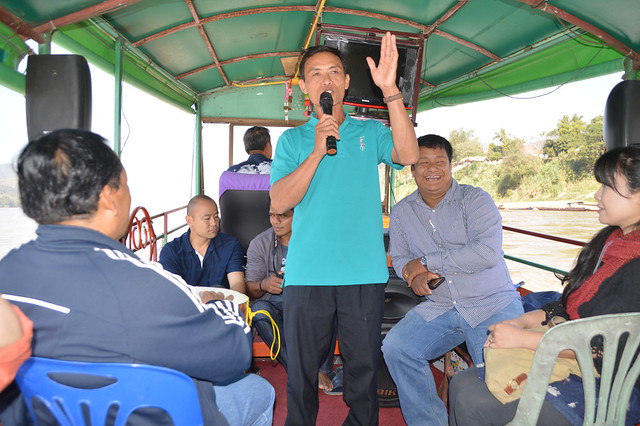
DNA Summit 063

In January we brought together several leaders from Canada and Laos to share stories with each other and encourage one another.  My main job was logistics.  I was instructed to set up a fun outing on one day, so we arranged a boat ride for the group from the Changing Life Center to a restaurant in Chiang Khong.  While many of the folks from Laos have probably been on the river many times in their lives--even if just to cross to Thailand--this was different. There were 45 of us on the boat and we passed the two hour trip upstream singing and telling stories.  It was great to see the folks from Laos enjoying this once in a lifetime trip.  The return trip only took half the time, as we were going downstream.

February

Ngao River
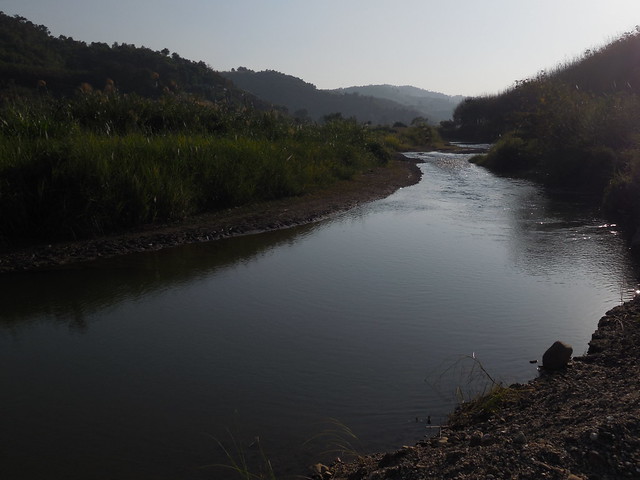
Ngao River in Pang Hat

The district we live in consists of the watershed for the Ngao River.  The river can be quite tame in the dry season but usually floods at least once in the rainy season.  In my bike riding I've explored many parts of this watershed.  This past year I tried a field road that I had not been on before.  The road eventually fords the Ngao River.  This is a quiet spot and sometimes I like to ride there just to detach myself from life's cares and concerns and enjoy God's presence.

March

Women's Conference
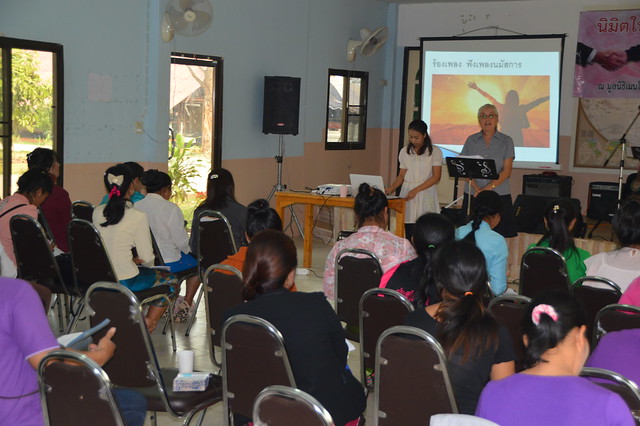
Women's Conference

This past year, we held the first Khmu Women's Conference at the Changing Life Center that featured women speakers.  We had hoped to also have it planned by women, but that was not to be.  Ingrid was one of the presenters, and it was her first time sharing at a large group in Thailand.  So I captured this glimpse of her speaking.  One of our Khmu leaders, Pat, was translating for her.

March-Vietnam

A taste of Mexico
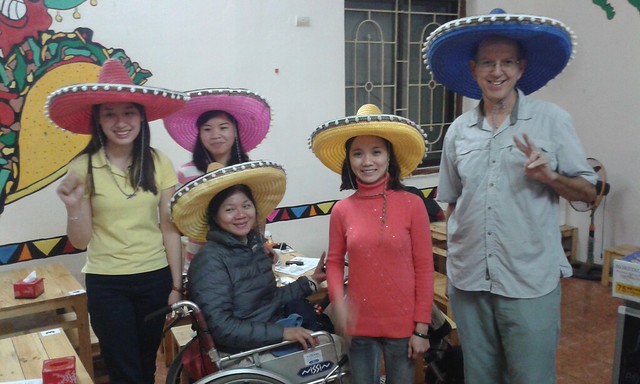
Tacos Việt

In March, I had to opportunity to travel to Hanoi to observe some training.  While I was there, I decided to visit a Mexican Restaurant that was near our hotel.  The hotel was not in a tourist area, so I was surprised to find a Mexican restaurant there.  The proprieter (In the red sweater) was happy to have someone to practice English with.  When I asked her why she opened a Mexican restaurant, she said that she once worked at a Mexican restaurant in the tourist area, but it was quite expensive.  She wanted to make Mexican food available to the common people.

I also chatted a bit with her husband, whose English was fairly good.  While I was explaining the kind of work I used to do, he responded using some technical words in English that not many Americans would even know. That's how I found out that he works for the Environmental Ministry.  Before I left, they wanted a picture with me.  So we grabbed the sombreros that were hanging from the walls as decor and put them on for this pose.  The food may not have been as authentic as what we find in California, but it was quite tasty. And the atmosphere was great.

For more pictures from Hanoi, view here.

April

Queen Sirikit Botanic Garden
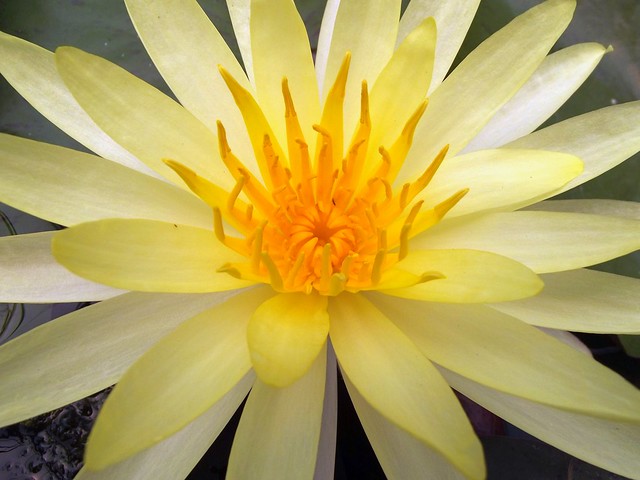
Nymphaea sp. L. Nymphaeaceae: Water Lily, บัว

In April, we ended up making a trip to Chiang Mai.  While we were there we took a few hours to visit the Queen Sirikit Botanic Garden.  The place was quite awesome, and I easily could have spent several days there.  Or maybe a few months.  It was hard to pick a photo from all the flowers I photographed there, but I especially liked this water lily, which seemed to glow like the sun.

May

Doi Pha Tang Park
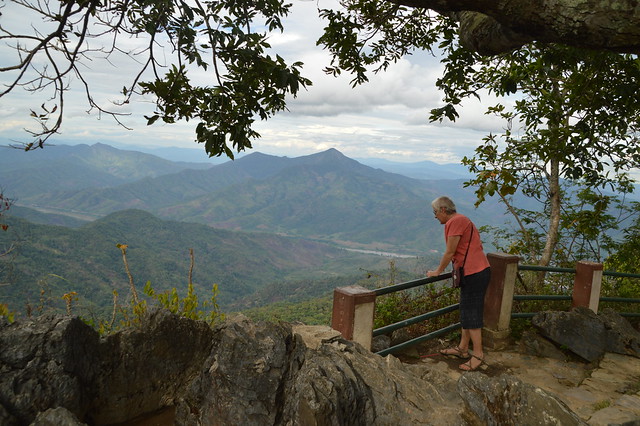
Doi Pha Tang Park

About 30 kilometers from us (20 miles) is a mountain park called Doi Pha Tang.  While it is quite close, It takes over an hour to get there because of the steep, windy, narrow roads.  Every once in a while we like to go there just to enjoy the cool mountain air. When you make the short walk from the parking area to the crest of the mountain, you are standing on the border of Laos.  Looking down off the cliff, one can see the Mekong River making its way towards Louang Prabang, the ancient capital of Laos, and eventually out the South China Sea in Vietnam.

June

Butterfly
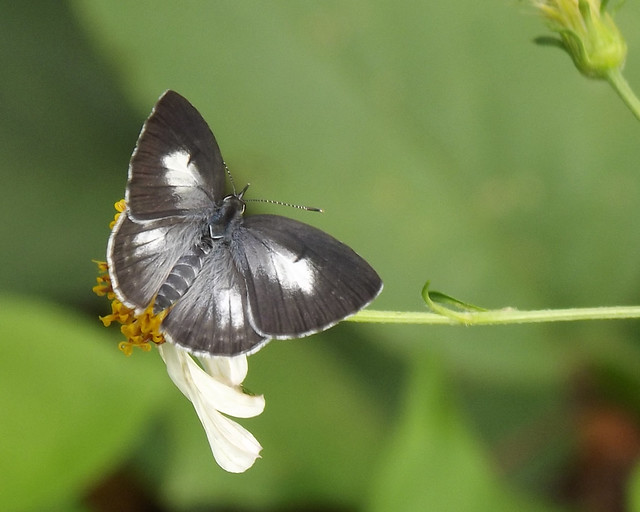
Butterfly b2

Not far from where we live is the ancient city of Wiang Kaen, which is now a forest.  There is a dirt road around this forest, where sometimes we go for walks.  One morning, the butterflies were particularly active.  While I never discovered the name for this particular butterfly, it seemed particularly pretty in its rather simple white, gray and black colors.

July

Voodo Lily
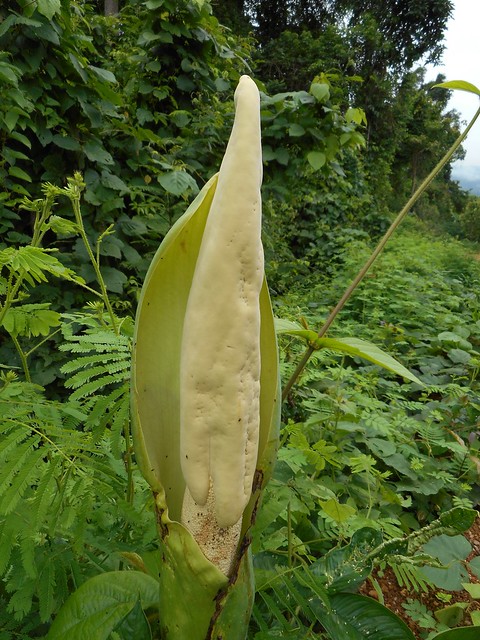
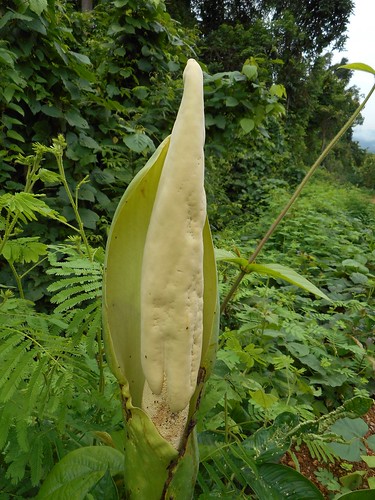
Amorphophallus yunnanensis Engl. Araceae-voodoo lily, บุก, บุกด่าง

The voodoo lily plant is fairly common around our area, but I had never seen it flower.  Finally, while I was walking around the forest that was once the city of Wiang Kaen, I saw this unusual white flower spike. Upon approaching it, I noticed a strong and not particularly pleasing smell.  Apparently, the plant uses these strong odors to attract the flies that pollinate it. What an amazing creation of God.  For more about this plant, view here.


July-Laos

Tat Xai Waterfall
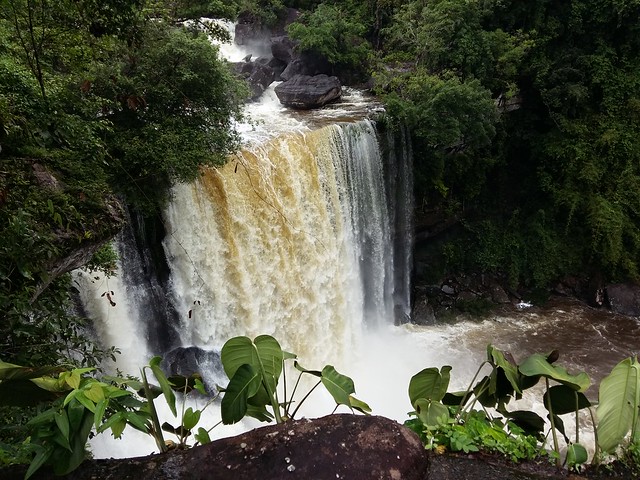
Tat Xai Waterfall-lower falls 2

Towards the end of June, our visas were expiring.  It was necessary for us to leave Thailand to apply for a new visa. We decided that the least expensive option was to travel to Vientiane-the capital of Laos.  In order to time the expiry of our visas with our MINA plans, we stayed several days.  One day, we took an outing to Phu Khao Khouay National Park.  We drove about an hour then we boarded a small boat which took us up river.  Since it was rainy season, the rivers were running high and I noticed we were boating over the tops of some small trees.  (Most people make this trip in the dry season when they do less of the travel on water and more on foot.)

When we got to the base of some nasty rapids, we disembarked and a guide helped us find our way through an overgrown trail up to a waterfall.  It was quite pretty along the way, and at the top, the tour included a gourmet picnic lunch.  Fortunately, there was a picnic shelter, because at that point the rain had started to fall.  There was an impressive amount of water going over the falls and the water was brown with mud.  But it was a beautiful place to hang out and listen to the water crashing on the rocks below.  For more photos from this trip to Laos, view here.

August

Rice Paddy Reflections
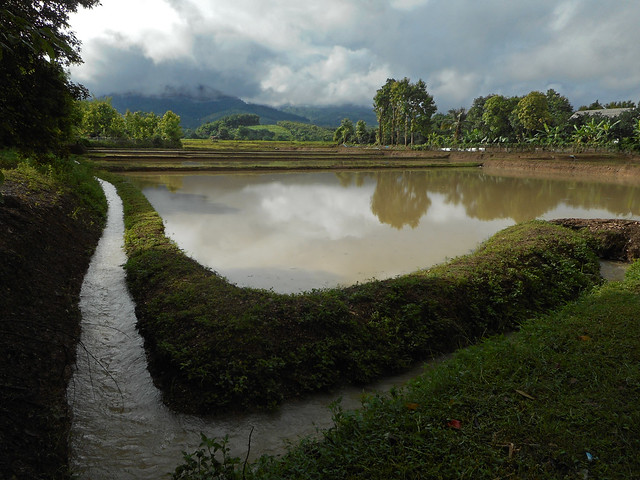
Flooded paddy in Ban Muang

Rice is the main crop grown in Thailand.  We grow both paddy rice and upland rice.  Where there is sufficient irrigation water, they may grow three crops a year of paddy rice.  Often, the farmers depend on rainfall even for the paddies.  Down the street from us is a creek bottom that they use to grow rice using primarily rain water, but also supplemented with water from the creek.  After one particularly heavy rainfall, the paddies were quite full and showing reflections of the hills and clouds.  Shortly after this, the fall rice crop was planted.

September

Skull Mountain
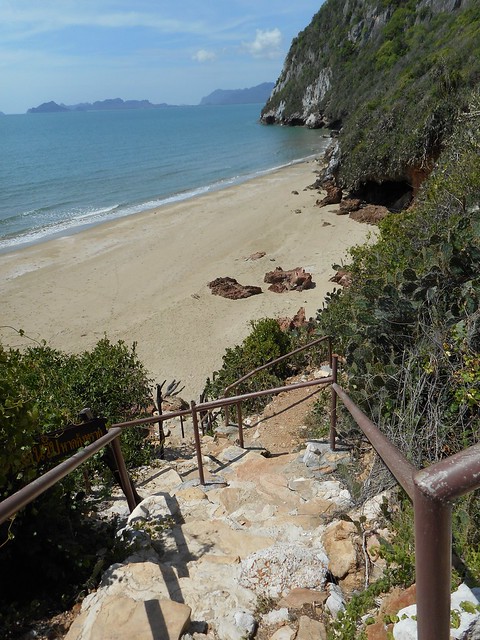
Khao Kralok 18

In September we were finally able to get away for a short break.  We went to one of our favorite places in Thailand, Sam Roi Yod (Three Hundred Peaks).  We like it because it has a mixture of ocean and mountains and parks, but it is not overdeveloped.

On one day we rented a scooter and drove up to Khao Kralok, which interprets "skull mountain".  It receives its name because the cave openings in the limestone hill give it the appearance of a skull.  There is a really nice beach there, that is quite popular.  But if you are brave enough to walk the rugged trail, you can walk over to the back side of the mountain where there is a nice, secluded beach.  We had it all to ourselves.

October

October Surprise
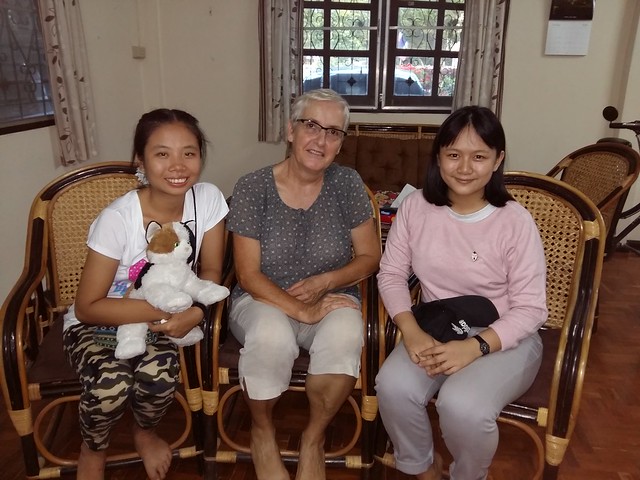
Ching and June visit 1

On a Sunday afternoon towards the end of October, we were getting our house ready in order to go on home assignment.  But before that we were leaving the following day for a week-long conference in Chiang Mai.  I was doing something in the back yard when I heard a motorcycle drive up.  To our surprise, it was Ching and June--two Hmong girls who had studied English with us and were now in their first year of university, Ching in Bangkok and June in Chiang Mai.

We were not at all expecting them as we thought they were away at school.  But they had come back for the weekend to attend a wedding and they didn't want to miss seeing us before we headed back to North America.

This visit was one of the highlights of our year--like having your kids travel a long ways to make a surprise visit.  Sometimes we wonder if our work has an impact on others.  The visit from these two young women showed that their relationship with us was more important than learning English.

November

Buntzen Lake
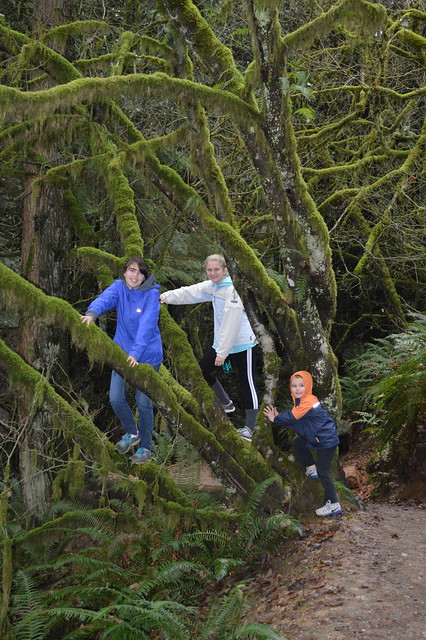
Buntzen Lake Trip 06

In early November we were in British Columbia.  One day, Ingrid's sister and her family took us on an outing to Buntzen Lake.  There was a trail running alongside the lake through the evergreen forest.  The humidity in this part of the world meant that everything was green with moss.  At one point, our nieces and nephew (who love to climb trees) found this small mossy tree beside the trail. In no time, they were up on its branches, and the bright colors of their clothing stood out like beacons in the dark, mossy forest.

December-New England

York Harbor
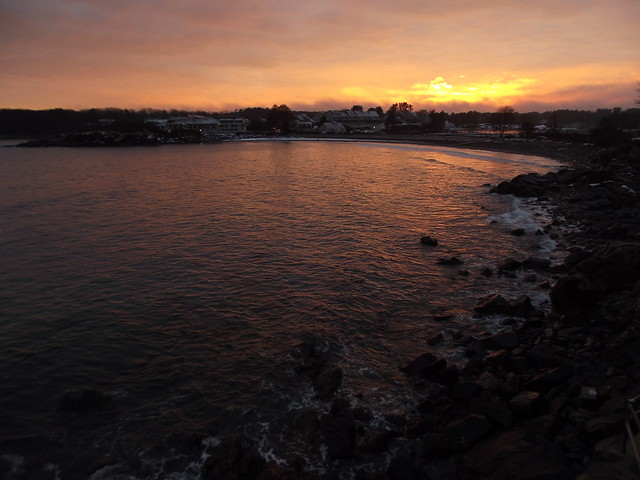
Fire in the sky

One of the things I like about New England is the rocky coastline that has lots of crannies in which there are sandy beaches.  One of such beach is at York Harbor.

We had awaken one morning in Montpelier, Vermont, to several inches of snow on the ground, with more rapidly accumulating.  We had planned on traveling almost due east to central Maine, but that would have meant driving in heavy snowfall the whole way, because we would be tracking the storm eastwards.  We opted instead to head southeast to southern Maine. It was my first time driving in snow in a many years.  Fortunately, the vehicle we had borrowed had all wheel drive with traction control, so we didn't slip and slide too much.  We arrived in York Harbor in mid-afternoon, just as the snow was ending.  Not much snow had fallen there, so before it got dark we went for a walk along the bluff trail.  As we were coming back to the Inn, the sun was going down in a way that made it seem the sky was on fire.  What an awesome end to a tiring day of driving.

December-Canada

Christmas Gathering

December Christmas Gathering 1

The latter half of December found us in Canada, staying with Ingrid's parents.  On Christmas day, we went to church, and came back to finish getting dinner ready.  Soon, family members started to arrive. It was nice to be surrounded by family members as we celebrated the birth of Jesus, even though we were two short as Christian was in the hospital and Karin was with him for the holiday.

Saturday, July 16, 2016

A Pleasing Aroma

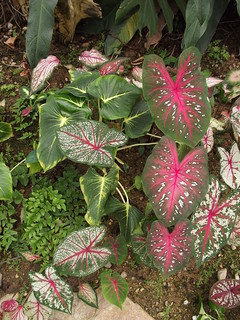
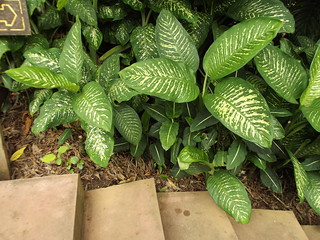
The Araceae plant family contains many plants that are common as houseplants in the US.  Plants such as Caladium, Diffenbachia, Spathiphyllum, and Philodendron are but a few.


Caladium bicolor (Aiton) Vent Araceae Aroideae-บอนสี, บอนฝรั่ง (Central)
Caladium

Dieffenbachia amoena Bull. Araceae-dumb cane, สาวน้อยประแป้ง อโมนา
Diffenbachia

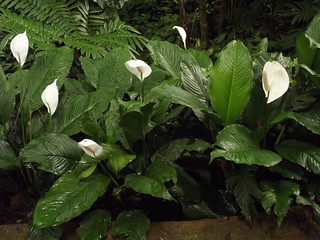
Spathiphyllum sp. Araceae Monsteroideae/Spathiphylleae-peace lily, เดหลี
Spathiphyllum


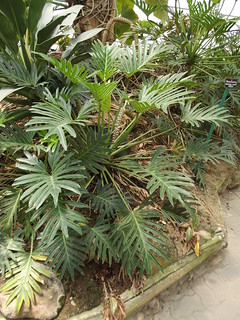
Philodendron sp. Xanada Araceae
Philodendron

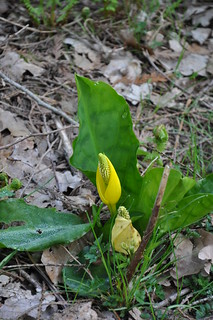
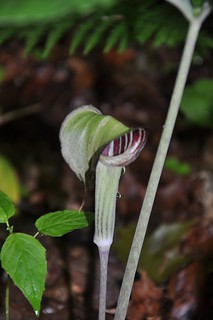
There are some species that are native to the cooler parts of North America such as skunk cabbage and jack-in-the-pulpit. But the humid tropics are the native home to many of the different species of this plant family.


Lysichiton americanus Araceae: American skunkcabbage
Skunk Cabbage
smells bad-but not as bad as some

Arisaema triphyllum Araceae: Jack in the Pulpit
Jack-in-the-pulpit

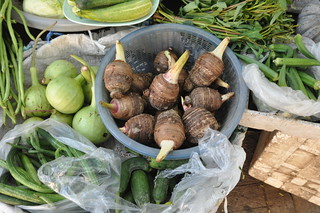
One species, taro, has an edible root that is an important food plant in the tropics.


Colocasia esculenta (L.) Araceae taro in the market
Taro roots in the market

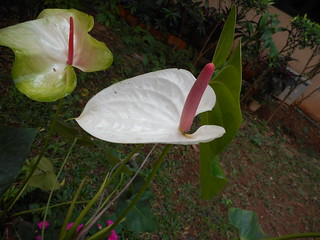
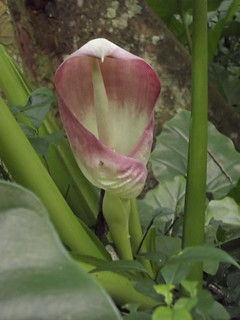
A characteristic of this plant family is the flower.  It is a spike called a spadix which is surrounded by or above a leafy bract called a spathe.


Anthurium andraeanum Linden ex André Araceae-painters pallette, flamingo flower, หน้าวัวดอก
Spathe on flamingo flower

Alocasia macrorrhizos (L.) G. Don  Araceae: giant taro, กระดาดด่าง
Spathe on giant taro

But the Araceae family has a notorious member as well.  One species, Amorphophallus titanum, has the largest unbranched infloresence of any plant species in the world--and perhaps the smelliest. It blooms at most only once every 2-7 years.  When specimens in gardens are about to bloom, large crowds will come to witness the event, despite the fact that the smell is compared to that of rotting flesh (which attract the flies that pollinate it) that gives rise to the name "carrion flower".

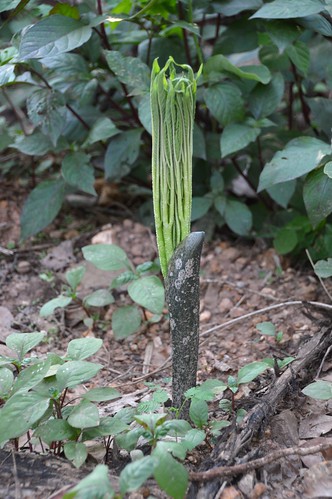
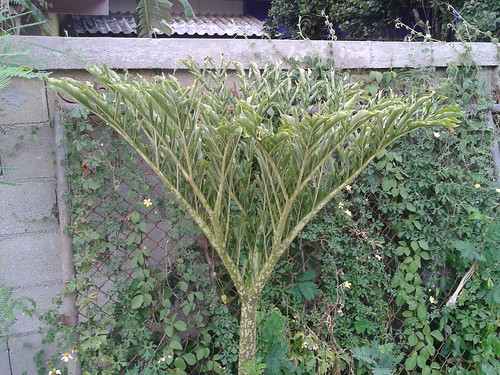
In Thailand we have a smaller relative of the carrion flower called the voodoo lily.  They are quite common here and they have an interesting growth habit.  They die back every year and then they will send up shoots in the spring.  The stalk of the plant has a unique blotchy appearance and the leaves and plant form are also quite unique.


Amorphophallus yunnanensis Engl. Araceae-voodoo lily, บุก, บุกด่าง
Voodoo lily sprouting from the bare ground

Amorphophallus yunnanensis Engl. Araceae-voodoo lily, บุก, บุกด่าง
Unique shape and blotchy bark of the voodoo lily

But I had yet to see one flower.


Until now.


The other day when I was out walking, I spotted a bloom of this plant.  When I went close to examine it I caught a whiff of the almost nauseating  smell emanating from the bloom.  Lots of little flies were attracted to the flower, but I was a bit repulsed.


Amorphophallus yunnanensis Engl. Araceae-voodoo lily, บุก, บุกด่าง
Voodoo lily flower

As I was thinking about that flower, I began to think about myself, what kind of flower am I?  Am I like a gardenia with a pleasant aroma that attracts people?  Or am I like a voodoo lily that drives people away?

I know people who profess to be lonely.  In their mind, I think, they imagine they are lonely because they are following God and no one else is.  But they don't seem to realize that it is often their attitude towards others that tends to repel them.

This is a warning to me to be mindful of how I "smell".  I want to have the fragrance of Christ.  To be more like a gardenia and not so much like a voodoo lily.


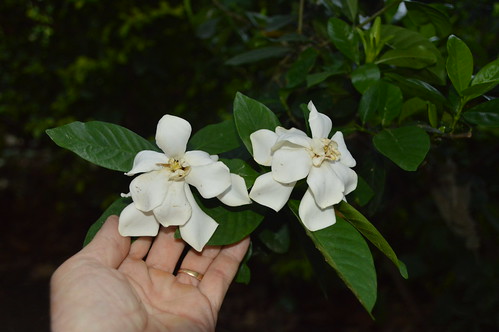
Gardenia jasminoides J.Ellis Rubiaceae-Gardenia, พุด
Gardenia

But thanks be to God, who in Christ always leads us in triumphal procession, and through us spreads the fragrance of the knowledge of him everywhere. 2 Corinthians 2:14 (ESV) 

Saturday, May 7, 2016

Put It In Your Pocket

It was probably the year 1992. We had taken a trip in our Ford F-150 to visit one of the Baptist Haiti Mission churches near St Michel de L' Atalaye, Haiti. Some people there were wanting some advice about capping a spring.

While I was I the area, I stopped at an open market.A woman was selling what appeared to be large seeds. I asked what they were, but the name, kakòn, meant nothing to me. I asked what they were for, and she told me they were for treating hemorrhoids. Intrigued, I asked, “how do they work?” She replied, “you carry them around in your pants pocket.

If you don’t ask, you never know.

I bought a seed from the woman and I probably still have it in storage in California.

This past week, Ingrid and I went bike riding down a track through a forest.

Off the beaten track
Cycling in the forest
Ingrid spotted the remnants of a very large bean pod lying on the ground. I busted a piece open, and there it was—the magical method for treating hemorrhoids.

Entada phaseoloides (L.) Merr. Fabaceae Mimosoideae-snuffbox bean, สะบ้า
I don't know if they really cure hemorrhoids or not, but if you swallow this thing, you might get them.

I have since found out that the bean is known as “snuffbox bean” or "sea bean" (Entada phaseoloides). Apparently, the beans were used for toting around one’s stash of snuff in days of yore.

Entada phaseoloides (L.) Merr. Fabaceae Mimosoideae-snuffbox bean, สะบ้า
Snuffbox bean pod, high up in a tree--about 2 feet long


Some of the tribal peoples of Northern Thailand use the large seeds for games or for medicinal purposes.

I've never tested the hemorrhoids treatment (and I hope I never have to want to), so I can't say for certain that it doesn't work.  But field of ethnobotany (the study of how indigenous people use the plants around them) has always fascinated me.  God gave us an amazing variety plant resources for us to use for food, tools, medicine and other things.  How people even came to know the beneficial properties of plants is amazing.  And it saddens me when I see these plants lost to needless destruction.  Many plants may have properties which can be used in the world of medicine, but if those plants become extinct, the resources are lost.

Recently, a verse in Revelation 22 caught my attention for the first time.  The Tree of Life, we read in Revelation 22:2, has leaves that are used "for the healing of the nations."  What an interesting picture.  The old world is gone and there is a new heaven and a new earth.  But there is still water and there are still trees that contain healthful benefits for mankind.  (I'm not sure why the nations will still need healing in New Earth but I'm sure it's related to a metaphorical aspect to this passage.)

From the very beginning, God gave us plants for our health and well-being (Genesis 1:29, 30).  And in the New Earth, He does the same.

Praise God for the amazing way he provides for us.

Monday, August 5, 2013

In Season


June is the saddest month of the year here in Central Thailand.  That’s because June marks the end of mango season.

I don’t have many favorites in my life.
I have no favorite color
no favorite song
no favorite food
no favorite movie
no favorite sport
etc.

But I DO have a favorite person (my wife)
AND a favorite fruit (mango).  My wife’s favorite fruit is mango as well.

We sometimes joke that we moved to Thailand because of the mangos.

Mangifera indica L. Anacardiaceae-mango, มะม่วง
image

But the good news is that June is the beginning of longan (Dimocarpus longan Lour. ลำไย) season

Longans are usually sold in bunches like this

Insides and seed of longan

What's left after eating
We never had eaten longan before we came to Thailand, but it is probably now the second favorite fruit for both of us.  But soon even it’s season will be over.

In the US we would sometimes be almost unaware of the cyclical nature of fruit harvest because in the grocery store you can get just about anything at any time of year due to the ability to transport fruit over great distances and store the harvested fruit while maintaining a reasonable quality.

But here in Thailand where we tend to buy our fruit in open markets, we tend to be more aware of the seasons of harvest.  And we adapt our fruit eating habits to whatever is in season.  (Though certain fruits are available all year long: banana, pineapple, papaya and watermelon.)

There is a seasonal nature to our work here in Thailand as well-even tough we are not involved in Agricultural production.  Paul alludes to the cyclical nature of our kind of work in 1 Corinthians 3:6 (ESV):

   I planted, Apollos watered, but God gave the growth.

We spend a lot of time planting and watering, so to speak, and aren’t always sure what the harvest will look like or if we will even be around for it.  Sometimes we get to harvest what others have planted.

Sometimes we think there is a crop coming along fine but then a storm comes up and beats the crop down.  I think of one person in our community who indicated a desire to follow Christ back in December.  But then some temptations came up and he succumbed to the temptation.  Now he seems too ashamed to be around us any more.

But while it is our responsibility to be faithful laborers. it is God who brings about the growth.  We don’t control that aspect of it.

So on one day my “sowing” might be holding a child whose parents are in prison and is pretty much neglected by his relatives.  It might be years before he can understand more fully the message of God’s love—what it means for God to send His Son and for His Son to take upon himself the sins of the whole world.

On another day I might be watering-teaching a young believer about the Bible and what certain scriptures mean to his life.

On perhaps another day we might enjoy a bit of harvest—praying with someone who is responding to the message of God’s love.

We plant.  We water.  We pray for God to make the crop grow.  And we bring in the harvest.
Like eating the seasonal fruit, we learn to enjoy each “fruit” in its season:

We enjoy planting in planting season
We enjoy watering in watering season
and we enjoy reaping in harvest season
And there’s always room for more laborers in the field.

 Ask the Lord of the harvest, therefore, to send out workers into his harvest field." Matthew 9:38 (NIV)

Tuesday, December 11, 2012

Weapon or Toy

clip_image002
A flambouyant tree similar to the one
we saw in Haiti
It was about 32 years ago when I first saw it. We had recently moved to Saint Marc, Haiti, and we were visiting Amani-y Beach just south of the city.  As we were driving over the white limestone soil on the way to the beach we passed this bare skeleton of a tree—except that it was covered with magnificent red blooms.
 
The flambouyant tree is probably the first tropical tree/flower that I learned the name of. And as beautiful as the blooms were, the later transformation was just as amazing. The big red blossoms gave way to enormous bean pods filled with hard, elongated beans. The pods dried almost black in color and when dry, the pods could be used as musical shakers. The dark skin could also be etched away revealing the paler woody pod beneath in order to make handicrafts.
clip_image004
Bloom of the flambouyant tree


The seeds themselves are quite hard. In the past, when I wanted to plant some seeds, I would file a notch in the side of the seed and then pour boiling water over them to hasten germination.
clip_image006
Pod and seeds of flambouyant tree
If you know how big my feet are, you can really appreciate this

 
It was in search of such pods that I set out a few weeks ago. I needed to pick them off the tree before they finished drying completely because otherwise they would split open while still on the tree. I had noticed a relatively short tree not far from our apartment on one of my walks so I headed to that tree.

clip_image008
When I arrived to the tree, there were the usual dozen or so feral dogs hanging around. (The undeveloped areas around here are home to probably a couple hundred feral dogs which are fed by well meaning folk trying to earn merit.) I had been around long enough where the dogs were more afraid of me than I of them. But that day they were even more afraid because now, in addition to the usual weapon I use to chase them away (my eyes), I also had this large, stick-like seed pod in my hand.
clip_image010


As I continued on my walk that morning, I turned around a corner when I saw this petite woman sitting on a curb almost dwarfed by the two golden retrievers that were with her. I had not seen those two dogs before, nor they me, but upon seeing me, the two came running up to me. One of them saw the bean pod in my hand—the same one that had been a potential weapon in the eyes of the feral dogs—and tried to pull it out of my hand to play fetch. (I had gone to great effort to get this pod, however, and I was not about to let it go.) The lady was apologetic about her dogs, but I was more than happy to hang out with the friendly duo for a few minutes. One of them wanted to follow me home, and I was tempted to let him.

We will soon (hopefully) be moving to the community of Ban Phruksa in Chachoengsao Province. This move to me is kind of like the seed pod of the flambouyant tree—I can look at it two different ways. The feral dog part of me wants to move to Isaan right now and resents the interim move we will soon be making to Ban Phruksa. The golden retriever in me sees how well suited we are for the ministry opportunity in Ban Phruksa. So I have to constantly choose between the two—will I be a feral dog or a golden retriever?


It’s kind of like when Moses sent out 12 spies into the Promised Land.  All twelve saw the same things, but ten of them, even though they had seen all the good things that the land had to offer, did not think that Israel was able to conquer the land or that it was worth the effort.  Only two of the spies, Joshua and Caleb, thought that Israel was able to conquer the land.  Caleb reported: "Let us go up at once and occupy it, for we are well able to overcome it." Numbers 13:30 (ESV) They believed that it was possible not because the nation of Israel was capable, but because God had promised them the land and that God would assure victory.
God, help me to see things with your eyes and to trust you to give victory.