Sunset Over the Mekong River

Showing posts with label farming. Show all posts

Sunday, January 2, 2022

Bookends 2021

This blog logs back at the previous year by look at photos from the beginning and end of the year.

When we began the year, we were living in Fresno, California, in a house owned by Mountain View Community Church. At the time, we were trying to avoid people as much as possible because we didn't want to get COVID, which would interfere with our plans to return to Thailand. We did feel comfortable going for walks where we could be a safe distance from others, though.

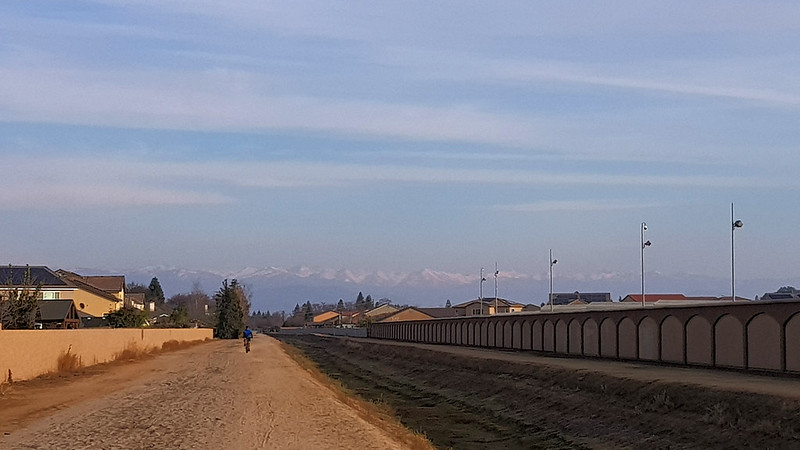
The house we were living in was near the Gould Canal. The canal levees we nice for walking. Occasionally, the fog and clouds would clear enough in the winter such that we could catch a glimpse of the snowy Sierra Nevada Mountains to the east. Such was the case on New Years Day, 2021.

Snowy Sierras views from Gould Canal 2
Gould Canal in East Fresno


Shortly after that New Year's Day, we boarded a plane to head back to Thailand. Because of COVID, we wore two masks on our flights. Upon arrival in Bangkok, we were taken on a specially prepared van to a hotel where we would quarantine for two weeks—a quarantine that included temperature checks twice as day and two COVID tests. Upon relaease, we went straight to Phon Phisai. It took a few weeks to get all of our stuff back in order after being gone a year. Then we moved about a 5-hour drive away to the province of Kalasin.

We found a place to rent in the town of Kamalasai. Then the next wave of COVID came and there were more restrictions on our activties. In late fall, new COVID cases were going down so we were able to do a bit more. Then Omicron Variant showed up in our province, and on the 30th of December, more stringent restrictions on activities were once again put in place.

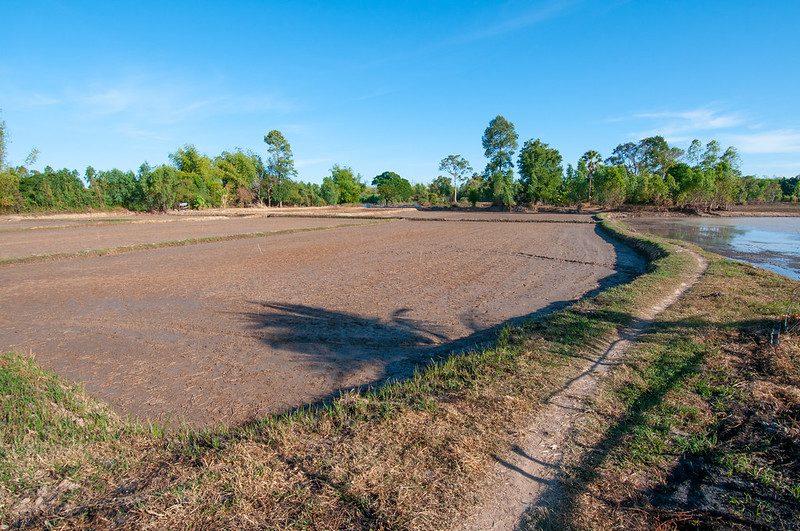
So on the last day of the year I went for a bike ride on some of the unimproved field roads to the west of the town where my encounters with others would be limited. This area is relatively flat, being a river terrace of the Pao River. Almost all of it ise used for rice growing.

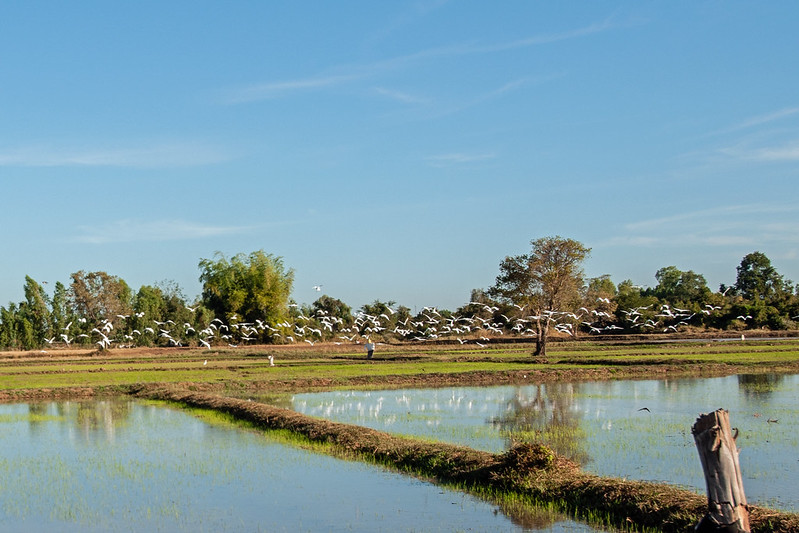
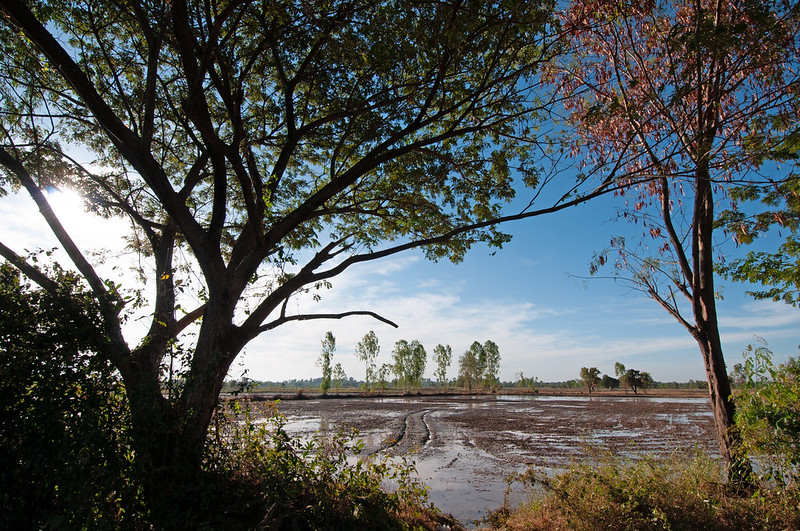
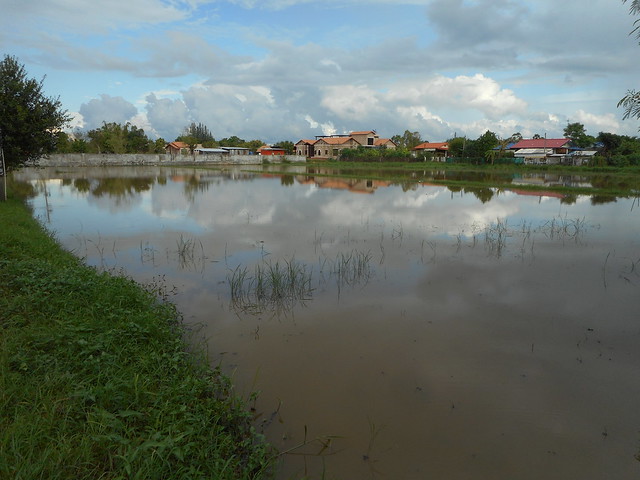
After the wet season crop is harvested in November, those with access to irrication water will prepare to plant a dry season crop. The old crop stubble is burned off, then the land is flooded and tilled while it is still submerged to thoroughly chop up the old crop remains and smooth everything off. The the water is drained off for the next stage in the process. Several species of egrets like this freshly prepared land, because it is easy for them to hunt for the crustaceans and amphibians that they like to eat.

Newly Prepped Rice Paddies 6e
Egrets in the Rice Paddies

Newly Prepped Rice Paddies 18e
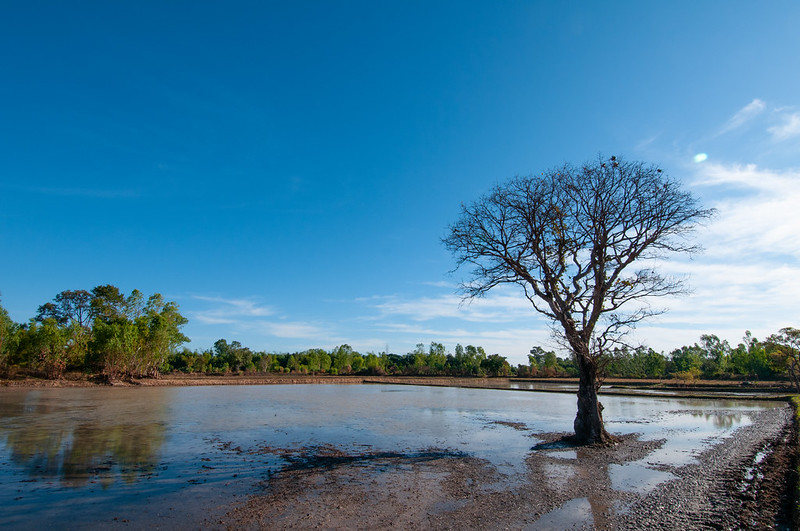
Tree in Flooded Rice Paddy


Newly Prepped Rice Paddies 13e
Rice Paddy Smoothed for Planting


Newly Prepped Rice Paddies 10e
Rice Paddy Smoothed for Planting


And so another year comes to a close. From the flat lands of Fresno, California to the flat lands of Kamalasai, Thailand.

Wednesday, January 2, 2019

Bookends 2018

How do we look at life? Are we pessimists or optimists? Are we stuck in the past or are we hopeful about the future?

For the past several years I've done a blog with photos from the beginning and ending of the year.  As I was looking through photos, trying to decide what to pick, I realized that my choices show how I look at my life.  Someone else might have chosen different pictures.  (A saying I have is: There are two kinds of journalists.  Those who are biased and recognize what their bias is--and tell others.  And then there are those who are biased and don't think they are.)

I could have done nearly-identical pictures.  On January first, we had several of the youth over from church to make fritters or, as some call them, New Years cookies.  On December 31st we were making a batch for a New Years eve service at church.  These would be people oriented photos.

But I decided to use some different photos. I'm not a great people photographer.

While we tend to choose our sandwiches based on what is in the middle, we also want to choose our bread.  So while these photos don't represent the meat of what happened this year, they are like the slices of bread I choose to put the meat between.

January 1st falls close to my birthday. I told my wife that I don't really want to acquire things for my birthday. I'd rather just go to a park somewhere.  So we decided to go to Phu Phrabat Historical Park. It turned out to be the first of three trips to the park that year.

Phu Phrabat Park is focused around some interesting rock formations that were used as housing and places of worship many, many years ago.  There are even red-colored petroglyphs which have a character similar to those I would see in the American west.  If you want to see that side of things, as well as photos of the fancy restrooms, check out my flickr album from the park.

What I like about the park are the nice walking trails with varied scenery.  It just happened to be the season that some of the dipterocarp trees were blooming.  I picked up a blossom and stuck it in a mossy log, because I like the color contrast.
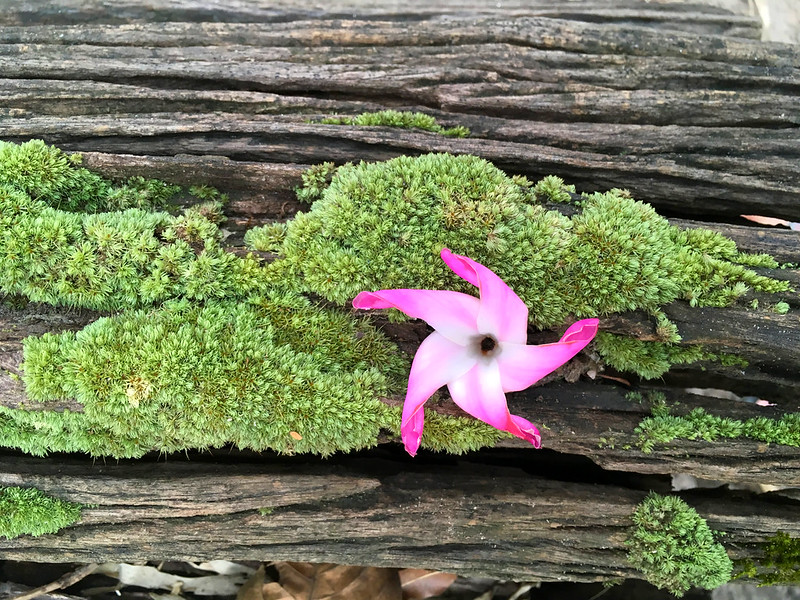
Dipterocarpus obtusifolius Teijsm. Ex Miq. Dipterocarpaceae-ยางเหียง
Dipterocarp flower on mossy log


Dipterocarp trees were once very common in northern and northeast Thailand.  They grow in humid climates with long dry seasons.  They don't seem to be bothered by the fact that it doesn't hardly rain for six months.  They just drop their leaves to cope with the dry season much as trees where I grew up would drop their leaves to cope with the cold.  There are many species in the plant family Dipterocarpaceae.  Most have winged seeds; the seed pictured below is the same species as the bloom above.  We big kids sometimes enjoy throwing them in the air and watching them helicopter down.
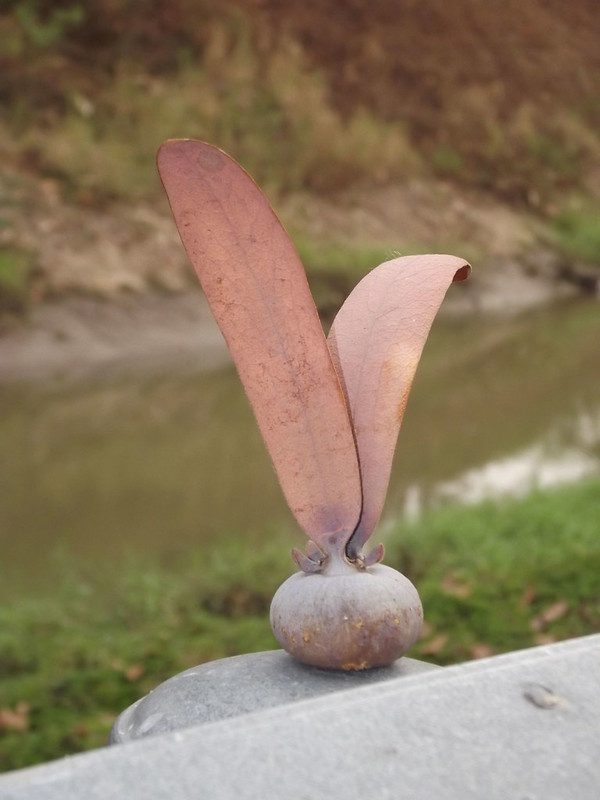

Dipterocarpus obtusifolius Teijsm. Ex Miq. Dipterocarpaceae-ยางเหียง
Dipterocarp winged fruit

Most species of the Dipterocarp genus get quite tall and the branches tend to be clustered at the top. This can make recognizing species difficult because it is often hard to see the leaves on the tree-you have to look at leaves and flowers that have fallen to the ground.

One thing that is nice about the Isaan region (as opposed to central or northern Thailand) is that the farmers often leave native trees in their rice paddies.  So one sees perhaps more of the big giants that used to cover the region before they were all cut down to put in farms.  Sometimes I'll even see masses of the pink flowers that have fallen off a tree onto the road.

Which brings be to the photo for the end of the year.

While many of our Canadian friends and relatives might be whining about the cold at this time of year (I would be if I was there), here in Thailand we are enjoying the cold winters.  It's nice when the temps drop into the 60s (15-20 C) at night.

While I tend to ride my bicycle all year round here, it is perhaps most enjoyable in the winter.  And so I found myself doing a leisurely bike ride on New Years Eve day.  This day I was staying on the dirt roads as much as possible because of the very busy highways during the New Years Holiday season.

My trip this day brought me past an old oxbow of the Huai Luang river that they put a dam in to form Huai Kan Lueang Reservoir.  The reservoir is on both sides of a minor highway and right now they are excavating dirt on one side to make it deeper and using the dirt to fill in the other side.

A consequence of this dirt fill operation is that I can now get up close to water lilies that used to be in the middle of the swamp.  On this morning, it had started out cloudy, but the clouds were moving off to the west so the flowers were in the sun.
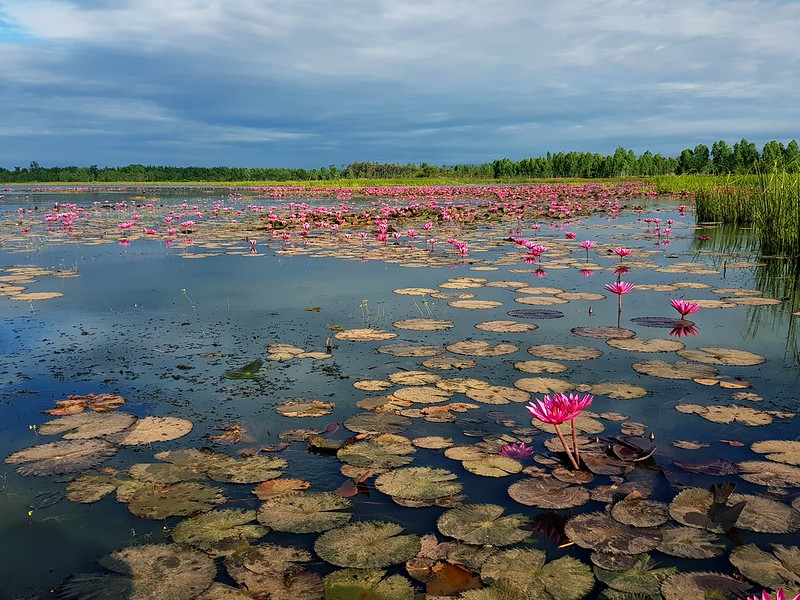

Nymphaea lotus  Nymphaeceae - Water lily, บัวแอง
Pink water lilies


The water levels in Huai Kan Lueang have dropped considerably since wet season.  As the water levels drop, some of the area is used to grow rice, as pictured below.

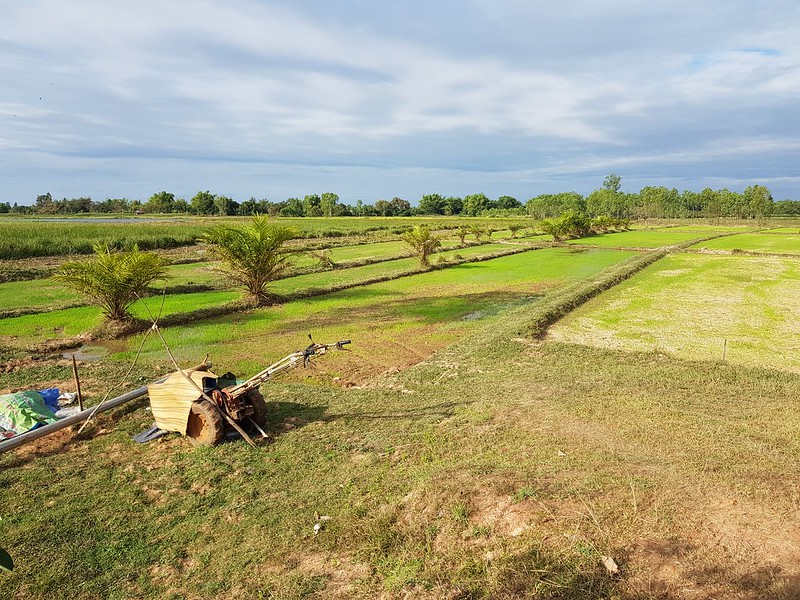
Ironic that this area was under water a few months ago. Now the farmer is using his tiller motor to drive a pump to irrigate his rice paddy.  Along one of the berms there are palm trees.  These are oil palms.  The fruits are are crushed to extract the oil. There is a significant acreage planted to oil palms in this part of Thailand.
Rice paddies in Phon Phisai 2
Rice paddies and oil palms


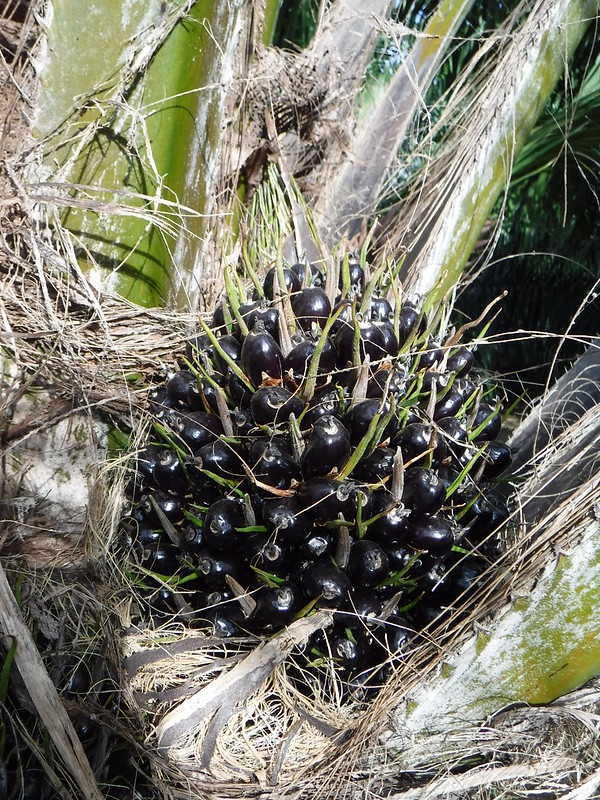
Elaeis guineensis Jacq. Arecaceae Palmae-oil palm, ปาล์มน้ำมัน
Oil Palm Fruits


And so my year has brought me from the forest to the field and lots of places in between.  But when I woke up on January 1st of this year, I was happy that some things did not change.  I woke up next to the same wife.  The sun rose again like it has everyday.  And God's great love for us was still there.

God showed how much he loved us by sending his one and only Son into the world so that we might have eternal life through him. This is real love—not that we loved God, but that he loved us and sent his Son as a sacrifice to take away our sins.  1 John 5:9, 10

Jesus Christ is the same yesterday, today, and forever. Hebrews 13:8


Wednesday, February 28, 2018

No Looking Back

Jesus said to him, "No one who puts his hand to the plow and looks back is fit for the Kingdom of God." Luke 9:62

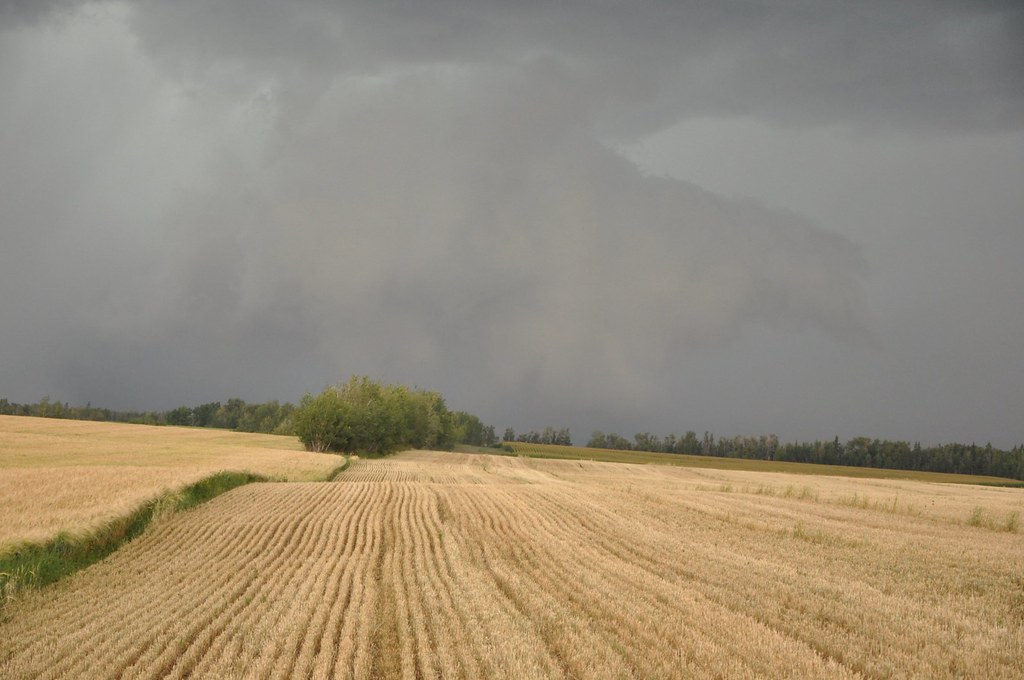
I admire a person who can drive a tractor in a straight line, especially in hilly areas. The ground is seldom smooth and it takes a bit of skill to keep the tractor going straight.  I remember helping my father-in-law once with the harvest, driving the swather, which we had just repaired.  He chided me because my rows weren't straight (it was my first time doing something like this).  Crooked lines meant the possibility of having to make an extra run or two across the field, which cost time and  money.

Engler Farm Freedom Alberta-Skies 6
Wheat fields on me father-in-laws farm

My father-in-law grew different kinds of crops, but in some places there was no fence or anything between them, there was only a marked pole on either end of the field.  Aim straight for the pole, and you get a straight line.  I could barely see the pole half a mile a way, let alone imagine tracking a straight line across the field to it.  And you couldn't let your eyes get distracted-if you turn around and start looking back, the tractor is liable to get off track. It's like what we were taught in driving school: "Where you look you will steer."  Or, as we read in Proverbs, "Let your eyes look directly forward, and your gaze be straight before you." (Proverbs 4:25 ESV)

So it was in Jesus' day.  Someone had told Jesus that he wanted to follow Him, but he told Jesus that he needed to say goodbye to his family first.  Jesus told him that a person who looks back is not fit for the Kingdom of God.

On the surface, the statement seems a bit harsh, but I can get the point.  If we're trying to go forward with Jesus, yet we keep looking back at what we're missing in our old life, we'll get off track, perhaps turned around completely.

The field is ripe and ready to harvest, Jesus said (John 4:35).  We need to direct our combine straight across the field.

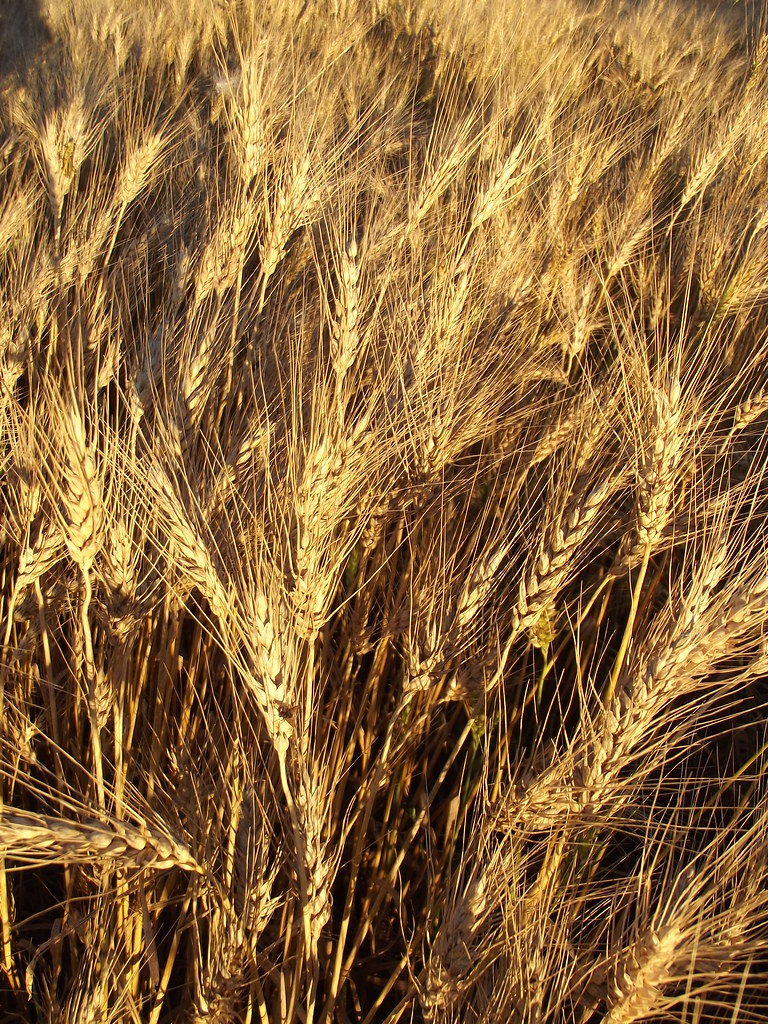
Triticum sp L. Poaceae Wheat 3
Abundant Harvest

I remember looking back once.  It was my mid-life crisis.  A lot of guys go through that kind of thing, usually when the're in their forties and they start comparing the life they are living with the life they hoped they'd being living at that point.

I had a mid-life crisis as well.  It was a difficult period of my life and I thought about ditching what I was doing and starting over.  But my mid-life crisis only lasted about 30 seconds. Because when I looked back—back to my life before I was a believer—I remembered how miserable I was then.  Why would I want to go back to that?  The present may not have been rosy, but it wasn't that bad.

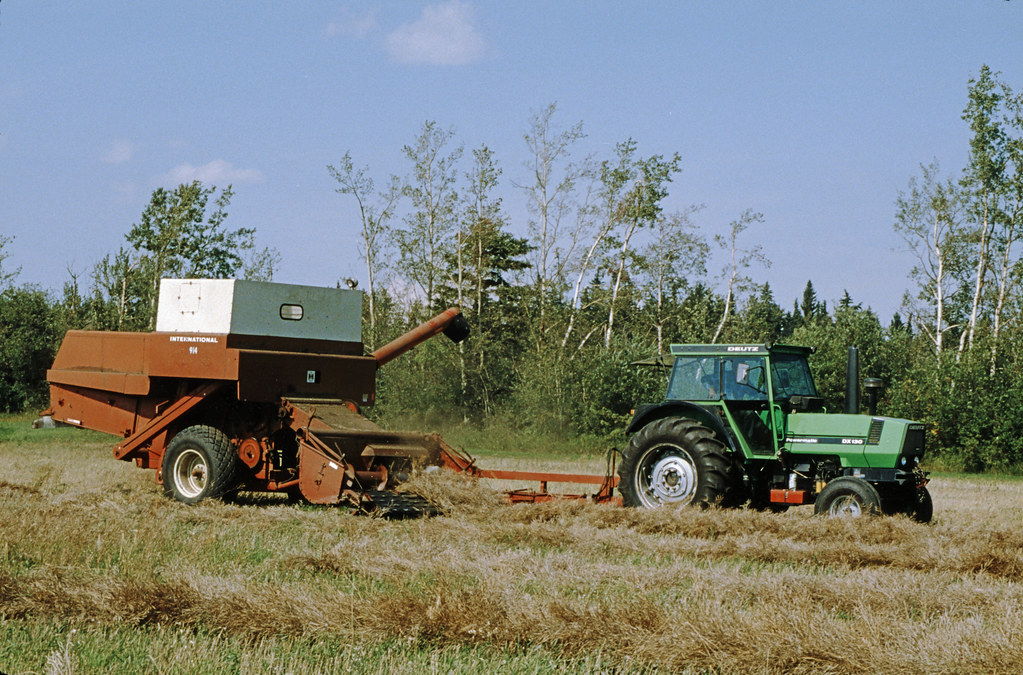
Combining in Freedom Sept 1987
Canola Harvest 1987


Now we're at the age when we might suffer from nostalgia.  They sometimes refer to this as looking back at the "good old days",  because we have a tendency to only remember the good times.  And there were good times to be sure.  It's fun to look at old photos and reminisce.  But we don't live there.  We rejoice that God allowed us to have those experiences in the past that helped us get to where we are in the present.  We were moving forward then and we're moving forward now.

Paul wrote, "12 Not that I have already obtained all this, or have already been made perfect, but I press on to take hold of that for which Christ Jesus took hold of me. 13 Brothers, I do not consider myself yet to have taken hold of it. But one thing I do: Forgetting what is behind and straining toward what is ahead, 14 I press on toward the goal to win the prize for which God has called me heavenward in Christ Jesus." (Philippians 3:12-14 NIV)

Tuesday, August 8, 2017

Too Much of a Good Thing

If you find honey, eat just enough--
     too much of it, and you will vomit.
Proverbs 25:16 (NIV)


Our house is surrounded by rice paddies.  However, over time, some of these rice paddies have been filled in in order to put up houses and commercial buildings.

If Thailand has any kind of grading ordinance, it is not evident.  People fill in land as they please; where the water drains off to is not their concern.

Our house sits on such a fill area, and immediately to the east is a rice paddy--or at least it used to be a rice paddy.  However, so many areas have now been filled, the water that falls on this part of town all seems to go into that field, and the water cannot get out at a reasonable rate.  So now, it is actually too wet for rice.

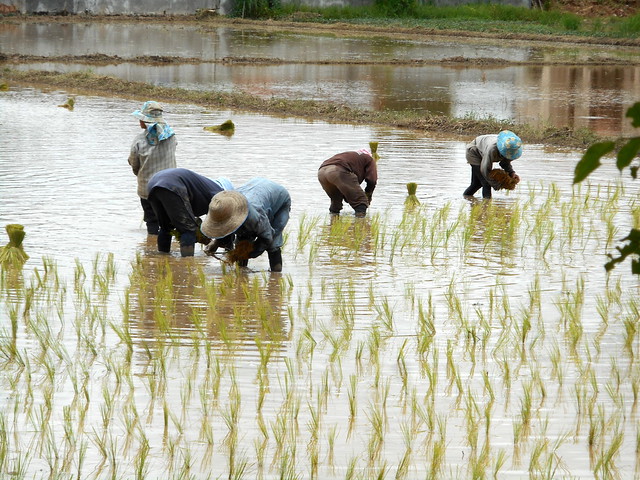
The owner spent a lot of effort planting rice this year.

Rice Planting in our back yard 2


When he was done planting, the paddy looked pretty good.  But notice the red colors in the foreground--that is from runoff from the field on the other side of our house.  The water runs down the road in front of our house and into the paddy.

Rice Planting in our back yard 16


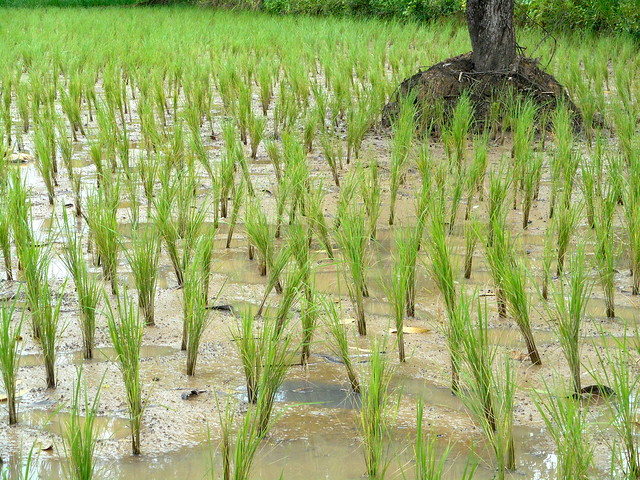
At this point, the paddy should look like this nearby one.

Newly transplanted rice in Jom Nang Nuea


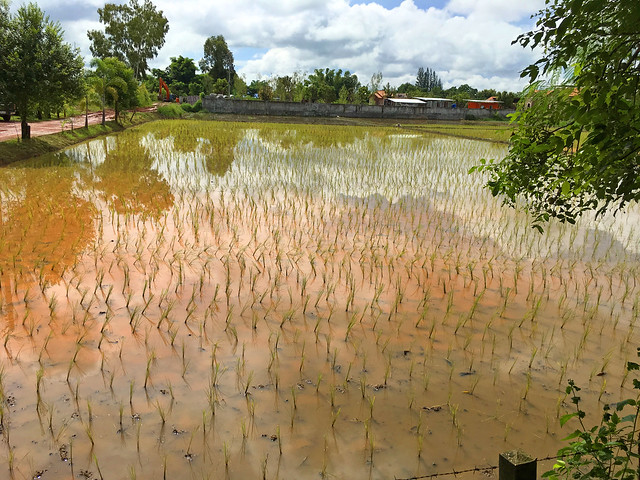
However, after a slow-moving monsoon system came through, all the rice has died and now we have this nice pond beside our house.

Flooded Paddy 1


While paddy rice needs lots of water, there is a limit to  how much it can take.  As hard as it is to fathom, even rice paddies can be too wet!

There is s flip side to this, at least for me.

One of the nice things about having this pond next to our house is the evening and nighttime sounds from the frogs and other creatures.  It kind of reminds me of growing up with a pond in our backyard.    While some may consider the noise annoying, for me it is like a constant lullaby throughout the night.

I recorded some of the sounds this past week.  (I recorded the audio while standing in the house.)  I added the audio to some wetland pictures from Thailand--the types of places you might expect to hear these sounds.  The first part of the video is the evening sounds.  At some point in the night, the composition changes.  The second part of the video has those early morning sounds.


For more about these wet areas where frogs live, view my blog Nong.


Monday, August 5, 2013

In Season


June is the saddest month of the year here in Central Thailand.  That’s because June marks the end of mango season.

I don’t have many favorites in my life.
I have no favorite color
no favorite song
no favorite food
no favorite movie
no favorite sport
etc.

But I DO have a favorite person (my wife)
AND a favorite fruit (mango).  My wife’s favorite fruit is mango as well.

We sometimes joke that we moved to Thailand because of the mangos.

Mangifera indica L. Anacardiaceae-mango, มะม่วง
image

But the good news is that June is the beginning of longan (Dimocarpus longan Lour. ลำไย) season

Longans are usually sold in bunches like this

Insides and seed of longan

What's left after eating
We never had eaten longan before we came to Thailand, but it is probably now the second favorite fruit for both of us.  But soon even it’s season will be over.

In the US we would sometimes be almost unaware of the cyclical nature of fruit harvest because in the grocery store you can get just about anything at any time of year due to the ability to transport fruit over great distances and store the harvested fruit while maintaining a reasonable quality.

But here in Thailand where we tend to buy our fruit in open markets, we tend to be more aware of the seasons of harvest.  And we adapt our fruit eating habits to whatever is in season.  (Though certain fruits are available all year long: banana, pineapple, papaya and watermelon.)

There is a seasonal nature to our work here in Thailand as well-even tough we are not involved in Agricultural production.  Paul alludes to the cyclical nature of our kind of work in 1 Corinthians 3:6 (ESV):

   I planted, Apollos watered, but God gave the growth.

We spend a lot of time planting and watering, so to speak, and aren’t always sure what the harvest will look like or if we will even be around for it.  Sometimes we get to harvest what others have planted.

Sometimes we think there is a crop coming along fine but then a storm comes up and beats the crop down.  I think of one person in our community who indicated a desire to follow Christ back in December.  But then some temptations came up and he succumbed to the temptation.  Now he seems too ashamed to be around us any more.

But while it is our responsibility to be faithful laborers. it is God who brings about the growth.  We don’t control that aspect of it.

So on one day my “sowing” might be holding a child whose parents are in prison and is pretty much neglected by his relatives.  It might be years before he can understand more fully the message of God’s love—what it means for God to send His Son and for His Son to take upon himself the sins of the whole world.

On another day I might be watering-teaching a young believer about the Bible and what certain scriptures mean to his life.

On perhaps another day we might enjoy a bit of harvest—praying with someone who is responding to the message of God’s love.

We plant.  We water.  We pray for God to make the crop grow.  And we bring in the harvest.
Like eating the seasonal fruit, we learn to enjoy each “fruit” in its season:

We enjoy planting in planting season
We enjoy watering in watering season
and we enjoy reaping in harvest season
And there’s always room for more laborers in the field.

 Ask the Lord of the harvest, therefore, to send out workers into his harvest field." Matthew 9:38 (NIV)