Sunset Over the Mekong River

Showing posts with label Isaan. Show all posts

Friday, October 22, 2021

Bountiful Hill

One of the things we like to do in rainy season in Thailand is to visit waterfalls. Many of the the waterfalls are practically dry for much of the year, but then they come to life towards the end of the rainy season. The early part of the wet season here was not particularly wet, but we've had a lot of good storms in the past few weeks. And finally we weren't so preoccupied with other things, we could actually get away on our day off.

This time, our destination was in Khon Kaen Province, just over the line from Kalasin. Ba Luang Waterfall Forest Park is located in some sandstone hills. The main waterfall is adjacent to the parking lot. The sandstone has both hard and soft layers. Here, the water flows over some hard layers, and as it falls, it undercuts into the soft layers below.

Ba Luang Waterfall Park วนอุทยานน้ำตกบ๋าหลวง 21e
Ba Luang Waterfall


Above the water fall is a smaller cascade as the water passes over the unevenly worn rock.

Ba Luang Waterfall Park วนอุทยานน้ำตกบ๋าหลวง 3e
Small Cascade Above the Waterfall


There is a 1 kilometer long nature trail that includes two smaller cascades. It was a quiet day at the park, and we were the only ones on the trail. After climbing a bit, we came to this pond. Water oozed out of the soil above and poured down off the cliff into the pond. A sign posted said that the waterfall is strongest in the early morning and gets weaker as the day goes on.

Ba Luang Waterfall Park วนอุทยานน้ำตกบ๋าหลวง 9e
Small Waterfall Along the Nature Trail


There was a small cave behind the waterfall, and there were a few clumps of these things that reminded me of sea anemones, except that we were nowhere near the sea and these were on land. We assume they are some kind of plant, but they are nothing like what we have ever seen before.

Unidentified sea urchin like plant 3
Land Anemones


As we were exploring by the pool, some creature flew by Ingrid then landed in a small tree. Turned out to be some kind of walking stick.

Walking Stick Insect 2
Walking Stick


Walking Stick Insect 5
Walking Stick Trying to Hide


Leaving that pool of water, we continued up the hill, then the trail dropped steeply down to an area where there was only a thin layer of soil over the sandstone. There were no trees in this area, only shrubs and grasses adapted to the harsh environment.

Whitethorn like shrub growing on shallow sandstone soils 1
Shrubs of the Shallow Soils


We heard the sounds of children talking and yelling nearby, and eventually we found the source of the clamor. A small creek had eaten its way into the rock below, and there was an old whirlpool etched into the creek bed. A group of boys was taking turns jumping off the two meter deep chasm into the pool below.

Ba Luang Forest Park Nature Trail Stop 10 - Nang Loi Pool4
Diving Pool


Just above this, we spotted a tiny waterfall flowing into a shallow pool.

Ba Luang Waterfall Park วนอุทยานน้ำตกบ๋าหลวง 14e
Small Waterfall


It was after 1 pm when we left the park, so we were ready for some lunch. The first village came to with a restaurant was Non Somboon. Khrua Yai Puy restaurant was marked by a colorful sign. There was a menu on the wall, and we were happy to see that they served Pad Thai, something we have not eaten in a long time. The couple that ran the place were friendly, though somewhat intimidated by having foreigners as guests. But they relaxed a bit when we spoke Thai to them and behaved as though we understood how these kinds of restaurants function.

Krua Yai Puy
Khrua Yai Puy Restaurant


After confirming that they had the dish, we ordered two plates of Pad Thai. We were eager to have this noodle dish, and the 10-minute wait seemed like a long time. Finally it came.

Krua Yai Puy
Pad Thai or Omelette


What an awesome looking omelette. If I had ordered an omelette, this would have been a great one. But why did they bring us Khai Jiao instead of Pad Thai? The names of the two items don't sound anything like each other, other than the vowel sound ai that occurs in each name. Did they really misunderstand us? Is our Thai that bad? Or maybe they didn't have Pad Thai noodles but they didn't want to say "no," so as to save face. I'm not sure the reason. But we didn't want to shame them, so we ate our omelettes and went on our way. They good thing is that the omelettes did not have cilantro, which they usually do, so I was able to eat it.

Later it dawned on me that Non Somboon is the same name as the village where we ate lunch on a waterfall trip in Mukdahan back in August, which I wrote about here. The name of the village translates as "Bountiful Hill." I think there are a lot of villages with that name in the Isaan region, but what a coincidence that we happen to find roadside restaurants to eat lunch at in a village of the same name after leaving a waterfall park on two occasions in two different provinces.

I like the name Bountiful Hill. It sounds like an inviting place to live. It also expresses hope for abundant harvests. And the name often seems appropriate, being that the villages are surrounded by lush rice paddies and forests in which to gather wild food. (This is unlike how we name things in California. When we lived in Bakersfield, California, we lived on River Mist Avenue. That was in a desert with no river to be seen. The name of the subdivision was Silver Creek. The only Silver Creek I ever saw in that area was a mirage.)

Bountiful Hill reminds me of the Biblical promises to the nation of Israel. They were going to a land "flowing with milk and honey." This phrase is used to describe the promised land twenty times in the Old Testament, beginning with Exodus 3:8. It as a poetic way of saying that it will be a bountiful land. It is a reminder that God loves us and cares for our needs.

Bountiful Hill reminds me of the words Jesus uses to describe the life that we can have when we believe in Him. He said The thief comes only to steal and kill and destroy. I came that they may have life and have it abundantly. (John 10:10 ESV) I don't have to travel to some small village in another province to experience God's bounty. An abundant life is available to all who put their faith in Jesus, wherever they are.

An abundant life does not necessarily mean that I will be rich in the stuff of this world. Jesus said, Take care, and be on your guard against all covetousness, for one’s life does not consist in the abundance of his possessions. (Luke 12:15ESV) An abundant life means that I can have peace and satisfaction that comes from God's presence in my life no matter what storms may come my way. Jesus wants us to trust Him, to be satisfied with Him. This is often easier said than done, however. It is something I am slowly learning to do.

Thank you, God, for being our bountiful hill. Thank you for your promises of an abundant life in Jesus. Thank you for the peace that comes from the presence of Your Holy Spirit in our lives.

Wednesday, July 7, 2021

Symbols

We live in the province of Kalasin, Thailand. One of the symbols of the province is the dinosaur. The reason for this is that in the northern part of the province they have found lots of dinosaur fossils.

Dinosaur Museum 14
Sirindhorn Dinosaur Museum in Kalasin


So you can find statues or symbols of dinosaurs all over the place.

Dinosaur Park - สวนไดโนเสาร์
Not waiting to find out if they really are herbivores


Dinosaurs are surprisingly mobile. At this rate they should be taking over Thailand soon.

Dinosaur Invasion in Kalasin City 2
Dinosaurs invading the city of Kalasin


Some dinosaurs like to hang around coffee shops.

Sae Jom Cafe แซ่จอมกาแฟ 4
Dinosaur coming to steal my coffee


Ran Hun Hueang Coffee Shop in Kamalasai 4
Dinosaur giving rides while we wait for out coffee


Earlier this week we found a dinosaur that had been trained to ring a gong.

Chi River Crossing at Khong Chai Pattana ตำบล ฆ้องชัยพัฒนา อำเภอ ฆ้องชัย กาฬสินธุ์ 10
Kalasin's trained dinosaurs


We humans like to use symbols. They can be an easy way to express the essence of something or even our emotions (emojis).

Emoji wall decor 1
Emojis as symbols of feelings


Symbols can be powerful tools for making something easy to recognize—like the golden arches at McDonalds or the donkeys and elephants used to represent political parties in the USA. Back when we lived in Haiti, we happened to be there for their first democratic elections, ever. The ballots had the names of the candidates, their photograph and a symbol for their party. Even the illiterate people could recognize the symbols.

Haitian Elections Jan 20 1991 - Ka Glo Letan Haiti 3
Haitian Election Ballot from 1992


For centuries now, the symbol for Christianity has been a cross. It is almost trivialized now, but in its day, the cross would be recognized as a brutal form of execution. Using a cross as a symbol is akin to using a gallows or guillotine, which makes it a really odd symbol. But it makes sense when you think that Jesus taught that the way to life is through death. Jesus died for our sins on the cross to secure our salvation. But He didn't stay dead. First came death, then the resurrection.

Mount Rubidoux
The Cross as a symbol of Christianity


Jesus, looking ahead to His crucifixion, wrote,

And Jesus answered them, “The hour has come for the Son of Man to be glorified. 24 Truly, truly, I say to you, unless a grain of wheat falls into the earth and dies, it remains alone; but if it dies, it bears much fruit. 25 Whoever loves his life loses it, and whoever hates his life in this world will keep it for eternal life. 26 If anyone serves me, he must follow me; and where I am, there will my servant be also. If anyone serves me, the Father will honor him. John 12:23-26 (ESV)

But Jesus wasn't just saying this about Himself. Whoever, He says, loves his life will lose it. Dying is the way to a life of fruitfulness.

Paul also writes about this. In Romans 8:13 (ESV) we read: "For if you live according to the flesh you will die, but if by the Spirit you put to death the deeds of the body, you will live." And again in Colossians 3:5 (ESV) "Put to death therefore what is earthly in you: sexual immorality, impurity, passion, evil desire, and covetousness, which is idolatry."

The challenge with symbols is that after a while the symbol becomes more important than what it is supposed to represent. The cross becomes merely a fashion statement or a religious symbol rather than showing one's desire to die to self or even even die for one's faith. Some, ironically, complain when governments try to remove our cross symbols from public places. When someone wants to remove a sign that should say we are willing to suffer for our faith, we complain and can become belligerent even to the point of being obnoxious, even though we aren't actually suffering. We are very unlike the first century Christians who rejoiced because they were counted worthy to suffer for the name of Jesus. (Acts 5:41)

When Jesus said we should be willing to take up our cross, I don't think he had in mind a piece of jewelry strung around our neck or a symbol erected on top of a building.

The cross is a reminder that we are strangers and exiles on the earth. (Hebrews 11:13) We are willing to die to the things of this world because we are looking forward to a better one. We read in Hebrews 11:35 (ESV): Some were tortured, refusing to accept release, so that they might rise again to a better life.

I've found that this cross thing is not always easy. Sometimes I get to a place where I have to choose gratifying my human desires or pleasing God. At other times I have to choose between responding to situations according to the wisdom and ways of this world or according to the ways of the Kingdom of God. I don't always get it right.

We read James 3:15-17 (The Voice translation): The wisdom of this world should never be mistaken for heavenly wisdom; it originates below in the earthly realms, with the demons. Any place where you find jealousy and selfish ambition, you will discover chaos and evil thriving under its rule. Heavenly wisdom centers on purity, peace, gentleness, deference, mercy, and other good fruits untainted by hypocrisy.

God, when I see the symbol of a cross, help me to remember that not only did Jesus die on the cross for my sins, but also that He called us to be willing to die to the things of this world for the sake of His kingdom

Tuesday, December 31, 2019

Top Twelve 2019

In my annual review of pictures this year, I tried to contain myself to 12 photos, but in the end I ended up with a baker's dozen.

January - Follow your heart in Phu Ruea

For my birthday, I told Ingrid I wanted to go to the mountains. Going to the mountains isn't as easy here as it was in California, where I could be in the mountains in just over an hour. From where we live now, we are talking about a 5-hour drive or longer.

We decided to go to Phu Ruea (pronounced poo rur-ah), which means "place of the boat." We've driven through Phu Ruea on several previous occasions, traveling back and forth to Northern Thailand. I had always wondered how a mountainous area is named "place of the boat," a name that would seem more fitting for a beach town. It turns out that viewed from the valley below, the mountain is shaped like a boat.

There are several national parks near Phu Ruea, one of which bears the same name. You can drive almost to the highest point in the park. From there, you can hop on a tram (pickup truck with benches in the back) or walk to the summit. We opted to walk, and we had the trail mostly to ourselves, as most people took the tram.

Phu Ruea has a flower festival over the New Year's holiday, and we came in on the tail end of it. So many flowers! The dominant flowers were poinsettias in red, pink, yellow and white. The main theme of the flower festival is hearts. Flower gardens shaped like hearts. Big heart-shaped signs. And even heart shaped pavers winding through the poinsettias. For more photos of Phu Ruea, see here.
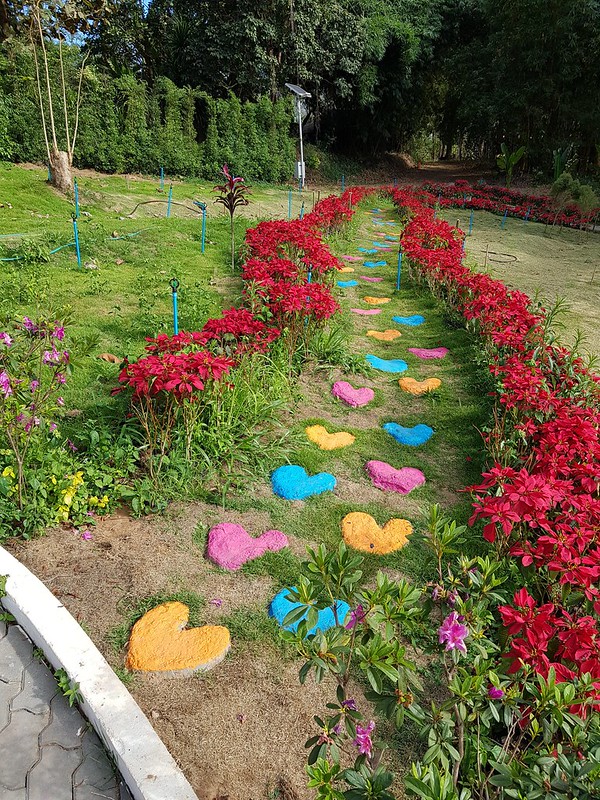

Euphorbia pulcherrima Willd. ex Klotzsch Euphorbiaceae Poinsettia-Red Poinsettia 12
Heart-shaped pavers in Phu Ruea


February - Phu Phrabat

Our second entry also has a "Phu" in it. (December's entry does as well.)

In February, we had a visit from a couple from Canada. They are friends of our co-workers and we were told that they like outdoorsy stuff. Since we have a vehicle and know about many of the outdoorsy activities to be had in the area, our co-workers made us responsible for one day's activities. So we put together as list of possibilities and presented it to our visitors. They decided to go to Phu Phrabat.

We like Phu Phrabat because it has some of the most well-groomed sets of forest trails for walking in the area. The park is considered an "historical park" and is run by the Arts and Culture ministry rather than the forestry department. That must be why the park has one of the classiest restrooms in Thailand!

The geology of the area includes some hard layers of sandstone which are underlain by softer material. This has contributed to the formation of lots of unusual rock formations. Several hundred years ago, these features were used for human settlement, either for living places, animal shelters or religious worship sites.

The picture below is from one of the most famous structures on the park. It is called Hor Nang Usa (หอนางอุสา), which means, "Ms. Usa's Tower". Nang Usa is a character in the anecdotal stories of the history of the structures.

More pictures from Phu Phrabat can be found here.

Hor Nang Usa หอนางอุสา
Hor Nang Usa - what would happen if you jumped up and down on the part that sticks out?


March - Tokay Geckos

Anybody want a pet lizard? I'd be happy to part with these cute, (no so) little, lizards. The tokay gecko is the type species of the gecko family, hence its scientific name, Gekko gecko. I like the Thai name, tookay (ตุ๊กแก) because it aptly describes the sound of this creature. Nothing like the "tookay, tookay, tookay" blasting from the ceiling from above your bed to wake you up at night.

The home of the creatures in the photo is above our front porch. They even have a trail mark from the hole where they get in and out. I would seal it, but I don't want them to die in the attic because the smell of rotting gecko bodies makes the fragrance of a dead rat like sweet perfume in comparison. Mama and papa had two babies this past year, one of which shows in this photo. They are cute, in a way, with their turquoise colored bodies covered with bright red spots. (The photo doesn't really do it justice.)
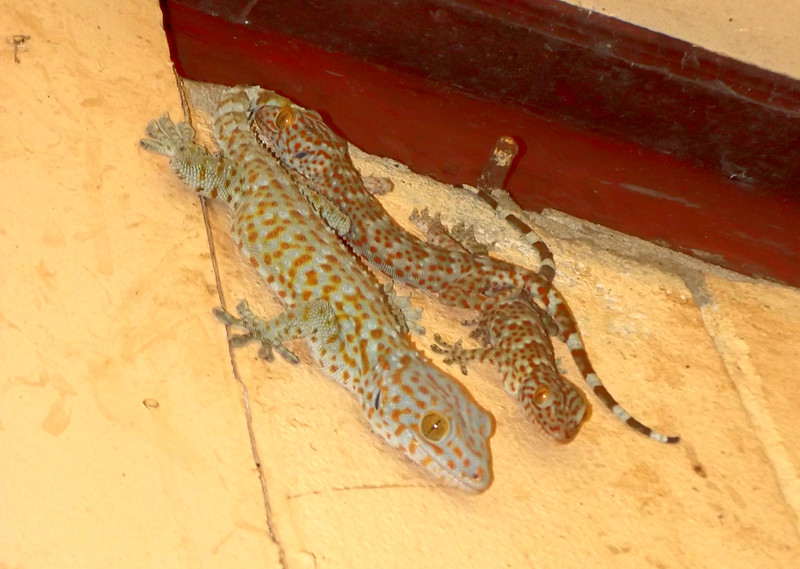
Gekko gecko (Linnaeus, 1758) Gekkonidae-Tokay, Gecko, Calling gecko-ตุ๊กแก
Calling Geckos on the wall of our house


April - Pretty in Pink

We're always in the mood for a good coffee shop. When your home is your office, sometimes it's nice to have an "away office." There are lots of chain and independent coffee shops in Thailand, but price, coffee quality and quality of internet connection vary greatly.

Sometimes on our day off, we drive north to a place called Pak Khat for dinner. Along the way there is a small town called Rattanawapi. There are several coffee shops in the town that have closed, but one day we noticed a new one, Ban Card Coffee. For a while it seemed like this one, too, succumbed to poor planning because it closed down soon after it opened (a common occurrence with restaurants and coffee shops in Thailand).  But then, to our surprise, it reopened.

The staff in this cozy establishment are friendly and they make our coffee the way we like it. Prices are good and so is the internet connectivity. And it has some cuteness value—especially if you bring along a pretty girl with an outfit to match the decor.


Ban Card Coffee


May - Dining Adventures

On most Thursday evenings, we meet a with a couple that helps lead our church, Tha and Nok. Nok is from Laos and she comes from a poor background, so she has learned to live off the land. She amazes us with the food she can prepare from whatever they caught or scrounged up in the forest on any given day.

One day, we were presented with a plate of...

   ...something.

April is the season that the termites swarm. These species of termites (Macrotermes sp.) somehow manage to acquire wings and they gather by the thousands around light sources at night. The Thai name for these, Malaeng Mao (แมลงเม่า) refers to their appearance being like a way that rice is sometimes prepared (Mao). The insects are very fragile and usually the floor under a light is covered with the bodies of these creatures, On many individuals, the wings may have already fallen off.

It is easy to gather a huge bowlful of these creatures. After pulling the wings off, they can be stir-fried and served with your meal.

Bon Appétit!
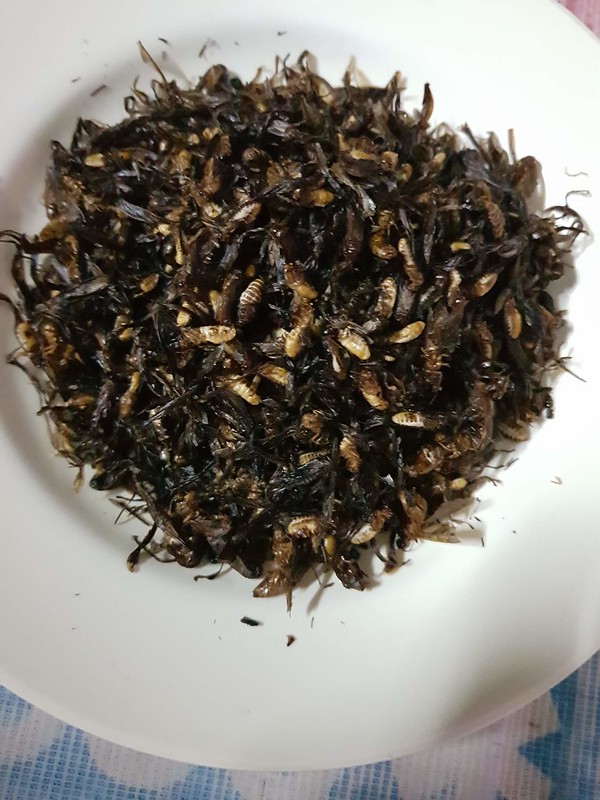

Macrotermes (Holmgren) Termitidae-Macrotermitinae-Flying termites (alates)-แมลงเม่า, ปลวกวรรณะสืบพันธุ์ 2


June - Cutting the Cord

On a steamy Wednesday morning, several of us piled in the truck and headed off to Ban Klum Pattana—a village about 14 kilometers north of the main town of Phon Phisai. We were on our way to visit some people who were interested in hearing the story of Jesus.

Our first visit was to a man who has had difficulty walking for several years due to a motorcycle accident. The second was to a woman who had an inoperable condition in her spine. In each place, we explained the gospel message to the people, then they prayed to confess belief in Jesus.

What happened next was the string cutting. Sacred strings are tied around the wrist to indicate a binding commitment. In most cases, it is as symbol of belief in Buddhism. But even some Christians will use these cords as part of a marriage ceremony, akin to the wedding ring used in western weddings. To cut the string means to say you no longer trust in the old way of doing things as a way to earn religious merit. Instead, you confess that you are now placing your trust in Jesus.

The man we visited first that day later bowed to pressure from family and reneged on his decision. The lady, however, has remained true to her new faith.

For more about family relationships and choosing Christ, click here.
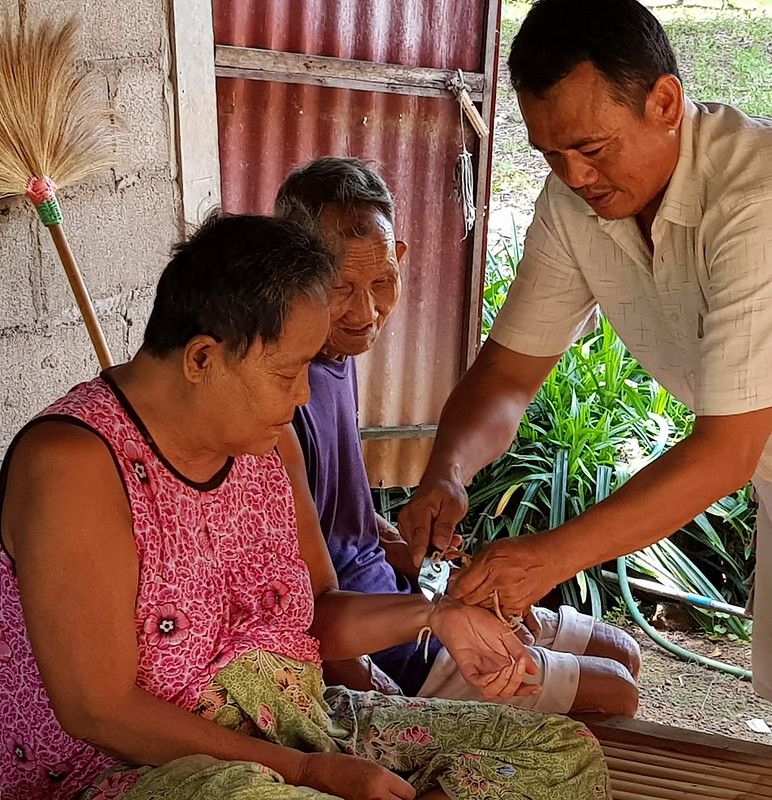

Church visits in Klum Pattana 2019-6-12 12
Tha cutting the string from Bor Wan's wrist

July - Seven Hearts

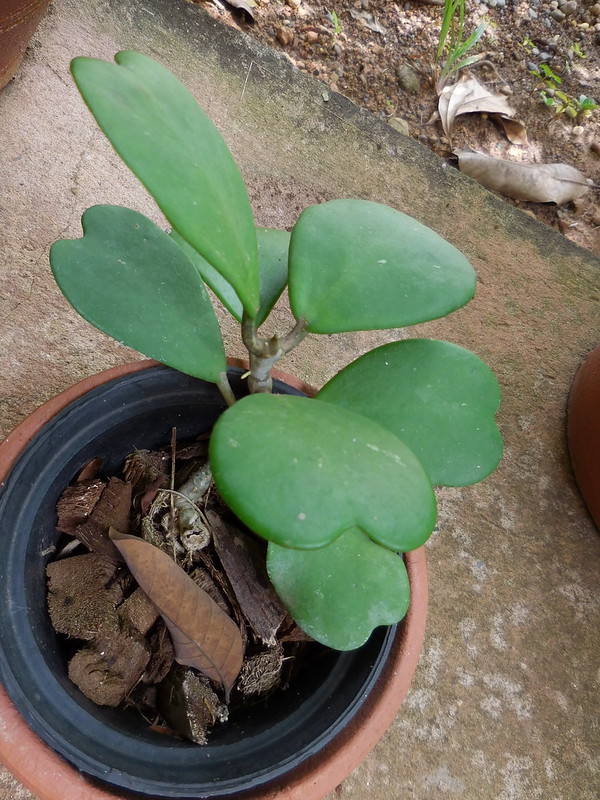
In a previous blog, I wrote about our Sweetheart Plant (Hoya kerrii), and the patience it took to wait for a leaf stuck in the soil to take root and start growing. Once the vine started growing, however, it put out new leaves relatively quickly. By July, about 11 months after it started putting out its first leaf, the Hoya had amassed seven leaves.

Seven leaves. Seven hearts.

I grew up in a family of seven, and while my parents are no longer with us on this side of heaven, I still think  of our family as a family of seven. So my Hoya with seven hearts was a symbolic reminder to me of family.

Interestingly, the vine has not made any new leaves in the six months since then. It still sits in its small pot with seven hearts attached to the vine.


Hoya kerrii Craib Asclepiadaceae (Apocynaceae)-sweetheart plant, luck heart, หัวใจทศกัณฐ์ 1


August - Celebrating Life

We had big plans for our 25th anniversary. But when the time came around, our life was full of too much uncertainty, and not much happened. So we figured, maybe we'll do something big for our 30th. But when that came around, we were in the midst of a very hectic schedule and settled for a couple of days in Monterey, California. Five years later we took a few days attached to a retreat I was on in Switzerland, but it was still not what we had in mind. So we figured we'd do something special this year.

We made plans to visit some relatives who live in Jordan, and to combine that with some visits to some Biblical historical sites.  We had most of the details figured out, but had no peace about them. "I need to visit George," I told my wife.

My brother-in-law had a rare form of cancer, and we did not expect him to be around much longer. Better to visit him while he's alive than to pay homage to a box of ashes after he's gone.

George was not very strong during our visit, but he did rally a bit and made it to church one Sunday, when this photo below was taken. I'm glad we went. A month and a half later, George opted for a better life with neither pain nor sorrow. Since I could tell his days remaining were few, I penned a eulogy ahead of time, so that he could read it. Better to enjoy the company of our loved ones while they are with us than to regret it later.


Haskin Russell 2
Enjoying our last weekend with George

September - Yung Thong Waterfall

Our wet season this past year was less than spectacular. The rains were fewer and they stopped over a month sooner than usual. Usually, September and October are a great time to visit waterfalls, because it is the end of the wet season and the rivers are at their peak.

In spite of it being so dry, we decided to visit a waterfall a 3 hour drive west of where we live. The last time we visited Nayung Namsom National Park it was dry season and the waterfall was nothing but a rock bluff.  This time around, things were slightly better. The climb to Yung Thong waterfall is challenging in some places, and we did not go all the way to the top because my knee had still not fully recovered from an injury incurred while in California the previous month. We did make it to the main viewpoint of the waterfall, though. And while the waterfall was not spectacular, as waterfalls go, if was a nice quiet day for a walk in the forest. And a bonus was that we did not have to pay to visit the park!
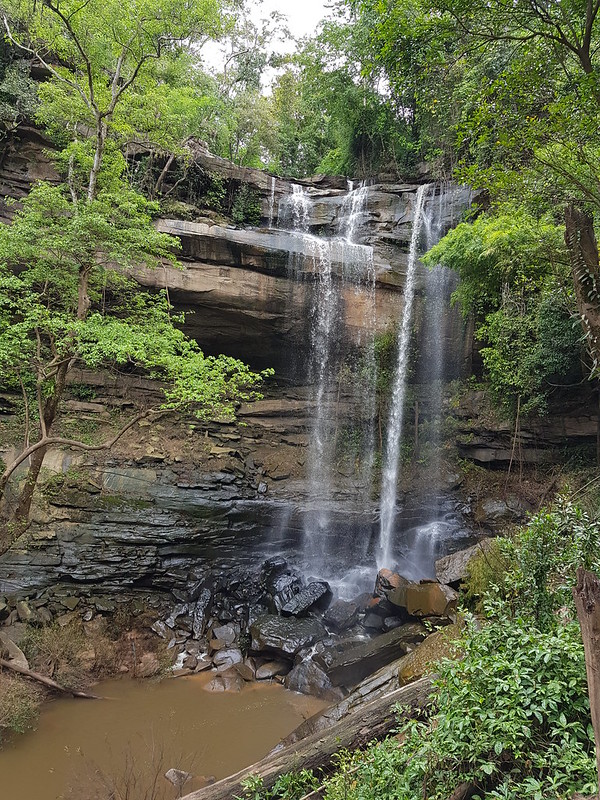

Yung Thong Waterfall 12
Yung Thong Waterfall in Nayung Namsom National Park

October - Reunion with Friends

Shortly after we moved to Phon Phisai, we made friends with the proprietor of a coffee shop in town. Yai is a man from the southern peninsula of Thailand. Yai's wife, Rung, is a police captain. Rung had recently been transferred to Phon Phisai.  They have a daughter named Khao Hom. Khao Hom came to the English / Bible story classes we had and often her mother would stay and listen to the stories as well. Rung is originally from Kalasin province, about a four-hour drive south of Phon Phisai. About once a month, they would travel there because they were working on building a house there so that at some point, Rung could move back to her hone area.

It seemed like we were just getting to know this family when Rung got a transfer to Kalasin province. Since they were the closest friends we had made, we really missed them.

The missionaries working in the Isaan region gather to pray together about three times a year. We meet in various places. We don't get to join with them all of the time because of our schedules. In October, the meeting was in Kalasin. We made use of the opportunity to visit Yai and his family. We had not seen or spoken to them since they had moved, but they were happy to see us again.
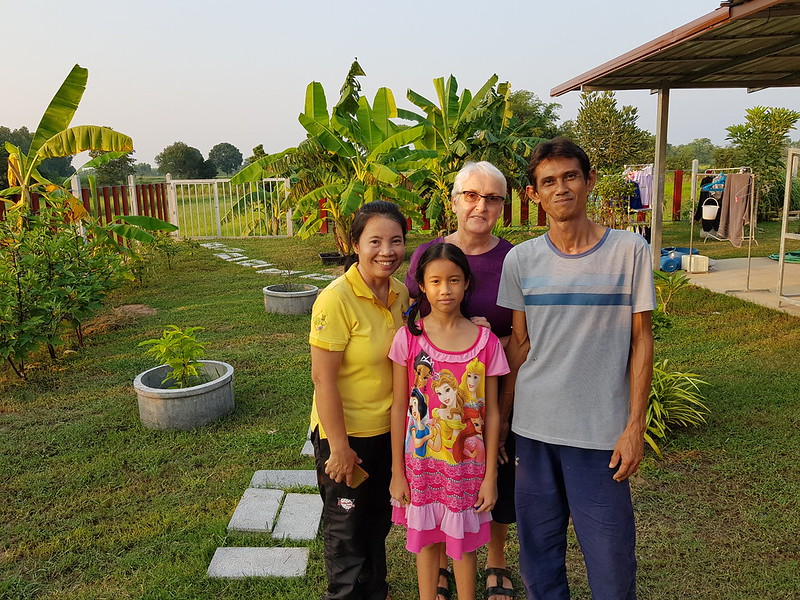

Yai Rung and Khao Hom 2
Rung Arun, Khao Hom, Ingrid and Yai by their new home 

November - Nong Ngaeng

One of my favorite bike rides is to follow some irrigation canals to a pond called Nong Ngaeng. (That's okay,  I can't pronounce it either.) The Acacia mangium trees planted along the east side of the pond provide a shady respite from the tropical sun. Often, while riding under this treed canopy, I will take a break to enjoy the peaceful setting.

November happens to be the month with the clearest skies. The rainy season clouds are gone and the smoke from burning all the forests and fields hasn't started to build up much yet. On this day, it was early enough that the morning breezes had not picked up yet and so the water was very still. The blue skies reflected in the pond made a nice backdrop for the red boat.
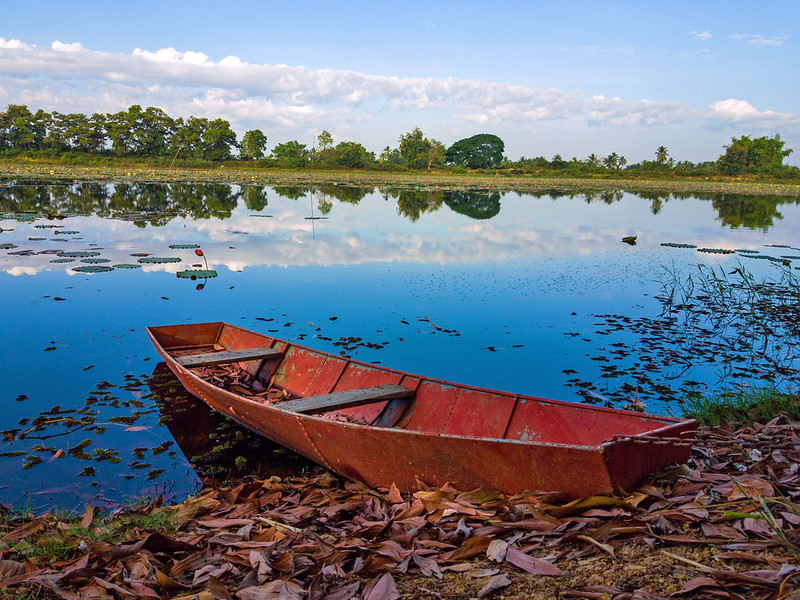
Reflections in Nong Ngaeng 4e
Red Boat in Nong Ngaeng

December - Phu Tawk

My photo for December is similar to my photo for November, last year.

In December, my sister came to visit from California. It was her first time traveling internationally by herself since her college days. Originally, she had hoped to come to Thailand with her husband, but that was not to be.

On one day during her visit, we visited Phu Tawk (variously spelled Phu Tok or Phu Thok). The skies were nice and clear and the cooler than normal temperatures made it more comfortable to climb the hundreds of stairs.

Phu Tawk is not for people with a fear of heights. Our teammate, Somdy, was with us and he was  constantly commenting about the safety of the handiwork. I've never heard of anyone dying here, so I'm guessing it must be fairly safe, even if it doesn't always look that way.

The mountain is a sacred site, and there are several shrines scattered about. They say there are seven levels, but I'm not sure how some of the "levels" are called such, except that seven is a sacred number (though 9 is more so) so it helps it the top is level 7, I suppose. Probably most of the people we saw were at the mountain as part of a religious pilgrimage, hoping to obtain special merit by making an offering  at level seven, if they make it that far (there are merit making opportunities on several of the levels).

For us, it was an opportunity to get out and get some exercise and marvel at the handiwork—not so much of the people who put all of the walkways together, but instead at the handiwork of God, who put the mountain together.

For more photos of this big, red rock, click here.
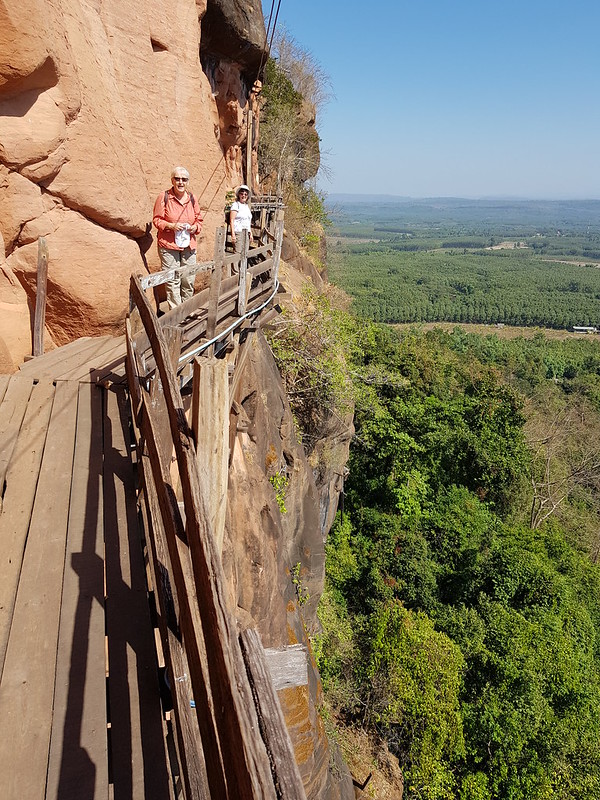

Phi Tawk ภูทอก 34
Ingrid and Dawn on the wooden walkway

December - Bonus pic


With our last wet season being not so wet, I was surprised at the number of people planting irrigated rice in the dry season. If water is less, why are we irrigating more? I've seen people pumping water in places I had not seen since moving here.

The reason for more off-season planting is that because the rains quit early last summer, the rice harvest in the area was much less than normal. Some fields were not even harvested because there was nothing to pick. Those fields that were harvested had a smaller crop than normal. For this reason, many families did not harvest enough rice to eat, let alone sell. So there is a push to get another crop in. We pray that the water supplies will last, because even the Mekong is at its lowest level Inver 50 years--and there are still several more months of dry season left.

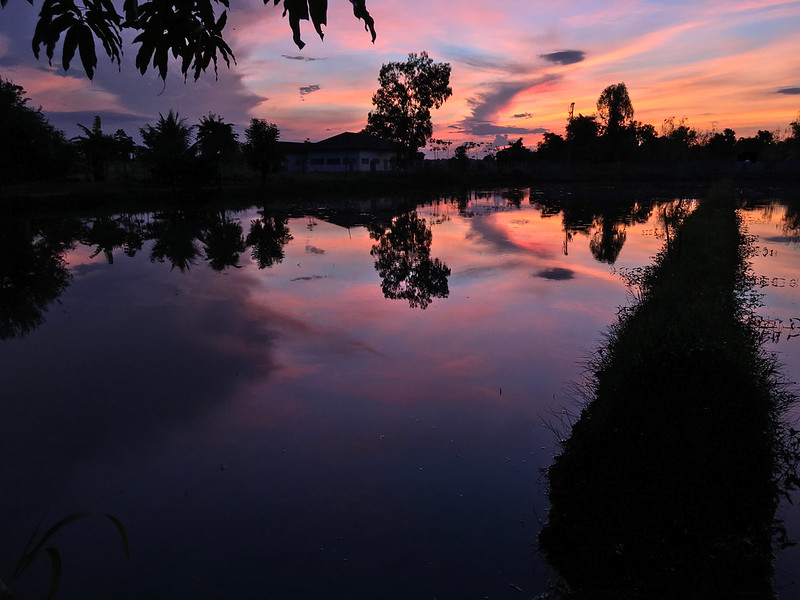
A side benefit for us, though, is that even our neighbor decided to plant a second crop. So he plowed and smoothed his paddies, making a nice reflecting pond for us, at least until the rice crop comes on. So we finish up the year having to put up with sunrise views from our house like the one below.
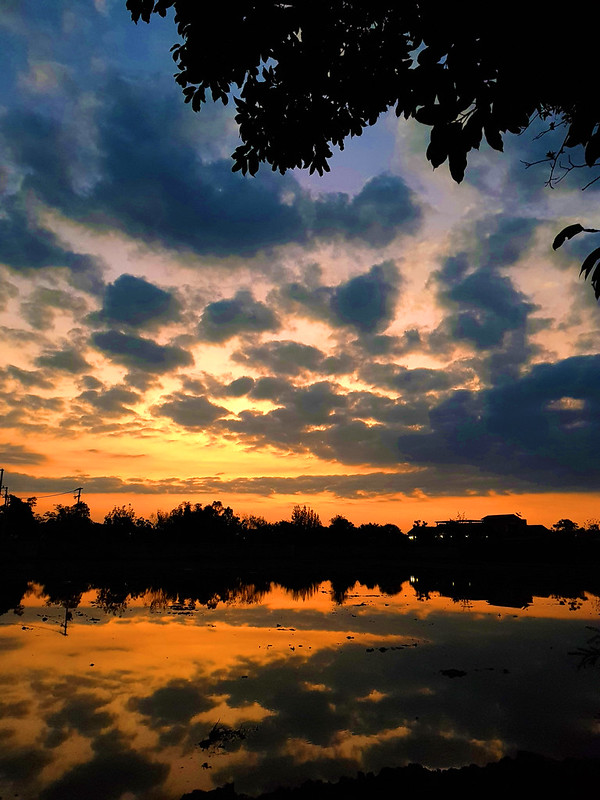

Sunrise reflections in Phon Phisai 2019-12-28 4
Sunrise reflections in the rice paddy


And so another year has gone by. Some things have gone as expected, many things have not. There have been good times and challenging times. All of which makes it a normal year.

I count it a blessing to finish the year with the same wife that I have shared the past 36 years with. Not everyone is so fortunate.

I also thank God for His faithfulness in helping get through some challenges during the year. Several times, I have wanted to give up, as my faith and strength were not up to the task. Fortunately, God is up to the task.

There is a saying that God does not give us more than we can handle. I'm not sure where this comes from, for my understanding from scripture is that God never gives us more than He can handle. As Paul writes, "We do not want you to be uninformed, brothers, about the hardships we suffered in the province of Asia. We were under great pressure, far beyond our ability to endure, so that we despaired even of life.  Indeed, in our hearts we felt the sentence of death. But this happened that we might not rely on ourselves but on God, who raises the dead."  (2 Corinthians 1:8-9, NIV)

We don't know what the coming year will bring. My prayer is that, no matter what happens, good or bad, we continue to rely on God.

Happy New Year

Saturday, February 2, 2019

Red Protection

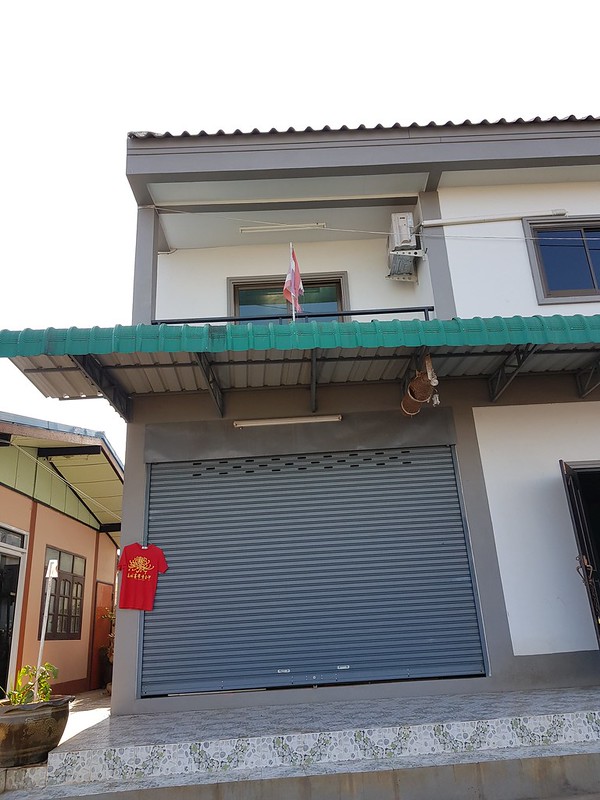
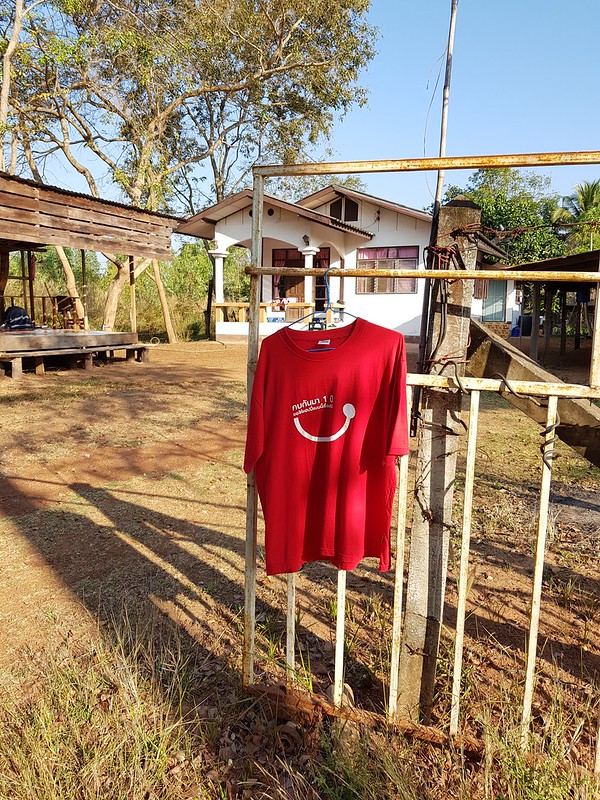
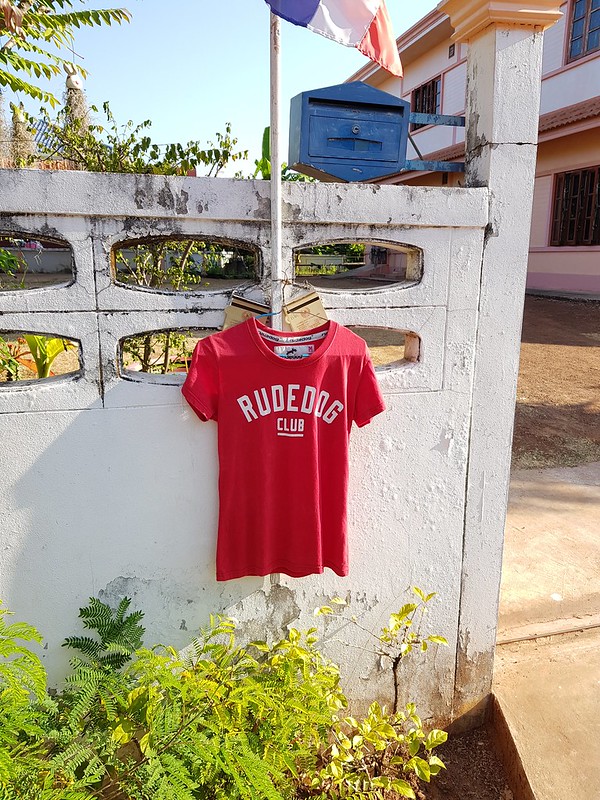
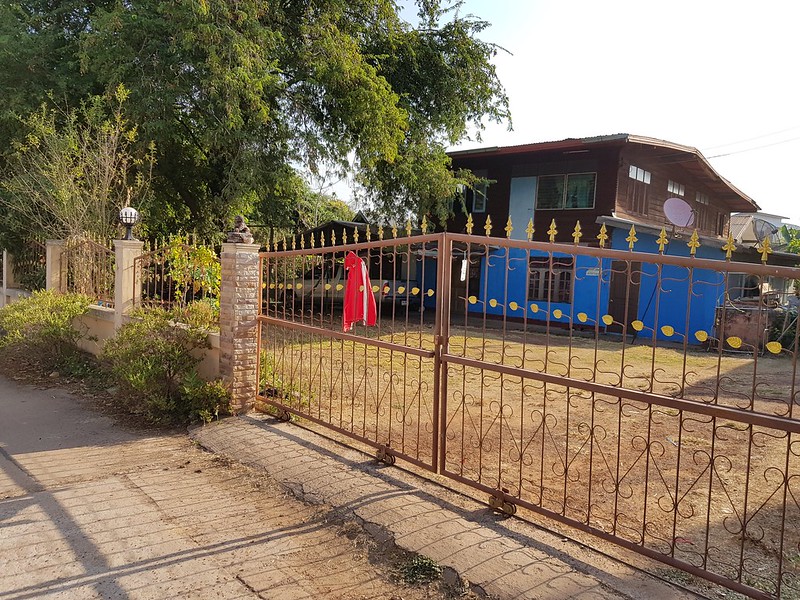
Late last week, while I was walking along the river, I noticed a red shirt suspended from someone's fence on a hanger.

Red Shirts to ward off the widow spirit-Phi Mae Mai (ผีแม่ม่าย)

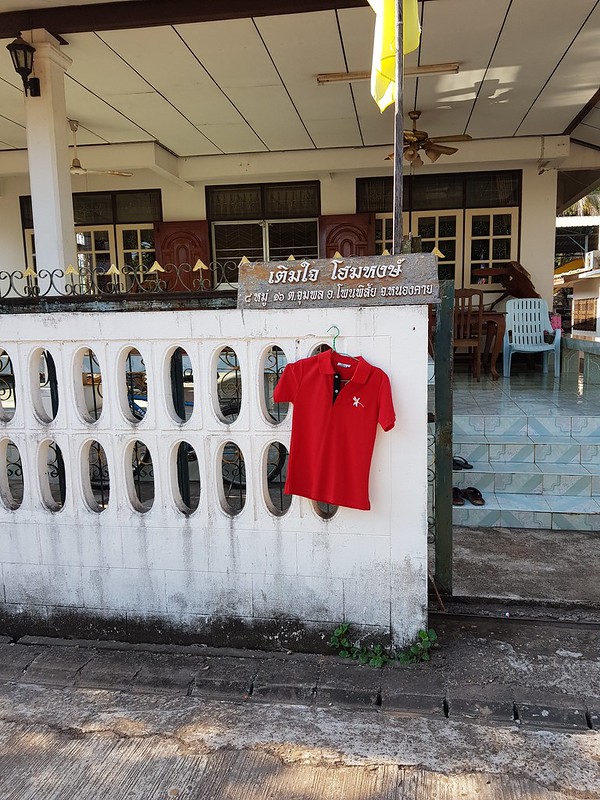
A few days later, a neighbor of ours hung a red shirt up on the fence by the gate to their property.

Red Shirts to ward off the widow spirit-Phi Mae Mai (ผีแม่ม่าย)

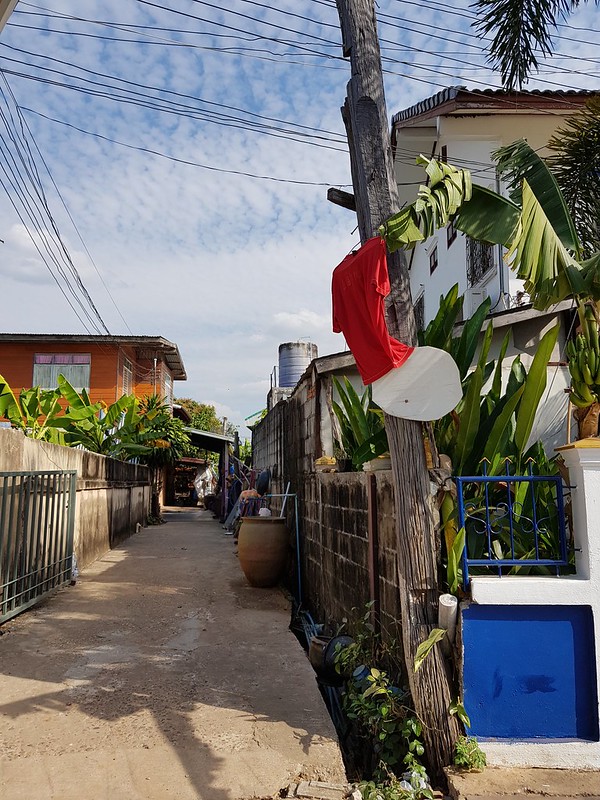
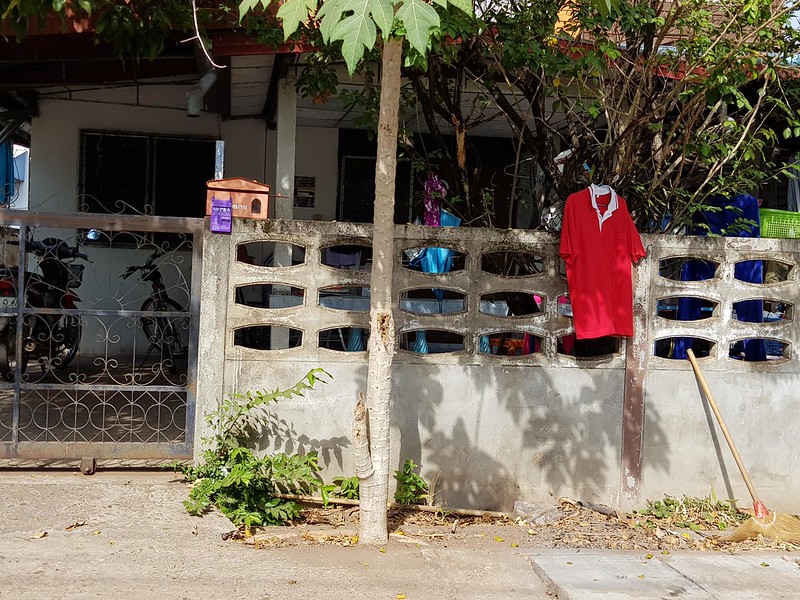
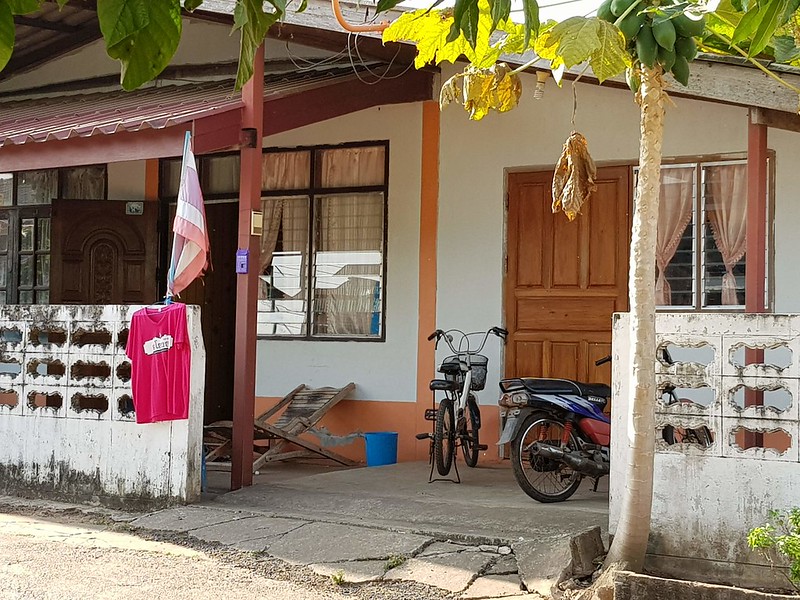
Then we noticed all over our village that red shirts were on display.

Red Shirts to ward off the widow spirit-Phi Mae Mai (ผีแม่ม่าย)


Red Shirts to ward off the widow spirit-Phi Mae Mai (ผีแม่ม่าย)


Red Shirts to ward off the widow spirit-Phi Mae Mai (ผีแม่ม่าย) 


Red Shirts to ward off the widow spirit-Phi Mae Mai (ผีแม่ม่าย) 


Red Shirt 7


Red Shirt 8

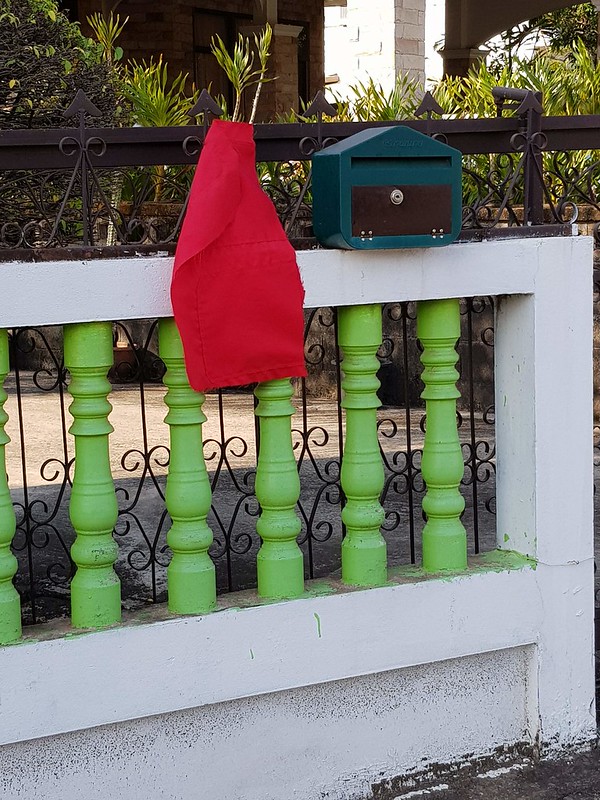
And, apparently, if you have no red shirt, you can use a piece of fabric.

Red Shirt 9

What's going on here?  Did we miss a memo?

Turns out there is a local belief in the Isaan region regarding the Widow Spirit, known as Phee Mae My.  When an seemingly fit individual dies unexpectedly in their sleep, the Widow Spirit is suspected.  Two weeks ago, in a nearby province, it was reported in the news that in one village, 3 healthy men, aged 47, 23 and 60, all died within a week's time.  When this happened, two local men recalled strange things that happened just prior to that.  One reported seeing an unusual light in the sky at night.  Another reported having a scary vision of a tall dark-skinned person.  In other reports I've read, people have reported seeing this spirit as a beautiful young woman dressed in white.

The local name for these nocturnal deaths Lai Tai, an Isaan term which roughly translates unconscious sleep death. Technically it is considered a version of Sudden Unexplained Nocturnal Death Syndrome (SUNDS).

At any rate, there are several precautions that households will take to keep the men of the house from suffering the fate of Lai Tai.  The most common and obvious thing is to hang red shirts at doorways or gates to yards.  Some will put up signs saying, "there are no men here".  Villages or individuals may put up red-painted phallic objects.  People will restrict evening activities outside of the house so the widow spirit will have less opportunity to encounter men while they are out and about.

We've heard that there have been three or four people who have died in our village that has caused people of our village to be concerned about the Widow Spirit.  The red shirts we've seen in this area have been confined to a single village.  We've not seen the use of phallic objects or signs declaring that there are no men around.

The Bible also records an instance of things being painted red to avoid death at night.  The night that Israel escaped captivity to Egypt, the people painted their doorposts with blood so they would not suffer loss when God killed the firstborn of all people and animals in Egypt. We read in Exodus 12:7 and 13:

Then they shall take some of the blood (of the passover lamb) and put it on the two doorposts and the lintel of the houses in which they eat it...
The blood shall be a sign for you, on the houses where you are. And when I see the blood, I will pass over you, and no plague will befall you to destroy you, when I strike the land of Egypt. 

Red is still able to keep us from death.  The cross was stained red by the blood of Jesus.  He was the Passover Lamb that was sacrificed for us, as we read in 1 Corinthians 5:7, "For Christ, our Passover lamb, has been sacrificed."

Because Jesus has been sacrificed for us,  we need not fear death. By his resurrection from the dead, Jesus has conquered death.

51But let me reveal to you a wonderful secret. We will not all die, but we will all be transformed! 52It will happen in a moment, in the blink of an eye, when the last trumpet is blown. For when the trumpet sounds, those who have died will be raised to live forever. And we who are living will also be transformed. 53For our dying bodies must be transformed into bodies that will never die; our mortal bodies must be transformed into immortal bodies.
54Then, when our dying bodies have been transformed into bodies that will never die, this Scripture will be fulfilled:

“Death is swallowed up in victory.
55O death, where is your victory?
O death, where is your sting?"
     1 Corinthians 15:51-55 (NLT)

We who know Jesus also do not need fear the Widow Spirit or any other spirit.  For to those who believe in Jesus, He gives His spirit, which is greater than all others.

2 This is how we know if they have the Spirit of God: If a person claiming to be a prophet acknowledges that Jesus Christ came in a real body, that person has the Spirit of God.  3 But if someone claims to be a prophet and does not acknowledge the truth about Jesus, that person is not from God. Such a person has the spirit of the Antichrist, which you heard is coming into the world and indeed is already here. 
4 But you belong to God, my dear children. You have already won a victory over those people, because the Spirit who lives in you is greater than the spirit who lives in the world. 
     1 John 4:2-4 (NLT)

We have authority over the spirits.  We do not need to be afraid of them.  We do not need red shirts to scare them away. We can go out at night without being afraid that we might inadvertently lead some demon back to our house.

19Look, I have given you authority over all the power of the enemy, and you can walk among snakes and scorpions and crush them. Nothing will injure you.  20But don’t rejoice because evil spirits obey you; rejoice because your names are registered in heaven.
     Luke 10:19-20 (NLT)

Praise be to God, because Jesus is enough...
     ...enough to free us from the power of death
     ...enough so that we need not fear the spirits.

Wednesday, January 2, 2019

Bookends 2018

How do we look at life? Are we pessimists or optimists? Are we stuck in the past or are we hopeful about the future?

For the past several years I've done a blog with photos from the beginning and ending of the year.  As I was looking through photos, trying to decide what to pick, I realized that my choices show how I look at my life.  Someone else might have chosen different pictures.  (A saying I have is: There are two kinds of journalists.  Those who are biased and recognize what their bias is--and tell others.  And then there are those who are biased and don't think they are.)

I could have done nearly-identical pictures.  On January first, we had several of the youth over from church to make fritters or, as some call them, New Years cookies.  On December 31st we were making a batch for a New Years eve service at church.  These would be people oriented photos.

But I decided to use some different photos. I'm not a great people photographer.

While we tend to choose our sandwiches based on what is in the middle, we also want to choose our bread.  So while these photos don't represent the meat of what happened this year, they are like the slices of bread I choose to put the meat between.

January 1st falls close to my birthday. I told my wife that I don't really want to acquire things for my birthday. I'd rather just go to a park somewhere.  So we decided to go to Phu Phrabat Historical Park. It turned out to be the first of three trips to the park that year.

Phu Phrabat Park is focused around some interesting rock formations that were used as housing and places of worship many, many years ago.  There are even red-colored petroglyphs which have a character similar to those I would see in the American west.  If you want to see that side of things, as well as photos of the fancy restrooms, check out my flickr album from the park.

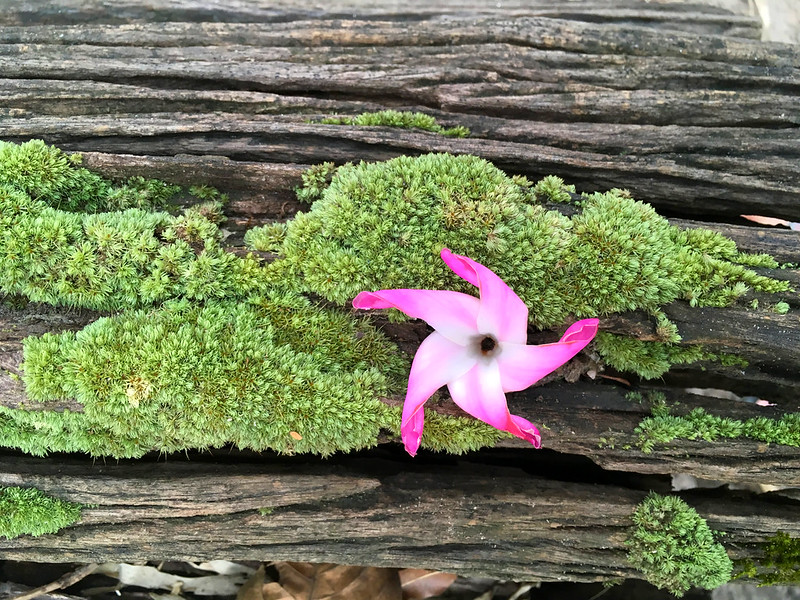
What I like about the park are the nice walking trails with varied scenery.  It just happened to be the season that some of the dipterocarp trees were blooming.  I picked up a blossom and stuck it in a mossy log, because I like the color contrast.

Dipterocarpus obtusifolius Teijsm. Ex Miq. Dipterocarpaceae-ยางเหียง
Dipterocarp flower on mossy log


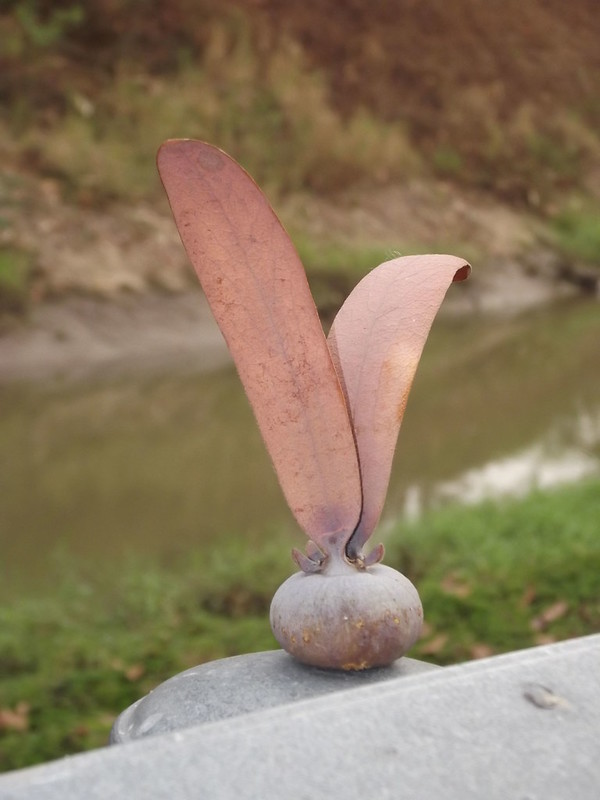
Dipterocarp trees were once very common in northern and northeast Thailand.  They grow in humid climates with long dry seasons.  They don't seem to be bothered by the fact that it doesn't hardly rain for six months.  They just drop their leaves to cope with the dry season much as trees where I grew up would drop their leaves to cope with the cold.  There are many species in the plant family Dipterocarpaceae.  Most have winged seeds; the seed pictured below is the same species as the bloom above.  We big kids sometimes enjoy throwing them in the air and watching them helicopter down.


Dipterocarpus obtusifolius Teijsm. Ex Miq. Dipterocarpaceae-ยางเหียง
Dipterocarp winged fruit

Most species of the Dipterocarp genus get quite tall and the branches tend to be clustered at the top. This can make recognizing species difficult because it is often hard to see the leaves on the tree-you have to look at leaves and flowers that have fallen to the ground.

One thing that is nice about the Isaan region (as opposed to central or northern Thailand) is that the farmers often leave native trees in their rice paddies.  So one sees perhaps more of the big giants that used to cover the region before they were all cut down to put in farms.  Sometimes I'll even see masses of the pink flowers that have fallen off a tree onto the road.

Which brings be to the photo for the end of the year.

While many of our Canadian friends and relatives might be whining about the cold at this time of year (I would be if I was there), here in Thailand we are enjoying the cold winters.  It's nice when the temps drop into the 60s (15-20 C) at night.

While I tend to ride my bicycle all year round here, it is perhaps most enjoyable in the winter.  And so I found myself doing a leisurely bike ride on New Years Eve day.  This day I was staying on the dirt roads as much as possible because of the very busy highways during the New Years Holiday season.

My trip this day brought me past an old oxbow of the Huai Luang river that they put a dam in to form Huai Kan Lueang Reservoir.  The reservoir is on both sides of a minor highway and right now they are excavating dirt on one side to make it deeper and using the dirt to fill in the other side.

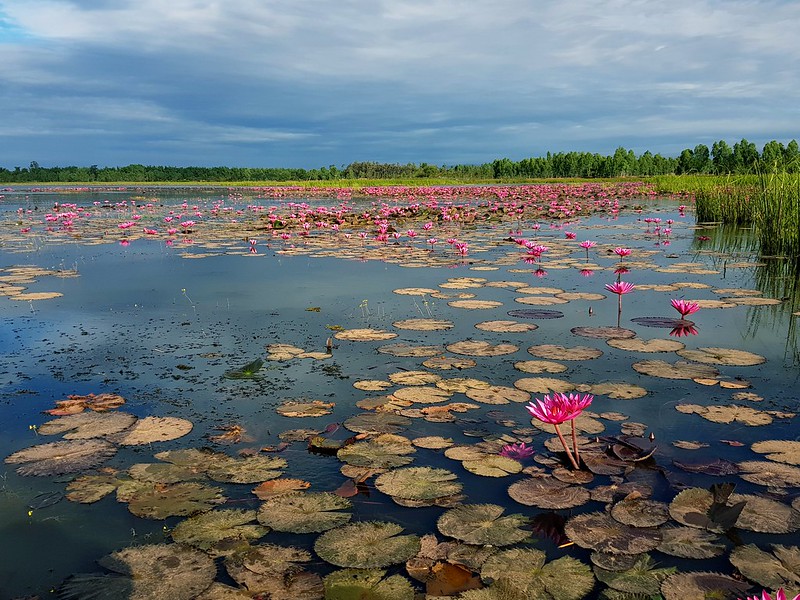
A consequence of this dirt fill operation is that I can now get up close to water lilies that used to be in the middle of the swamp.  On this morning, it had started out cloudy, but the clouds were moving off to the west so the flowers were in the sun.


Nymphaea lotus  Nymphaeceae - Water lily, บัวแอง
Pink water lilies


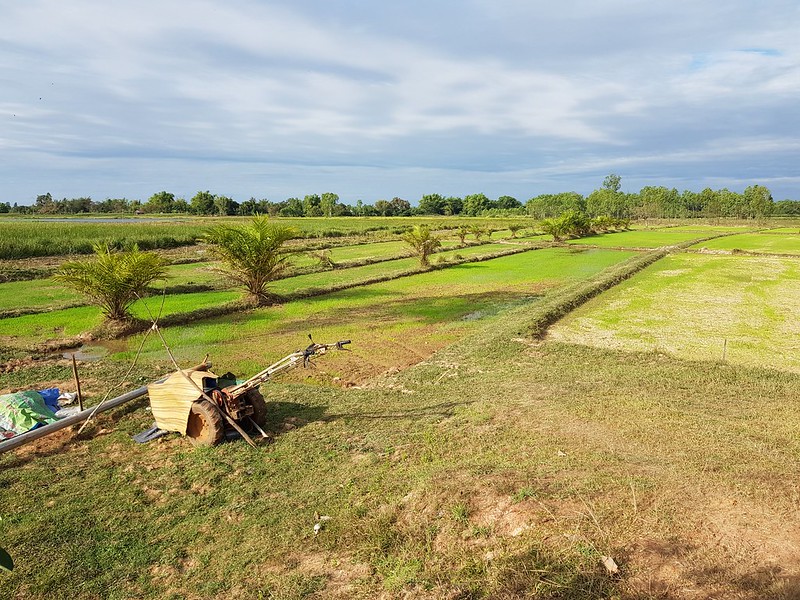
The water levels in Huai Kan Lueang have dropped considerably since wet season.  As the water levels drop, some of the area is used to grow rice, as pictured below.

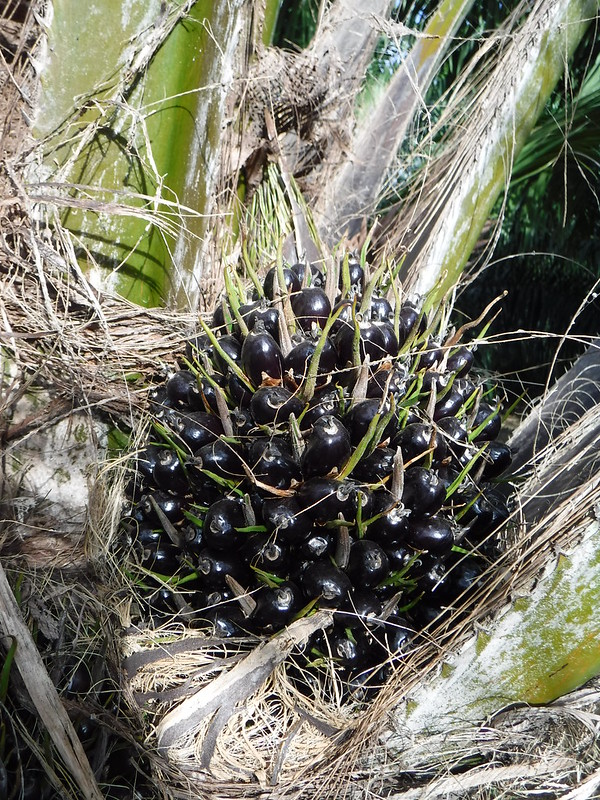
Ironic that this area was under water a few months ago. Now the farmer is using his tiller motor to drive a pump to irrigate his rice paddy.  Along one of the berms there are palm trees.  These are oil palms.  The fruits are are crushed to extract the oil. There is a significant acreage planted to oil palms in this part of Thailand.

Rice paddies in Phon Phisai 2
Rice paddies and oil palms


Elaeis guineensis Jacq. Arecaceae Palmae-oil palm, ปาล์มน้ำมัน
Oil Palm Fruits


And so my year has brought me from the forest to the field and lots of places in between.  But when I woke up on January 1st of this year, I was happy that some things did not change.  I woke up next to the same wife.  The sun rose again like it has everyday.  And God's great love for us was still there.

God showed how much he loved us by sending his one and only Son into the world so that we might have eternal life through him. This is real love—not that we loved God, but that he loved us and sent his Son as a sacrifice to take away our sins.  1 John 5:9, 10

Jesus Christ is the same yesterday, today, and forever. Hebrews 13:8


Saturday, July 28, 2018

Backswamp

You can take the soil scientist out of the dirt but you can't take the dirt out of the soil scientist.

Monsoon season.  That's a fancy term for a seasonal rainy season.  Practically it means that for part of the year, it is very wet.  Add to the normal rains a tropical storm pushing in from the east and, well, its kind of soggy in Phon Phisai right now.

To our regional climate we will add some humans.  Humans often began to settle in areas that were near rivers.  It made sense.  Rivers were transportation channels and a source of food.  Phon Phisai is on the confluence of the Mekong River and a smaller river called Huai Luang. It was a good place to settle.

Now we'll add s small geomorphology lesson.

Geomorphology is the study of landforms.  A typical landform associated with rivers and streams is a floodplain.  A floodplain generally has two main parts:

The levee is a relatively high part of the floodplain located adjacent to the river. The soils here are generally coarser (e.g. sand and fine gravel).

Adjacent to the levee is the backswamp.  This is a relatively lower position. The soils here tend to be finer-textured (e.g. silt and clay).


When we combine landforms, climate and humans, we can get some interesting results.

Because the backswamp is lower, it tends to be wetter. And because the soils are finer-textured, they hold onto water longer. As a result, when people would build adjacent to a river, they would often build on the levee, as opposed to the backswamp.

But as villages grow, people need a place to build, so they will often fill in areas of the backswamp and build there.  In some places there are grading ordinances and such regarding the filling of low areas.  Here in Thailand, if there are such rules, there is no obvious indication.  And people don't seem to think much about what happens to the water that falls on the landscape.

So the basic rule is, if I am going to build, I need to build higher than what is around me.  If I build next to someone who has built already, I just need to build higher than them.  If the water that falls onto my place goes onto their place, well , that's not my problem.

The house we are renting, like many other houses in Phon Phisai, is built on a backswamp.  There are a lot of areas that have been filled in, but some low areas remain that are generally used for growing rice.  However, the field adjacent to us has been filled in on all sides and is the recipient of much of the runoff from the filled in areas.  The only way for the water to get out of the field  is through a small culvert that drains to an area where the water is impounded to protect other fields. The lowest part of that field is so wet, they can't even grow rice, though they tried last year.  So last year we had this beautiful reflecting pool next-door. This year it is just aquatic weeds.

Sunrise in Phon Phisai 2017-8-13 14
The Field Next Door - Last Year
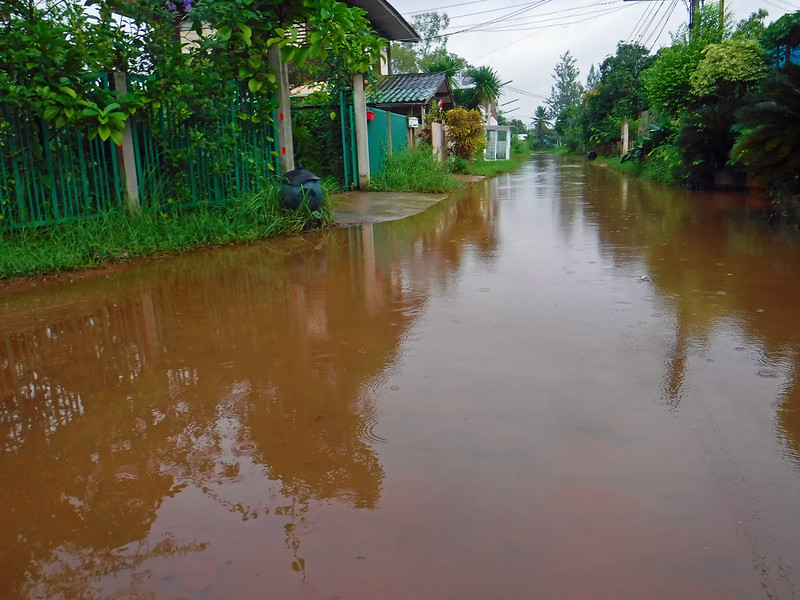
Most of the houses are built up higher than the street, so the street is subject to flooding.

Road flooding
Our Street
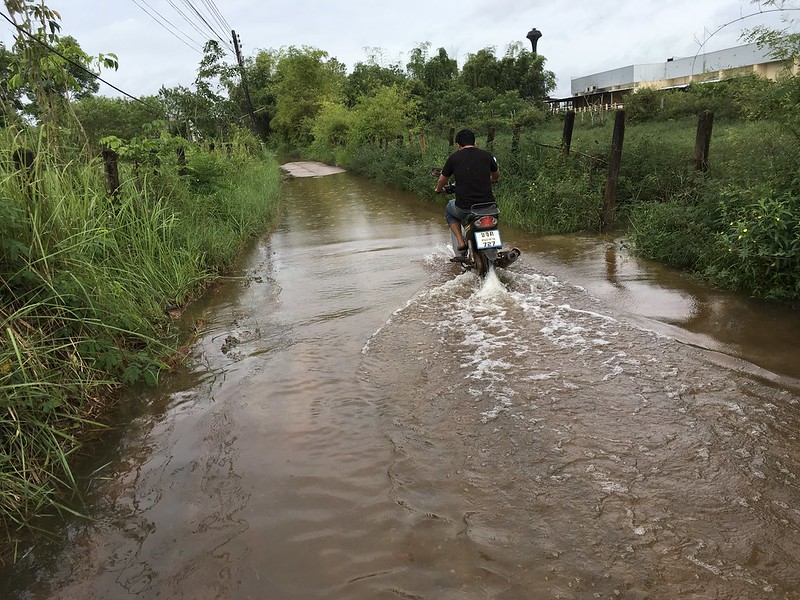
Most of the water on our street clears off a few hours after flooding.  However there are some nearby streets on the same landform where the the water has no place to go.  I was out for a walk earlier this week and when I came to this, I decided to try a different route.

Flooding on streets of Phon Phisai
Phon Phisai or Venice?


But flooding is not the only problem we face.  As I mentioned earlier, most of the houses are built on fill. Most the the soil they use to fill with is fairly clayey.  Not the greatest stuff to build on, but it is what they have.  And they don't engineer the fill, they just dump it.  So the houses are built on unstable fill on top of mushy soils.  Unless someone goes through a great effort to put in decent footings (not so common), the houses tend to crack with time.  The house we are renting is less than 10 years old, yet there are several full length cracks.

Glad we don't have earthquakes

 
Because I used to have a job making soil  maps, I tend to think about these things.  When we bought our first house in Bakersfield, one consideration I had was whether it would flood if one of the dams on Lake Isabella gave way.  (A geologic fault line runs between the two dams on the lake.)

Jesus taught us that we should think about what we build on as well:

The people who come to me, who listen to my teachings and obey them—I will show you what they are like: They are like a man building a house. He digs deep and builds his house on rock. The floods come, and the water crashes against the house. But the flood cannot move the house, because it was built well. (Luke 6:48 ERV)


If we want our lives to be strong and endure, we need to  build them on the right stuff.  And the stuff to build our lives on is the teachings of Jesus.  Jesus spoke the words above after giving what is called "The Sermon on the Mount."  That body of teaching contains some things that are very difficult to practice.  Yet, it is in the doing of these things that make for a strong house.

I pray for strength and wisdom from the Holy Spirit to embrace the teachings of Jesus in my life and I am thankful for the grace that comes through Christ Jesus when I fall short. I want my life to not be like a poorly built house on a backswamp.