Sunset Over the Mekong River

Showing posts with label family. Show all posts

Tuesday, July 28, 2026

Why Are You Here Today


Notes for a sermon preached at Butler Church in the Faith Community congregation (6/22/2025) and in the Common Ground congregation (8/3/2025).

Good morning, everyone. When I looked at the preaching schedule for this week and saw who was lined to speak at our services this morning, I was thinking this would be a good day to worship with Faith Community. But since you all are here, perhaps it is good that I showed up too. I was asked if I could preach here this morning, but I’m not really a preachery kind of person. I’m more used to teaching where there is discussion. Where there are questions and answers. So, if at any point you have a question or a comment, you can raise your hand.


To start this off, Who is willing to share their answer to the question: Why are you here today? Why are you gathered in this place on this Sunday morning instead of going on a picnic or hanging out at the beach? There is no right or wrong answer. I’ve got a microphone we can use so everyone, including those listening online, can hear. Why are you here today?

(Time for answers)

The reason I ask that question is that it is the first thing that came to mind when I read the passage that I was asked to talk about this morning: Acts 2:42-47.

42 And they devoted themselves to the apostles’ teaching and the fellowship, to the breaking of bread and the prayers. 43 And awe came upon every soul, and many wonders and signs were being done through the apostles. 44 And all who believed were together and had all things in common. 45 And they were selling their possessions and belongings and distributing the proceeds to all, as any had need. 46 And day by day, attending the temple together and breaking bread in their homes, they received their food with glad and generous hearts, 47 praising God and having favor with all the people. And the Lord added to their number day by day those who were being saved.

Before I begin talking about the content of this passage, I wish to point out that this passage is descriptive, not prescriptive. In other words, it does not make any commands about normative church practice, but it does gives us examples about how things were done in order that we might learn from them.

Another thing is that my thoughts on these few verses are not meant to be an exhaustive exposition of the passage, but just a few gleanings that I chose to speak about. I put the message together—I get to choose.

These few verses are transitional. They serve to summarize the earlier verses in chapter 2, and they set the stage for the events that are going to happen in the rest of the book of Acts.

Earlier in Chapter 2 we read about the Holy Spirit coming down upon the believers on Pentecost Sunday, which we celebrated back in June. Who remembers what Pentecost Sunday was about? Who remembers what the word Pentecost means? Now Pentecost, or the Feast of Weeks, was one of three occasions during the calendar year when all adult Jewish males had to come before God at the place that He chose. The three occasions were Passover; the Feast of the Harvest also known as the feast of weeks or Pentecost; and the Feast of the Ingathering also known as the Feast of Booths. You can read about these in Exodus 23 and 34 and other places. So, there were only three regularly scheduled times of the year when all the Jewish men had to “go to Church,” so to speak. (Scripture does not mention women and children as having to go, but I imagine that many times these were family pilgrimages.) There also might have been other occasions when people had to travel to the tabernacle or temple to fulfill vows or make some other kind of offering during the year

It just so happened that God chose one of these occasions to pour out His Spirit on the believers—a time where Jewish men from all over the known world would have gathered in Jerusalem. As a result of the sermon that Peter preached that day and the work of the Holy Spirit, some 3,000 people came to faith. So now the question is, What’s next? What does this new group of believers do? What is the Church going to look like on a day-to-day basis? Though I should point out that the term church is not used here, that word first appears in Acts a couple of chapters later. Acts 2:42-47 begins to answer that question. I stress the word begins, because the church is a new thing, and the whole of the rest the book of Acts is devoted to this topic.

The first thing that grabbed my attention when I re-read this passage was that these new believers started meeting together. They met in a big group in the temple. They met in people’s homes. Why? Who told them to do this? We don’t see anywhere that God commanded or directed these people to meet together.

I find it interesting that one of the great commandments that is taught in churches is, “Thou shalt go to Church on Sunday.” Yet nowhere in scripture are we told to go to church. In fact, that phrase wouldn’t have made any sense to the believers of the early church, because the church was never a place, it was a people. The Biblical word for church, ekklēsía, refers to people who are called out to assemble together. And why do we need to be told to “go to church”? Here we see the newborn church meeting together without any command to do so.

When I was young, I was very self-centered and did not socialize well with people. I never scored well on “plays well with others.” I took up smoking when I was 14 and started partying not long after that. But when I was 17, I got hoodwinked into attending a Christian youth group. I figured it was only once, so I could put up with it. But then I met a group of people who had been touched by the love of God and that love flowed out of their lives. Even though they had every reason not to welcome someone like me into their midst, they welcomed me. I kept going back, and after a few months, I decided to become a follower of Jesus.

At that point, all I wanted to do was be around these Jesus people. I wanted to be in that culture where God’s love was so evident, and I wanted to grow in my newfound faith. No one had to tell me that as a believer I had to fellowship regularly with God’s people—it was what I wanted to do. Every opportunity I had, whether it be a Bible Study or an activity night, if I was free, I was traveling to this next town over to be with these people.

But we’ll come back to this.


Another question I have for you today is this: of the following two things, which do you think better represents what the church should be like: a school or a family. Who thinks a school represents the church better? Who thinks family represents the church better?

Most people consider that the church should look more like a family than a school, but when we gather, we are often sitting in rows, looking up front at the teacher, much like a classroom. Though back in my day the teacher would have a wooden pointy stick to point at the blackboard, and which would also serve as a veiled threat against potential mischief makers. Now all I have is this little clicker thing—doesn’t do much for crowd control. Anyway, I don’t think this is what Jesus had in mind when He said He would build His church.

Many people refer to their church as a family. Why is church often viewed as a family? When we moved to Fresno, we eventually joined Butler Church. It is the first Mennonite church we have been a part of. Now maybe many of you don’t know about the history of the Mennonite Brethren church, we certainly didn’t when we started coming here.

I did not grow up around or anywhere near Mennonite communities. I had heard of Mennonites, but really knew nothing about them. I first encountered some Mennonites when I was in training for a short term mission in Ontario. There were a couple of Mennonite women there, one had the last name Dyck, which I thought was odd, because it was spelled with a “y”. The other had one of the most unusual last names I had ever heard: Warkentin. Unusual, I thought, until I visited her in her hometown of Abbotsford and looked in the phone book and saw column after column of Warkentins in the fine print. I looked up Dyck with a y, too. Same thing.

Shortly after joining Butler Church, we were hosting a small group at our home. There were some couples there who had a long Mennonite Heritage. The first night we introduced ourselves to each other. Anyone want to guess what game they played? That’s right, they played the Mennonite Name Game. For those of you who are unfamiliar with this game, it is when two or more Mennonites get together and try to figure out if they are related and how, or if they have any historic family connections and where those happened. This was something new to us. It turns out that some of the people there had common connections in a place called Corn, Oklahoma. Corn. Is that really a place? I thought they were playing games with us newbies to the Mennonite World. But it turns out Corn does really exist—turns out about 500 people call it home and it has a Baptist Church and an MB Church. It was in Corn, Oklahoma back in 1951, where the first tornado was captured on video in the US. Anybody here have family connections that go back to Corn?

While we do not have a Mennonite heritage, my oldest brother is really into genealogy stuff. If he meets someone with whom he will have more than just a passing relationship, he will try to figure out how they are related. He even knows his relationship to his wife—she is his 10th cousin twice removed—whatever that means. I think the fact that she is his wife is more important. And they’ve been together over 50 years and he hasn’t removed her yet.

Why do people care about such things? I think it is because we are longing for connection with others. We want a sense of belonging. We want to feel part of something bigger than ourselves. And if you’re keeping track, that is my first point—healthy families are characterized by a sense of belonging.

When I became a believer, it was like I was an orphan who was adopted into his forever family. I had this connection with other believers, not by the blood that flows through our veins but by the blood of Jesus that flowed down from the cross. And this forever family has been very important to us, especially as we have lived most of our lives far from our siblings and parents. And so, we have been welcomed into homes all around the world because we are part of the family of God.

Perhaps this was one of the things that was going on in this passage in Acts. We have a bunch of people who are far from their homes—far from their families—and now they have found a new family in the assembly of believers in Jerusalem.

If we have grown up in church culture, we can take this sense of family for granted. After all, we belong to a local church, which is part of a regional conference of churches, which is part of a national group of Mennonite churches, which is part of a global family of churches. And if we are ethnic Mennonite, we may also share a last name with many people in those churches.

But in minority-Christian cultures, that sense of belonging is not as well entrenched. If you are one of only a handful of believers in a province, you can feel quite lonely. This was the case in Thailand.

Family Camp


Each year in Thailand, the Mennonite Brethren churches get together for family camp. When we think of family camp in North America, we think of a camp that families attend together as opposed to something like a youth camp or a men’s camp. But the meaning in Thailand is a bit broader. It is a time when a family of believers get together. This is a very significant time for them. The believers are encouraged to see that there are many other people in Thailand who love Jesus. And they are also excited to hear about how there are many such people all around the world. They are not alone. They belong to a big family.

Healthy families are characterized by Belonging, and this was an important characteristic of the early church, but we often don’t think about it, or we take it for granted.

Sharing

Growing up, my family lived around the corner from my mother’s brother and his family. My dad and my uncle had been friends since before they each got married. They went in together on buying an extension ladder. Most of the time, a section of the ladder was at each of our houses. But if the need arose, we would walk down the street to borrow the other half—though it took a lot of effort to carry those heavy, wooden, twelve foot ladders down the street. And how many times do I remember going to see my aunt to borrow some item needed for cooking, or fetching such a thing from our cupboard when one of my cousins came asking for it.

Families share resources.

This connection between families and sharing resources affected our ministry in Thailand a great deal. In Thailand one’s family and one’s village (which would include a lot of extended family) provide for their socio-economic security. If you run into problems, these are the people that will help you out. You look out for your own family. One of the things that kept people from coming to faith in Thailand was that they might get kicked out of their families if they became believers and they did not want to give up the security that it represented.

It is not surprising, then, that often we would see the most rapid church growth among those lacking in familial connections—those who don’t have a well-established socio-economic support system.

If the church is going to grow in Thailand, it needs to make up for the security people may lose from their earthly family.

This sharing of resources should also be true of God’s family. We read in Acts 2:44 that the newborn church had all things in common. The expression in common comes from the Greek koinos, which is the root of the word for fellowship in verse 42, Koinonia. Koinonia is typically translated as fellowship, but, as John Stott writes:

Thus koinōnia is a Trinitarian experience; it is our common share in God, Father, Son and Holy Spirit. But secondly, koinōnia also expresses what we share out together, what we give as well as what we receive. Koinōnia is the word Paul used for the collection he was organizing among the Greek churches (Romans 15:26; 2 Corinthians 8:4; 9:13), and koinonikos is the Greek word for ‘generous’.

Koinonia is about sharing—sharing lives and sharing resources. People sold belongings to help others. People shared their lives over food at the dinner table. This sharing would have contributed to the family-like atmosphere that made this group seem so inviting. Being family means using one’s resources to care for others in our family.

Just like the new believers wanted to spend time together, we don’t see anywhere that they were commanded to do this. It seemed to come natural to them that sharing resources was something they should do.

In Christian circles, we will often say that “our” possessions are actually God’s. But how well do we live that out? In Thailand, we had two vehicles—a pickup and a small car. On many occasions, God would have us lend one of them out for extended periods. After all, they were God’s cars, and our willingness to do this opened up opportunities to share the gospel, because people saw that we treated them like family.

But it wasn’t always so easy let go of ownership. One time we had a group visiting from Laos for a few days. They asked to borrow my guitar, so I let them. When they returned it, I noticed it had suffered quite a bit of abuse in those few days. I remember being upset because they had damaged “my” guitar.

Do people see Butler Church as a place where their physical and emotional needs can be met? How loosely do we hold “our” possessions. Are there people around us who lack meaningful family relationships that can help provide for their needs?

Because Healthy families share.

Growing

Another characteristic of healthy families that we see in this passage is that they grow. Family members and families grow in two ways. They grow in maturity, and they grow by multiplying.

The family is to be a place of learning. Most of what we learn is not taught in school, but is taught in the home. New believers are spiritual infants, as Peter writes: Like newborn infants, long for the pure spiritual milk, that by it you may grow up into salvation. (1 Peter 2:2, ESV) Part of the task of our church family is to help us grow from newborn babes to functional adults. But how does that happen? One way we learn is through actual instruction. We are even taught in scripture to do this.

Psalm 78:5-7
  5 He established a testimony in Jacob
    and appointed a law in Israel,
  which he commanded our fathers
    to teach to their children,
  6 that the next generation might know them,
    the children yet unborn,
    and arise and tell them to their children,
  7 so that they should set their hope in God
    and not forget the works of God,
    but keep his commandments;


But most of what we are taught, we learn by example. When I saw my dad brush his hair, I wanted a brush so I could do the same thing. I learned how to remove stubborn bolts when he showed me the trick to loosen spark plugs without breaking them. I learned how to treat all people with respect when we welcomed people of different colors and cultures into our home. We weren’t just told what to do, we were shown how to do it.

Suppose a father tells his son that he should not go out and get drunk. But every Friday after work, the dad goes out with his buddies and comes home drunk. What two things is this father teaching his son? Some might say he is teaching him both that he shouldn’t get drunk and that it is okay to get drunk. But what he is really teaching is that it is okay to get drunk and that his words carry little weight. We teach mostly by example, and our words should reinforce that example.

I remember asking one of the parents in our church of they could help teach. This person said they couldn’t teach because they weren’t a teacher. But if you are a parent, you are a teacher, though you may not be a very good one.

In these verses in Acts 2, we see the believers spending time together. I’m sure the believers did more than just share a meal when they met in people’s homes—this is when they could talk about what’s going on in their own lives and how they can live more like Jesus. And new believers could see how the Christians actually lived their lives on a day-to-day basis. The new believers could see if the behavior of the disciples matched up with what they were teaching in public.

As a church family, how intentional are we about raising healthy children? Do we just hope that by attending church on Sundays it will be enough for them to mature as Christians? Or do we take time to meet with new believers and mentor them. Does our behavior correspond to the things we say when we gather on Sunday?

Still another way families grow is in numbers. People have children, who have children.

In the same way, the church should grow numerically. The challenge for us is how do we continue to grow as a healthy family? How do we adopt new family members in the midst of a community that looks and speaks less and less like we do?


We read in Acts 2:47:
praising God and having favor with all the people. And the Lord added to their number day by day those who were being saved.

We see in this verse that it was the Lord who added to their number each day. But it is not like the church did not have a role. One role they played was through their teaching. But another important role was to behave in such a way as to have favor with all the people.

Often, in our church outreach programs, we focus on getting people in the door—getting people in the door of the church building as if we can somehow trap them into becoming part of our family. But the picture I see here is not inviting someone into a building but rather inviting them to the table. Inviting them to be part of the family.

There may be some reluctance when we invite people to meet our family. I think of the young men and women who invite their significant other to meet the family for the first time. It can be a scary thing. If you meet your possible future son-in-law carrying a shotgun, you probably won’t see him again.

The picture I see here in the book of Acts is like going to a restaurant and seeing that table that you would like to be a part of. Did you ever see something like that? Maybe it’s the joyous laughter that catches your attention. Perhaps it is a person talking while the other person actively listening. Or maybe it is just the interesting conversation taking place. You can see, feel, and hear the love that the people at the table have for each other. It is something that makes you want to get up from your own table and go join theirs.

Church Family Gathering


This method of evangelism means being at the table that other people want to be a part of, and then inviting them to join you. Are we this kind of family? Do people know we are disciples of Jesus because of the love we have for each other as we read in John 13:34-35? Does our light shine before people, so that they see our good works? (Matthew 5:16) And if we invite new family members to our table, are there any changes we need to make so that they feel at home? Or do we just say that you’re welcome here as long as you conform? Is the love that our family members share for each other evident to those on the outside and make people feel like this is a family they want to be a part of?

Closing

To summarize, the church is a growing family where everyone feels like they belong and that is characterized, in part, by a sharing of lives and resources.

I want to end by going back to my original question. Why am I here? First, let me state a couple reasons that are not why I’m here.

I’m not here because Butler Church is a perfect church. In fact, I think it is a very dysfunctional church. There is a saying that goes every family has at least one strange, oddball character, and that if you can’t figure out who it is in your family, it is probably you. Well in my family, that person is me, but I’m okay with that. So I know Butler Church is dysfunctional because I’m a member here.

I’m also not here because this is such an awesome building, as nice as it is (we are about the same age, after all). But I find it odd that all the doorways point inward instead of outward—it does not make it seem like an inviting place.

No, the reason I’m here because Butler Church is my family—a family that welcomed us when we first moved to Fresno over 20 years ago, and has become part of our forever family.

I’d like to close today by having us gather together in a circle and join hands. We’re going to sing a song that was written about 60 years ago by a fellow who was a Catholic priest at the time. In those days, there was a lot of civil unrest due to race relations—not so much unlike the present. Reverend Scholtes saw that the church needed to be that family where everyone was welcomed and loved, regardless of their background, race, color, social status or whatever. The song is called “We Are One in the Spirit”, many of you older folks will probably know it. At the end we will sing a benediction.


We are one in the Spirit
Peter Scholtes 1966

We are one in the Spirit, we are one in the Lord.
And we pray that all unity may one day be restored,
And they’ll know we are Christians by our love, by our love,
Yes they’ll know we are Christians by our love.

We will walk with each other, we will walk hand in hand.
And together we’ll spread the news that God is in our land,
And they’ll know we are Christians by our love, by our love,
Yes they’ll know we are Christians by our love.

We will work with each other, We will work side by side.
And we'll guard each man's dignity And save each man's pride.
And they’ll know we are Christians by our love, by our love,
Yes they’ll know we are Christians by our love.

All praise to the Father, from whom all things come,
And all praise to Christ Jesus, His only Son,
And all praise to the Spirit, who makes us one:
And they’ll know we are Christians by our love, by our love,
Yes they’ll know we are Christians by our love.

Sunday, September 18, 2022

Change of Address

On Saturday, September 17, 2022, as family members lovingly watched over her, Betty Engler changed her permanent residence from Barrhead, Alberta, Canada to Paradise.

Betty Engler 1930-2022


Betty has changed addresses many times in her life. She was born on the island of Rügen off the northern coast of Germany in August, 1930. A couple of years later, her family moved to Groß Zastrow, near Greifswald, on the mainland.

The House on Rügen


In 1950, Betty married Werner Engler and moved back to Rügen, but only stayed there until 1952 when they moved back to the Greifswald area. They were only there a few months when they decided to sneak out out of what had become communist East Germany. In West Germany, after a brief stay in a refugee camp, the Englers lived in Lünern for a while but later settled in Lerche.

The House in Lerche


In 1963, Betty and Werner, along with their four children, moved to Alberta, Canada, living on a farm in the community of Freedom, near the town of Barrhead. It was during this season that I became a part of the Engler family.

Farmstead in Freedom, Alberta


The Englers lived on the farm until about 10 years ago, when they moved to a house in the town of Barrhead. However, for the past two years, Betty has been staying at Shepherd's Care in Barrhead.

Snowy days in Barrhead 24
The House in Barrhead

It seems Providential that we are here in Canada at this significant point in our parent's lives.

For some time, I had been feeling weary from our work, and have desparately been in need of a break. We planned to make a trip to Canada to visit Ingrid's parents. But there was a lot of uncertainty about when the best time would be. Our preference would have been earlier, but circumstances on the Canadian side caused us to plan a trip for September.

Our idea was to be here to help Ingrid's dad move into some senior housing in Barrhead, and then help get his house ready to sell. After that, we planned to get a few days of actual vacation in the mountains. On our first Sunday here, Betty came out of Shepherd's Care to have dinner with all the family that had gathered. However, she wasn't doing very well. Early the next morning, she was sent to the ER. and later that day she was admitted to the hospital. After a 92-year run. it looked like Betty was getting ready to change addresses for the last time.

As word got out, many family members gathered to help Ingrid's dad move to his new address and to be with her mom as she moved to hers. While her body may eventually lay in Manola Cemetery, Betty lives on with Jesus in Paradise and in the hearts of all who knew her.

Betty with her Husband, Three of her Daughters and one of her Sons


Dad's New Apartment


Many years ago, before I was married, I heard advice something like this: if you want to know what your wife will be like in the future, look at her mother. When I was thinking about marrying Ingrid, I followed this counsel. I saw in Ingrid's mom an intelligent, multi-talented, hard-working woman. I figured if Ingrid turned out like that, that would be awesome. And the sparkle I once saw in Betty's eyes, I continue to see in her daughter, my wife.

Betty's smile and laughter will no longer grace our dinner tables. But the physical challenges she faced in the past few years are now vanquished.

Behold! I tell you a mystery. We shall not all sleep, but we shall all be changed, in a moment, in the twinkling of an eye, at the last trumpet. For the trumpet will sound, and the dead will be raised imperishable, and we shall be changed.  For this perishable body must put on the imperishable, and this mortal body must put on immortality.  When the perishable puts on the imperishable, and the mortal puts on immortality, then shall come to pass the saying that is written:
     “Death is swallowed up in victory.”
     “O death, where is your victory?
       O death, where is your sting?”

           1 Corinthians 15:51-55


Thursday, May 20, 2021

An Appointment With Jesus

Today we received word about one of my wife's uncles. The message we received from his daughter via my sister-in-law was:

"My dad is in heaven I can hardly believe it! He had breakfast, walked to his room and sat in his chair where he reads his Bible and they found him there."

It seems that Uncle Garry had an appointment with Jesus. This was a little different than the previous ones, in that it started in his usual meeting place in the care center, but ended in a much more glorious one in the presence of Jesus.

Parkinson's had robbed Uncle Garry of his mobility the past few years, but not his mind. He had much wisdom to offer those who had patience to listen, as his physical limitations made it difficult for him to speak.

Uncle Garry and his wife, Connie, had spent most of their adult lives moving around Canada and Europe to tell and show people about the love of Jesus. In his later years, his ministry was to international students living in Canada.

We actually did not see him very much, because he was usually living someplace away from the rest of his siblings. (In that way, they were a lot like us.) He was a soft spoken man, and when I think about him I am reminded of the words of Paul, "let your conversation be always full of grace." (Colossians 4:6) I hope I can speak so well as I mature.

Uncle Garry passed his love of Jesus on to his children who continue to minister that love to others.

Camp Nakamun Fri Eve Get-Together-21
Uncle Garry with my Father-in-Law


We will miss you, Uncle Garry, but we're happy that now you can lift your head to see Jesus face-to-face.

Friday, July 3, 2020

Cousins

Genealogy is a popular thing these days. There is something exciting about doing some detective work to research who your ancestors are. And now, affordable DNA tests can shed a little more light on your genealogical research.

When you've done your research, you can boast about your pedigree with phrases like, "Queen Elizabeth is my nth cousin x times removed."

The thing is, by using that formula, you can demonstrate that just about everyone who has ever lived who is not in your direct lineage (ancestor, descendant, sibling, aunt, uncle, niece, or nephew) is your cousin. You may just have to use some large numbers for n and x. You just have to go far enough back down you family line—maybe as far as Noah, or Adam, or, if you don't like the Biblical accounts, whoever is our first Homo sapiens ancestor couple.

Everybody is your relative. It doesn't matter if they share the same skin color or language or ethnicity. We're all related to each other. We're all family.

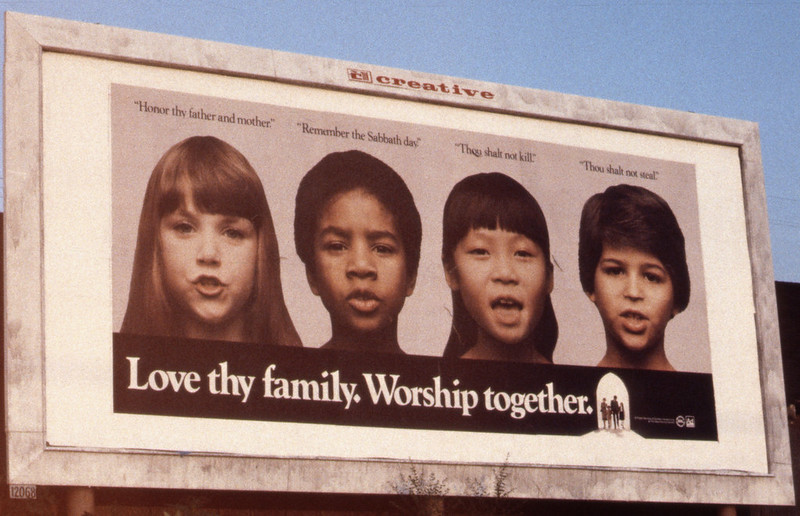
I was recently going through some old photographic slides and I found this photo I took of a billboard back in the early 1980's when I was living in Alabama:


One Family - billboard in Alabama Sept 1983


I don't want to get too nit-picky about the commandments that were chosen for this billboard or the choice of commandments chosen to place over each person other than to say with a caption that talks about worship, I find it strange that the first commandment is not listed.

What struck me was that at the time, and particularly in the South, the idea of worshiping together with people of different ethnicity was almost unheard of. Even in recent days I have often heard the quote, "Sunday mornings are the most segregated time in America."

What I like about the billboard is the first part of the caption: Love thy family.
My family. My brothers and sisters and cousins of every shade of color and who speak one or more of 6500 different languages scattered all across the globe.

In these days in the aftermath of the George Floyd killing, we are hearing many stories about how people of color are looked upon differently and treated differently, and not in a good sense. It breaks my heart to hear about such things happening in my family. Because ultimately, George Floyd is a distant cousin of mine. And what's sad is that Derek Chauvin, the guy who knelt on his neck—well that's also another distant cousin. I suppose such violence between cousins should not be surprising when even siblings can sometimes get so upset about trivial things that they don't speak to each other.

For the past several years I have had the privilege of working with distant cousins in another country whose language and culture differ drastically from mine and whose skin color is a shade or two darker. I've learned how easy it is to offend, or be offended by, people I love due to misunderstandings in language and culture. And when these offenses have happened, we've had a choice to make. We could hang onto the offenses and let them simmer until we do something stupid and/or violent. Or we could take a different path involving humility, grace, forgiveness and reconciliation. The latter choice is not always easy, in fact, it can be very difficult. It's often easier to hang onto an offense than to humbly ask forgiveness for where we screwed up. And sometimes I would rather nurture a grudge than forgive someone who has offended me.

I'm grateful, though, that God doesn't struggle so much with these issues. Through the blood of Jesus, He forgives all of our sins—not holding onto grudges. How many times have I had to go to God, for the umpteenth time, for some silly sin I repeated again (redundancy intended). I'm glad God doesn't have a three strikes law, because there would be no hope for me. Jesus, when asked if we needed to forgive people for an offense as many as seven times, said that we needed to forgive 70 times 7 times; but the implication was that we need to be ready to forgive even more than 490 times. (Matthew 18:21, 22)

This same Jesus said that when we pray to God we should say something like: "And forgive us our sins, For we also forgive everyone who is indebted to us." (Luke 11:4 NKJV) In that prayer, we are asking God to forgive use based on how much we have forgiven others. If that is the case, do I want to be stingy with forgiveness?

There is a lot of talk these days about justice. Justice is a good thing, it means everyone gets what they deserve, no more and no less, and all are treated the same. The Bible talks a lot about justice—about not showing favoritism to different classes of people. The prophetical books in particular point out the injustice that was prevalent at the time: the rich and powerful used their money and power to the disadvantage of the poor and the weak. Does that sound familiar? In our day and age people are still treated less favorably because of the color of their skin, or their accent, or the shape of their eyes, or because of their age, or something else. But these people who look, talk and act different than us are still our cousins. Why should they be treated differently?

And while I like the concept of justice, there is another concept in the Bible I like more, and that is mercy. You see with justice, I get what I deserve. And because I'm a sinner, I deserve death. In Romans 6:23 we read For the wages of sin is death. But that same verse also points out the mercy option available in Jesus: but the free gift of God is eternal life in Christ Jesus our Lord.(Emphasis mine)

If we're really honest with ourselves, we'll admit that we don't want what we deserve, we want better than we deserve. We want mercy.

One time, King David screwed up really bad. He raped a women and had her husband murdered. If there was ever a case for the death penalty, this would probably qualify, and he knows it. David didn't appeal to justice, he appealed to mercy:

1 Have mercy on me, O God,
    according to your unfailing love;
according to your great compassion
    blot out my transgressions.
2 Wash away all my iniquity
    and cleanse me from my sin.
3 For I know my transgressions,
    and my sin is always before me.

Psalm 51:1-3 (NIV)

James makes a challenging statement about justice and mercy:

12  Speak and act as those who are going to be judged by the law that gives freedom, 13  because judgment without mercy will be shown to anyone who has not been merciful. Mercy triumphs over judgment! (James 2:12-13 NIV)

Mercy can be sorely lacking. We can be quite hypocritical about justice and mercy. When we are offended or when we stand to gain, we will cry for justice. We shout, "I want what's mine!" or "I want what's coming to me!," but deep down we have to admit we want more than we deserve. However, when the tables are turned, and we are the ones who owe, we appeal to mercy. We want others to pay up, but we don't want to have to pay up ourselves.

So if I am offended or hurt by one of my cousins, regardless of the color of their skin or their appearance or the language they speak, I need to think carefully about how I will respond. And if somebody does something wrong or commits a crime we need to consider our response.The offense may even be so grave that the person deserves to die, according to the law. But that doesn't mean they should be put to death or punished to the max. Instead, we can chose to respond with mercy the same way God shows us mercy.

Especially since they are family.

Tuesday, December 31, 2019

Top Twelve 2019

In my annual review of pictures this year, I tried to contain myself to 12 photos, but in the end I ended up with a baker's dozen.

January - Follow your heart in Phu Ruea

For my birthday, I told Ingrid I wanted to go to the mountains. Going to the mountains isn't as easy here as it was in California, where I could be in the mountains in just over an hour. From where we live now, we are talking about a 5-hour drive or longer.

We decided to go to Phu Ruea (pronounced poo rur-ah), which means "place of the boat." We've driven through Phu Ruea on several previous occasions, traveling back and forth to Northern Thailand. I had always wondered how a mountainous area is named "place of the boat," a name that would seem more fitting for a beach town. It turns out that viewed from the valley below, the mountain is shaped like a boat.

There are several national parks near Phu Ruea, one of which bears the same name. You can drive almost to the highest point in the park. From there, you can hop on a tram (pickup truck with benches in the back) or walk to the summit. We opted to walk, and we had the trail mostly to ourselves, as most people took the tram.

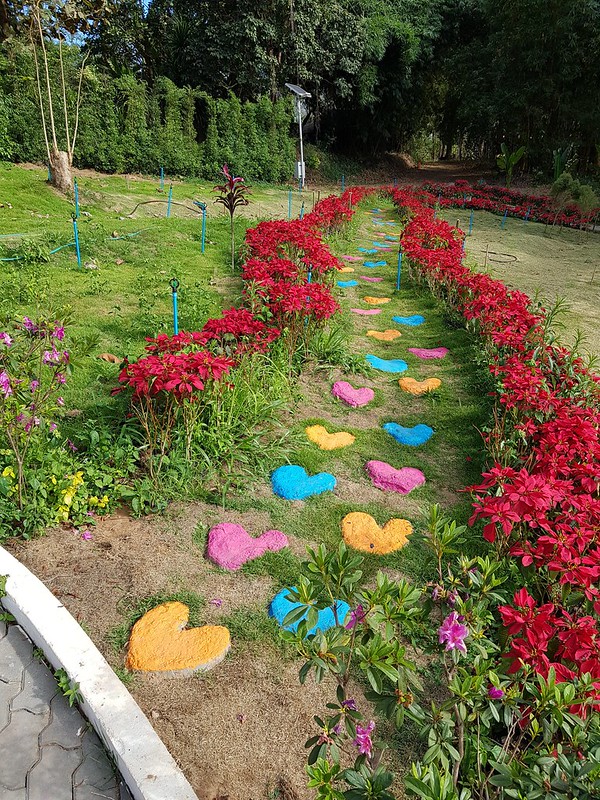
Phu Ruea has a flower festival over the New Year's holiday, and we came in on the tail end of it. So many flowers! The dominant flowers were poinsettias in red, pink, yellow and white. The main theme of the flower festival is hearts. Flower gardens shaped like hearts. Big heart-shaped signs. And even heart shaped pavers winding through the poinsettias. For more photos of Phu Ruea, see here.


Euphorbia pulcherrima Willd. ex Klotzsch Euphorbiaceae Poinsettia-Red Poinsettia 12
Heart-shaped pavers in Phu Ruea


February - Phu Phrabat

Our second entry also has a "Phu" in it. (December's entry does as well.)

In February, we had a visit from a couple from Canada. They are friends of our co-workers and we were told that they like outdoorsy stuff. Since we have a vehicle and know about many of the outdoorsy activities to be had in the area, our co-workers made us responsible for one day's activities. So we put together as list of possibilities and presented it to our visitors. They decided to go to Phu Phrabat.

We like Phu Phrabat because it has some of the most well-groomed sets of forest trails for walking in the area. The park is considered an "historical park" and is run by the Arts and Culture ministry rather than the forestry department. That must be why the park has one of the classiest restrooms in Thailand!

The geology of the area includes some hard layers of sandstone which are underlain by softer material. This has contributed to the formation of lots of unusual rock formations. Several hundred years ago, these features were used for human settlement, either for living places, animal shelters or religious worship sites.

The picture below is from one of the most famous structures on the park. It is called Hor Nang Usa (หอนางอุสา), which means, "Ms. Usa's Tower". Nang Usa is a character in the anecdotal stories of the history of the structures.

More pictures from Phu Phrabat can be found here.

Hor Nang Usa หอนางอุสา
Hor Nang Usa - what would happen if you jumped up and down on the part that sticks out?


March - Tokay Geckos

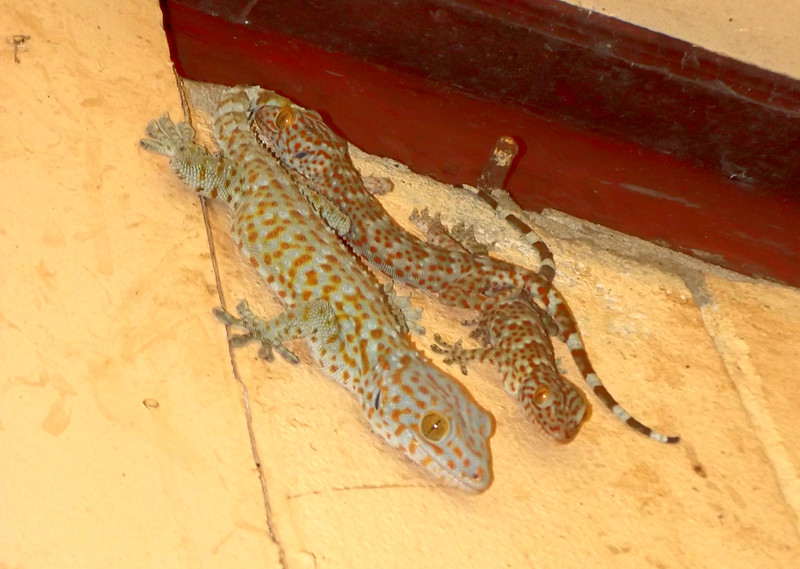
Anybody want a pet lizard? I'd be happy to part with these cute, (no so) little, lizards. The tokay gecko is the type species of the gecko family, hence its scientific name, Gekko gecko. I like the Thai name, tookay (ตุ๊กแก) because it aptly describes the sound of this creature. Nothing like the "tookay, tookay, tookay" blasting from the ceiling from above your bed to wake you up at night.

The home of the creatures in the photo is above our front porch. They even have a trail mark from the hole where they get in and out. I would seal it, but I don't want them to die in the attic because the smell of rotting gecko bodies makes the fragrance of a dead rat like sweet perfume in comparison. Mama and papa had two babies this past year, one of which shows in this photo. They are cute, in a way, with their turquoise colored bodies covered with bright red spots. (The photo doesn't really do it justice.)

Gekko gecko (Linnaeus, 1758) Gekkonidae-Tokay, Gecko, Calling gecko-ตุ๊กแก
Calling Geckos on the wall of our house


April - Pretty in Pink

We're always in the mood for a good coffee shop. When your home is your office, sometimes it's nice to have an "away office." There are lots of chain and independent coffee shops in Thailand, but price, coffee quality and quality of internet connection vary greatly.

Sometimes on our day off, we drive north to a place called Pak Khat for dinner. Along the way there is a small town called Rattanawapi. There are several coffee shops in the town that have closed, but one day we noticed a new one, Ban Card Coffee. For a while it seemed like this one, too, succumbed to poor planning because it closed down soon after it opened (a common occurrence with restaurants and coffee shops in Thailand).  But then, to our surprise, it reopened.

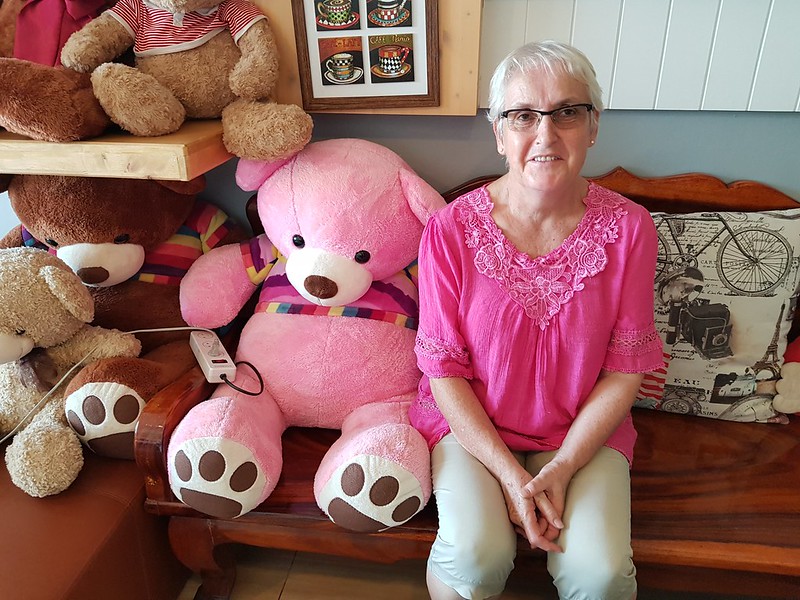
The staff in this cozy establishment are friendly and they make our coffee the way we like it. Prices are good and so is the internet connectivity. And it has some cuteness value—especially if you bring along a pretty girl with an outfit to match the decor.


Ban Card Coffee


May - Dining Adventures

On most Thursday evenings, we meet a with a couple that helps lead our church, Tha and Nok. Nok is from Laos and she comes from a poor background, so she has learned to live off the land. She amazes us with the food she can prepare from whatever they caught or scrounged up in the forest on any given day.

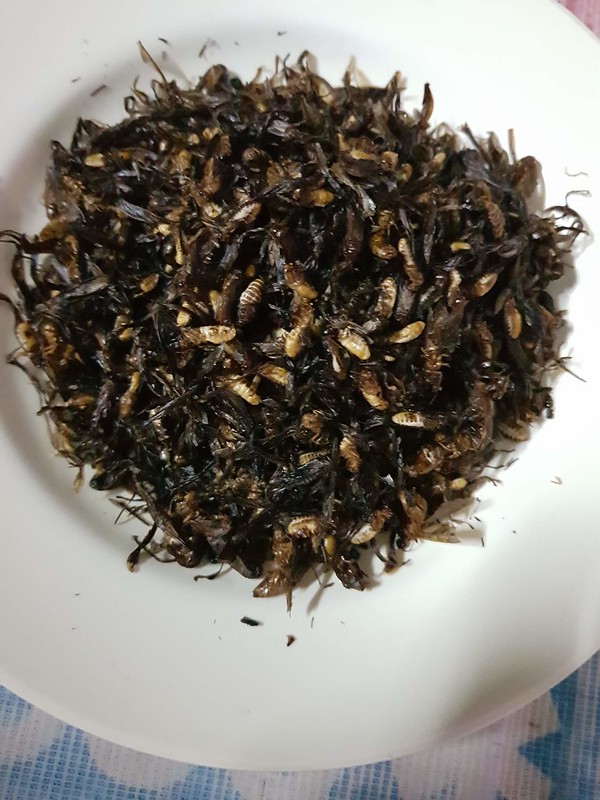
One day, we were presented with a plate of...

   ...something.

April is the season that the termites swarm. These species of termites (Macrotermes sp.) somehow manage to acquire wings and they gather by the thousands around light sources at night. The Thai name for these, Malaeng Mao (แมลงเม่า) refers to their appearance being like a way that rice is sometimes prepared (Mao). The insects are very fragile and usually the floor under a light is covered with the bodies of these creatures, On many individuals, the wings may have already fallen off.

It is easy to gather a huge bowlful of these creatures. After pulling the wings off, they can be stir-fried and served with your meal.

Bon Appétit!


Macrotermes (Holmgren) Termitidae-Macrotermitinae-Flying termites (alates)-แมลงเม่า, ปลวกวรรณะสืบพันธุ์ 2


June - Cutting the Cord

On a steamy Wednesday morning, several of us piled in the truck and headed off to Ban Klum Pattana—a village about 14 kilometers north of the main town of Phon Phisai. We were on our way to visit some people who were interested in hearing the story of Jesus.

Our first visit was to a man who has had difficulty walking for several years due to a motorcycle accident. The second was to a woman who had an inoperable condition in her spine. In each place, we explained the gospel message to the people, then they prayed to confess belief in Jesus.

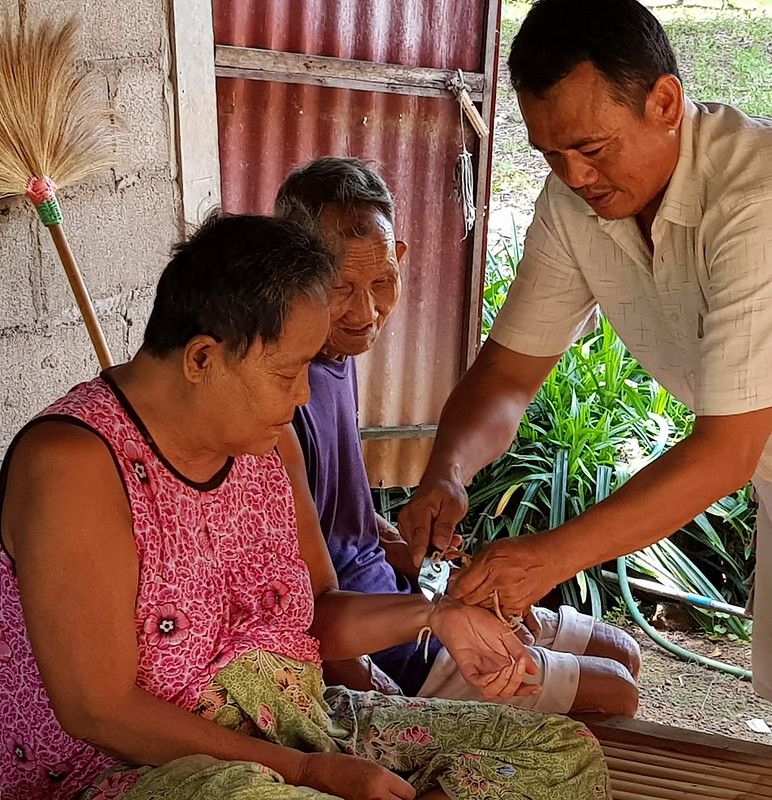
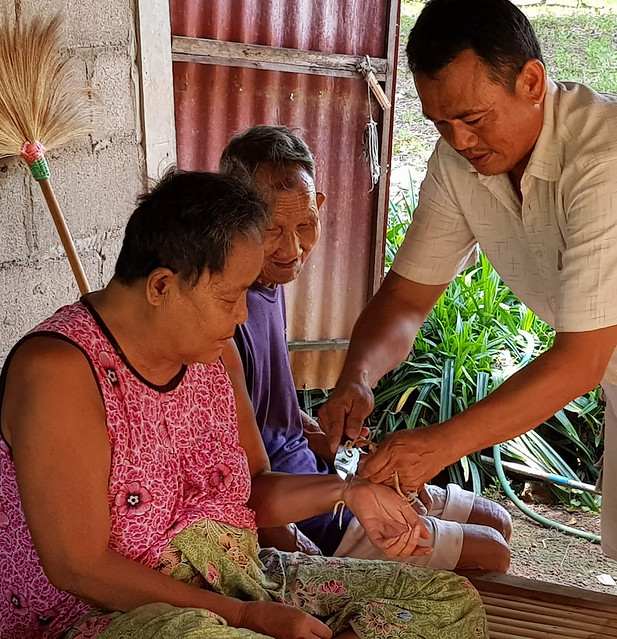
What happened next was the string cutting. Sacred strings are tied around the wrist to indicate a binding commitment. In most cases, it is as symbol of belief in Buddhism. But even some Christians will use these cords as part of a marriage ceremony, akin to the wedding ring used in western weddings. To cut the string means to say you no longer trust in the old way of doing things as a way to earn religious merit. Instead, you confess that you are now placing your trust in Jesus.

The man we visited first that day later bowed to pressure from family and reneged on his decision. The lady, however, has remained true to her new faith.

For more about family relationships and choosing Christ, click here.


Church visits in Klum Pattana 2019-6-12 12
Tha cutting the string from Bor Wan's wrist

July - Seven Hearts

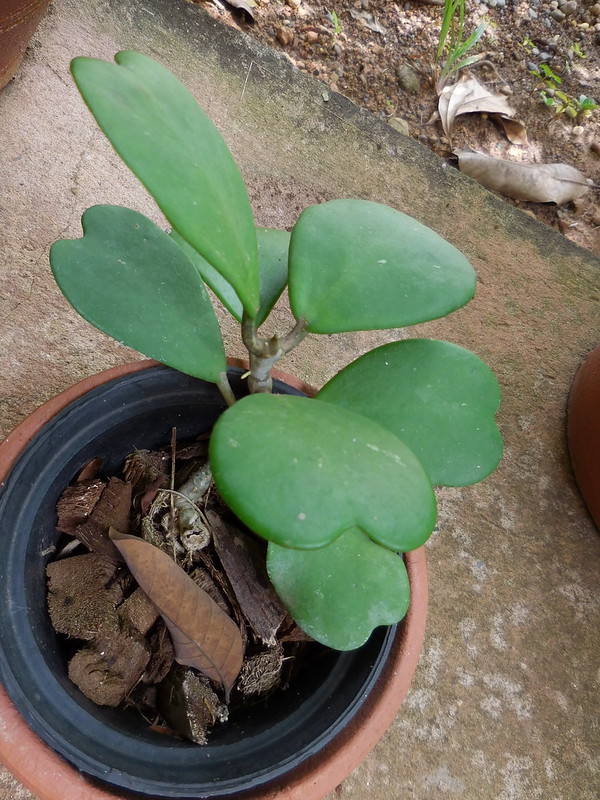
In a previous blog, I wrote about our Sweetheart Plant (Hoya kerrii), and the patience it took to wait for a leaf stuck in the soil to take root and start growing. Once the vine started growing, however, it put out new leaves relatively quickly. By July, about 11 months after it started putting out its first leaf, the Hoya had amassed seven leaves.

Seven leaves. Seven hearts.

I grew up in a family of seven, and while my parents are no longer with us on this side of heaven, I still think  of our family as a family of seven. So my Hoya with seven hearts was a symbolic reminder to me of family.

Interestingly, the vine has not made any new leaves in the six months since then. It still sits in its small pot with seven hearts attached to the vine.


Hoya kerrii Craib Asclepiadaceae (Apocynaceae)-sweetheart plant, luck heart, หัวใจทศกัณฐ์ 1


August - Celebrating Life

We had big plans for our 25th anniversary. But when the time came around, our life was full of too much uncertainty, and not much happened. So we figured, maybe we'll do something big for our 30th. But when that came around, we were in the midst of a very hectic schedule and settled for a couple of days in Monterey, California. Five years later we took a few days attached to a retreat I was on in Switzerland, but it was still not what we had in mind. So we figured we'd do something special this year.

We made plans to visit some relatives who live in Jordan, and to combine that with some visits to some Biblical historical sites.  We had most of the details figured out, but had no peace about them. "I need to visit George," I told my wife.

My brother-in-law had a rare form of cancer, and we did not expect him to be around much longer. Better to visit him while he's alive than to pay homage to a box of ashes after he's gone.

George was not very strong during our visit, but he did rally a bit and made it to church one Sunday, when this photo below was taken. I'm glad we went. A month and a half later, George opted for a better life with neither pain nor sorrow. Since I could tell his days remaining were few, I penned a eulogy ahead of time, so that he could read it. Better to enjoy the company of our loved ones while they are with us than to regret it later.


Haskin Russell 2
Enjoying our last weekend with George

September - Yung Thong Waterfall

Our wet season this past year was less than spectacular. The rains were fewer and they stopped over a month sooner than usual. Usually, September and October are a great time to visit waterfalls, because it is the end of the wet season and the rivers are at their peak.

In spite of it being so dry, we decided to visit a waterfall a 3 hour drive west of where we live. The last time we visited Nayung Namsom National Park it was dry season and the waterfall was nothing but a rock bluff.  This time around, things were slightly better. The climb to Yung Thong waterfall is challenging in some places, and we did not go all the way to the top because my knee had still not fully recovered from an injury incurred while in California the previous month. We did make it to the main viewpoint of the waterfall, though. And while the waterfall was not spectacular, as waterfalls go, if was a nice quiet day for a walk in the forest. And a bonus was that we did not have to pay to visit the park!


Yung Thong Waterfall 12
Yung Thong Waterfall in Nayung Namsom National Park

October - Reunion with Friends

Shortly after we moved to Phon Phisai, we made friends with the proprietor of a coffee shop in town. Yai is a man from the southern peninsula of Thailand. Yai's wife, Rung, is a police captain. Rung had recently been transferred to Phon Phisai.  They have a daughter named Khao Hom. Khao Hom came to the English / Bible story classes we had and often her mother would stay and listen to the stories as well. Rung is originally from Kalasin province, about a four-hour drive south of Phon Phisai. About once a month, they would travel there because they were working on building a house there so that at some point, Rung could move back to her hone area.

It seemed like we were just getting to know this family when Rung got a transfer to Kalasin province. Since they were the closest friends we had made, we really missed them.

The missionaries working in the Isaan region gather to pray together about three times a year. We meet in various places. We don't get to join with them all of the time because of our schedules. In October, the meeting was in Kalasin. We made use of the opportunity to visit Yai and his family. We had not seen or spoken to them since they had moved, but they were happy to see us again.


Yai Rung and Khao Hom 2
Rung Arun, Khao Hom, Ingrid and Yai by their new home 

November - Nong Ngaeng

One of my favorite bike rides is to follow some irrigation canals to a pond called Nong Ngaeng. (That's okay,  I can't pronounce it either.) The Acacia mangium trees planted along the east side of the pond provide a shady respite from the tropical sun. Often, while riding under this treed canopy, I will take a break to enjoy the peaceful setting.

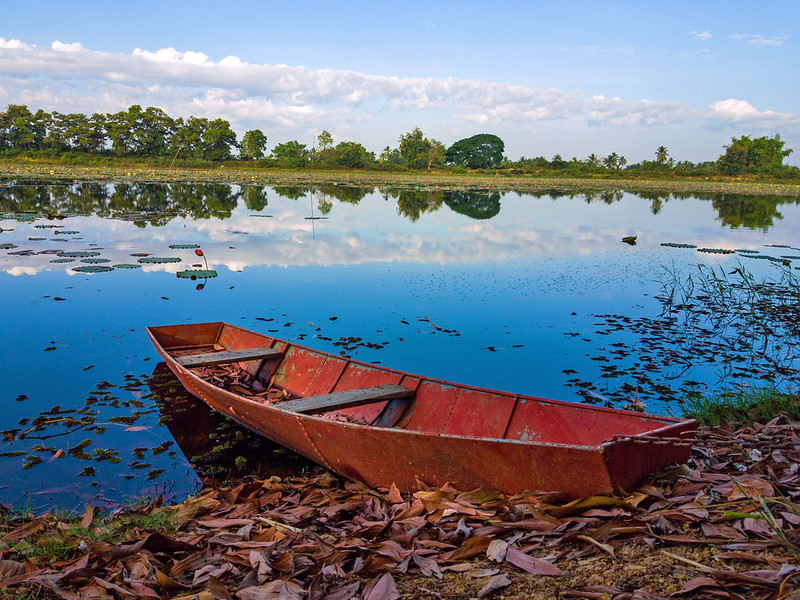
November happens to be the month with the clearest skies. The rainy season clouds are gone and the smoke from burning all the forests and fields hasn't started to build up much yet. On this day, it was early enough that the morning breezes had not picked up yet and so the water was very still. The blue skies reflected in the pond made a nice backdrop for the red boat.

Reflections in Nong Ngaeng 4e
Red Boat in Nong Ngaeng

December - Phu Tawk

My photo for December is similar to my photo for November, last year.

In December, my sister came to visit from California. It was her first time traveling internationally by herself since her college days. Originally, she had hoped to come to Thailand with her husband, but that was not to be.

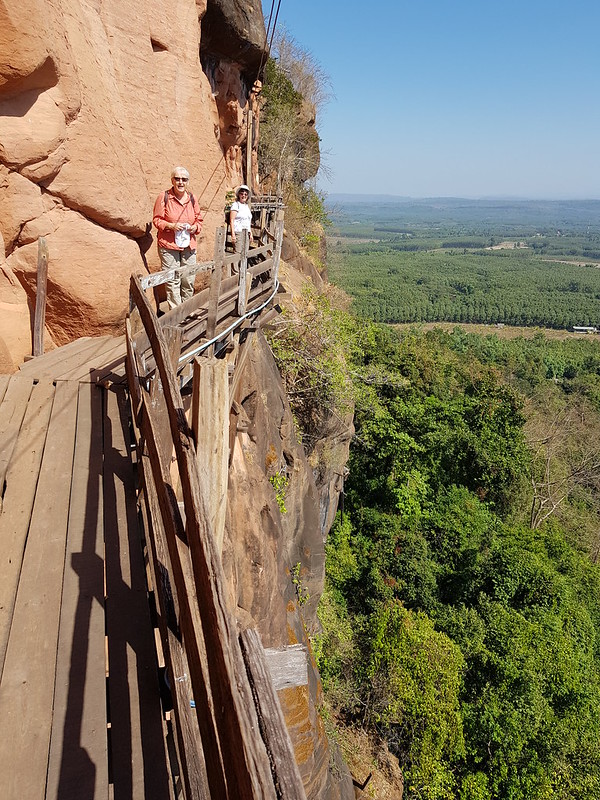
On one day during her visit, we visited Phu Tawk (variously spelled Phu Tok or Phu Thok). The skies were nice and clear and the cooler than normal temperatures made it more comfortable to climb the hundreds of stairs.

Phu Tawk is not for people with a fear of heights. Our teammate, Somdy, was with us and he was  constantly commenting about the safety of the handiwork. I've never heard of anyone dying here, so I'm guessing it must be fairly safe, even if it doesn't always look that way.

The mountain is a sacred site, and there are several shrines scattered about. They say there are seven levels, but I'm not sure how some of the "levels" are called such, except that seven is a sacred number (though 9 is more so) so it helps it the top is level 7, I suppose. Probably most of the people we saw were at the mountain as part of a religious pilgrimage, hoping to obtain special merit by making an offering  at level seven, if they make it that far (there are merit making opportunities on several of the levels).

For us, it was an opportunity to get out and get some exercise and marvel at the handiwork—not so much of the people who put all of the walkways together, but instead at the handiwork of God, who put the mountain together.

For more photos of this big, red rock, click here.


Phi Tawk ภูทอก 34
Ingrid and Dawn on the wooden walkway

December - Bonus pic


With our last wet season being not so wet, I was surprised at the number of people planting irrigated rice in the dry season. If water is less, why are we irrigating more? I've seen people pumping water in places I had not seen since moving here.

The reason for more off-season planting is that because the rains quit early last summer, the rice harvest in the area was much less than normal. Some fields were not even harvested because there was nothing to pick. Those fields that were harvested had a smaller crop than normal. For this reason, many families did not harvest enough rice to eat, let alone sell. So there is a push to get another crop in. We pray that the water supplies will last, because even the Mekong is at its lowest level Inver 50 years--and there are still several more months of dry season left.

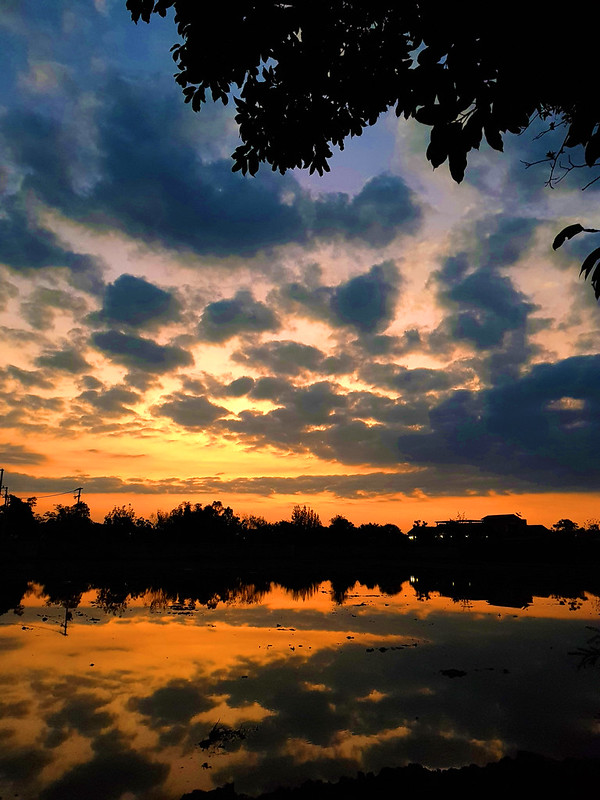
A side benefit for us, though, is that even our neighbor decided to plant a second crop. So he plowed and smoothed his paddies, making a nice reflecting pond for us, at least until the rice crop comes on. So we finish up the year having to put up with sunrise views from our house like the one below.


Sunrise reflections in Phon Phisai 2019-12-28 4
Sunrise reflections in the rice paddy


And so another year has gone by. Some things have gone as expected, many things have not. There have been good times and challenging times. All of which makes it a normal year.

I count it a blessing to finish the year with the same wife that I have shared the past 36 years with. Not everyone is so fortunate.

I also thank God for His faithfulness in helping get through some challenges during the year. Several times, I have wanted to give up, as my faith and strength were not up to the task. Fortunately, God is up to the task.

There is a saying that God does not give us more than we can handle. I'm not sure where this comes from, for my understanding from scripture is that God never gives us more than He can handle. As Paul writes, "We do not want you to be uninformed, brothers, about the hardships we suffered in the province of Asia. We were under great pressure, far beyond our ability to endure, so that we despaired even of life.  Indeed, in our hearts we felt the sentence of death. But this happened that we might not rely on ourselves but on God, who raises the dead."  (2 Corinthians 1:8-9, NIV)

We don't know what the coming year will bring. My prayer is that, no matter what happens, good or bad, we continue to rely on God.

Happy New Year

Monday, August 26, 2019

Why Wait?

Note: This is an open note to my Brother-in-law, who will remain unnamed.

Dear Brother-in-law,

It was with sadness we heard, several months ago, that you had been placed in home hospice care. While we don't know what this means as far as how long it will be till you get to be with Jesus, it will likely be before me. (None of us really know how long we have left on this planet, we just pretend to know by looking at longevity statistics.) But I'm glad that you hung around long enough for us to come visit you these past couple of weeks.

I wanted to write to you now, because in our culture we have this strange practice of waiting until people are no longer with us to eulogize them. I think it's kind of a sad practice, because the person the eulogies are directed at doesn't get to enjoy them.

My history with you is not all that long, as far as our life-spans are concerned.  At first I was a bit leery when my sister met some stranger online about 18 years ago. She was still hurting from the loss of her first husband and I was feeling a bit protective of my little (if older) sibling.  But any fears I may have had about this stranger soon passed.

I first met you at your wedding.  In our culture, when we get married, we have these vows we repeat.  The vows are kind of like a contract with the fine print written in invisible ink.  Or, to use terminology from your former career, it's like obligating yourself to a cost-plus contract when you currently don't have the resources for the cost, let alone the "plus". This is because we do not know what our futures hold for us. We pledge "for better or worse", but we don't know which proportion the better's and worse's will come in. We all hope we'll leave earth peacefully in our sleep together with our spouses on the same night.

But that doesn't happen too often.

I want to thank you for coming into my sister's life at a time when she needed someone like you.  You came not only into her life, but you also took her children as your own as well.  That doesn't always happen with step-parents. I like watching how you interact with my sister's kids and grand-kids, even if they aren't genetically yours and even if you first had to bribe the grandkids with M&M's to get them to come to you. (I'm easily bribed with M&M's too. Just want to let you know before our next visit.😋)

You have made sure my sister was well cared for, not only in the present but also looking to the future. I appreciate that.

I like your sense of humor that shows you don't take life too seriously. Your house has always been a fun place to visit and I have a lot of fond memories from there. You even manage tp smile and laugh in your present condition, which is rather admirable. And people always feel welcome at your house.

You have a generous spirit, which, in my mind, was exemplified when you took a lot of time and patience to make a dulcimer just to give away as a gift.  (I had kind of been hoping you would make me a new guitar for when we eventually move back to California to replace the one I currently have that has suffered a bit from the hot, humid climate here 😁 )

Your generous spirit showed as well when you opted to take care of your ailing mother at home as long as possible, rather than send her off some place where no one knows her.  You even made a little "apartment" so she could be independent but always close by.

All this shows that you value the people in your life, and since these are many of the same people that I have in my life, I consider it an honor have you as part of our family.

But there is a greater family that we belong to, and that is the family of Jesus.  To all appearances, you will get to see Jesus before I do.

Paul wrote, "For to me, to live is Christ and to die is gain. If I am to go on living in the body, this will mean fruitful labor for me. Yet what shall I choose? I don't know! I am torn between the two: I desire to depart and be with Christ, which is better by far; but it is more necessary for you that I remain in the body." (Philippians 1:21-24)

We are called to worship and serve the Lord Jesus only until such time as He sees fit, and then He calls us to his side.  So while I like having you as part of my family in this world, one day we will all depart to join the greater family in heaven.

In the meantime, remember that you are loved not only by your Father in heaven but also by so many of us on earth.  And we realize that you love us, even if you can't always give voice to it.

Thank you for being a part of our family.


Haskin Russell 2

Tuesday, July 2, 2019

All in the family

Recently, one of my siblings wrote a blog about how we are distantly related (so many "-th" cousin, so many times removed) to some earl. The name of this earl did not mean anything to me so all the connections were of little interest to me.

But it did get me thinking about family.

Several years ago (and I'll date myself here), I started a job in a factory and one of my new coworkers, upon hearing my name, asked me jokingly (I think), if I was any relation to Bill Russell. I know very little about sports, but I did recognize the name, so I replied, "only in skin color."  That, too, was a joke, but I probably do have more in common with Bill's skin color than I do his ability to handle a ball. I'm not very dexterous when it come to handling those round things and while I can probably dribble on a ball, I'd be hard pressed to dribble with one.

Bill Russell (not my relative)
Image from:


Family, then, is more than just a name.  We, with our rather nomadic lifestyles, tend to think differently about what makes family.  In our missionary family, we are "aunt" and "uncle" to a number of missionary kids. We are commonly called aunt and uncle by Thai people.

But there is another family we belong to, and that is the family of God.  This past week, during our church meeting, we read together from Galatians 6:10: "Therefore, whenever we have the opportunity, we should do good to everyone--especially to those in the family of faith."

The family of faith is awesome. I've been to many places around the world and every place I've been there have usually been some family members. I can feel "at home" even when far from home.


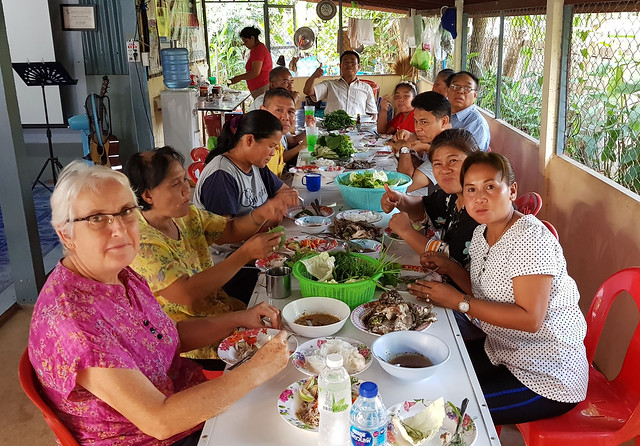
Dinner with Family
Dinner with Family


The significance of this family of faith is especially important in the culture here.  After our worship service last Sunday, we we're making plans on giving rides home to people from the next township over. One woman, Wari, who had come with us in the morning, said she would go home later. The reason she was staying, she said, was that she wanted to spend some time with the family.  Those were not actually her words, but that was the basic meaning of what she said.

When a person decides to follow Christ here in Thailand, it is a family matter.  To go against the religion of the ancestors is generally not well accepted, and a person who does so is often rejected by family. These days there is more tolerance than in the past, but in the region we work, the family pull is quite strong. To lose the support of family is also to lose the support of the village. Since this is the main method of socioeconomic support, people are reluctant to go against the wishes of family.  If a person does decide to follow Christ and stick with the decision it is because they have found a suitable replacement family in the family of God.

A few weeks ago we visited a man who was injured in a motorcycle a number of years ago and now has difficulty walking. He lives on the same compound with his wife's family, as is typical in Isaan, but he is currently estranged from his wife and is building a small house for himself behind the family compound. He was interested in the gospel message, and he repeated a prayer to follow Jesus, after which he let us cut the sacred strings from his wrist. Then we prayed that God would heal his legs so that he could walk normally. He received a Bible from us and was looking forward to having us visit more in the future to talk about the Bible.


Cutting sacred string
Cutting Sacred String
A way of showing you're joining a new family.


But then family intervened. While they had been willing to let us come talk with this man, it was quite another thing for him to quit the family religion. It's okay to add Jesus in with the other gods on the altar, but not so okay to dispense with the other gods.  So the man's in-laws told him that if he persisted in following Jesus exclusively, he would be kicked out of the family compound. They even told him that they did not want us to pray for his healing.  Better to be crippled than Christian, they said. The man had no place place else to go. So he decided against joining the new family.

To follow Jesus is to be adopted into a new family, sometimes at the expense of the old one. Jesus said, "Do not think that I have come to bring peace to the earth. I have not come to bring peace but a sword.  For I have come to set a man against his father, and a daughter against her mother, and a daughter-in-law against her mother-in-law. And a person's enemies will be those of his own household."  (Matthew 10:34-36 ESV)

We Christians in North America do not tend to have this kind of experience, but it is very real for people in Thailand.

 It is very important, then, that the family of God be the kind of family to which one would want to belong. If our family is beset with problems and a lack of love, one will not want to risk losing their earthly family to join this new one. Instead, we should have such a love in our new family that we become the talk of the town. Jesus said, "By this all people will know that you are my disciples, if you have love for one another." (John 13:35 ESV) If we fail at this, all our words spent preaching the gospel become unintelligible. (1 Corinthians 13:1)

It's not always easy. There is an old rhyme that goes something like:

To live above, with saints we love--
that's glory.
To live below, with saints we know--
that's a different story.

No wonder Jesus prayed, "And I am no longer in the world, but they are in the world, and I am coming to you. Holy Father, keep them in your name, which you have given me, that they may be one, even as we are one." (John 17:11 ESV)

So, if you think about us here in Thailand, pray for our family of faith. Pray that we will be one as The Father and the Son are one.  Pray that we will be the kind of family people will want to be a part of.  It's not always easy. We've had a couple of occasions where people started spreading untrue rumors to try to sow division among us (this by people who call themselves Christian). So far, fortunately, those who have tried to divide us have only caused us to draw closer together. The enemy wants us fighting and bickering rather than loving and accepting one another. He wants us to be ugly, and not attractive.

My hope is that it may be said of us who follow Jesus what Paul wrote to Philemon: "because I hear of your love and of the faith that you have toward the Lord Jesus and for all the saints." (Philemon 1:5 ESV)


Thursday, June 14, 2018

Going Back

Recently, my brother posted a blog about memories of growing up in Wolcott, Connecticut.

I, too, have many memories of growing up in Wolcott, many similar to the ones he mentioned, though not all the memories are good.

But there is one good memory that stands out.

Sometimes, on the way home from church on Sundays, we would take the back way home and in so doing, we would pass a Dunkin Donuts store at the end of Lakewood Road at North Main Street in Waterbury. This was before Dunkin Donuts became famous for being a coffee place and there weren't that many around. ( I don't think that particular store is around any more--it was across from the Burger Chef (the fast food place we went to before we had McDonalds)).

Occasionally, we would even stop at Dunkin Donuts.

It was at Dunkin Donuts that I learned the term baker's dozen, which meant if you bought 12 you got one free.

Dunkin Donuts originated in the nearby state of Massachusetts, and for many years was generally a regional chain. After moving from away from the Northeast, this brand eventually faded from memory.

Until 2010.

In 2010 we visited Thailand to begin to explore the country to which we would soon be moving.  We traveled around a lot, by just about every means of transportation possible (not by choice, it was just that's how we got to the places we were going.)  One of those trips brought us to the Northern Bus Station in Bangkok.  We were looking for the vans to Lopburi, and fortunately there was someone who knew a little Thai with us, because there were almost no signs in English.

Except this one:

Dunkin Donuts in Bangkok Bus Station


I was amazed to see a Dunkin Donuts in Thailand as we did not even have them in California.  We did not have much time, so I only paused long enough to take this photo.

In Thailand there are two major donut brands: Mister Donut and Dunkin Donuts.  For many years now, these brands have both been owned by the same corporation.Mister Donut is far more common in Thailand, and franchises can be found at shopping centers even in small towns like Phon Phisai, where we currently live.

For many years I hardly ate donuts, but since moving to Thailand, we will occasionally stop at a Mister Donut for a morning coffee break.

To get to a Dunkin Donuts, we have to go to the larger city of Nong Khai, where there are two outlets in two different shopping centers across the street from each other.  Last week, as I walked past one, I noticed a somewhat familiar looking sight:

Dunkin Donuts-Boston Creme


This looked somewhat familiar, like the Boston Creme donuts that were my favorite as a child.  I looked at the label and sure enough, there were the words, in English, "Boston Creme."

A few days later we had to go back to Nong Khai, so I dared to get a Boston Creme donut to see if it was anything like I remember.  They say that memories can be tricky, and can even change with time.  It's probably been 40 years since I had one of these, so my comparison may be bit off.

First, the most obvious, the chocolate.  The donuts I remember from youth did not have a full covering of chocolate on top, like this one.  It was also creamier. (Eating Nutella actually brings back memories of that chocolate.) This chocolate was a bit hard, which may be a good thing, given the climate here.  Flavor is okay, but certainly something I can pass on.

The donut.  The donut is a bit chewier than the ones we had growing up.  But I actually prefer that. So that, for me, is a positive difference.

The creme.  The thing I really liked about the Boston Creme donuts as a child was the filling.  The filling in this donut was a big letdown.  Reminds me of the vanilla pudding you buy prepacked and ready to eat.

There is a saying, "you can never go back."  I don't know the context of the original saying, but for me it means that over time places and circumstances you remember have changed and you have changed, so that things or places you once thought you could never leave behind you now no longer want to go back to, or, if you could go back, it would not be the same.

Unlike my brother, who has kept in touch with many of his high school classmates, I have kept in touch with only one, and even that one I lost track of about 6 years ago.  My high school memories are generally not that wonderful.  I don't have a desire to walk those halls again. 

The one thing that sticks out to me from the end of my high school years is being rescued.  Rescued from depression.  Rescued from misery.  Rescued from the darkness I felt inside.  Rescued when I discovered that no matter how miserable I thought I was, Jesus loved me enough to give up his life so that I might have life.

Paul wrote in his letter to the church in Rome, "For while we were still helpless, Christ died for the ungodly."  (Romans 5:6, NET)  That was me. Ungodly.  Helpless to do anything about it.  I've been rescued from that and I don't want to go back.  I'll treasure the positive memories and leave the rest behind.

As for the donuts,  I'll stick with the memories and not eat these Boston Creme donuts in Thailand any more (though maybe on my next trip back to New England, I'll give them a try).