Sunset Over the Mekong River

Showing posts with label food. Show all posts

Thursday, January 16, 2025

Traditions

 After church, almost like magic a green papaya appears out of nowhere. Sometimes I think they grow in the rafters of the roughly framed old houses. Within minutes I hear the thumping noise of the mortar and pestle. The papaya salad will soon be ready.

Rice harvest - lunch 2
Making Papaya Salad


Meanwhile, if there are any chairs around they are stacked and set to the side. Thin mats are placed on the floor. Bowls of sticky rice are brought out along with various side dishes. The smell of fish sauce and other things familiar and unfamiliar fills the air. The bowls are placed on the mats in clusters around the room. The papaya salad is scooped onto plates to join the other fragrant dishes. Soon, people sit in circles around the clusters of bowls. There may or may not be plates and utensils for everyone.

People grab a wad of sticky rice with their left hand. With their right hand, they grab a smaller mass and massage it into a smooth ball. This is used to help grab food from the dishes in the middle. If there is some kind of soup, Asian-style spoons will be available for use. Welcome to a traditional Mennonite meal in Isaan, Thailand.

Last Sunday Worship in Ban Kae 2023-8-27 16
After-church Lunch in Isaan


I did not know much about Mennonites growing up—I'm not even sure I knew the term. I think the first Mennonite I met was my first girlfriend. She was normal enough, except that her last name was not one I had ever heard of before, though it turns out that it, along with many other last names that were unusual to me, were quite common in Mennonite communities (when I visited her home, I checked out the phone book and there was column after column of names that before that time had been unknown to me). 

Mennonites get their name from Menno Simons, one of the leaders of the Radical Reformation in the 16th century. There were several other leaders of these Anabaptist groups that faced much persecution. Because of this persecution, many of them fled from various places to West Prussia where a dialect of Low German became their common language. In the last half of the 18th century, Catherine the Great opened parts of Russia (now Ukraine) to European immigrants and many of the Mennonites relocated there.

Eventually, many of these Mennonites relocated, either by choice or because of further persecution, to places in the western hemisphere where they formed colonies and retained their language and culture. By this time the term Mennonite had as much, if not more, to do with their culture than their religious faith. In the late 1800's, there was a revival among some of the Mennonites in the Ukraine that gave birth to a branch of the Mennonites known as the Mennonite Brethren (MB). Many of these relocated to North America where they tended to stay together in various communities, hence the phone books packed with "Mennonite" names that were not so common elsewhere.

I broke up with that girlfriend and did not think much more about Mennonites until we moved to Fresno in 2001 and eventually ended up joining an MB church. It is there that we discovered that Mennonite was as much a culture as a religion. Fairly early on after joining Butler MB church, we were hosting a small group at our home. Some the members of the group would get to talking about who is related to who and how. They found out they had common relatives in a place called Corn, Oklahoma. Corn. Is that really a place? Later we discovered that this name game of discovering common relatives was frequent occurrence at Mennonite gatherings. This was a bit of challenge for us, as we were Mennonite by choice, not by birth.

We also learned that there are some Mennonite traditional foods. When I first heard the term Verenika, I thought it was someone's name. Turns out its a kind of stuffed dumpling, a Ukrainian ravioli, if you will (I may get ostracized for saying that, but I grew up among Italians, not Ukrainians). Verenika (or varenyky) is a Ukrainian name, but they also go by their Polish name pierogi. Like ravioli, verenika can have different kinds of stuffings. When I first had verenika, it was served with gravy and Mennonite sausage. This sausage was not a smoked sausage, but the Mennonites have that, too. If you are ever in Abbotsford, British Columbia, I recommend going by Rempel Meats to pick some up.

Chanisara Restaurant 4
Verenika at a restaurant catering to Russian tourists in Phuket, Thailand


Another Mennonite food/tradition is fritters aka portzelky. These are deep fried dough akin to donuts, except they are not shaped like donuts. By tradition, they are served on New Years day hence they are also known as New Years Cookies. Even though we are not ethnic Mennonite, we rather like this tradition.

Making fritters 2018-11-1 7
Making New Years Cookies in November in Phon Phisai, Thailand
Couldn't wait for New Years day


The third traditional food I'll mention is zwieback. I had heard of zwieback as a youth and I knew it is a crispy toasted bread. The name comes from German zwei ("two") or zwie ("twi-"), and backen, meaning "to bake", in other words, "twice-baked". After joining a Mennonite group, we heard people getting excited that zwieback was going to be served on a special occasion and we were wondering why people feel that way about overcooked toast. We learned that Russian-Mennonite zwieback is altogether different—it is neither crispy nor flat. The "two" in this zwieback comes from how they are double-buns, so to speak, with one stuck on top of the other. Getting them to stay that way during baking takes special skill, and in our own attempts at baking them, we have ended up with a significant number of einback.

Home Made Zwieback
Our first attempt at Zwieback (and einback)
in Kalasin, Thailand


There are other Mennonite foods and traditions, but I am getting off-topic.

One of the characteristics of the Mennonite Brethren is their desire to share the good news of Jesus with others. To this end, the North American MBs began sending missionaries to other countries not long after arriving in the US and Canada. These missionaries saw great fruit to the point that at present both DR Congo and India have more people worshiping in MB churches than North America.

One of the challenges of missionary work is not confusing our cultural forms of religious expression with that which is essential to the gospel. To put it somewhat amusingly, does one have to embrace fritters, zwieback, verenika and sausage as an essential part of being a Mennonite Christian? I have visited MB churches in both DR Congo and India and saw no "traditional" Mennonite foods. But if you consider that the MB conferences in those countries are larger than the countries of origin of Mennonites, we see that traditional Mennonite foods are, in fact, minority Mennonite foods. There are probably more Mennonites living where there is a rice-based diet than a bread and potatoes diet, but even they are not all consuming the same kind of rice. (In the Isaan region of Thailand they prefer sticky rice, while in central Thailand jasmine is the rice of choice and both of these differ from the various types of rice I ate while visiting India.)

After church lunch
After-Church lunch in Shamsabad, India
No zwieback for this faspa


Tapioca New Years treat-ขนมเทียน
Khanom Thian - a treat for Thai New Years day (April 15)
Made with tapioca flour


The separation of tradition and religious belief is not always straightforward and there isn't always agreement, even in one's own culture. For example, what style of music do we use? It seems like it wasn't all that long ago when guitars and drum kits came in alongside and later replaced the organ in churches. Then we see churches in Thailand that don't consider themselves a real church unless they have a building, a guitar and a drum kit. None of which are required by scripture. I remember our first trip to Thailand and we were visiting Khmu church in the North of the country. I was excited to be in a place where I could hear some ethnic church music. But all they had were translated contemporary Christian songs accompanied by drums and electric guitar. On the other hand, when worshiping with older believers in Isaan, I hear them come alive when we sing songs of traditional style and instrumentation.

Huay Caw church 4
Worship at a Khmu church in Northern Thailand
with electric guitar and drums


Det Udon Church Visit 13
Worship Isaan style with phin and kaen
They use an 8-tone scale instead of 12-tone


Another example of religious tradition is how we serve communion. We once visited a church in Thailand where they used sticky rice instead of bread or crackers for communion. I thought that it was a nice cultural adaptation, but it turns out that they did this especially for visiting foreigners. For themselves, they normally used western style communion cups and crackers because it was associated with higher status—something that was culturally important for them.

Serving Communion 2017-9-10
Communion with communion cups and crackers
Phon Phisai, Thailand

While traditions are nice, there can be a problem when the traditions outlast the faith that they are supposed to represent. People end up considering themselves to right with God because they follow traditions rather than actually believing in God. Or sometimes the traditions may conflict with God's will, but we give them priority over following God's word. This was certainly a problem in Jesus' day. On one occasion, some Pharisees we complaining that Jesus and his disciples did not follow the traditional handwashing ceremony before eating. Jesus replied.

6 And he said to them, “Well did Isaiah prophesy of you hypocrites, as it is written,

    ‘This people honors me with their lips,
  but their heart is far from me;
   “ 7 in vain do they worship me,
  teaching as doctrines the commandments of men.’

8 You leave the commandment of God and hold to the tradition of men.”


(Mark 7:6–8 ESV)

The Pharisees were giving greater priority to following their traditions than to obeying God's word.

This is kind of behavior is not that unusual. For example, a person may consider themseleves Christian because they observe certain traditions (going to church on Sundays (or maybe just Christmas and Easter) but not really living according to the teachings of the Bible the rest of the week. Or the Buddhist who participates in some Buddhist rituals but who also regularly shows disdain for one or more of the 5 precepts. We humans have a tendency to hold onto the forms of religion long after we have forgotten the meaning behind the form, like Christmas without Christ.

So if I eat fritters on New Years, cook up a mean pot of verenika, and play the Mennonite name game at social gatherings, but refuse to forgive those who offend me or love my enemies—Biblical teachings of Jesus emphasized by Menno Simons and other Radical Reformers—am I really Mennonite?

Though it is not my heritage, I like some of the traditions that the Mennonites carried over from Russian and the Ukraine. But what attracted me to the Mennonites were those who, like Menno Simons, believed that Jesus meant what he said and felt that Jesus' life was a model of how Christians ought to live. But whether I'm seated around a table sharing borscht and zwieback or seated on the floor around a bowl of bamboo curry and sticky rice, I'm happy to be together with like-minded believers. Because if we are to try to live the kind of life that the Bible teaches us to live, we will need the help of these other believers as well as the power that comes from the Holy Spirit in order to do so.

Though I did not plan it this way, I'm publishing this blog in the same month we celebrate the 500th anniversary of the birth of the Anabaptist movement. It was on January 21, 1525 that a small group of people defied the state church by participating in a believer's baptism that marked the beginning of that movement.

Saturday, January 4, 2025

Street Food

In a blog last month I wrote about a gastronomic quest to find some mille feuille. Today, I will write about another seach for elusive food.

In 2014, we moved to Chiang Rai in province in Northern Thailand. Sortly after we moved there, we were visiting friends in Chiang Mai and they introduced us to a Northern Thai dish known as Khao Soi. Khao Soi, which translates "street food," is a noodle soup with a yellow coconut curry-based broth. It typically has chicken (usually a drumstick) and is served with garnishings: pickles, cut up shallots or red onions, and a piece of lime. The soup is topped with crispy-fried noodles. Sometimes they will also serve garlic. It is typically mildly to moderately spicy. We enjoyed the Khao Soi, and decided we needed to find some place closer to home that served it.

Khao Soi at Prat Rajapruek Resort
Khao Soi in Chiang Mai, 2014


Eventually, we found a place about a kilometer from where we lived. This was a small, unassuming restaurant that served two dishes: khao soi and another kind of soup. It ended up being our go-to place to each lunch after church on Sundays if we didn't have other plans. The price was right, too. At the time it was about $1 US. (When we went back in 2023, the price had gone up to $1.50.) Good food at a good price.

Khao Soi Restaurant in Wiang Kaen 2
Khao Soi Restaurant in Wiang Kaen


Khao Soi Restaurant in Wiang Kaen 3
Khao Soi Restaurant in Wiang Kaen


When we lived in Northern Thailand, we typically traveled to Chiang Rai city, which was a 2-hour drive away, about once every two weeks or so. We did find a very rustic place along the way that served only khao soi. What was unique about this place was the big cauldron of soup on the wood-burning "stove."

Khao Soi Restaurant 1
Rustic Khao Soi Restaurant in Chiang Rai


In January, 2015, a friend of ours gave us a tour of some places he was doing ministry across the river in Laos. He was excited one day to take us to a khao soi restaurant. We were excited, too, until we saw it. Apparently there are different styles of Khao Soi. The Lao version was okay, but it was not what we were expecting.

Ban Nam Keung 2
Khao Soi, Lao Style, topped with fried pork rind


In 2017 we moved to Nong Khai province in Northeast Thailand (Isaan). Northeast Thailand is culturally different than Northen Thailand—it is more Lao than Thai. We sought out a place to find khao soi, but we could not find any in our district—it was easier to find a good hamburger or decent pizza and those were not easy to come by. I tried searching the internet, but to no avail. One day we were in the provincial capital, about a 45-minute drive from where we lived. We were looking for a particular business, but it was on a busy street, so we had to park some distance away. Just a few steps from where were we parked was a small, dark shop. "Wait...does that sign say khao soi?" We weren't ready for lunch yet, but we went back at a later date. The proprietor was a woman from Northern Thailand who had married someone from Nong Khai. She opened up a restaurant that served Kuai Tiao (a noodle soup found all over Thailand and is common in many places in the US as a Vietnamese variant called pho) along with khao soi.

Khao Soi
Khao Soi in Nong Khai


In 2021, we moved to Kalasin province in the central part of Isaan. Like where we had previously lived, there were no khao soi restaurants in our district. One day, we were in the mood for some khao soi and I scoured the internet and eventually found a place. It was at the end of a small alley off a street that barely qualified as such. But it was popular—not so much as a sit-down restaurant, but with people ordering by various motorcycle delivery services. They ended up expanding but, for some reason, ended up closing about a year before we left Thailand. Now where to go?

Khao Soi 1
Khao Soi in Kalasin


One day were were on our way back from Roi Et, the provice south of where we lived, and we stopped a a service station complex to try to find some food. These complexes typically have a Seven-Eleven or other convenience store, some kind of restaurant, a coffee shop, and various other small shops. This was our first time stopping at this service station for a meal (we had stopped there previously to get gas and/or coffee.) We walked into the restaurant and noticed that they had khao soi on the menu. It was good, but it was Isaan style—much spicier than we were used to.

ข้าวซอย-กระทะเหล็ก ร้อยเอ็ด - Khao Soi Kratha Lek ROi Et 2
Khao Soi in Roi Et


In 2023, we moved back to the USA—now where are we going to find Khao Soi? If you think it is hard to find in Isaan, what must it be like here? There are actually a lot of Thai restaurants that have sprung up in the US and Canada, but few of them serve khao soi.

One time, after we had returned to North America for our home ministry in 2017, we were traveling south on I-5 from Canada. We randomly pulled off the freeway somewhere in or near Tacoma and saw a Thai restaurant. We thought we would try it, not necessarily looking for khao soi, but it was on the menu—though at ten times the price of Thailand.

Khao Soi in Tacoma ข้าวซอย
Khao Soi in Tacoma


Just after we returned to the US for home ministry in 2020, we took a few days to relax on the coast in Morro Bay. One night, we went out to eat at Thai Bounty. This was an interesting place in that it served both Cuban and Thai food (the owner was a Cuban fellow married to a Thai woman). The khao soi there was good, but unfortunately, the restaurant is no longer open.

Thai Bounty - Khao Soi
Khao Soi at Thai Bounty in Morro Bay


But now have have moved back to the US permanently. Shortly after we returned to Fresno, we read an article that says there are 27 Thai restaurants in Fresno. But what constitutes Thai is another matter. Fresno has a large SE Asian population, the majority of which are ethnic Hmong from Laos. There are also Khmu (from Laos), ethnic Lao, Cambodian, Thai and other. We have been to several Thai restaurants, some of which have khao soi on the menu. But NOT the northern Thai version.

Today is my birthday. I had already decided a couple of weeks ago that I would like Thai food for the occasion. Yesterday evening, I was scrounging through Google maps, Yelp, and general web searches looking up Thai restaurants. Then I decided that maybe I should try to find places that had khao soi. Some places I already knew had the Lao version. A reviewer of one restaurant said they had a Mien version. When I could pull up menus, I would look at the descriptions and end up disapponted.

Then—there it was—a description of Northern Thai style khao soi—only it wasn't in Fresno. It was in Madera...close enough.

This morning we were up early to help out with the monthly food distribution at Butler Church. We finished up just before 11 am. Then off we were to Madera. Thai Basil is located not far off the 99 freeway on the north side of Madera. The proprietors set up shop there 2 years ago after running a Thai restaurant in Sacramento for 15 years. They wanted to move to a quieter community and find a place where it was more affordable for their daughter to practice golf. Victor is from Udon Thani in Isaan. His wife is from Trat in Eastern Thailand but went to school at Burapha University in Bang Saen, the town were a team of MB missionaries did a church plant in the early 2000's and to which we have been to many times. So it was surprising that they had the Northern Thai version of Khao Soi on the menu. Victor said that they try to have Thai food and not the variants from nearby places like Laos.

We we happy with the khao soi, and we will probably go back—though we will probably try some of the other dishes. We were drooling as we watched them bring food out to the other diners. It was like going home to Thailand. Happy Birthday me!

Thai Basil Restaurant, Madera - khao soi, ข้าวซอย
Khao Soi at Thai Basil in Madera, CA


Sunday, December 1, 2024

A Thousand Leaves

Mille Feuille (Napolean) at Chez Maryse
Mille Feuille from Chez Maryse

Back in another life, we lived in the country of Haiti. On one special occasion in the late 1980's, we went out to eat at a nice restaurant. At this point I don't remember if it was in Petionville or Port-au-Prince. For dessert we ordered mille feuille, which we have never had before.

Mille feuille is a French term meaning "thousand leaves," and is a reference to the "leaves" of pastry dough that make up the dessert. (I didn't count them, but I don't think there were actually 1000 sheets of pastry in it.) Referring to pastry sheets as leaves is not unique to French. The Greek do the same thing, referring to their pastry sheets as phyllo, which also means leaf. You may recognize that from its use in baklava.

Anyway, the mille feuille was amazing! Ever since then, we have sought out this delectable French pastry in various places we have been, but without much success. The next time we found the multi-layered masterpiece was on a trip to Germany in 2003 to celebrate our 20th anniversary. We were driving near the French border, so in Rastatt we took a free ferry across the Rhine River into France. The first town we came to was Seltz, and we stopped at a store where we found some. (I don't remember the name of the store but it was one of those large grocery stores with little shops inside. I notice on Google Maps it is now called Super U et Drive, which may have been the name back then as well.)

Back in the US, we have not had much luck. After we moved to Fresno about 20 years ago, I remember checking out French bakeries to no avail. I guess one needs to go to a pastry shop (pâtisserie) as opposed to a bakery (boulangerie) to find mille feuille.

In Thailand, we were on a holiday in Krabi once and we went to an Italian restaurant for dinner one night. They had mille feuille! And it was actually pretty good, especially given that we were at an Italian restaurant in Thailand.

A few years ago, we discovered Barrhead Bakery on one of our trips to Canada. Most of the food there has a Dutch character, but they do on occasion have a pastry called Napolean, which is similar to mille feuille (some people use the terms interchangeably).The Napolean there is pretty good, but it is a long way from Fresno, and wasn't quite what we were looking for, as it uses a different kind of cream filling.

Barrhead Bakery - Napoleon
Napoleon at Barrhead Bakery

When we moved back to Fresno last year, we discovered there was a new French bakery/coffee shop in nearby Clovis called Parisien Bakery. They do have some pretty awesome food there, but not mille feuille ☹️.

Then, just last week, a friend posted on Facebook about a French restaurant called Chez Maryse. So, off we were to see if we could  finally find the treasure we have been searching for. We made the 15 minute drive there, and when I arrived I went inside and immediately went over to the pastry display; there it was! There was no label on it as there was for the other items, as if they were trying to keep it a secret. But later when the server took our order, I requested mille feuille and she understood me (even though the receipt said Napolean). And it was actually quite good! And even in our zip code area!!

I'll guess we'll have to frequent Chez Maryse so they don't go out of business.

Monday, March 21, 2022

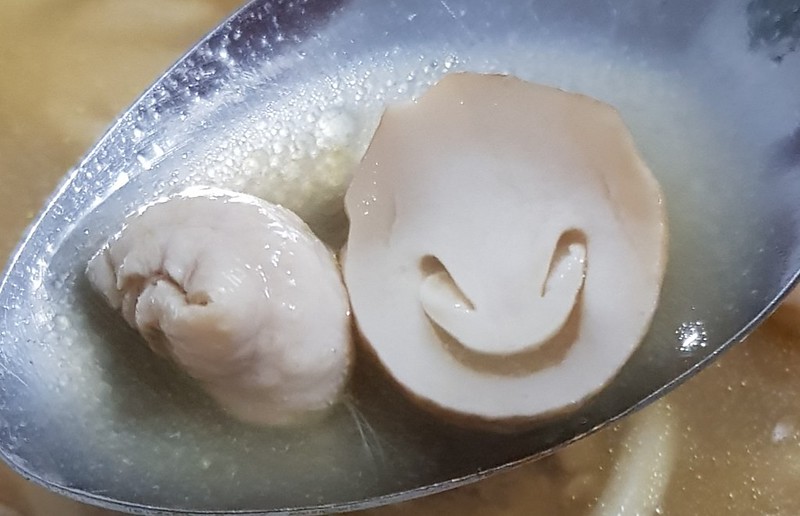
Waiter, there's a smile in my soup

Often on Saturdays, we do some kind of baking or cooking as way way for people to learn something new with results that they can eat themselves or use to bless their friends and neighbors. Typically, these are more western kind of foods which not everyone appreciates, because they are so different from their local Isaan foods.

So, at the beginning of last week, I suggested something different to Ngok, one of the women from our church. I asked if there was something we could make and give away to show love to their neighbors in Ban Kae (the name of their village). Ngok said she would think about it.

It so happened that during that week, several people in the village came down with COVID and were either isolating at home or, if their cases were severe, being treated in the hospital. Ngok contacted the Village Public Health Agent (who lives next door to her), and suggested making food to bring to the families.

Ngok decided to make Chicken Tom Yum. Tom Yum is a kind of soup that supposedly has many heath benefits. I guess in that way, it is kind of like chicken soup we make in the US, which is supposed to beneficial if you are sick. The name Tom Yum is comprised of two words. Tom means to boil. Yam (pronounced more like "yahm") is a type of spicy-sour salad they make here. So is it a spicy-sour soup with herbs and vegetables. The standard ingredients include galangal (a type of ginger), lemongrass, kaffir lime leaves, garlic, lime juice, fish sauce and chili peppers. There are also typically shitake mushrooms or straw mushrooms. It is usually garnished with cilantro. Other ingredients may be added as well such as tomatoes or scallions. The first three ingredients are often sold in packs, along with cilantro, in markets or grocery stores. Often it is made with shrimp (tom yum koong), but it can be made with fish or chicken. The galangal, kaffir lime leaves and lemongrass are not eaten, but are left in the soup to add flavor.

Food Distribution to families with COVID  3
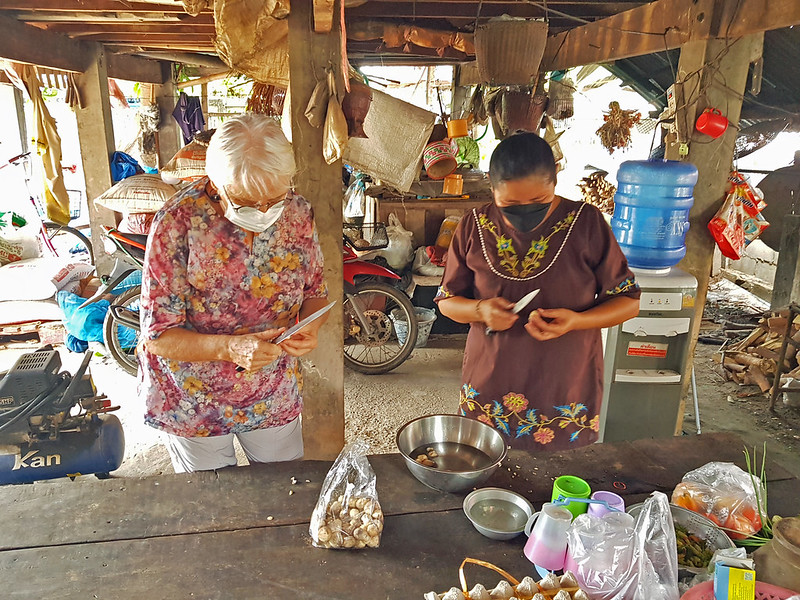
Cutting up straw mushrooms


Ngok was nice and used celery instead of cilantro, which meant that I could eat it. (I'm allergic to cilantro).

Food Distribution to families with COVID  4
Finished Pot of Soup


Waiter, there is a smile in my soup
Straw Mushroom with a Smile


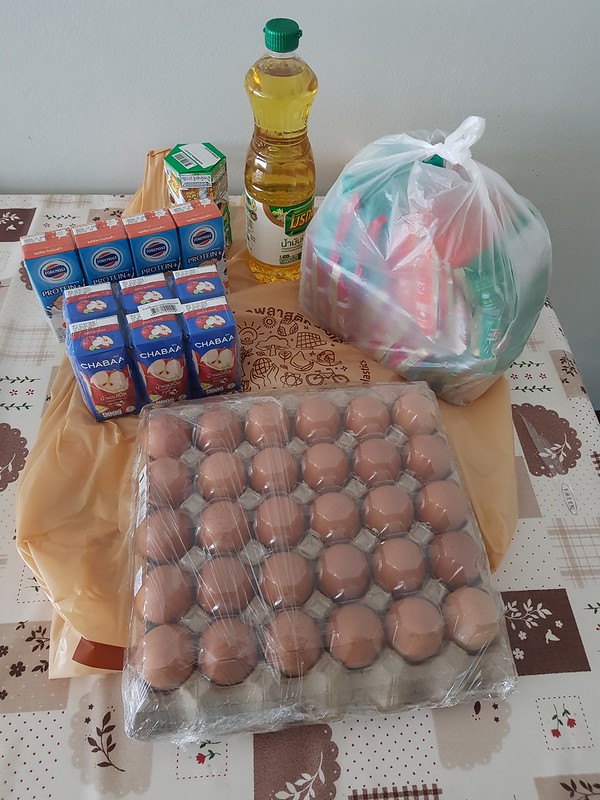
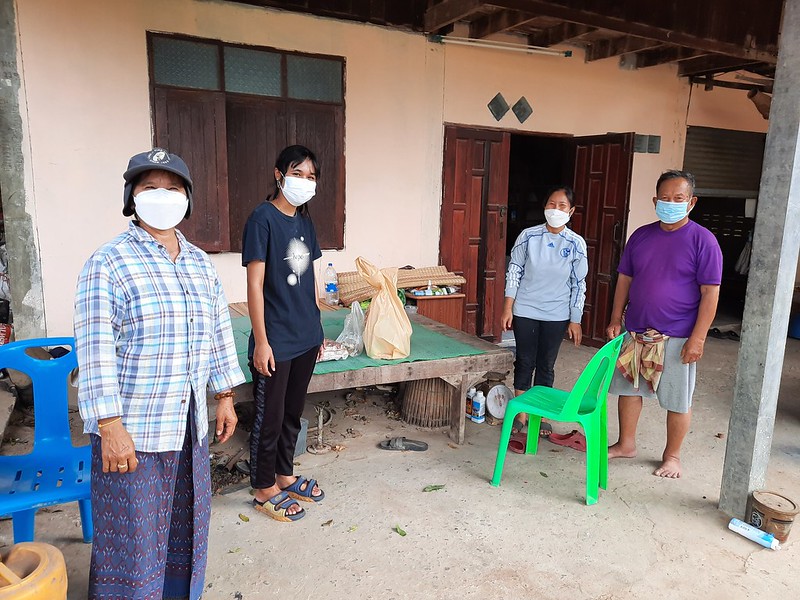
To go with this food, we prepared a bag of other food items to give away to the families affected with COVID.

Food Distribution to families with COVID  1
Food Items to Hand Out


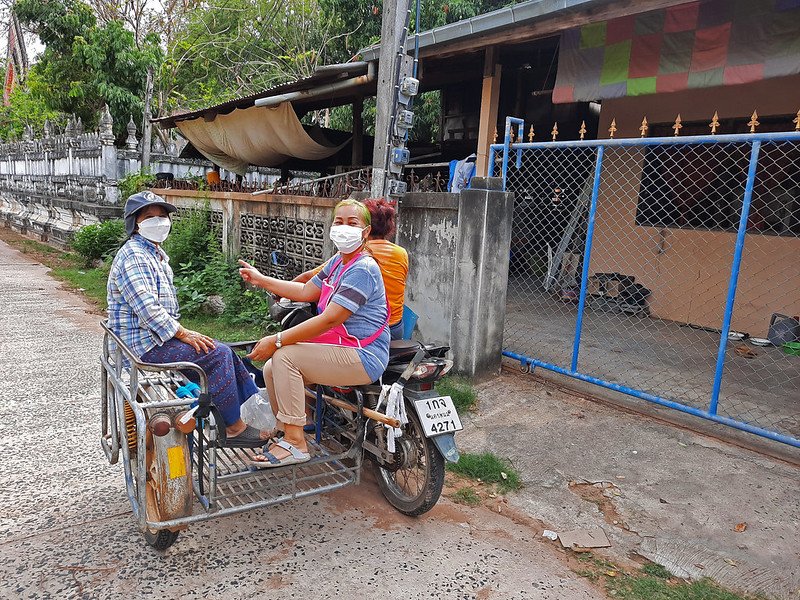
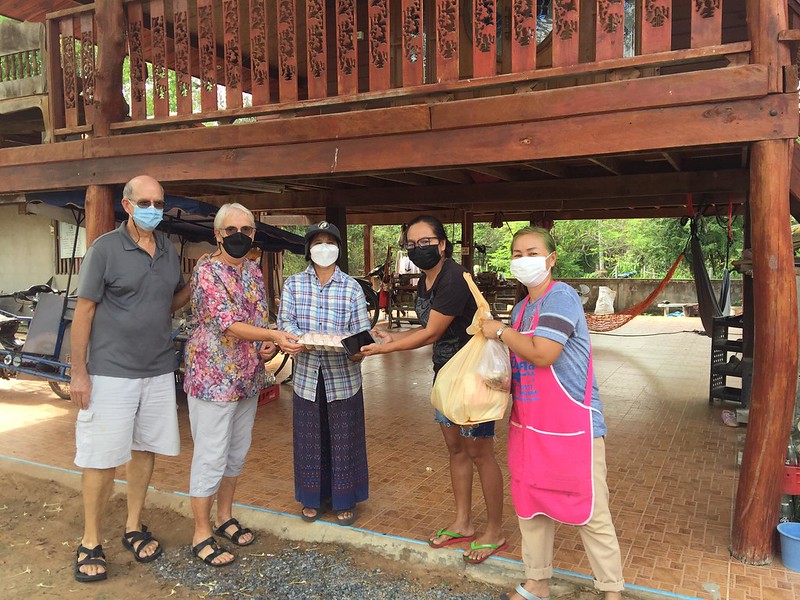
Because of its large size, Ban Kae is subdivided into two administrative sub-villages; each has its own Public Health Agent. They had identified ten families as being affected with COVID, and they led us around on a motorcycle with sidecar to deliver the Tom Yum and food items.
Food Distribution to families with COVID  13
Ngok with Publich Health Agents on Sidecar


Food Distribution to families with COVID  21
Traveling Around the Village

Some families had family members that were COVID-free and we were able to hand the items directly to them.

Food Distribution to families with COVID - View Photos 1
Handing Out Food


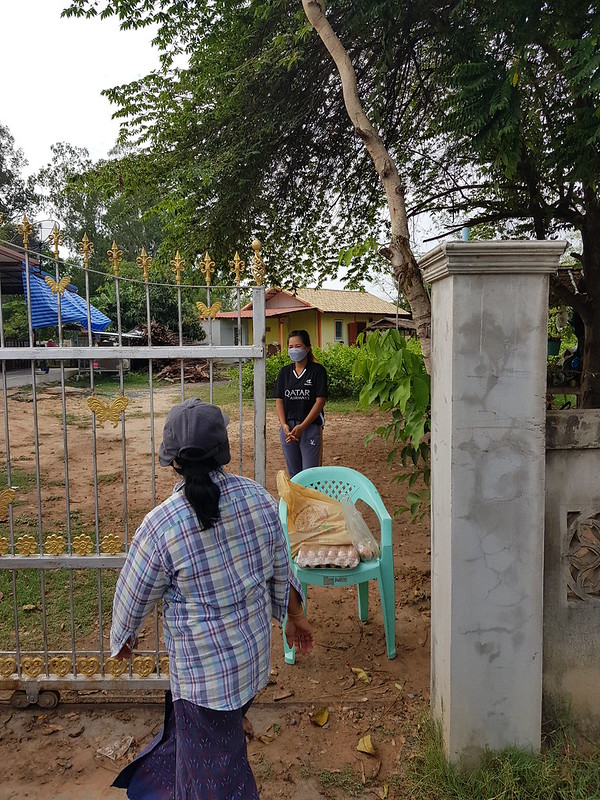
In families with no COVID-free members, we left the items in a chair or table for them to pick up.

Food Distribution to families with COVID  17
Leaving Food for Families


Food Distribution to families with COVID  14
Special thanks to View (in the blue t-shirt) who helped make and package the soup and who took a bunch of photos for us.


A few days before we gave out the food, Ngok's brother was asking about Matthew 5:13, which he had been reading.

Let me tell you why you are here. You’re here to be salt-seasoning that brings out the God-flavors of this earth. If you lose your saltiness, how will people taste godliness? You’ve lost your usefulness and will end up in the garbage. (The Message)

I asked Ngok's brother if they liked bland food. He said that they didn't. I told him that this verse means that, like salt, we are to bring flavor to the world around us by being a benefit to the people around us.
This week we had the opportunity to bring flavor to the community by delivering savory food.

Saturday, January 22, 2022

A Year Ago Today

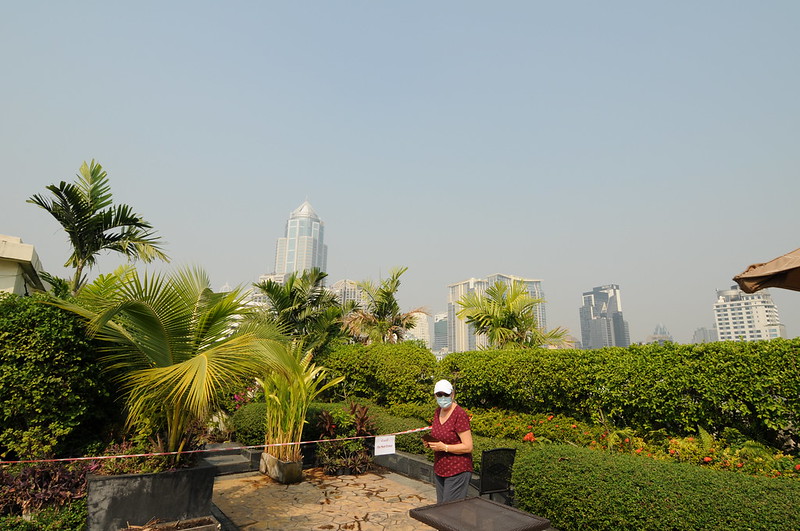
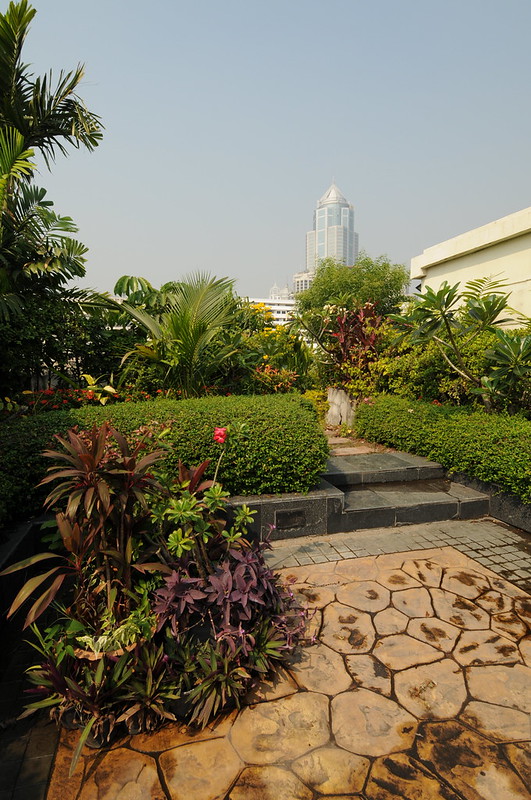
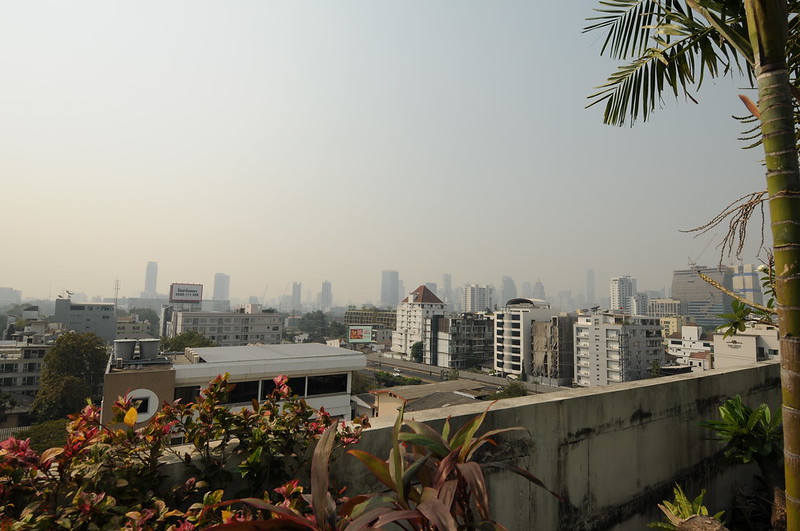
This week marks one year since we returned to Thailand after our COVID exile. And today is one year since we were let out of our quarantine room for 45 minutes to go out on the rooftop garden. So here are some of our quarantine photos from a year ago.

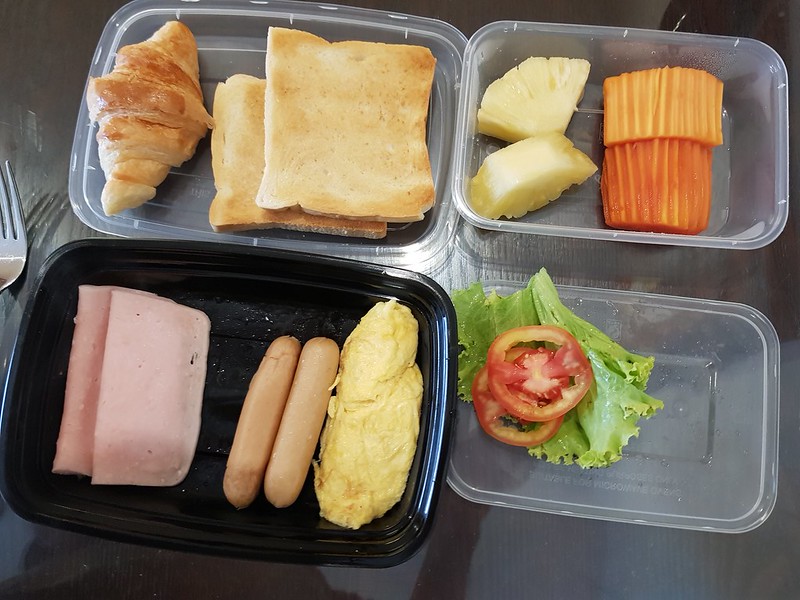
Breakfast that day was the American Breakfast. This thing they call an American Breakfast is something I've only ever had in Thailand. Before that, I never thought to eat hot dogs in the morning.

Lohas Residences - breakfast - American Breakfast
American Breakfast


After breakfast, we were escorted to the roof for 45 minutes in the fresh air.

Lohas Residences Rooftop Views 2021-1-23 13
Doing Laps in the Rooftop Garden


Lohas Residences Rooftop Views 2021-1-23 14
Rooftop Garden


Lohas Residences Rooftop Views 2021-1-23 15
Bangkok Views


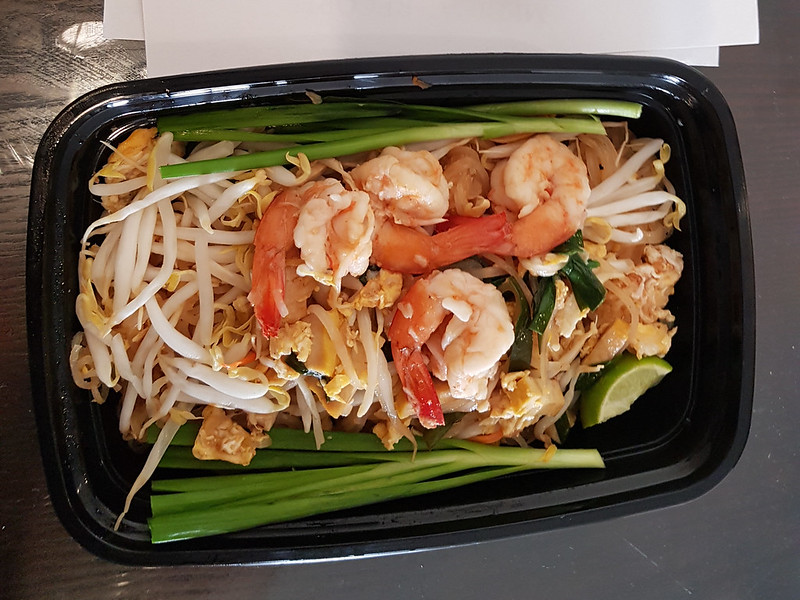
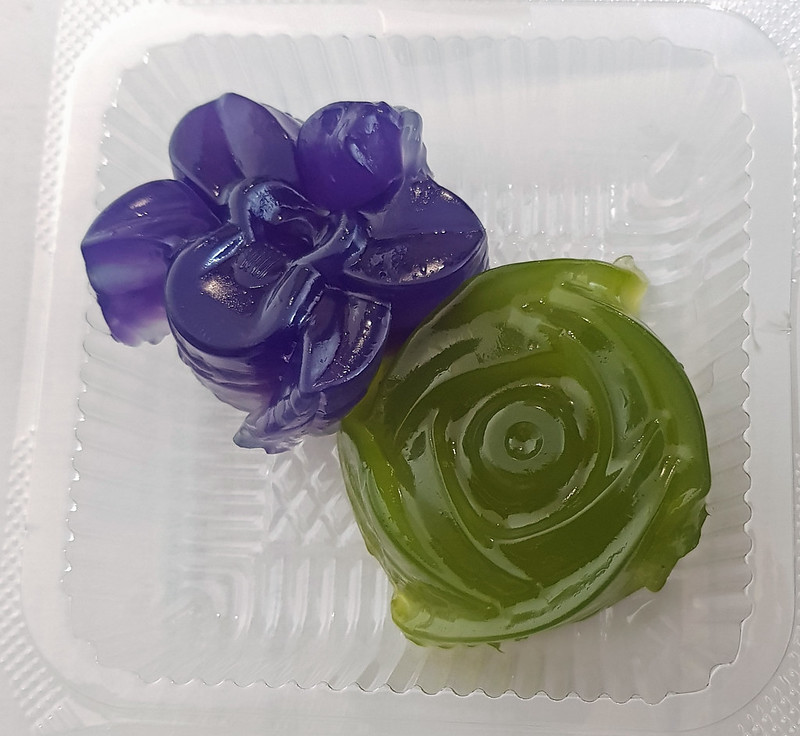
For lunch that day we had Pad Thai. Something we have not had much since then since we have not found a place in our town that sells it. Along with that was a tapioca dessert shaped like flowers.

Lohas Reidences - lunch - Pad Thai
Pad Thai with Shrimp


Lohas Residences - dessert - tapioca gelatins
Tapioca Gelatin Desserts


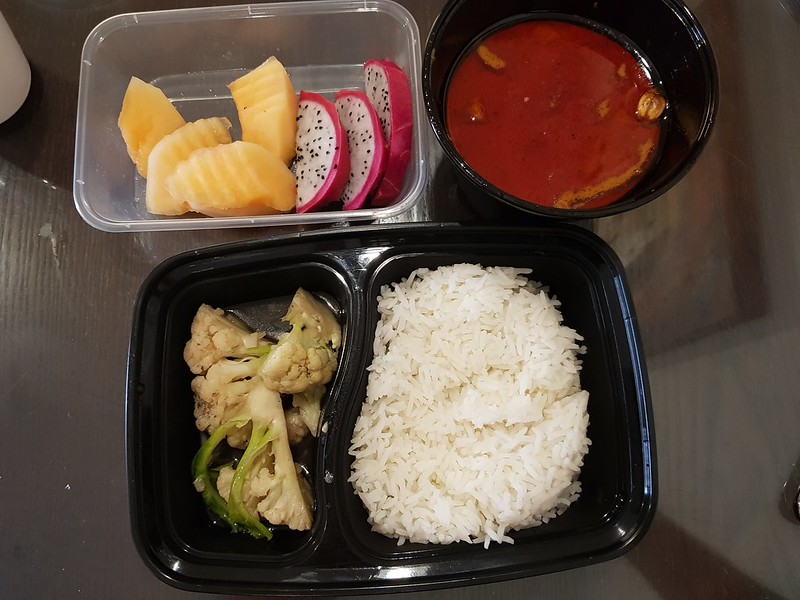
Then in the evening we had massaman curry.

Lohas Residences - dinner - Massaman Curry
Massaman Curry


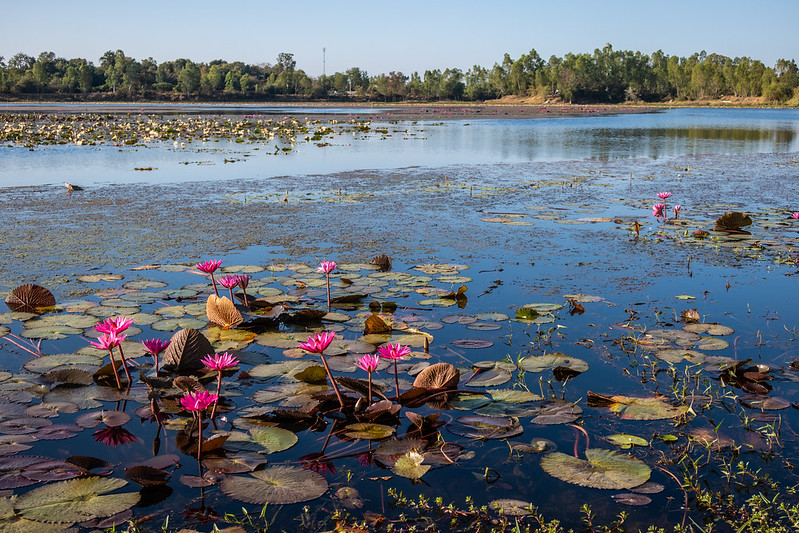
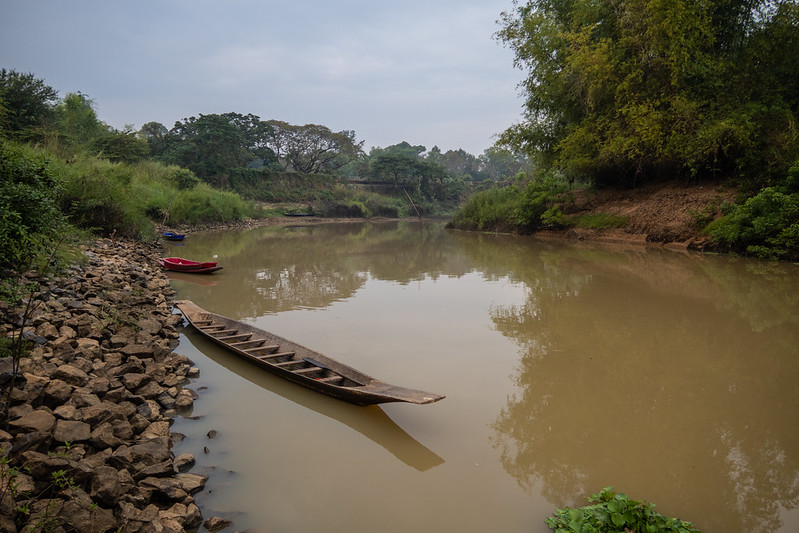
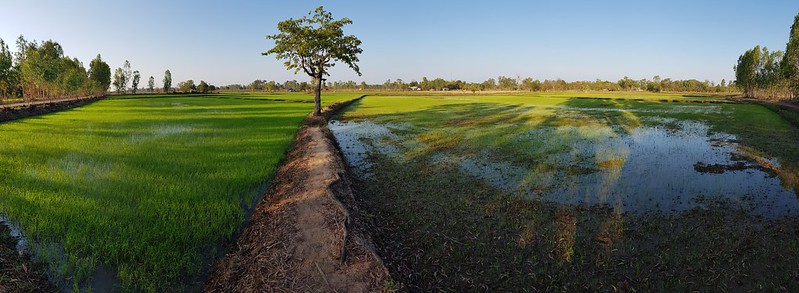
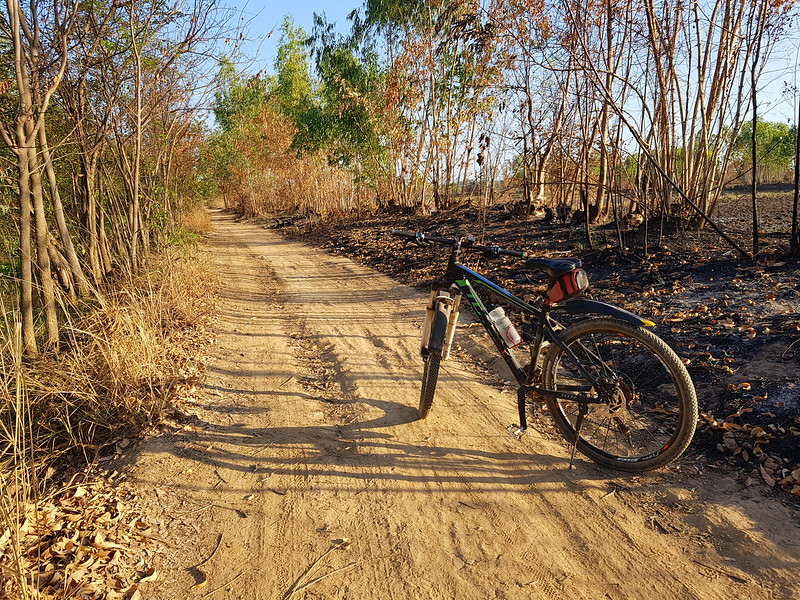
After being cooped up for a couple of weeks, I am much more appreciative of how nice it is to be able to get out and around. And we are glad to be living in a rural area where it is pleasant to bicycle through the fields and forests. Often when I'm out pedaling among the paddies I praise God that I get to live in such a beautiful locale. So, by contrast, here are some scenes from this past week.

Nymphaea pubescens Willd. Nymphaeaceae-Water Lily, บัวแดง 11e
Pink Water Lilies


Canoes in the Pao River 5e
Canoe in the Pao River in Kamalasai


Rice Paddies of Kamalasai 40
Newly Planted Rice Paddies


Kalasin Unpaved 5
Pedaling the Field Roads


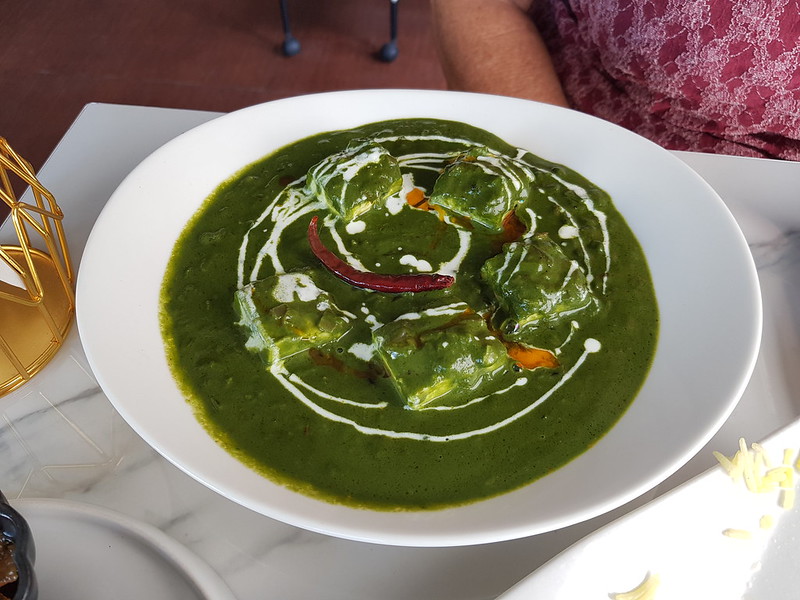
Bombay restaurant Kalasin 4 - palak paneer
Palak Paneer at an Indian Restaurant in Kalasin


While the environment we find ourselves in now is much different than it was a year ago, the two are similar in that God is present in both situations. Whether we're stuck in a building in the big city or surrounded by the hope represented in the greening rice paddies, God is close by and ready to visit with us.

But as for me, how good it is to be near God! I have made the Sovereign LORD my shelter, and I will tell everyone about the wonderful things you do.
Psalm 73:28 (NLT)

Sunday, November 28, 2021

Breaking Tradition

For Thanksgiving this year we decided to break tradition in a couple of ways.

The first way we broke tradition was in our menu choice. Rather than turkey or duck, we opted for roasted chicken. It's not often that we've had turkey for Thanksgiving here in Thailand, as imported frozen turkeys are expensive (about US$100 for a cheap one). While there are some turkeys grown locally, they are not that common—though I have seen some wandering around Kamalasai. The meat from these turkey's is likely not so tender, either. Another nice thing about the chicken is that it was a good size for the two of us.

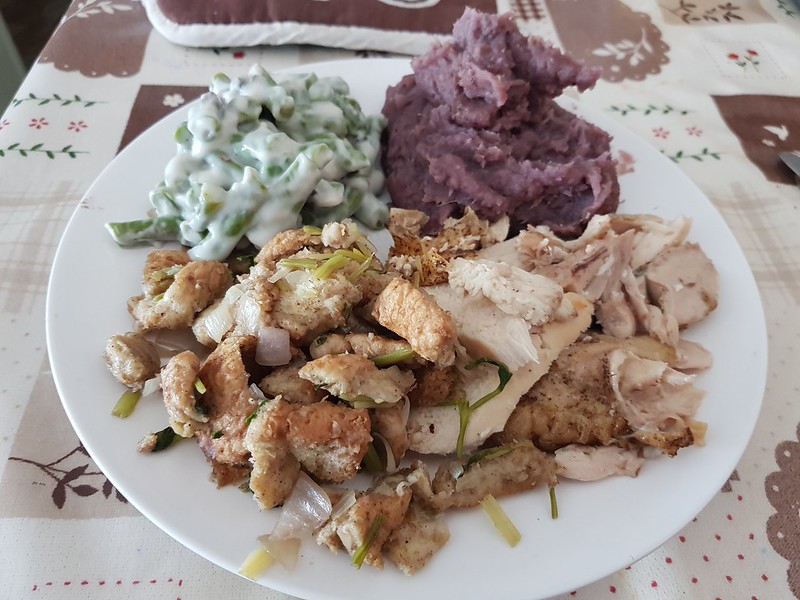
We also had string bean casserole, without the fried onions and cooked on a stove-top. We were going to have mashed potatoes, but opted for mashed sweet potatoes since we had them. These ended up with a unique color because we mixed brown and orange varieties. The stuffing was more-or-less normal.

Thanksgiving Dinner - chicken, stuffing, bean casserole, mashed sweet potatoes
Thanksgiving Dinner


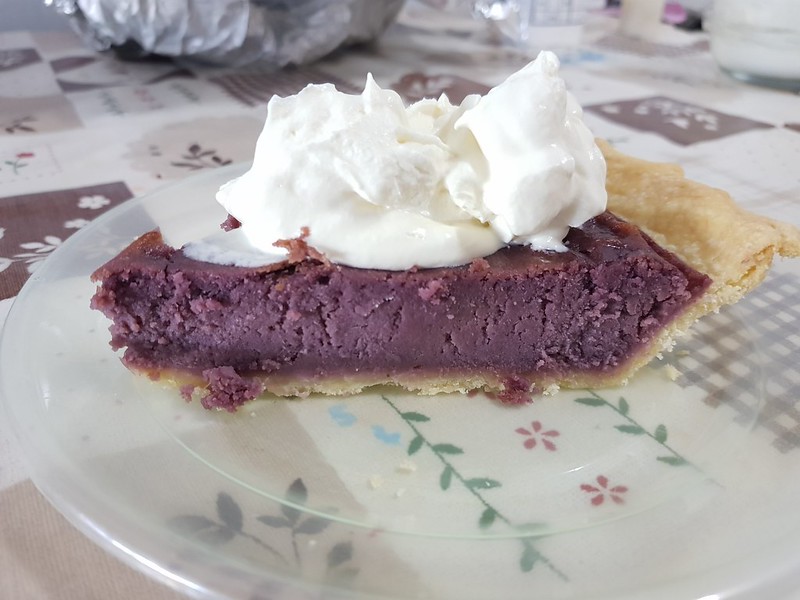
We always like to have sweet potato pie with our Thanksgiving. This ia a tradition we picked up when we lived in Alabama. Through the years, the nature of the sweet potato pie, though, has been a bit variable, depending on the type of sweet potatoes that we can find depending on where we have lived. In our slight variance from normal this time around, we used purple Japanese sweet potatoes. Taste is similar to the orange variety, but the color adds quite a different character to the final product.

Thanksgiving Dinner - Sweet Potato Pie 2
Purple Sweet Potato Pie


Another way we broke with tradition is that we celebrated the Thanksgiving holiday twice. While we wanted to invite some Thai friends over for a traditional holiday meal, we have found in the past that our North American foods are not always appreciated by our Isaan friends. We have sometimes prepared lots of food only to have little of it eaten. So we decided to have a separate celebration and let our friends help decide the menu. The word hamburgers came up in the conversation.

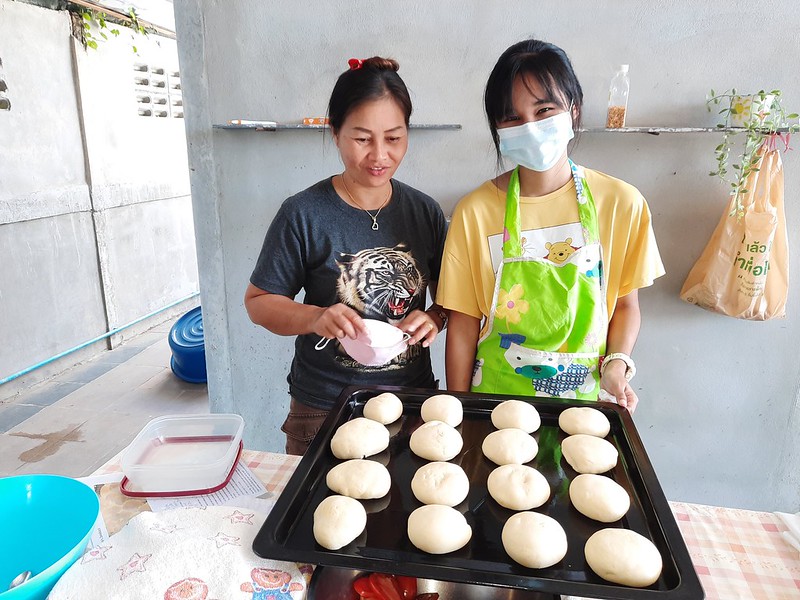
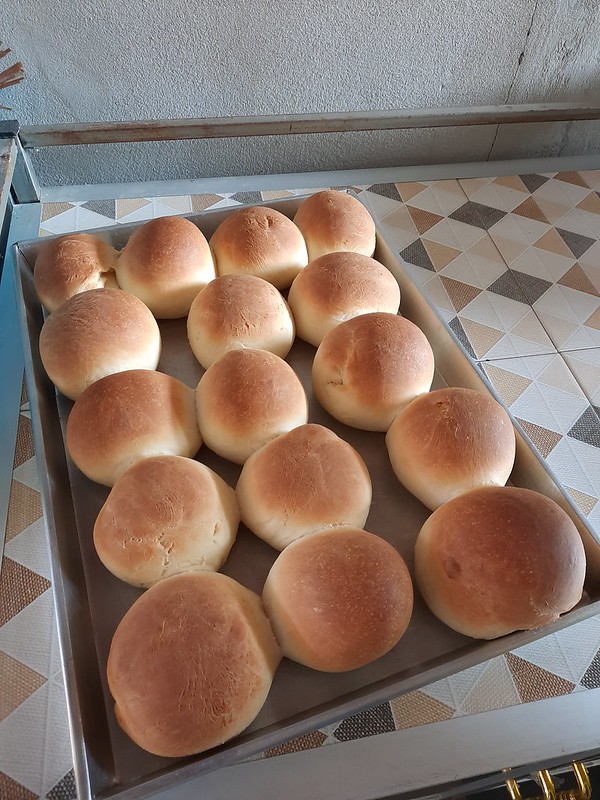
Ingrid made some dough for the buns ahead of time using a zwieback recipe. Ngok and View helped roll out the buns. (Sorry, Mennonite friends, these zwieback did not have the cap on top.)

Thanksgiving Hamburger and French Fries Meal 2
Buns, Ready to Cook


Thanksgiving Hamburger and French Fries Meal 15
Finished Hamburger Buns


I was in charge of the meat. The charcoal cooker we borrowed was a bit small, so it took a while to cook all the burgers that I had made.

Thanksgiving Hamburger and French Fries Meal 5
Grilling the Burgers


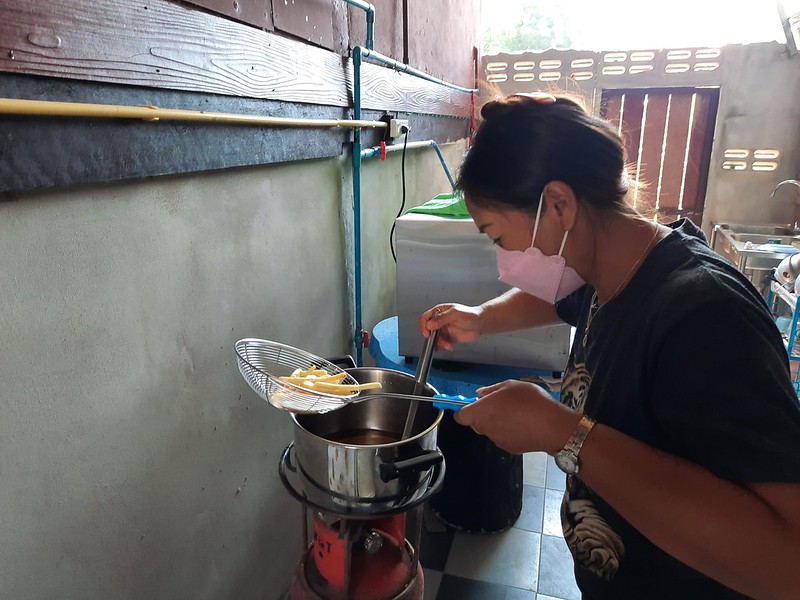
Ngok and View cooked the french fries.

Thanksgiving Hamburger and French Fries Meal 9
Making the French Fries


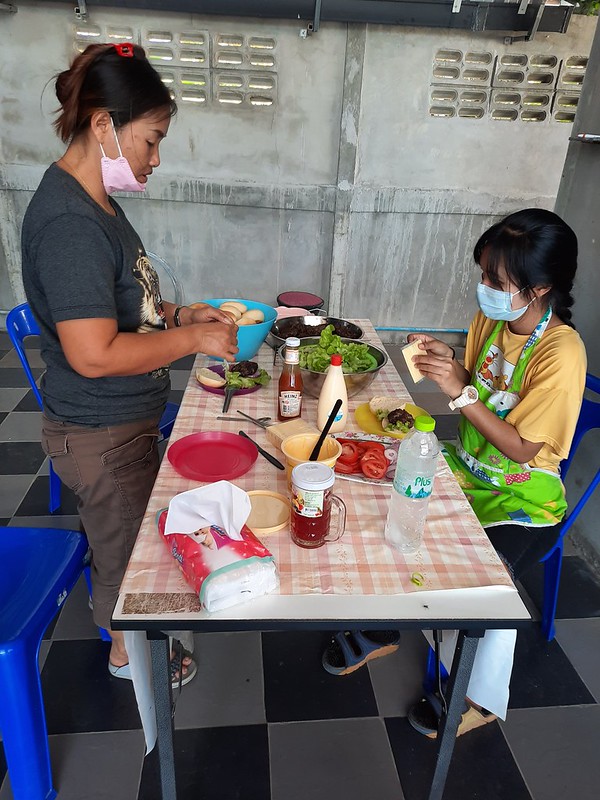
We only had three people join us at the actual meal. Several people couldn't make it, but Ngok and View put together some plates for them.

Thanksgiving Hamburger and French Fries Meal 17
Decorating the Burgers


In the end, we had a good time at both celebrations. After all, Thanksgiving is not about what we put in our mouths, it is about the God who provides good things for us to eat.

For every creation of God is good and no food is to be rejected if it is received with thanksgiving.
1 Timothy 4:4 (NET)