Sunset Over the Mekong River

Showing posts with label holidays. Show all posts

Sunday, November 28, 2021

Breaking Tradition

For Thanksgiving this year we decided to break tradition in a couple of ways.

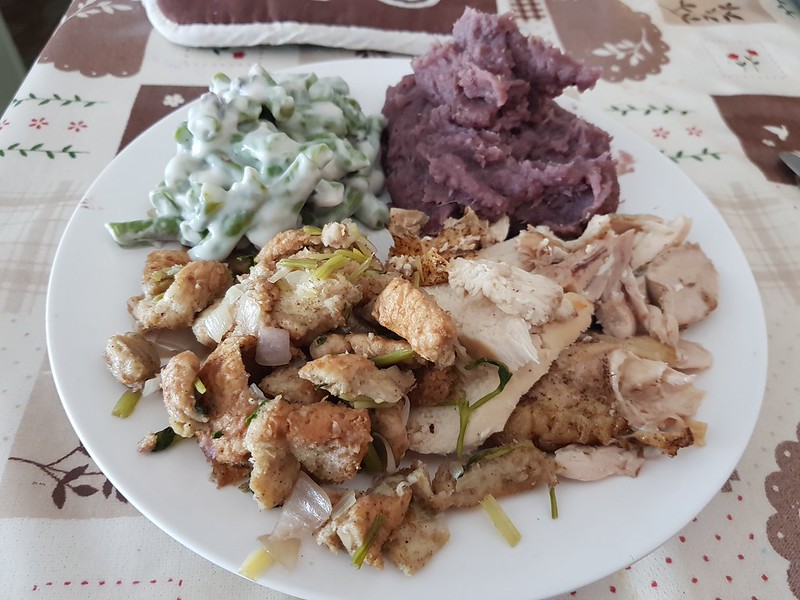
The first way we broke tradition was in our menu choice. Rather than turkey or duck, we opted for roasted chicken. It's not often that we've had turkey for Thanksgiving here in Thailand, as imported frozen turkeys are expensive (about US$100 for a cheap one). While there are some turkeys grown locally, they are not that common—though I have seen some wandering around Kamalasai. The meat from these turkey's is likely not so tender, either. Another nice thing about the chicken is that it was a good size for the two of us.

We also had string bean casserole, without the fried onions and cooked on a stove-top. We were going to have mashed potatoes, but opted for mashed sweet potatoes since we had them. These ended up with a unique color because we mixed brown and orange varieties. The stuffing was more-or-less normal.

Thanksgiving Dinner - chicken, stuffing, bean casserole, mashed sweet potatoes
Thanksgiving Dinner


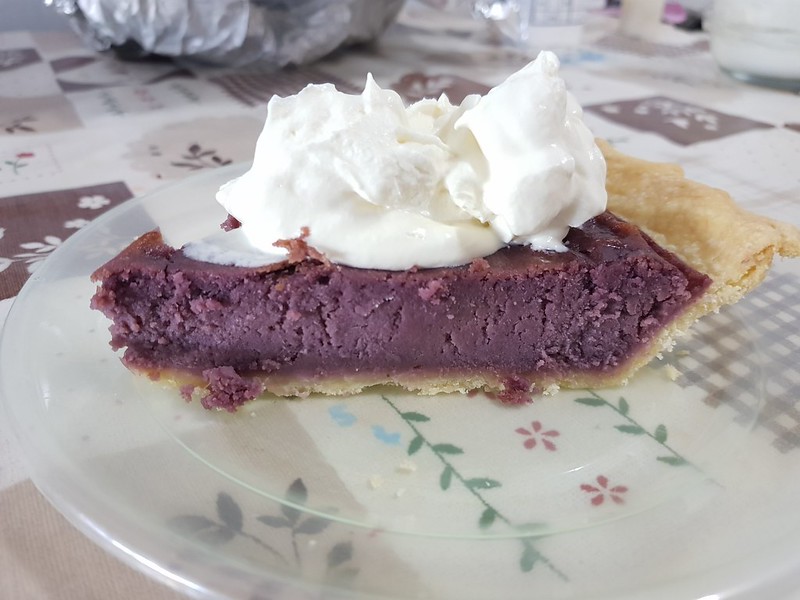
We always like to have sweet potato pie with our Thanksgiving. This ia a tradition we picked up when we lived in Alabama. Through the years, the nature of the sweet potato pie, though, has been a bit variable, depending on the type of sweet potatoes that we can find depending on where we have lived. In our slight variance from normal this time around, we used purple Japanese sweet potatoes. Taste is similar to the orange variety, but the color adds quite a different character to the final product.

Thanksgiving Dinner - Sweet Potato Pie 2
Purple Sweet Potato Pie


Another way we broke with tradition is that we celebrated the Thanksgiving holiday twice. While we wanted to invite some Thai friends over for a traditional holiday meal, we have found in the past that our North American foods are not always appreciated by our Isaan friends. We have sometimes prepared lots of food only to have little of it eaten. So we decided to have a separate celebration and let our friends help decide the menu. The word hamburgers came up in the conversation.

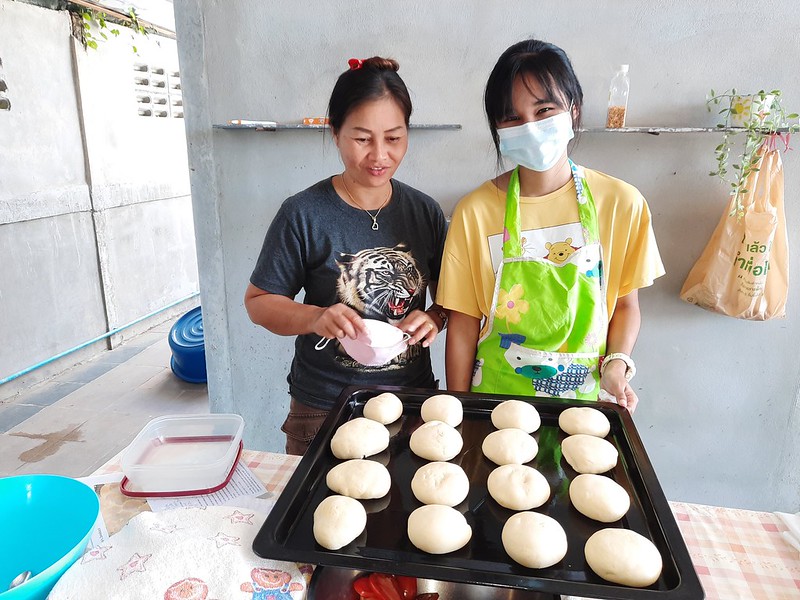
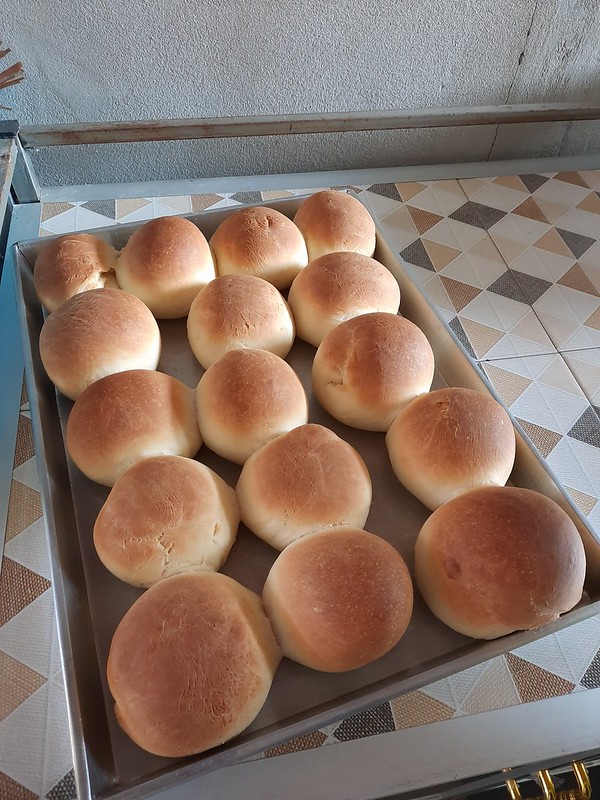
Ingrid made some dough for the buns ahead of time using a zwieback recipe. Ngok and View helped roll out the buns. (Sorry, Mennonite friends, these zwieback did not have the cap on top.)

Thanksgiving Hamburger and French Fries Meal 2
Buns, Ready to Cook


Thanksgiving Hamburger and French Fries Meal 15
Finished Hamburger Buns


I was in charge of the meat. The charcoal cooker we borrowed was a bit small, so it took a while to cook all the burgers that I had made.

Thanksgiving Hamburger and French Fries Meal 5
Grilling the Burgers


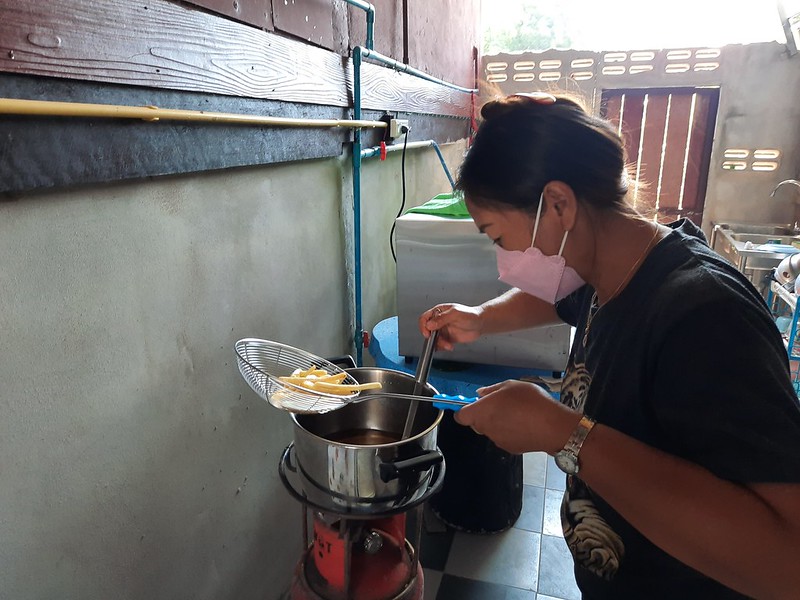
Ngok and View cooked the french fries.

Thanksgiving Hamburger and French Fries Meal 9
Making the French Fries


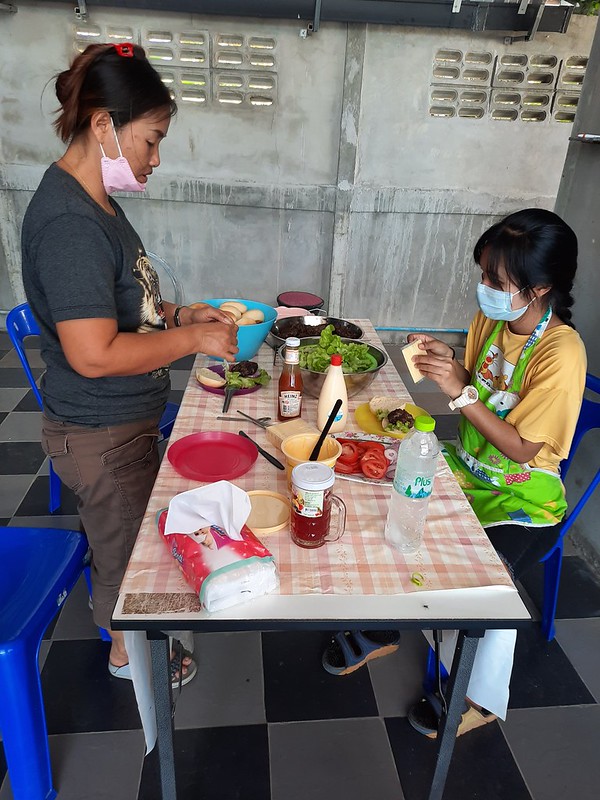
We only had three people join us at the actual meal. Several people couldn't make it, but Ngok and View put together some plates for them.

Thanksgiving Hamburger and French Fries Meal 17
Decorating the Burgers


In the end, we had a good time at both celebrations. After all, Thanksgiving is not about what we put in our mouths, it is about the God who provides good things for us to eat.

For every creation of God is good and no food is to be rejected if it is received with thanksgiving.
1 Timothy 4:4 (NET)

Wednesday, December 25, 2019

Traditions


Family traditions.

We grow up with family traditions. Without thinking, we assume we will carry these on all our lives. When we marry, we have to figure out how to blend two sets of traditions, which can be a source of conflict. Then we end up adding our own spin on things and figure we will pass these new traditions down to our children.

Christmas tree from the early years
before Alan was taller than the tree.


One tradition I remember is that on one of my brother's birthdays (December 15th), we would drive down the hill to a Christmas tree farm. Dad would go pick a tree his height and we would cut it down, bring it home, and decorate it.

On Christmas Eve, we were allowed to open one gift.

On Christmas morning, we kids were up early. We were allowed to open our stockings early, while our parents were sleeping. Then we would have breakfast. The staples of Christmas breakfast were scrambled eggs, Brown 'n Serve® sausages and Pillsbury Pop 'n Fresh® cinnamon rolls—two kinds: orange glaze and caramel topping. To drink there was orange juice and hot chocolate served in Santa Claus mugs.
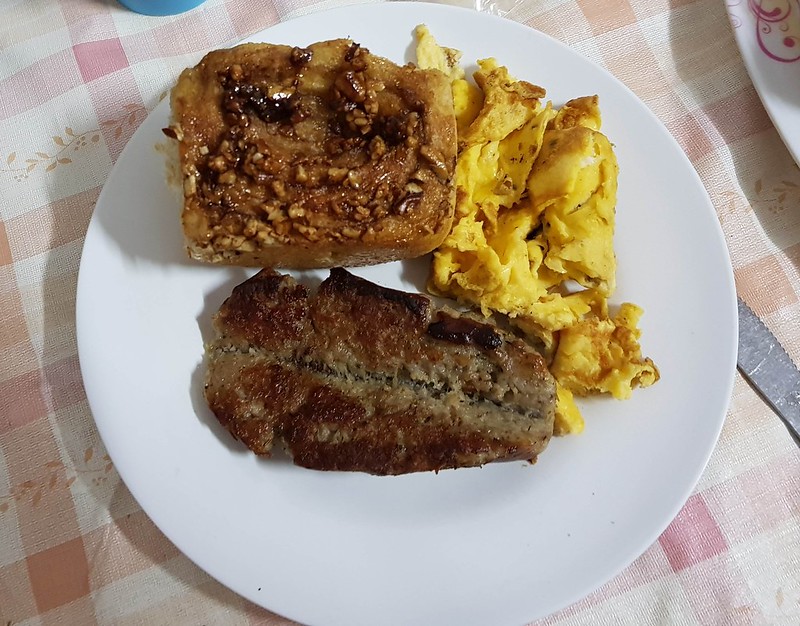

Christmas 2018 breakfast 4
Modern version of traditional Christmas breakfast

Ingrid's traditions were a bit different. Christmas Eve was a time to celebrate in the church, where the children would receive a Christmas Tüte, a brown paper bag with treats inside. In her house, the parents set up the Christmas tree on Christmas Eve while the kids were out of the way.

I remember our first Christmas together we had to work out what our blended family traditions would look like. What things would we like to pass on to our children? Even the Christmas cookie offerings had to be figured out. From my childhood there were almond snowballs, Starlight mint surprise cookies,  thumbprint cookies (yuletide gems), and peanut butter blossoms. Ingrid brought Pfferneuse (which for many years Ingrid's mom made and sent to us) and Stöllen into the mix. Both of us were used to the sugar cookies and cookie-press cookies. A sister introduced us to almond Rocha.

But then there were no children. No one to pass family traditions down to.

And then we ended up living places where we could not get the things we associated with family traditions.

So we improvised. One year, some friends sent us some coconut-based fruit cake. They did this for several years and eventually we started making our own. A new tradition was born, added to the various cookie receipts we inherited from our families.

Many years I ended up making my own cinnamon rolls. Brown 'n Serve sausages were seldom an option, but usually we could find some other kind.

When we lived in Haiti, after breakfast on Christmas Day, we would drive two hours to our mission's main office to have dinner with the other missionaries. Then we would head to the beach house in Montrouis for a few days. There they had palm trees naturally decorated with green, coconut-shaped ornaments. Now that's my kind of Christmas tree.
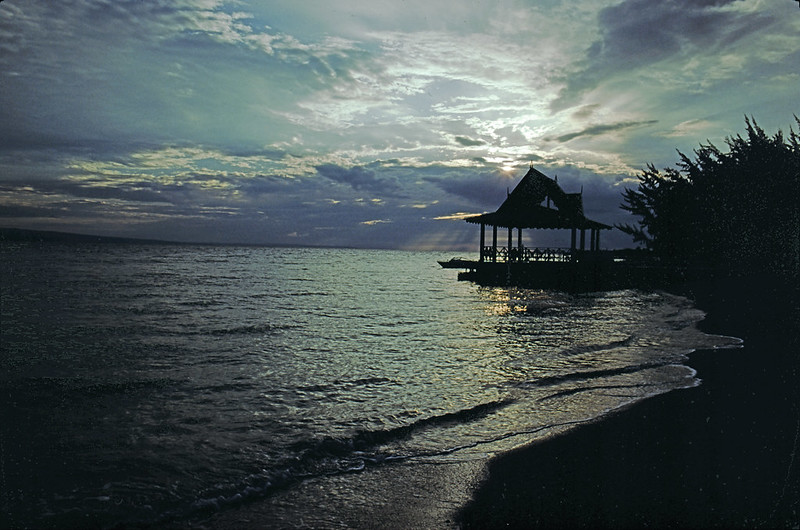
Sunset at Moulin Sur Mer Late 1980s Kodachrome
Montrouis, Haiti, a nice place to spend Christmas

One year we spent Christmas Eve in Morro Bay. In our hotel room on Christmas morning we turned on a television station that had a video of a burning fireplace with Christmas carols playing. Lunch was a picnic on a cool, misty beach with smoked salmon and crackers.

But this year, things are really different.  In addition to the usual busyness of Christmas outreach events (one of which was on Christmas day), we are preparing to leave for the US for a few months shortly afterwards. So our theme for presents was things that took up no space and had no weight. There is also a lot of prep to do before traveling back to North America. Add to that all the stuff to do for visa renewals.

Who has time for Christmas? Not much time for tradition. No Christmas cake this year. Limited variety of Christmas cookies.

No tree this year—not even our tiny artificial one. But we did take out some manger scene ornaments and set them out on a table.


Christmas Eve was mostly working. So for Christmas Eve dinner, we picked up a cooked ham leg at the grocery store on the way home from rehearsing music.


I did not make homemade cinnamon rolls this year, as we are trying to empty our cupboards and didn't have all the ingredients. But there was some leftover sticky rice in the freezer from some Khao Lam someone gave us a couple weeks ago. How about we add some cinnamon and coconut milk to that? And there were some British-style sausages in the freezer, too. No orange juice, but fresh oranges instead. Thus, Christmas breakfast is born.


On Christmas Day, I told Ingrid that as I thought back over all of our Christmases together, there is only one constant tradition—that we spend it together.

I was never one for much in the way of Christmas decorations, and this detachment from tradition makes that tendency even stronger. But this year even I felt myself missing some of the trappings of the season.

Some may decry me for lack of "Christmas spirit" since I don't buy into all the glitter and glam. But, on the other hand, I think I have even more "Christmas spirit," for what makes Christmas special is not a tree, or stockings, or a fat man with a long white beard in a red suit. The Spirit of Christmas is the Spirit of Jesus, whose birth we celebrate on this day.

Here in Thailand, many think that Christmas is Santa Claus' birthday. That is probably more true than I like to admit, because December 25th is more closely associated with Santa Claus than it is with the actual birthday of Jesus. I actually don't have a problem with separating Jesus from this celebration of   stuff that happens each December, because I don't think Jesus is all too happy if we get the latest toys and tech gadgets and then let those things take us further from Him. The greatest Christmas present of all time was wrapped in cloth and lying in a manger.

It makes no difference if we have the greatest nativity scene in town and then live our lives as if Jesus doesn't exist.

We may not have much in the way of Christmas traditions, and even if what we do have should pass away, I pray that my heart, like a manger, will continually be a place where the Spirit of Christmas dwells.

The angel said,

Fear not, for behold, I bring you good news of great joy that will be for all the people. For unto you is born this day in the city of David a Savior, who is Christ the Lord. 
Luke 2:10, 11

Tuesday, December 20, 2016

What does Jesus Look Like To You?

Today in the town of David a Savior has been born to you; he is Christ the Lord.  This will be a sign to you: You will find a baby wrapped in cloths and lying in a manger.

Suddenly a great company of the heavenly host appeared with the angel, praising God and saying,

"Glory to God in the highest, and on earth peace to men on whom his favor rests."
          Luke 2:11-14 (NIV)

Earlier this month, while we were in Connecticut, we went to the Abbey of Regina Laudis in
Bethlehem, Connecticut. It seemed appropriate to visit a village by that name during the Christmas season.

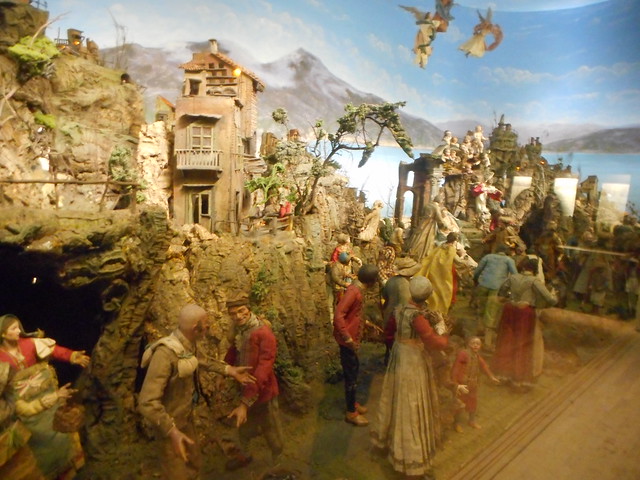
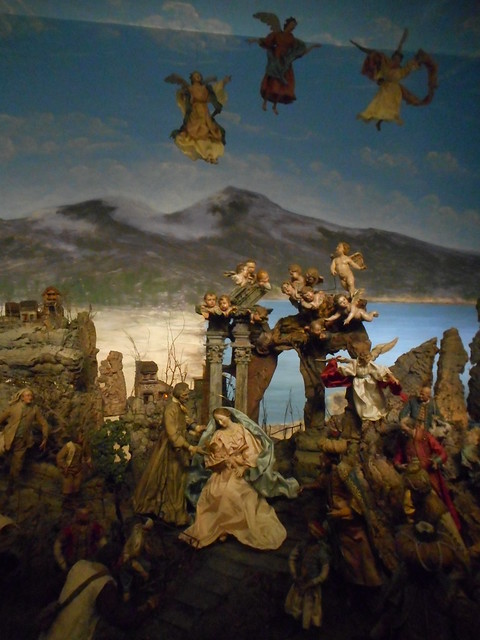
At the abbey, they have a Neapolitan crèche dating from the 18th century.  The crèche is interesting in that it tries to depict how the people of the time would respond to the birth of Jesus.  So there is a large village scene, with Mary and Joseph and baby Jesus and company in one part, while much of the rest of the village goes about their business.


Abbey f

Abbey b3

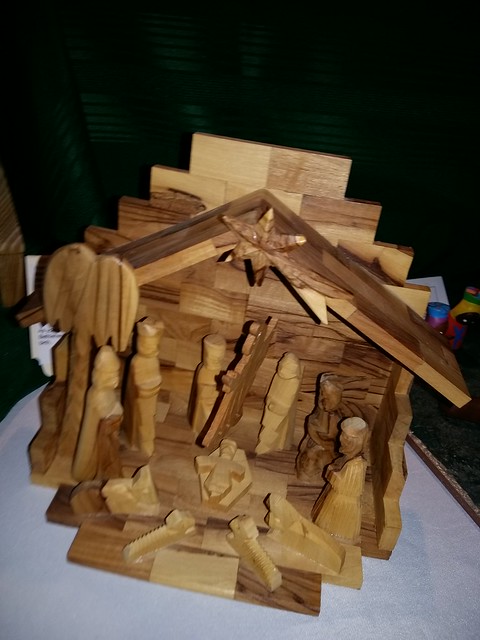
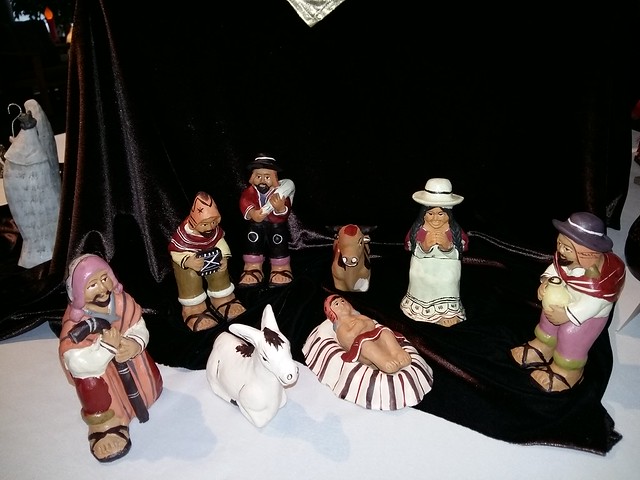
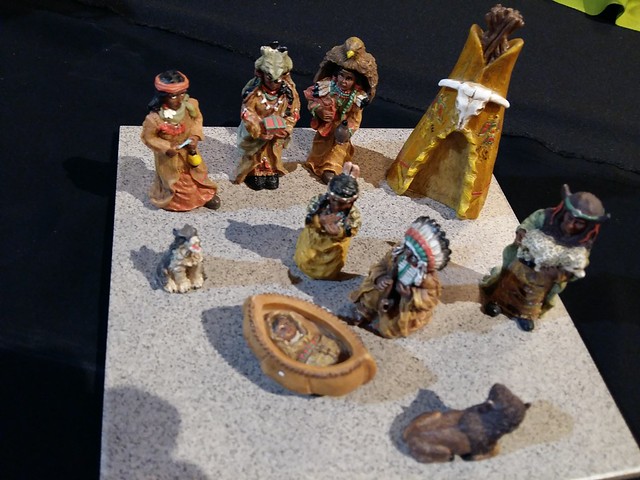
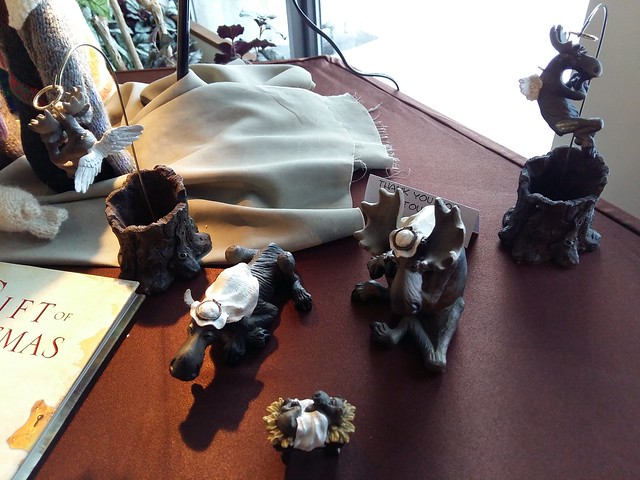
Then, this past week, we had the opportunity to visit Reformed Church in Edmonton, Alberta.  Each year the church puts on a display of nativity scenes that people have collected from around the world.  There is a great variety in both the construction of the nativity scenes and how the characters are represented.


Nativity displays at Reformed Church

Nativity displays at Reformed Church

The baby Jesus ends up with various shades of skin tones.  While normally he is pictured laying in the manger on His back, some scenes depict him on his stomach.  One display has him in a canoe instead of a manger.

Nativity displays at Reformed Church

There are even some displays which use animals instead of people, and in these sets he may end up as a mouse or a moose.


Nativity displays at Reformed Church

One wonders why God chose to send Jesus at a time when technology was such that no one really knows what he looks like.  If God were to have sent him in this day and age, his birth would have been quickly recorded for all on social media.  But maybe it’s better that way.  With no photographs or realistic paintings to depict what Jesus looked like, we can focus more on other aspects of His life like his activities and teachings.  For in the end, it is not so critical as to what kind of facility the manger was in and exactly who and how many people were present.  The more important thing is, as depicted in the nativity scene at the Abbey, what are we going to do about it?

What are we going to do now that Jesus has come into the world?  What are we going to do about His teachings?  How will we respond?  Will be believe the testimony of the shepherds and angels?  Or will we just go about our lives as if nothing of consequence has happened?  Will we believe and obey?  Or we celebrate the season of materialistic indulgence that Christmas has become?

Thailand is not historically a Christian country.  Few people there could tell you what the real meaning of Christmas is.  Yet all the malls are full of Christmas carols and Christmas displays.  Christmas has become a money-making opportunity for merchants.  Unfortunately, this commercial Christmas is the first one many Thai people learn about.

It’s probably not much different in North America anymore.  There is Santa Claus and Christmas trees and reindeer, but I don’t think most children are learning the story of the first Christmas—the story of when God came to earth to show people what He is like.

It is up to us who believe in Jesus to celebrate Christmas like God did.  To go about humbly demonstrating the love of God to people who are desperately in need of it while telling them the good news that the Kingdom of God is here.  To focus less on stuff and more on the people around us.  To be less concerned with ourselves and more concerned with others.  For Jesus came not to accumulate things in this world but to lay down His life for others.

This, I think, would be the best Christmas present we could give away—and not just one day per year.

For even the Son of Man came not to be served but to serve, and to give his life as a ransom for many. Mark 10:45 (ESV)

Tuesday, October 25, 2016

Cycles


What does the term "fall colors" mean to you?  When you hear that term, what do you see in your mind?

For many years, the term fall colors would cause me to picture standing on a mountain top in the White Mountains of New Hampshire looking across at the vast and varicolored display of reds and oranges and yellows and greens.  Later on in life, living in California, I would think of the non-native oramentals such as Chinese pistache, Chinese tallow and Liquiamber in shades of yellow to purple.

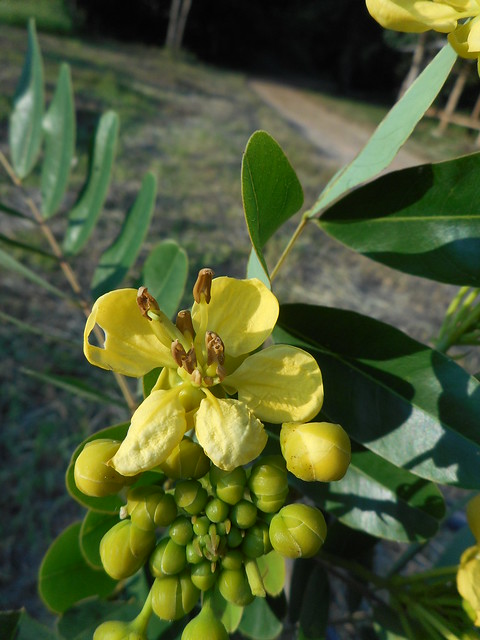
Now, I think of yellow.

For September and October is when the Siamese Cassia bloom in Thailand.

Senna siamea (Lam.) Irwin & Barneby Fabaceae Caesalpinioideae-Siamese cassia, ขี้เหล็กไทย, ขี้เหล็กหลวง 

I first recall seeing these blooms when we visited the Changing Life Center in October 2011 for the first Youth Camp they hosted there.  There was a tree on the campus that was blooming at the time.

But the Siamese Cassia are only  one of many indicators of the passing of time throughout the year.  Some indicators are natural such as when certain flowers bloom, when certain fruit are ripe or when birds pass through on migratory cycles.

Some cycles are agrarian in nature such as rice planting season, corn planting season, harvest, etc.

Some cycles are cultural such as memorial holidays or events such as throwing water during Sonkran or setting off fireworks on Independence Day.

Other cycles are religious.  Some Christians may look forward to things like Advent or Easter.  For the Jew it may be Passover.  For the Buddhist it may be Buddhist lent.

Many of the religious and cultural cycles are based on the cycles of the moon.

Furthermore, there are individual cycles such as birthdays and anniversaries.

No wonder many cultures think of time as cyclical instead of linear.

Solomon wrote:

What has been is what will be, and what has been done is what will be done, and there is nothing new under the sun.
Is there a thing of which it is said, “See, this is new”? It has been already in the ages before us.

 (Ecclesiastes 1:9-10 ESV)  

It takes a while to adjust to the cycles of a new place.  The first year you don't notice the cycles because you are new.  Perhaps each year you start to notice more and more.  Eventually you get used to the cycles and they become part of your norm.  Though perhaps if you grow up in a place, you may take the cycles for granted and hardly notice them at all.

Now that we have lived in northern Thailand for 2-1/2 years, we have become used to some of the cycles--especially the fruit cycles.  Especially mango season!  (Begins about March, peaks in June and July with some varieties carrying on later.)

As we prepare to head back to North America for a few months, part of me is already grieving some of the things I'll miss that we've grown accustomed to such as the cooler, drier weather and the dry-season blooming trees such as flambouyant, Cochlospermum and Tabebuia.  But then we will catch the fruit tree blooming period in the Central Valley of California.  I'm looking forward to the drive from Fresno to Reedley in peak bloom season!  And then there is that annual cultural event of the valley, the International Ag Exposition, which I used to go to every year.  There is also the possibility of a white Christmas for us this year.

We don't know what the future holds for us.  The cycles we may find ourselves in in the future may be different than what we have grown accustomed to.  But one thing doesn't change, and that is God.  Jesus Christ is the same, yesterday, today and forever, the writer of Hebrews tells us. (Hebrews 13:8)  He is the anchor of our lives, for which we are grateful.

I'm thankful for those rhythms God has placed in our lives.  But I'm more thankful that He will still be in my life even when those rhythms are gone.

Sunday, June 15, 2014

Honoring Teacher’s Day-วันไหว้ครู

Outdo one another in showing honor. Romans 12:10b (ESV)
 
Wan Wai Khru is a day in which Thai students thank their teachers.  Typically this is done by presenting a gift of flowers along with performing a wai (holding ones palms together in front of the face while bowing slightly).  This year, the local high school honored their teachers on June 12th.

While we are not school teachers, one young woman who we have been helping to learn English and also helping in her walk with Jesus chose to make a card for us for Wan Wai Khru.

And we, of course, were very honored to receive the card.

Some days we wonder whether one is making an impact in the lives of people around us.  So it was great to receive a special gift like this.

The card was quite pretty and well made.  Lie was very creative in her use of dried flowers and seeds and in her use of color.

วันพฤหัสก่อนนักเรียนที่โรงเรียนเวียงแก่นวิทยาคมถวายเกียรติให้ครูในวันไหว้ครู

มีนักเรียนคนหนึ่งที่เราช่วยโดยสอนภาษาอังกฤษ  ถึงแม้ว่าเราไม่ได้เป็นครูประจำของเธอ  เมื่อวานนี้เธอถวายเกียรติให้เราโดยทำการ์ดสวยงามให้

เราก็ดีใจมากที่เราได้รับของขวาญแบบนี้เพราะเป็นการกระทำที่ให้กำลังใจเรามาก


Teachers Day Card front 1

Teachers Day Card inside 1 edit

Wednesday, January 1, 2014

Bookends 2013


As I have done the past couple of years, my first blog post will be taken from my first and last photos of the years.

Ban Phrueksa Sunrise 2

It seems appropriate to begin with a sunrise.  For this was indeed the beginning of not just a new year, but also a new ministry in a new location.  We had moved into a subdivision called Ban Phrueksa 36 only about 10 days earlier.  We were still in the process of moving and getting settled.  We had not yet begun any regular ministry activities.

On New Year’s Eve, we stayed up late to watch the fireworks set off by our neighbors.  But still I was up by 7, walking around, checkng out our new neighborhood.

Before the sun came up (or maybe it was up but obscured by the murky sky), I caught a photo of a palm tree silhouette.
 
Coconut palms are fairly common in this area.  They are often planted at the edges of rice paddies or fish ponds.  One of the things I came to enjoy about this area was morning walks or bike rides on the narrow country lanes—watching the birds and seeing the constant rhythm of life on the rice farms and fish farms.

We were also able to see the contrast of life in our subdivision with life outside the gates.  Our subdivision is comprised of about 1000 units of tightly packed townhouses.  These are relatively inexpensive units and give opportunity for those in the lower middle class to have affordable housing.  We came to find out that many of the people who live here work at the airport or some airport related industry (e.g. import/export).

Outside the gates are the home of the rice and fish farmers.  Typically the houses are on a narrow strip of land between the road and the irrigation/flood control canals.  When the canals get really full, some people's yards (or even homes) get quite soggy.  The minimum wage of 300 baht a day (about $10 US) would probably be an improvement for many of these people.

Sometimes the cluster of spirit houses (often 3 of them per household) seems to be in better condition than the homes.

It was into this environment we found ourselves planted, and like the coconut palm, we hoped that this would be fertile ground to produce fruit.

Even though things did not work out at all like we expected, we were able to touch  many lives through our ministry here—teaching English, teaching guitar, teaching baking, playing games with the children, leading Bible studies, praying with our church family and telling people the good news about Jesus.  And the fruit of our efforts was the lives we saw transformed by the Holy Spirit.

Fast forward to December 31st, 2013.  It is New Year’s eve, but we are not staying up late like we did the previous year.  We just arrived back from our first MINA (Mobilization in North America) less than 48 hours ago and we were quite tired from lack of sleep over the past couple of days.

(We were already tired coming back from MINA.  While MINA was a great time to connect with people, it can be quite tiring for introverts like us.  This is because one of the main activities of MINA is to meet with individuals, small groups and churches.  We shared in 13 different churches (in Alberta, British Columbia, California and Oregon) on 13 different Sunday mornings.

Another challenge in meeting with people for me is that not everyone is a morning person.  So we would tend to meet with people at dinner time or later as opposed to breakfast or before.  But, as my saying goes, you can take a person out of the morning but you can’t take the morning out of the person.  And so we would often stay up later than we are used to but I would find myself still waking early.)

And so we headed out early for a New Year’s Eve walk in our neighborhood—about 7 pm.  “Christmas” lights adorn many houses—only these are more like New Years lights as opposed to Christmas lights.  People had set up tables in the streets and the drinking had already started.  We received many invites to sit down and consume so of the local brew (which we declined).  Many children and youth were roaming the streets along with the adults.  And one didn't have to look to see that big amplifiers were set up and running all over the place. We noticed that some people are much better at karaoke than others.  It looked like it would be another good night for ear plugs.

New Years Eve in Ban Phrueksa 36 6

Fortunately, the temperature is really cool this year and it is comfortable to sleep with the windows shut to keep out the noise.  We watch a movie and hit the hay before 10 pm.

Goodbye 2013.

Sunday, April 14, 2013

How do we give-a lesson from Songkran

This weekend has been the celebration of Thai New Year, also known as Songkran.

The focus of much of the popular media has to do with the modern-day Songkran celebrations marked by the throwing and spraying of water.  I have written previously about that aspect of the holiday (see here).

This year is our first celebration of Songkran in our new home, Ban Phrueksa 36.  I couldn’t help but join in the water fun along with the children-many of whom attend our Kid’s Club gatherings.

Songkran 2013 in ban Phrueksa

One block our our subdivision put on a special party.  There was lots of food.  And beer.  (They served it with ice cubes—not sure I could handle that.)  And also they were putting together a “money tree” to be given to the nearby temple.  Everyone's contributions were put in bamboo clips which were stuck into a banana stalk to make the tree.

Songkran fun 17

Later in the day, There was a parade to the temple.  There were two pickups, each carrying a money tree and passengers in the back—many with water blasters.  Another truck had the ice chests—they were still handing out beer—and they were also throwing ice water from the melting ice onto people alongside the road (felt good, actually).

Songkran fun 32
Songkran fun 34

Then there was the crowd drinking and dancing along the way.  All-in-all, they were having a good time as they brought their offering to the temple.

Songkran fun 30

I thought it a bit ironic though that their offering at the Buddhist temple was accompanied by self-indulgence—something that Buddha taught against.

All of which gives me cause for some soul-searching—does my practice of Christianity include things Jesus taught against?

Also, the idea of giving accompanied by fanfare—so common in Thailand—made made me think of the words of Jesus:

1 "Beware of practicing your righteousness before other people in order to be seen by them, for then you will have no reward from your Father who is in heaven.
2 "Thus, when you give to the needy, sound no trumpet before you, as the hypocrites do in the synagogues and in the streets, that they may be praised by others. Truly, I say to you, they have received their reward.
3 But when you give to the needy, do not let your left hand know what your right hand is doing,
4 so that your giving may be in secret. And your Father who sees in secret will reward you.
Matthew 6:1-4 (ESV)

In the west, where our financial matters tend to be quite private affairs, it is easy for us to not be so open about our giving—to a certain extent.  We don’t let others know what we put in the offering (either to keep from being proud or shamed, perhaps)—but we certainly want the church finance people to know so that we can get our tax deduction.

But it can be hard not to tell about our good works.  For those of us who are involved in ministry that is supported by the gifts of others, we have this need to be accountable.  Those who give want to know what we are doing with the money we receive.  How do we both report on our “good works” and let our “left hand not know what our right hand is doing” at the same time?

Then there is this whole other spin on the gift-bearing parade.  Why not celebrate your “faith” like that?
 
I think of David, when he brought the ark to Jerusalem.  This was accompanied buy much celebration, dancing, and public sacrifice. (2 Samuel 6:12-15)

So much to think about this Songkran weekend.

Jesus, give us your wisdom to practice our faith in a way that pleases you.

Friday, March 1, 2013

Holiday-not, but a Holy Day

It was supposed to be our day off. It was a holiday to boot. Yet, here it was, Monday, and our house was a rather noisy place with children playing and having a good time and some youth practicing guitar.

It started on Sunday afternoon. I was chatting with some of the neighborhood kids outside our home. One of them, Jill (not her real name), mentioned that the next day was her 10th birthday. So I said that since it was her birthday, she should have a birthday cake. And then I suggested that she could come and help make a cake.

So three kids showed up about 10:30 am and Ingrid began the cake-making instructions.

Mays birthday cake party 4 
 
After the cake was in the oven, we had them read the creation story from a simplified Bible story book, designed for English learners. Then I taught them how to play Uno, which they caught onto quickly and had fun playing—especially after the second hand in which I had two 50 point and three 20 point cards left in my hand.

Mays birthday cake party 7

We took a break for lunch while the cake cooled, and then the three were back, plus one other, for the decorating. One of my guitar students was there (an hour early), but he seemed to enjoy the cake decorating as much, if not more so, than the others. He was pretty good at it, too.

Mays birthday cake party 16 
 
Mays birthday cake party 24

And then the kids made themselves at home—playing with the guitars, tambourine and drum and singing some Christian songs that they had learned in kids club. (I did forbid use of the hula hoop inside.)

Mays birthday cake party 10

Eventually Ingrid carried some cake to Jill’s house while I continued with the guitar lessons. She discovered that as chaotic as our place had become that day, it was even worse at Jill’s place—maybe that’s why she likes it at our place.  And one of the participants in the day’s activities was sure to remind us that his birthday is in March.

After the guitar students left we were exhausted, but glad that we could provide some constructive activities for their day off from school.

This is what are life is often like here—things don’t always go as planned—sometimes they even go better.  And while we could have used a day off to rest, it’s always in season to show some love to our neighbors.  And the cake was good, too.

But Jesus said, “Let the children come to me. Don’t stop them! For the Kingdom of Heaven belongs to those who are like these children.” –Matthew 19:14 (NLT)


Tuesday, July 3, 2012

In-dependence Day

Celebrating freedom.

July 4 Celebration With Home Group_155
People all over the world celebrate freedom.  This is the time of year when the skies all across North America light up in celebration of freedom from being ruled by other nations.  Being from a Canadian-America marriage, we find it convenient that Canada Day and the US Independence day are close together.

The founding fathers of America put it this way: We hold these truths to be self-evident, that all men are created equal, that they are endowed by their Creator with certain unalienable Rights, that among these are Life, Liberty and the pursuit of Happiness

From when we are children we seek freedom.  Freedom from having to clean up our room—or mow the lawn—or whatever.  And on it goes throughout our lives.

People die for freedom because they believe being dead is better than being a live slave.

In my home country, being independent is a value of high importance for many people.

Yet no one is truly independent.  Well, there may be one or two odd exceptions of people who live completely independent from the rest  of society, but even may of the people who want to “live off the land,” so to speak, end up using tools and things made by others.  God did not make us to be independent, but interdependent--interdependent on each other.

But God also made us to be dependent.  Dependent upon Him.

If we are not dependent upon God, we become slaves to something else.  One of those things is money.  Jesus put it this way:

No one can serve two masters, for either he will hate the one and love the other, or he will be devoted to the one and despise the other. You cannot serve God and money. Matthew 6:24 (ESV)

The Apostle Paul mentioned that we have a choice of being a slave to sin or a slave to obedience to God:

Do you not know that if you present yourselves to anyone as obedient slaves, you are slaves of the one whom you obey, either of sin, which leads to death, or of obedience, which leads to righteousness? Romans 6:16 (ESV)

It seems, then, quite appropriate to have a Declaration of Dependence:

God, I can’t make it to heaven without your help.  I can’t even make it through a day without sinning without the help of your Spirit.  I can’t love others unconditionally unless You give me the ability.  I can’t forgive seven times, let alone 7x70 times, unless Your Spirit empowers me.  Only because of Your work on my behalf through Jesus Christ do I have any hope of any kind at all.  I depend on You.

A declaration of interdependence would be good as well—to remind ourselves that we share our lives and our planet with many others.  So I hereby declare my interdependence with:
  • my wife
  • my family
  • my church
  • my friends and neighbors
  • all the other co-inhabitors of my planet
Thanks everyone—I can’t do it alone.