Sunset Over the Mekong River

Showing posts with label flooding. Show all posts

Monday, October 24, 2022

It Takes a Bunch of Villages

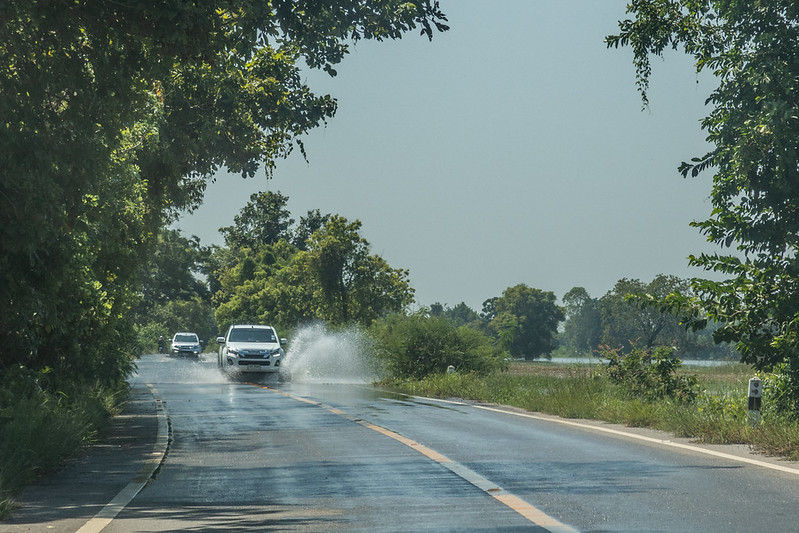
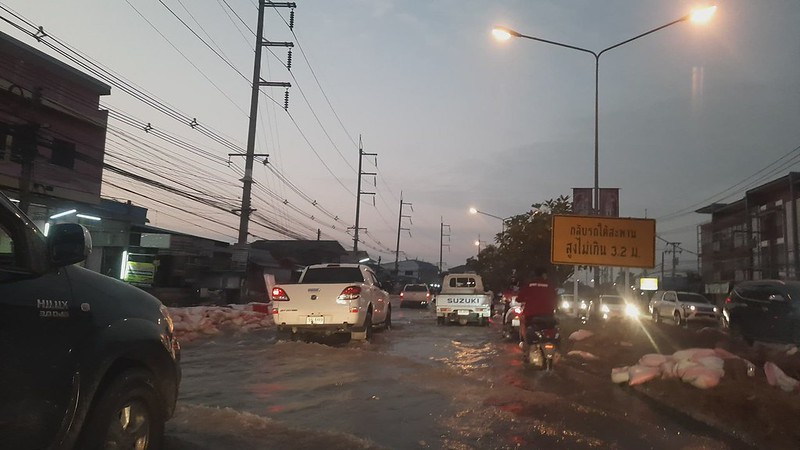
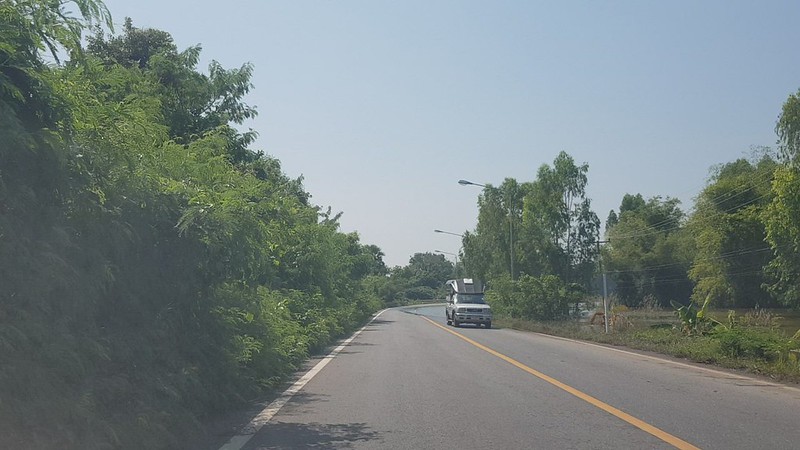
Last week, we drove down to Chonburi to meet with some people there. We took our usual route on a levee road on the south side of the Chi River in Maha Sarakham Province, but it was a bit slow going at first because of the flooding.

Chi River Flooding Video 2
Video of Driving the Levee Road to Maha Sarakham


Chi River and Mahasarakham Flooding 17
Ended up on a Detour on a "Drier" Road


On the way home, we figured we would take an alternate route to avoid driving along the flooded levee road. But it took us an hour to get through the city of Maha Sarakham because the Chi River decided to take a shortcut through town.

Chi River Flooding Video 6
Driving Through Maha Sarakham


Many parts of Thailand have experienced flooding this year. While this is typical to a degree, this year has been worse than normal. A combination of factors has brought flooding into the area where we are ministering. Normal end-of-rainy-season high water levels and some late season storms coming off the South China Sea caused higher than normal flood levels. Also, water was released from several reservoirs to prevent dam failure. This has raised water levels in three large rivers in the southern part of the Isaan Region, and brought flooding to the Chi River that borders Kalasin where we work.

By Hdamm - Own work, CC BY-SA 4.0, https://commons.wikimedia.org/w/index.php?curid=4140784
In the map above, we live along the Pao River, just north of the "S" in Maha Sarakham


We live in the southern part of Kalasin Province, so not only are we affected by Chi River floods, but also by floods along the Pao River, which flows through our town. There has been significant damage to the rice crops due to flooding from the Pao River. While water levels in the Pao River have dropped about a meter from the highest levels, many rice paddies are still under water. The timing is especially bad, because right now the grain heads should be ripening.

Pao River Flooding 8
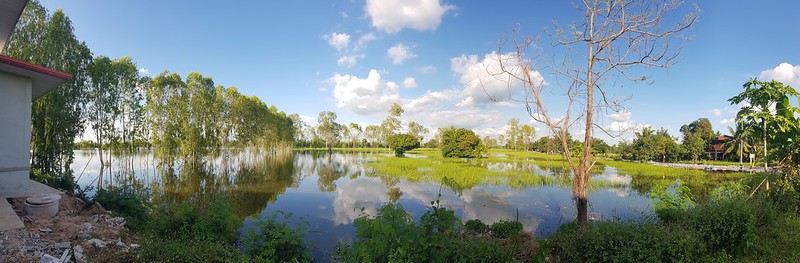
Flooded Road With Rice Paddy on the Right


Flooded Rice Paddies in Phon Ngam 1
This Lake is a Rice Paddy That Would be Almost Ready to Harvest


In addition to normal floods, this last week, a levee failed along the Chi River and caused water to inundate areas that don't usually flood, including villages where we work.

Chi River and Mahasarakham Flooding 32
Flooded Rice Paddies Near Ban Sa-ad


Chi River and Mahasarakham Flooding 28
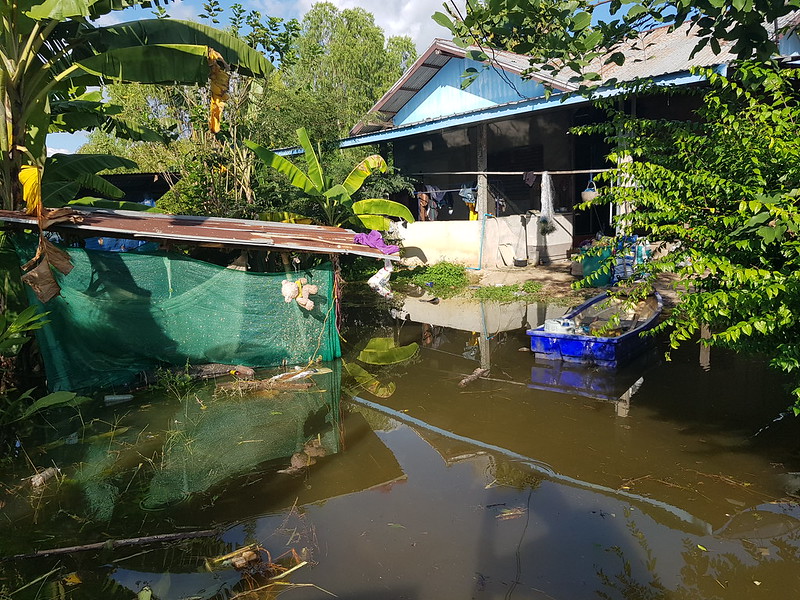
One of Our Church Member's Houses--the Water Was Even Deeper the Next Day


They hope to finish repairing the levee breach this week and then they can begin the process of pumping water back into the Chi River. However, in the meantime, water levels have continued to rise. The government will offer some financial assistance to help with rice crop losses, but it will not cover all of the losses experienced by villagers.

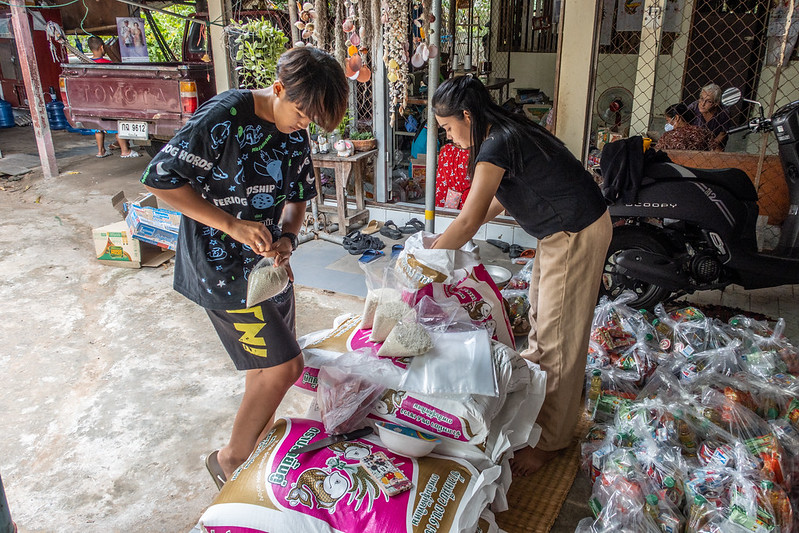
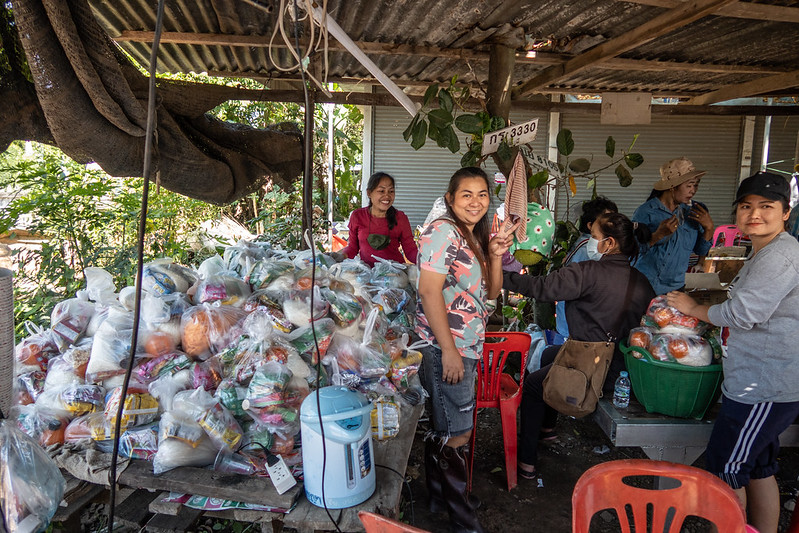
Our small church decided this would be an opportunity to demonstrate God's love to our neighbors. Our team leader came up early for a planned trip so that we could plan how to assist. We consulted with village leaders on how we could help as well. We purchased rice and other dry goods and prepared food bags to hand out.

Preparing Flood Relief Bags 8
Packing Dry Goods


Preparing Flood Relief Bags 13
Bagging Rice


We ended up handing out the food on Sunday morning. Instead of our worshiping with music and Bible study, we used our time to bless those in need. As we read in scripture: Little children, let us not love in word or talk but in deed and in truth. (1 John 3:18 ESV)

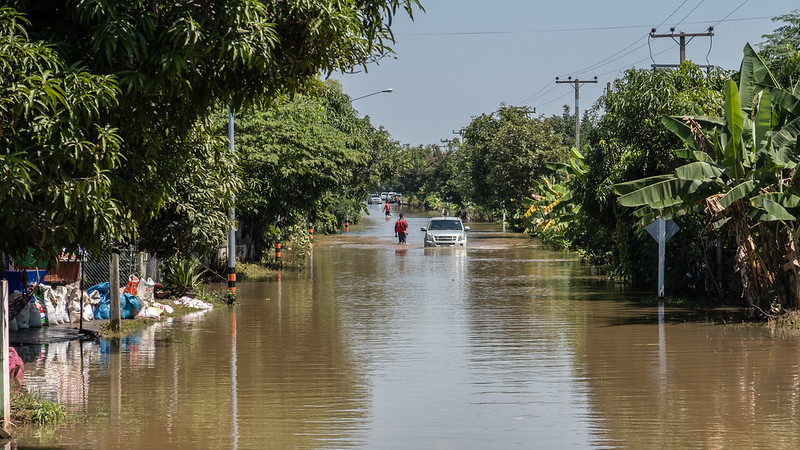
One of the village heads helped us bring the bags into the village because the water was too deep to drive in with our pickup truck.

Ban Sa-ad Flood Relief 66
Road Into Ban Sa-ad Village - Trucks With Higher Clearance Could Make it Part Way


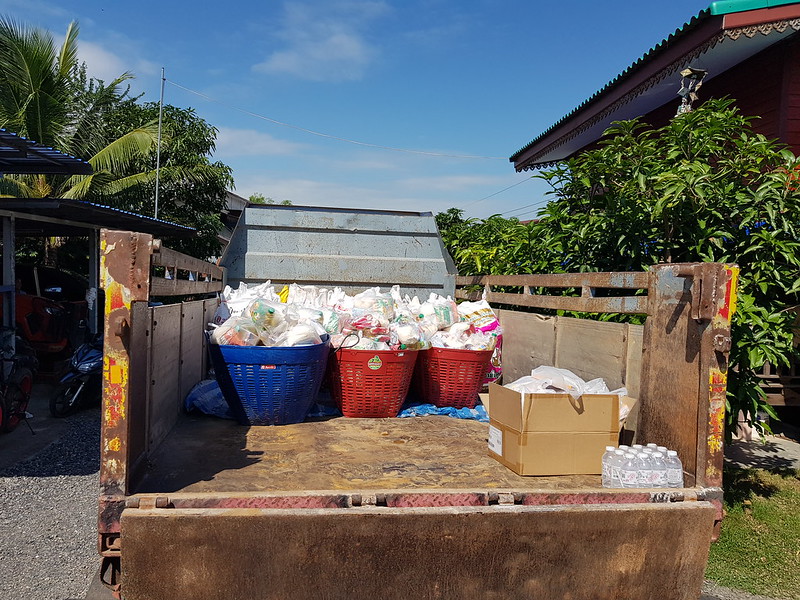
Ban Sa-ad Flood Relief 4
Bags Ready to Give Away


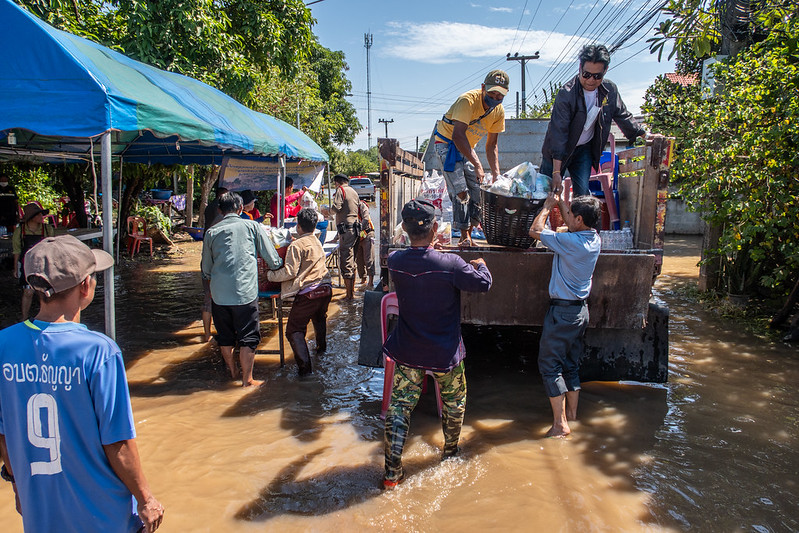
Ban Sa-ad Flood Relief 35
Unloading the Bags


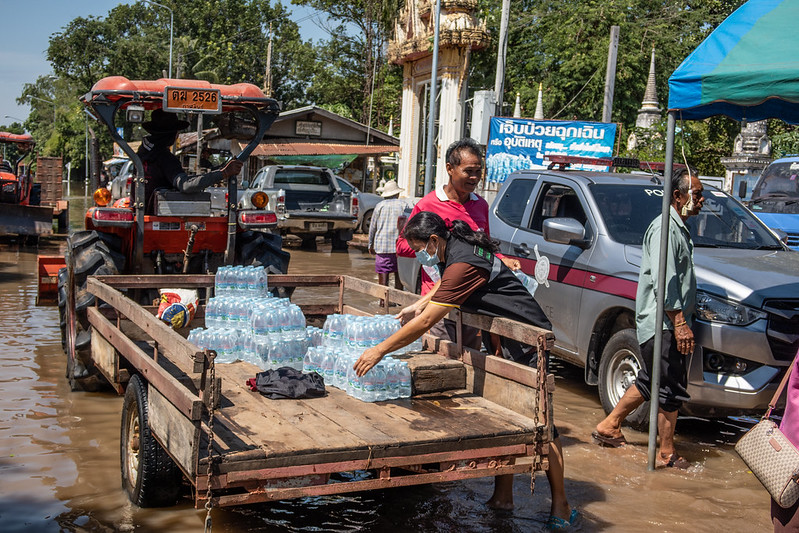
We weren't the only ones providing assistance. Other groups and individuals pitched in. It was great to see so many people coming together to provide assistance. Some groups put together bags similar to ours. Others contributed bottled water (the public water systems ad power had been shut down). Still others donated fresh meat and vegetables.

Ban Sa-ad Flood Relief 39
Some of the Bags Brought by Others


Ban Sa-ad Flood Relief 52
Others Contributed Bottled Water


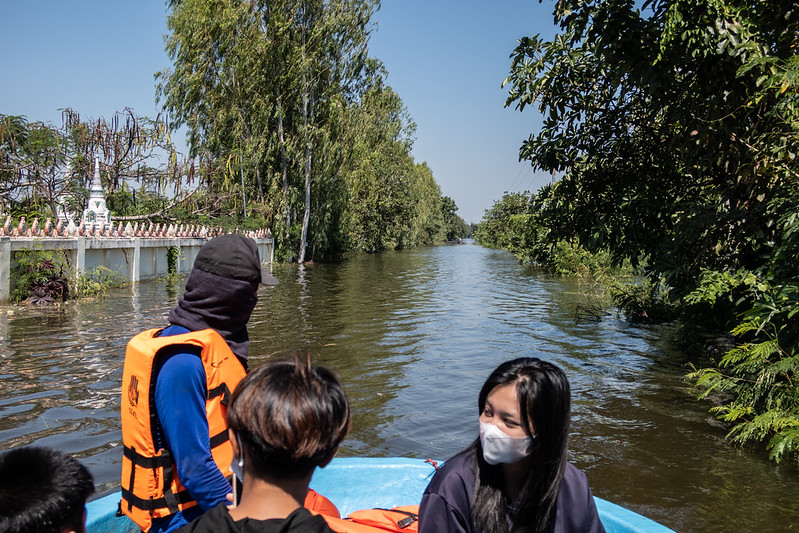
After we delivered our supplies, we were given a tour of some of the areas by boat.

Ban Sa-ad Flood Relief 53
Starting Out on Our Boat Tour  Down the Road Past the Temple


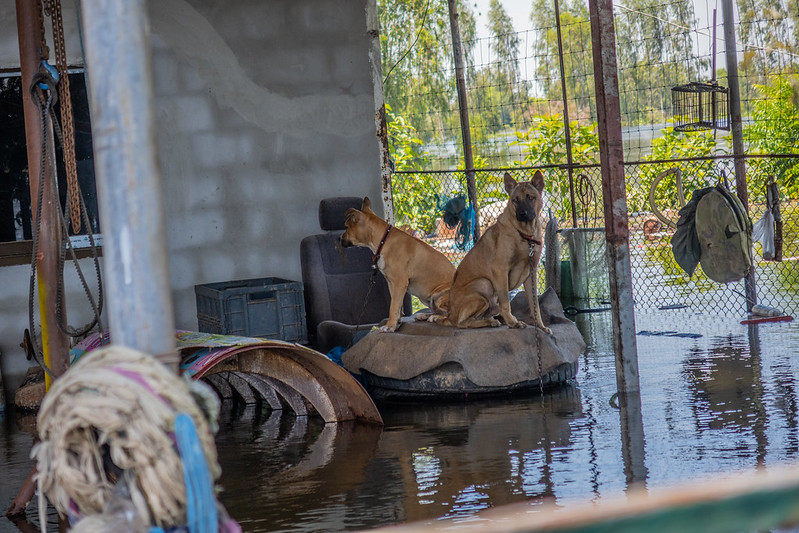
Ban Sa-ad Flood Relief 65
One Woman Didn't Want to Leave Her Home Even Though it Was Under Three Feet of Water. Her Dogs Had a Small Place to Perch


Ban Sa-ad Flood Relief 56
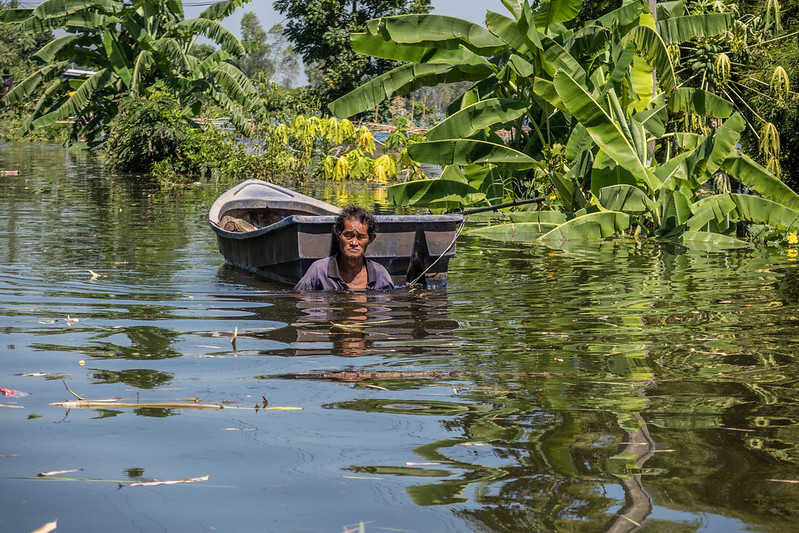
This Man Was Dragging His Boat Down the Road


It will be several weeks before there is any sense of normality. And the lost rice crop will continue to affect the lives for some time, so we will continue join with others to offer assistance where we can.

Saturday, July 28, 2018

Backswamp

You can take the soil scientist out of the dirt but you can't take the dirt out of the soil scientist.

Monsoon season.  That's a fancy term for a seasonal rainy season.  Practically it means that for part of the year, it is very wet.  Add to the normal rains a tropical storm pushing in from the east and, well, its kind of soggy in Phon Phisai right now.

To our regional climate we will add some humans.  Humans often began to settle in areas that were near rivers.  It made sense.  Rivers were transportation channels and a source of food.  Phon Phisai is on the confluence of the Mekong River and a smaller river called Huai Luang. It was a good place to settle.

Now we'll add s small geomorphology lesson.

Geomorphology is the study of landforms.  A typical landform associated with rivers and streams is a floodplain.  A floodplain generally has two main parts:

The levee is a relatively high part of the floodplain located adjacent to the river. The soils here are generally coarser (e.g. sand and fine gravel).

Adjacent to the levee is the backswamp.  This is a relatively lower position. The soils here tend to be finer-textured (e.g. silt and clay).


When we combine landforms, climate and humans, we can get some interesting results.

Because the backswamp is lower, it tends to be wetter. And because the soils are finer-textured, they hold onto water longer. As a result, when people would build adjacent to a river, they would often build on the levee, as opposed to the backswamp.

But as villages grow, people need a place to build, so they will often fill in areas of the backswamp and build there.  In some places there are grading ordinances and such regarding the filling of low areas.  Here in Thailand, if there are such rules, there is no obvious indication.  And people don't seem to think much about what happens to the water that falls on the landscape.

So the basic rule is, if I am going to build, I need to build higher than what is around me.  If I build next to someone who has built already, I just need to build higher than them.  If the water that falls onto my place goes onto their place, well , that's not my problem.

The house we are renting, like many other houses in Phon Phisai, is built on a backswamp.  There are a lot of areas that have been filled in, but some low areas remain that are generally used for growing rice.  However, the field adjacent to us has been filled in on all sides and is the recipient of much of the runoff from the filled in areas.  The only way for the water to get out of the field  is through a small culvert that drains to an area where the water is impounded to protect other fields. The lowest part of that field is so wet, they can't even grow rice, though they tried last year.  So last year we had this beautiful reflecting pool next-door. This year it is just aquatic weeds.
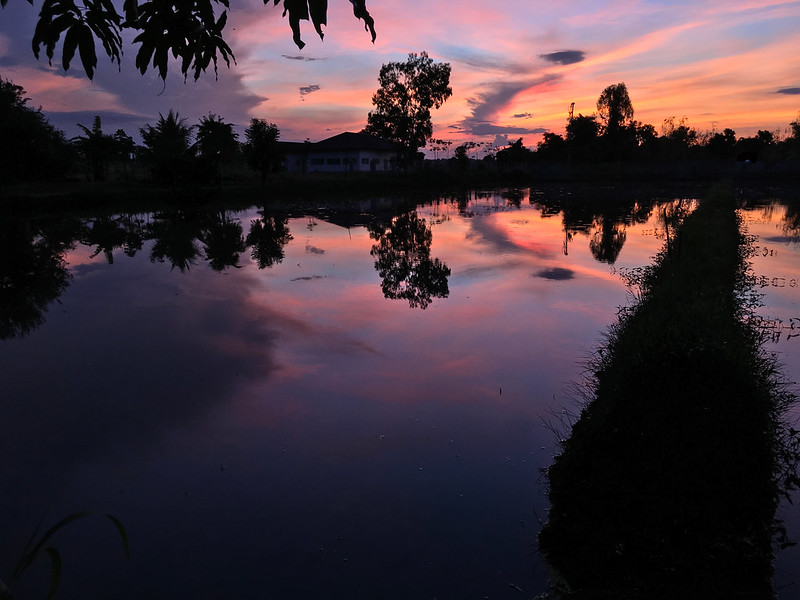
Sunrise in Phon Phisai 2017-8-13 14
The Field Next Door - Last Year
Most of the houses are built up higher than the street, so the street is subject to flooding.
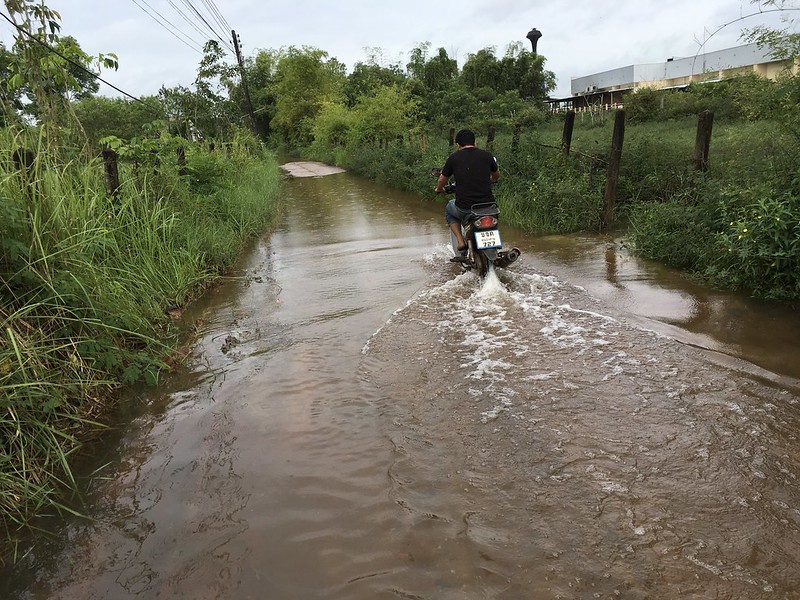
Road flooding
Our Street
Most of the water on our street clears off a few hours after flooding.  However there are some nearby streets on the same landform where the the water has no place to go.  I was out for a walk earlier this week and when I came to this, I decided to try a different route.
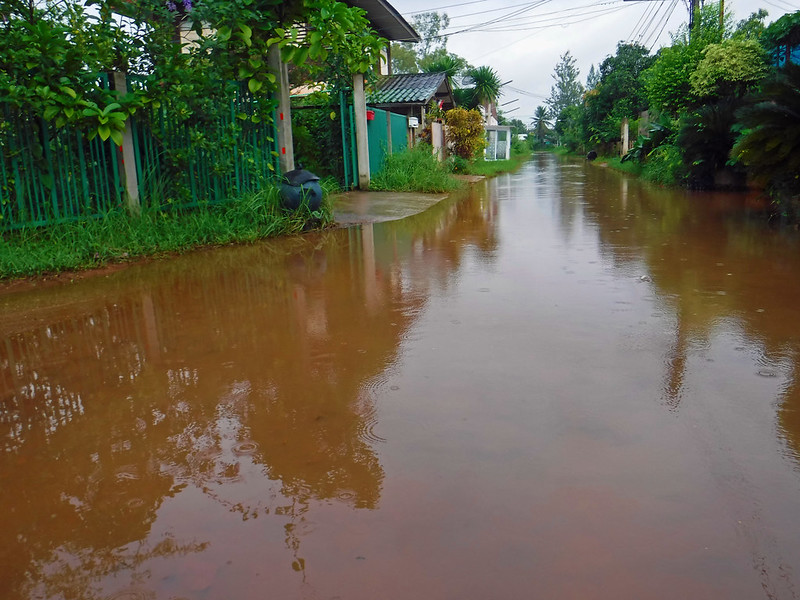
Flooding on streets of Phon Phisai
Phon Phisai or Venice?


But flooding is not the only problem we face.  As I mentioned earlier, most of the houses are built on fill. Most the the soil they use to fill with is fairly clayey.  Not the greatest stuff to build on, but it is what they have.  And they don't engineer the fill, they just dump it.  So the houses are built on unstable fill on top of mushy soils.  Unless someone goes through a great effort to put in decent footings (not so common), the houses tend to crack with time.  The house we are renting is less than 10 years old, yet there are several full length cracks.

Glad we don't have earthquakes

 
Because I used to have a job making soil  maps, I tend to think about these things.  When we bought our first house in Bakersfield, one consideration I had was whether it would flood if one of the dams on Lake Isabella gave way.  (A geologic fault line runs between the two dams on the lake.)

Jesus taught us that we should think about what we build on as well:

The people who come to me, who listen to my teachings and obey them—I will show you what they are like: They are like a man building a house. He digs deep and builds his house on rock. The floods come, and the water crashes against the house. But the flood cannot move the house, because it was built well. (Luke 6:48 ERV)


If we want our lives to be strong and endure, we need to  build them on the right stuff.  And the stuff to build our lives on is the teachings of Jesus.  Jesus spoke the words above after giving what is called "The Sermon on the Mount."  That body of teaching contains some things that are very difficult to practice.  Yet, it is in the doing of these things that make for a strong house.

I pray for strength and wisdom from the Holy Spirit to embrace the teachings of Jesus in my life and I am thankful for the grace that comes through Christ Jesus when I fall short. I want my life to not be like a poorly built house on a backswamp.

Thursday, November 29, 2012

Being Grateful

Ang Sila slum flood 3

It’s not a good sign when you have aquatic plants as your front lawn.  But such is the case for many poor people living on this back road in Ang Sila.

The rainy season is supposed to end by Loy Krathong (a festival which fell on November 28 this year), an old fellow told me.  And it couldn’t be soon enough for some of these people.

I took the picture above several days before Loy Krathong.  Several days before some of the heaviest rains we’ve had.

This was the neighborhood where we held VBS a couple of weeks ago.  The VBS program was held at the home pictured below.  The gray-haired lady was our host.  An MB Mission team had helped fix up her flood prone home.  They raised it a little bit and gave it a concrete floor—although I don’t think they raised it enough to be above the current water level.  The woman and several others have since come to Christ, though they don’t get to church much because they have no transportation to get them there.

VBS 2012-11-12 53

Ingrid and I had come back to the neighbor hood to inquire about a girl we met during VBS. This girl had a chronic leg infection and Ingrid had treated it some and we wanted to see how it was doing.  We did not know exactly where she lived and so we were traveling with Upa—another woman from the church who lives close by.  But when we came to the flooded area Upa said we shouldn’t go into the neighborhood.  She told us we’ll get a rash on our leg—and she should know—she lives on the back side of the same swamp in a house that is also prone to flooding.

VBS 2012-11-15 20

It is hard to know what to do with situations like this.  One wants to help, but how?  This neighborhood is built on a depression—a low spot where all the rainwater collects.  Upa said it would be a least a week until it dried up—and that was before several more days of rain.  The original houses in the area were built on the few high spots in the area.  If it were in America, no one would be allowed to put up a community in a swamp without doing something to get rid of the water (However frail it might be as we learned in the case of New Orleans).  But here in Thailand, the poor have to live somewhere and the options are few.  So they settle where they can, even if it is a swamp.

On the night of Loy Krathong, we watched the fireworks and flying lanterns that mark the holiday from the dry safety of our 6th floor apartment.  (The orange star-like things in the photo are actually balloon-like lanterns the are set afloat in the sky.)  We are grateful for such housing.

DSC_0754

But we and the Thai believers from Ang Sila church still think about the plight of those living in the swampland neighborhood.  Not only are they physically poor, they are also spiritually poor as well.  During VBS, many children indicated a desire to follow Jesus.  The Ang Sila church now grapples with how to follow up on this VBS.  How do we bring the gospel of Jesus to this neighborhood?  How do we not just tell them about the love of God but also show them the love of God?

The bigger question is, how do we not grow calloused after seeing this kind of situation again and again throughout Thailand?  It is too easy to just throw our hands in the hair and say, “well, this is too big for me to deal with,” and so do absolutely nothing.  We pray that we might find ways to show our gratefulness to God by doing things that others can be grateful to Him for.

As James writes:
14 What good is it, dear brothers and sisters, if you say you have faith but don’t show it by your actions? Can that kind of faith save anyone?
15 Suppose you see a brother or sister who has no food or clothing,
16 and you say, “Good-bye and have a good day; stay warm and eat well”—but then you don’t give that person any food or clothing. What good does that do?

James 2:14-16 (NLT)