Sunset Over the Mekong River

Showing posts with label religion. Show all posts

Saturday, February 2, 2019

Red Protection

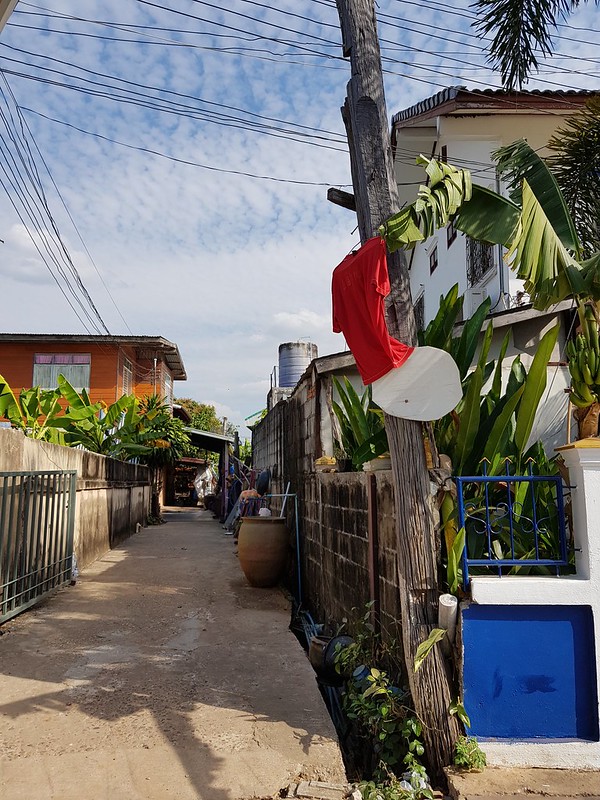
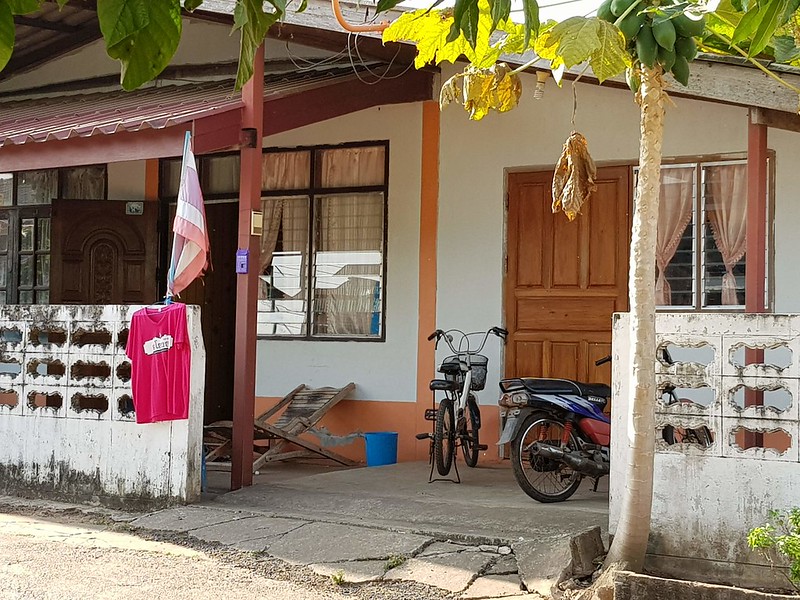
Late last week, while I was walking along the river, I noticed a red shirt suspended from someone's fence on a hanger.

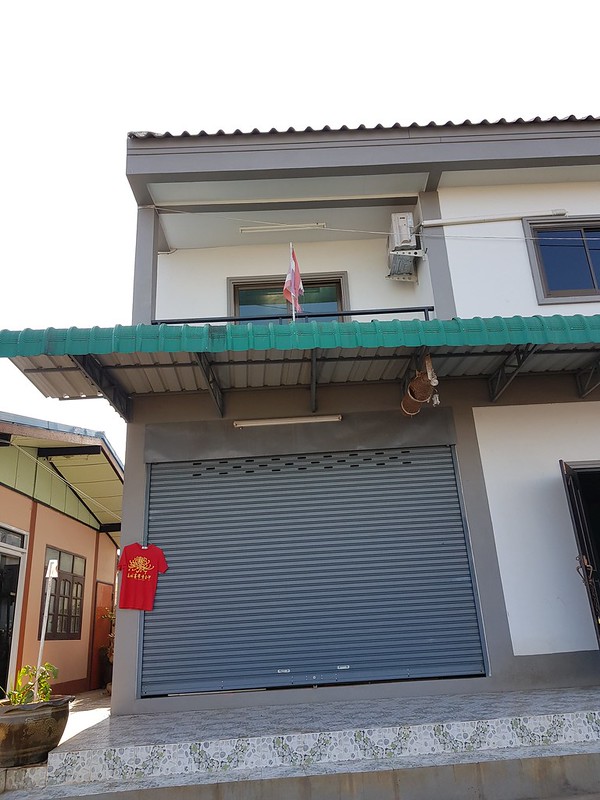
Red Shirts to ward off the widow spirit-Phi Mae Mai (ผีแม่ม่าย)

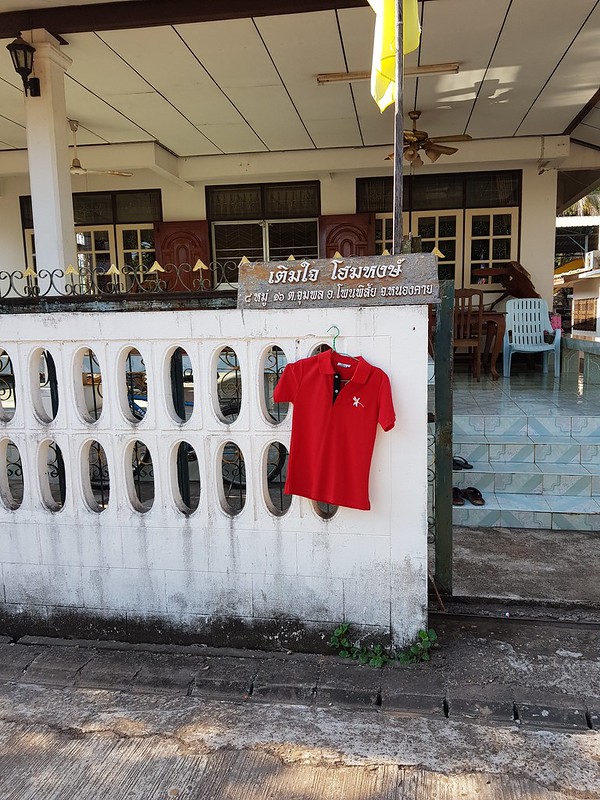
A few days later, a neighbor of ours hung a red shirt up on the fence by the gate to their property.
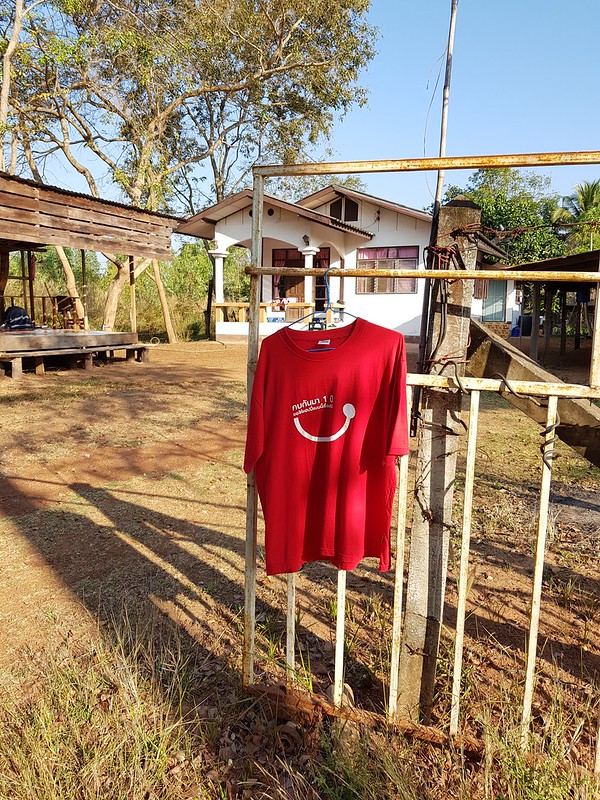
Red Shirts to ward off the widow spirit-Phi Mae Mai (ผีแม่ม่าย)

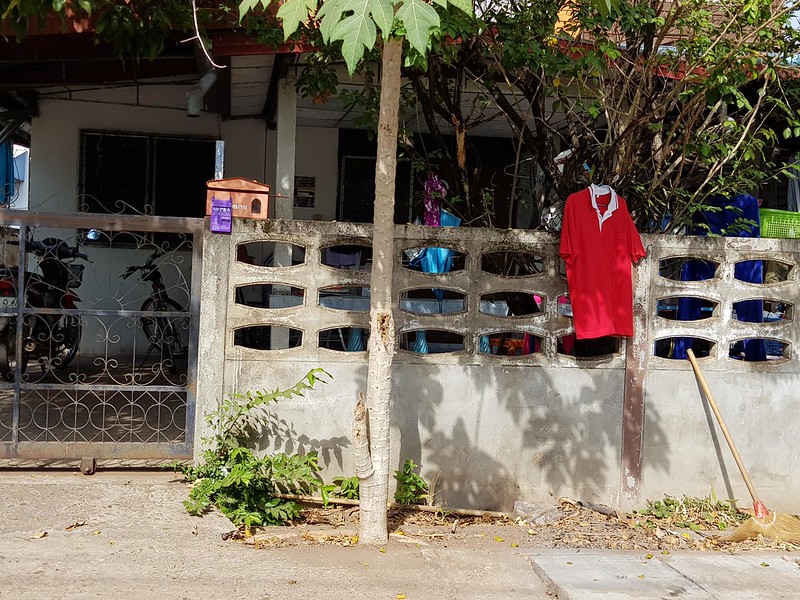
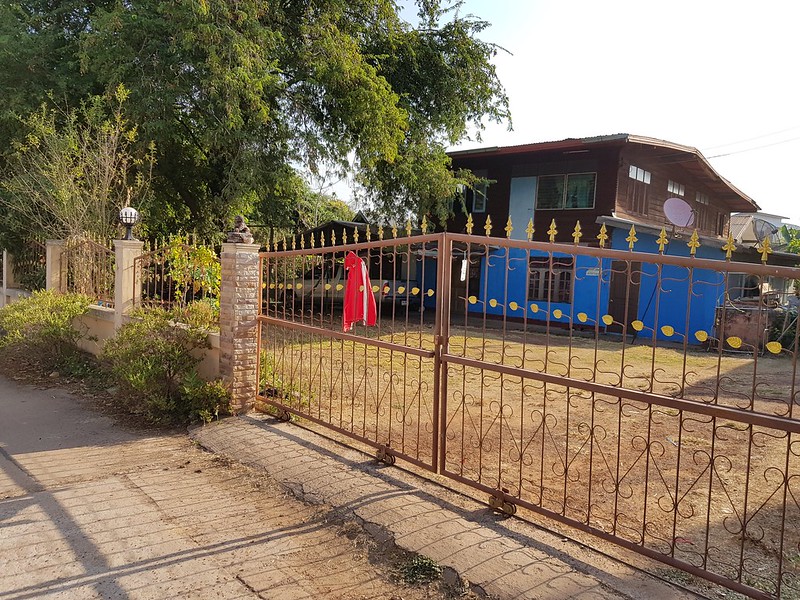
Then we noticed all over our village that red shirts were on display.
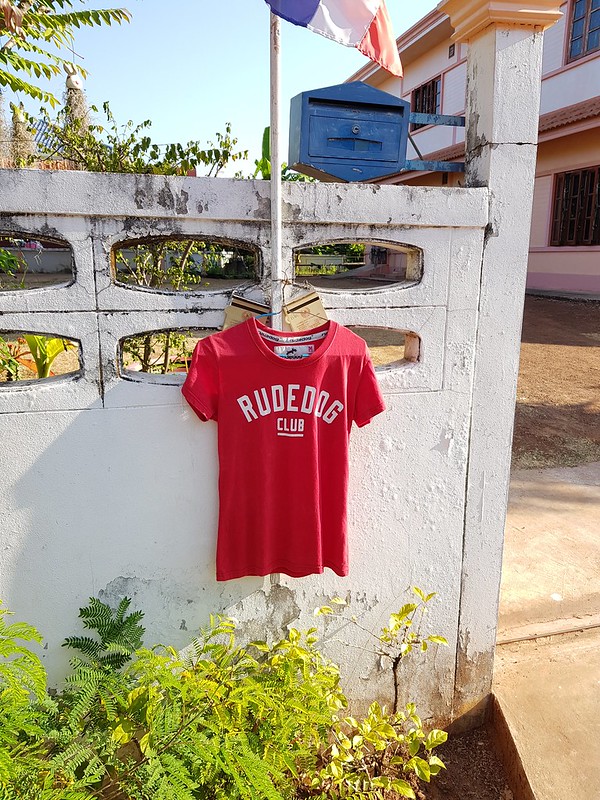
Red Shirts to ward off the widow spirit-Phi Mae Mai (ผีแม่ม่าย)


Red Shirts to ward off the widow spirit-Phi Mae Mai (ผีแม่ม่าย)


Red Shirts to ward off the widow spirit-Phi Mae Mai (ผีแม่ม่าย) 


Red Shirts to ward off the widow spirit-Phi Mae Mai (ผีแม่ม่าย) 


Red Shirt 7


Red Shirt 8

And, apparently, if you have no red shirt, you can use a piece of fabric.
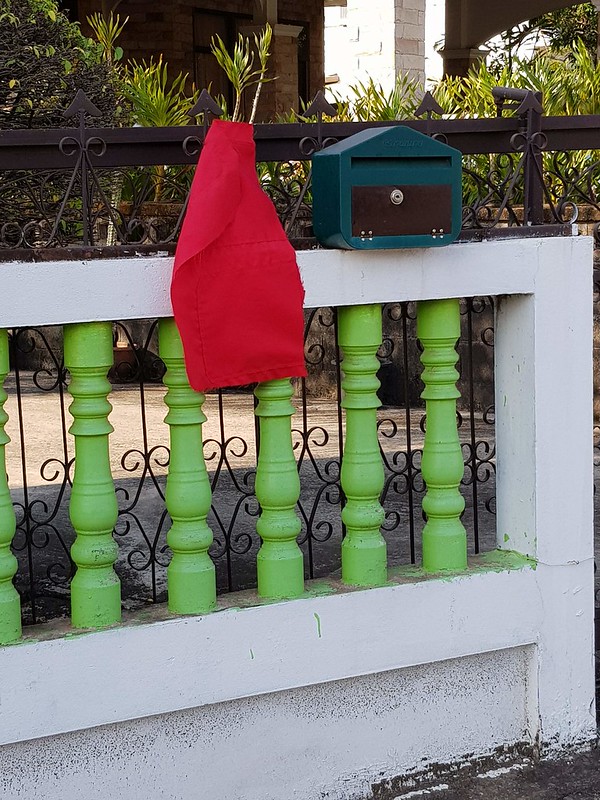
Red Shirt 9

What's going on here?  Did we miss a memo?

Turns out there is a local belief in the Isaan region regarding the Widow Spirit, known as Phee Mae My.  When an seemingly fit individual dies unexpectedly in their sleep, the Widow Spirit is suspected.  Two weeks ago, in a nearby province, it was reported in the news that in one village, 3 healthy men, aged 47, 23 and 60, all died within a week's time.  When this happened, two local men recalled strange things that happened just prior to that.  One reported seeing an unusual light in the sky at night.  Another reported having a scary vision of a tall dark-skinned person.  In other reports I've read, people have reported seeing this spirit as a beautiful young woman dressed in white.

The local name for these nocturnal deaths Lai Tai, an Isaan term which roughly translates unconscious sleep death. Technically it is considered a version of Sudden Unexplained Nocturnal Death Syndrome (SUNDS).

At any rate, there are several precautions that households will take to keep the men of the house from suffering the fate of Lai Tai.  The most common and obvious thing is to hang red shirts at doorways or gates to yards.  Some will put up signs saying, "there are no men here".  Villages or individuals may put up red-painted phallic objects.  People will restrict evening activities outside of the house so the widow spirit will have less opportunity to encounter men while they are out and about.

We've heard that there have been three or four people who have died in our village that has caused people of our village to be concerned about the Widow Spirit.  The red shirts we've seen in this area have been confined to a single village.  We've not seen the use of phallic objects or signs declaring that there are no men around.

The Bible also records an instance of things being painted red to avoid death at night.  The night that Israel escaped captivity to Egypt, the people painted their doorposts with blood so they would not suffer loss when God killed the firstborn of all people and animals in Egypt. We read in Exodus 12:7 and 13:

Then they shall take some of the blood (of the passover lamb) and put it on the two doorposts and the lintel of the houses in which they eat it...
The blood shall be a sign for you, on the houses where you are. And when I see the blood, I will pass over you, and no plague will befall you to destroy you, when I strike the land of Egypt. 

Red is still able to keep us from death.  The cross was stained red by the blood of Jesus.  He was the Passover Lamb that was sacrificed for us, as we read in 1 Corinthians 5:7, "For Christ, our Passover lamb, has been sacrificed."

Because Jesus has been sacrificed for us,  we need not fear death. By his resurrection from the dead, Jesus has conquered death.

51But let me reveal to you a wonderful secret. We will not all die, but we will all be transformed! 52It will happen in a moment, in the blink of an eye, when the last trumpet is blown. For when the trumpet sounds, those who have died will be raised to live forever. And we who are living will also be transformed. 53For our dying bodies must be transformed into bodies that will never die; our mortal bodies must be transformed into immortal bodies.
54Then, when our dying bodies have been transformed into bodies that will never die, this Scripture will be fulfilled:

“Death is swallowed up in victory.
55O death, where is your victory?
O death, where is your sting?"
     1 Corinthians 15:51-55 (NLT)

We who know Jesus also do not need fear the Widow Spirit or any other spirit.  For to those who believe in Jesus, He gives His spirit, which is greater than all others.

2 This is how we know if they have the Spirit of God: If a person claiming to be a prophet acknowledges that Jesus Christ came in a real body, that person has the Spirit of God.  3 But if someone claims to be a prophet and does not acknowledge the truth about Jesus, that person is not from God. Such a person has the spirit of the Antichrist, which you heard is coming into the world and indeed is already here. 
4 But you belong to God, my dear children. You have already won a victory over those people, because the Spirit who lives in you is greater than the spirit who lives in the world. 
     1 John 4:2-4 (NLT)

We have authority over the spirits.  We do not need to be afraid of them.  We do not need red shirts to scare them away. We can go out at night without being afraid that we might inadvertently lead some demon back to our house.

19Look, I have given you authority over all the power of the enemy, and you can walk among snakes and scorpions and crush them. Nothing will injure you.  20But don’t rejoice because evil spirits obey you; rejoice because your names are registered in heaven.
     Luke 10:19-20 (NLT)

Praise be to God, because Jesus is enough...
     ...enough to free us from the power of death
     ...enough so that we need not fear the spirits.

Sunday, October 15, 2017

What kind of sin

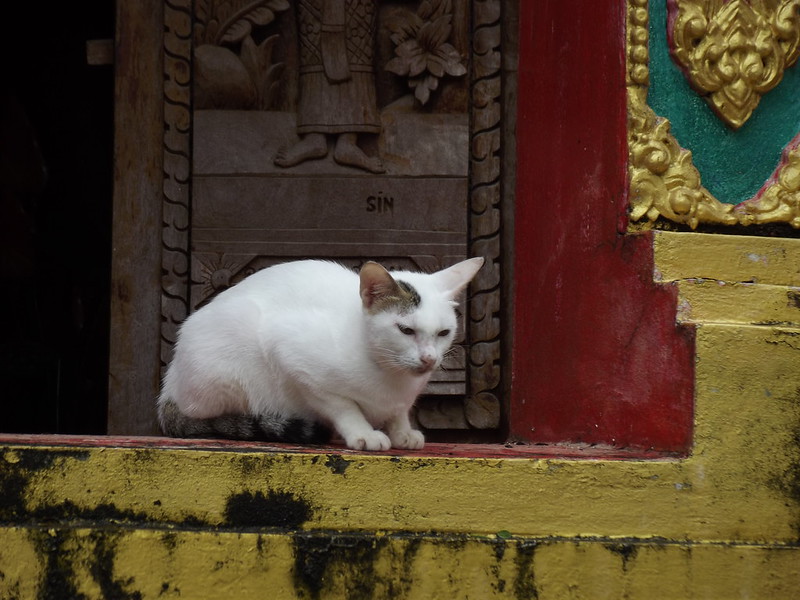
Recently, I was walking back home from the Mekong River and I passed through the yard of one of the many Buddhist temples in the area.  There is a stupa in the temple yard that has wooden doors with carvings on them.  I couldn't help but notice the cute, white cat sitting in front of one of the doors. Carved in the door above where the cat was sitting was the word "sin".


Sinful Cat?
Sinful cat?

At first I thought it strange to have the word "sin" carved into the door of the stupa.  But then I realized that it was totally appropriate, because the word "sin" is a transliteration of the Thai word ศีล, which is a religious commandment.

Unlike Judaism, which has 10 main commandments, Buddhism has 8 "precepts",  five of which lay people are expected to keep, the other 3 are supposed to be kept by the monks (as well as the first 5). These commandments are referred to as the "5 Precepts" and "8 Precepts".  The 5 Precepts can be summarized:

1. Don't harm living beings.
2. Don't steal.
3. Don't engage in sexual misconduct.
4. Don't lie.
5. Don't get drunk or take drugs.

To a Thai person, sin (ปาป  (bap)) is breaking one of these precepts.  Other types of wrongdoing go under the category of karma (กรรม (kam)). Karma can be either positive or negative but is usually viewed as negative.  In other words, "getting what you deserve" means you are not getting something good.

Keeping the precepts is considered important.  It is not uncommon when you enter a village to see a sign that says: "this village keeps the precepts".

In reality, all but the second "sins" are fairly common in Thailand (though certainly not exclusive to this country).

The first of these precepts refers not just to killing people (as in the 6th commandment of the Bible), but to all creatures.  You would think, then, that this would be a country of vegetarians, but it is far from the case. People justify eating meat by the fact that they don't typically do the killing, they just eat the meat from animals someone else killed. The fact that the animals would not be killed if there were no market for the meat does not seem to be relevant.  Interestingly, this precept does affect some kinds of pest control. You seldom see a typical rat trap or mouse trap.  What you usually find are glue traps. This is because these glue traps don't directly kill the rodents, so the person who set out the trap can honestly say, "I didn't kill the rat."  That the rat may have starved to death because of the glue trap, or died when the trap was buried in the trash heap is not their concern. (Others would say that glue traps are actually a less humane way of doing things.)   Keeping this precept also means no killing mosquitoes. So if a mosquito is in the process of sucking your blood, don't swat it.

I like the fact that the second precept is better observed.  It's nice that I don't normally have to worry if I forget to lock the doors of the house or car. This experience is certainly a lot different than other places I have lived.  Theft of intellectual property, on the other hand, is rampant.  For example, even if you want to buy a legitimate DVD,  sometimes it can be difficult to find one.  Even ones that seem legit may turn out not to be.

As for the third precept, just after we moved to Thailand in 2011, someone did a poll in Thailand and found that just over 50% of married men AND women admitted being unfaithful to their spouses.  I was even asked by a monk once, while Ingrid was present, if I had a Thai wife, as if the fact that I already had a foreign wife was irrelevant to the question.  And while there are laws prohibiting prostitution, it is still fairly common.  On several occasions, when we have told people we have been not been able to have children, we have been asked, "have you tried other partners?"

There are two words for "rape" in Thai.  Khomkheun (ข่มขืน) refers to rape by a stranger, and is definitely considered a sin and a crime.  However, blam (ปล้ำ) refers to things like date rape, which is normalized on TV and is viewed of as acceptable—or at least as something that women should be expected to endure.  A young Christian woman we know was counseled by her friends that if her boyfriend wanted to have sex with her, she should, because he needs it. (I guess the needs of the women don't count for much.)

Regarding the fourth precept, truthfulness takes a backseat to saving face and desire to please.  The most common form of lying, though it is not really viewed as lying, is to say "yes" when you don't don't mean it.  This is done because you don't want to be seen as disagreeable and a desire to make the person who asks the question feel good.  I even wonder sometimes if I should answer truthfully, as my Western culture dictates, or just say yes, which is not necessarily understood as a yes.  Or would I be misunderstood because they expect me to answer as a foreigner?

One wonders why in Thailand liquor and other alcoholic beverages are even sold, with the 5th precept being what it is.  Yet all kinds of alcoholic beverages are readily available, though they do ban sales in stores (not restaurants and bars) on certain Buddhist holidays.  A common late afternoon and evening activity is the drinking circle, kind of the equivalent of happy hour in my home culture. This past week there was a festival associated with the end of Buddhist Lent.  Alcohol was served at most of the events, even though his was a Buddhist celebration. We are saddened when we hear, "I wish my father would stop drinking" or "I wish my husband would stop drinking."

I write all this not to say that the Thai people are bad people.  Indeed, they are normal people.  They struggle with the same things people all over the world struggle with, regardless of what their religion or nationality is.  Thai people aren't the only ones to try to find justification for their actions so that they aren't "sinful,"  we are very good at that in my home culture as well.  It is also not a new kind of behavior.  Two thousand years ago, Jesus talked about those who "strain out a gnat and swallow a camel." (Matthew 23:24)

We can also be pretty selective about which commandments or precepts we wish to follow—not just as individuals but as cultures or sub-cultures.  We have what I call socially acceptable sins. The problem with socially acceptable sins is that they change with time, so someone who may have once been considered a good person is now a bad person, without the person having changed.

We also like to rate sins and crimes so that we come out on the better side.  He ran a red light (bad boy); I drove over the speed limit (socially acceptable).  She cheated on her taxes (everybody does it—and it's only the government who taxes too much anyway); he spanked his child (what an awful parent).

The Bible speaks a lot about the struggle of mankind to observe rules.

Not a single person on earth is always good and never sins.
Ecclesiastes 7:20 (NLT)

All of us, like sheep, have strayed away. We have left God’s paths to follow our own. Yet the Lord laid on him the sins of us all.
Isaiah 53:6 (NLT)

For everyone has sinned; we all fall short of God’s glorious standard.
 Romans 3:23 (NLT)

If we claim we have not sinned, we are calling God a liar and showing that his word has no place in our hearts.
1 John 1:10 (NLT)

At first, reading all these verses can be a bit depressing.  If we are all sinners, what hope is there for us?

Which is why Jesus came to bring us incredibly good news!

First, the sins we've committed can be forgiven.

But if we confess our sins to him (Jesus), he is faithful and just to forgive us our sins and to cleanse us from all wickedness.
1 John 1:9 (NLT)

Second, the Holy Spirit is given to those who believe in Jesus to help them not to sin.

Those who have been born into God’s family do not make a practice of sinning, because God’s life is in them. So they can’t keep on sinning, because they are children of God.
1 John 3:9 (NLT)

And this is his commandment: We must believe in the name of his Son, Jesus Christ, and love one another, just as he commanded us. Those who obey God’s commandments remain in fellowship with him, and he with them. And we know he lives in us because the Spirit he gave us lives in us.
1 John 3:23, 24 (NLT)

But the Holy Spirit produces this kind of fruit in our lives: love, joy, peace, patience, kindness, goodness, faithfulness, gentleness, and self-control. There is no law against these things!
Galatians 5:22, 23 (NLT)

Thank you, God, for sending Jesus to die for us that our sins might be forgiven.  Thank you for sending your Holy Spirit to all those who believe in Jesus to help make it possible for us not to sin.


Thursday, September 21, 2017

Memorable Scents

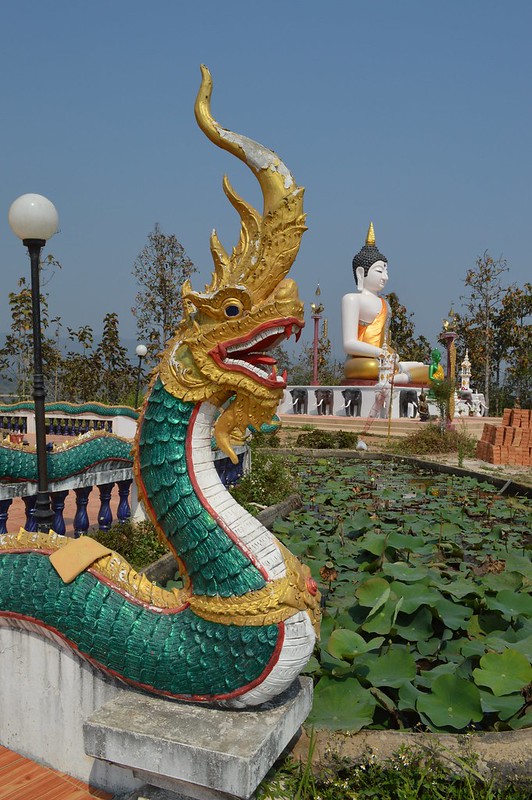
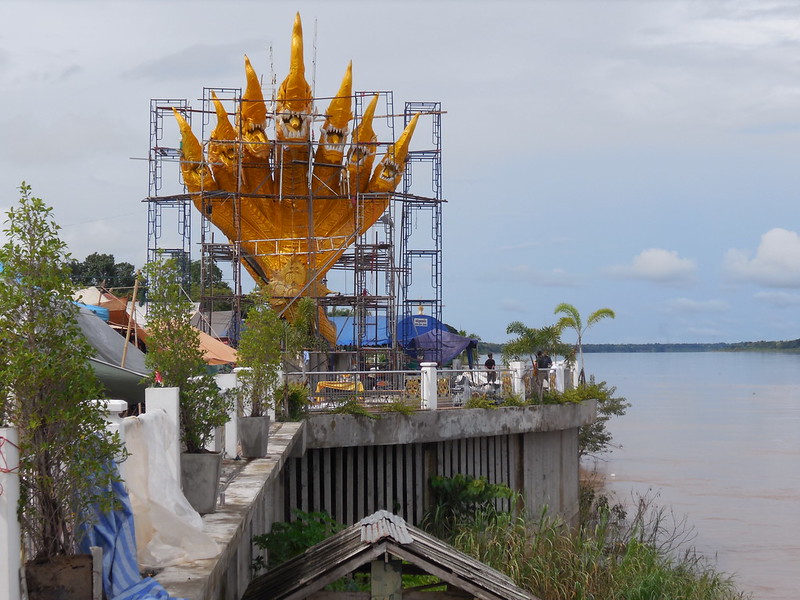
Phon Phisai is the center of Naga worship in Thailand.  The Great Naga (พญานาค-Phayanak in Thai) is a serpent God.  There is a Naga idol present in most Buddhist temples here in Thailand.  The Naga is often pictured with multiple numbers of heads, but always and odd number--3, 5, 7, or 9.

Wat Phratat 12 Rasi

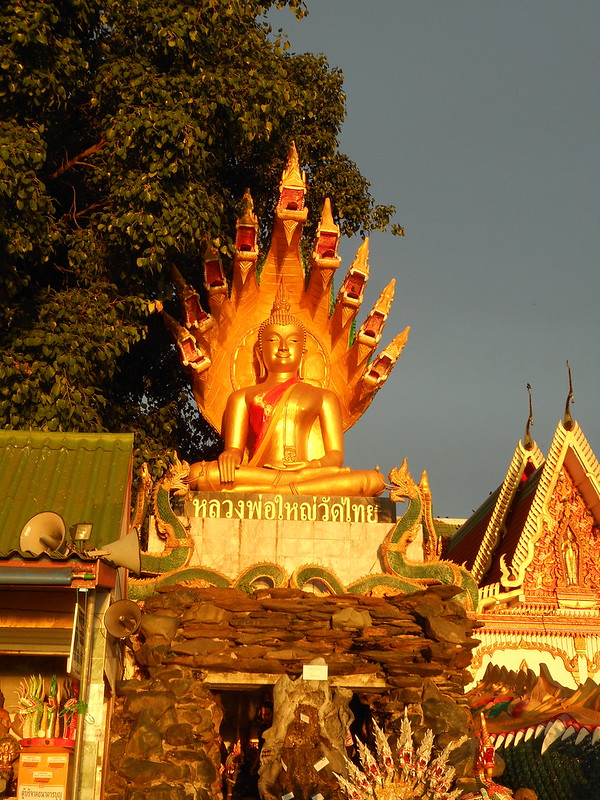
Often the Naga is depicted covering a Buddha image.

Buddha idol under naga


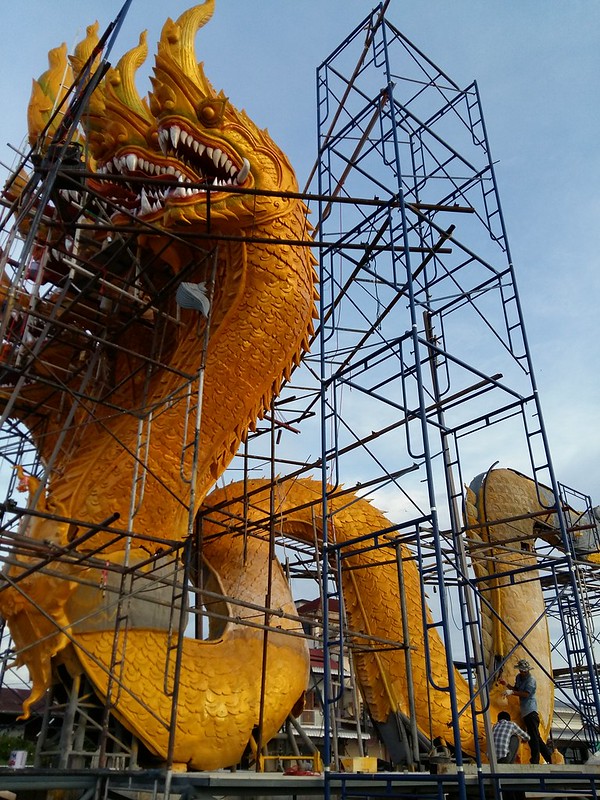
Every year, at the end of Buddhist Lent (Buddhist Lent follows a lunar calendar and this year the last day is October 5) there is a big celebration here known as the Naga Fireballs, when balls of fire come up from the Mekong River, supposedly emanating from the Great Naga.  This celebration is a big economic boon to the community, so they do a lot to get people to come here.  Right now they are constructing a large, 7-headed Naga along the Mekong River.  They are rushing to get it done before October 5th.

Naga construction 3


Naga Construction

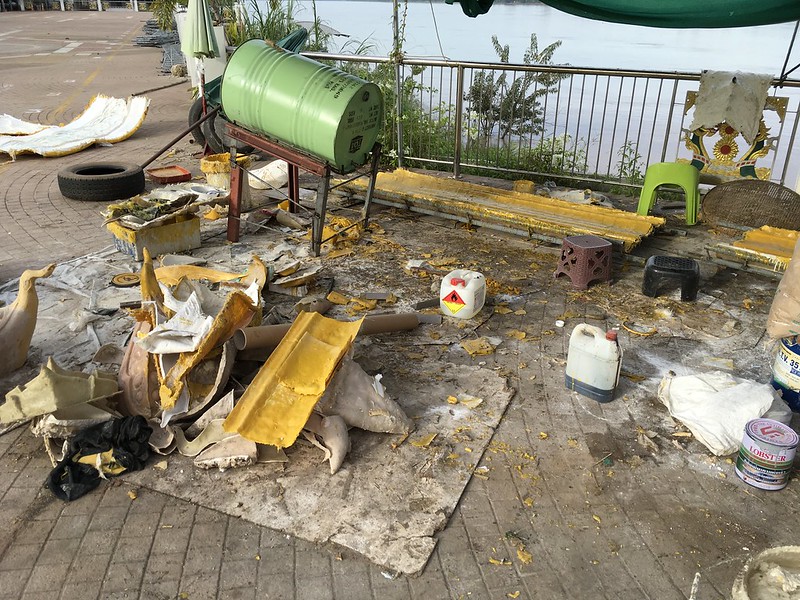
As we were walking along the river near the site of this idol, a familiar scent wafted up to my nose.  It was a scent that brought me back about 35 years when I worked in a plastics factory. (More on that below.) That factory made primarily plastic housings for computers and electronics.  This "factory" I was passing now is set up outside and is used to construct the pieces of the Naga.

Naga Construction Plastic Factory 1


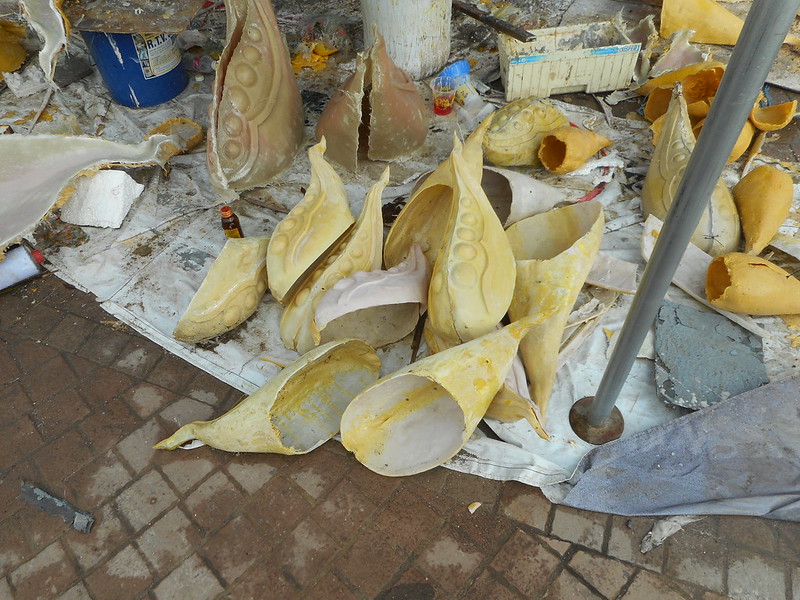
Fiberglass naga pieces 1

At one point during the construction, some of the pieces broke and fell off the steel framework.  It doesn't appear to be something that will last a long time. I find it strange that people will come and worship or make offerings to something that has been built by men.  Is not the one who creates something greater than the creation?  This is nothing but a hollow piece of plastic.

This reminds me of the writing of the Psalmist:

Their idols are merely things of silver and gold, shaped by human hands.
They have mouths but cannot speak, and eyes but cannot see.
They have ears but cannot hear, and noses but cannot smell.
They have hands but cannot feel, and feet but cannot walk, and throats but cannot make a sound.
And those who make idols are just like them, as are all who trust in them.
Psalm 115:4-8 NLT

The Apostle Paul writes this way:

They traded the truth about God for a lie. So they worshiped and served the things God created instead of the Creator himself, who is worthy of eternal praise! Amen.
Romans 1:25 (NLT)

We pray that the people of  Phon Phisai will one day no longer worship a god of their own making, or even something created by God, but will instead worship the God who created all things and Who will endure for all eternity..

Now, about that plastics factory...

After I graduated from UNH, I had a job for a while working at Jotko Enterprises, a factory that was owned by a member of my church, Dover Baptist Church.  This was in 1980, and our church at that time sponsored a refugee family from Vietnam.  Joe, the factory owner, hired the Vietnamese man.  The fellow was fairly smart—he spoke 5 languages.  Unfortunately, English (nor any Latin-based language I was familiar with at the time) was not among the 5 languages.  Joe gave me the job of training this new employee.  It was a bit challenging, using only gestures and modeling to do this.

At the time I knew little or nothing about the geopolitics of Southeast Asia.  I was ignorant of the complexities of languages and people groups in this region. I only knew that this family must have come from a desperate situation and we were trying to help.  This family was the first of many connections I made to this region before I eventually ended up moving here.

Jotko Enterprises closed in the mid-1980's.  Several years later Joe told me that he appreciated some instructions I had written about packing and shipping products.  They used these instructions for quite a while after I left.  (I had not even remembered writing them!) When he sold the business, Joe thanked us by sending a donation for the ministry we were doing in Haiti in the time.  This enabled us to attend a workshop that we really wanted to go to but had no idea how we could afford it.  Some of the things I learned at that workshop I used throughout the time we lived in Haiti.

A-level (nivo-A; niveau-A)
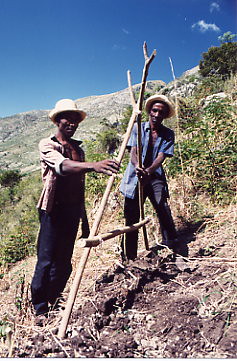
One of the things we learned at the conference was how to make an A-level
(for soil conservation work) using no tools and only sticks, some string and a rock.

I shouldn't be amazed at the way all these life experiences have come together the way they have.  Even those pieces of the puzzle that don't seem to fit at first eventually find a place.


Thursday, May 12, 2016

Inviting-Not!

A portion of the road to Wiang Kaen follows the Mekong River.  Perched on a hill on a bend in the river is a stupa and Buddhist shrine.

Interestingly, there is no name of this place posted along the road. There is a staircase from main road up to the stupa (though it does not get used much because it is also possible to drive up).  On either side of the stair case are these interesting statues.  One is a man holding a scythe, the other is a man wielding a club.

Welcoming Committee?


Welcoming Committee? 

I'm not sure how the locals interpret these statues.  But what I DON'T read is "Welcome, come on up," or "We're glad you're here."  It looks more like they are saying, "we dare you to come up."  In my eyes, this is anything but welcoming.

What a contrast to how we see God depicted in the Bible.  We have an invitational God.  In the Old Testament, we see God was welcoming the alien and stranger.

He executes justice for the fatherless and the widow, and loves the sojourner, giving him food and clothing.  Love the sojourner, therefore, for you were sojourners in the land of Egypt. (Deuteronomy 10:18, 18 ESV)

The temple was to be a  place where everyone was invited to come pray.

these I will bring to my holy mountain and give them joy in my house of prayer. Their burnt offerings and sacrifices will be accepted on my altar; for my house will be called a house of prayer for all nations. (Isaiah 56:7 NIV) 

Jesus welcomed all people.  He invites people to follow him. He invites the weary to come find rest. He invites even children into his presence.

Jesus answered him, “If anyone loves me, he will keep my word, and my Father will love him, and we will come to him and make our home with him. (John 14:23 ESV)

Come to me, all who labor and are heavy laden, and I will give you rest. (Matthew 11:28 ESV)

but Jesus said, “Let the little children come to me and do not hinder them, for to such belongs the kingdom of heaven.”  (Matthew 19:14 ESV)

God is a welcoming God.

But what about us?  Are we as inviting as Jesus was?

I have not seen any strange statues outside our church buildings that would deter people from entering.  But sometimes the buildings themselves can be quite intimidating.  In an historically non-Christian culture like we find in Thailand, very few people would dare go into a church building unless they are already believers or they are pretty much ready to receive Christ.

We believers can be a bit intimidating as well.  Sometimes our speech or behavior can be less than inviting.

I pray that my life would not be like these statues below the stupa, but that it would bear testimony to our God who welcomes all who come to Him.


Sunday, September 27, 2015

Our Helper?

Recently, one of the Buddhist temples in our area erected this interesting idol with multiple arms.  It is an interesting looking idol, but I wasn’t quite sure what the significance is of this latest idol was.

Guan Yin-เจ้าแม่กวนอิม
Guan Yin เจ้าแม่กวนอิม

But last week, while I was out bicycling, I noticed that there were several young monks out working in the yard by the statue.  So I detoured and chatted with them a few minutes.

The first inquiry I made was concerning the name of the god depicted by the statue.  I found out that this was the goddess Guan Yin (เจ้าแม่กวนอิม).

Next I asked why this goddess had so many arms.

I found out that Guan Yin has so many arms because she is a helper goddess.  The term they used was Phu Chuai (ผู้ช่วย), the same term the Bible uses to refer to the Holy Spirit.

Interesting that since this idol was erected, it has yet to move from where it was made in order to go help anyone. And even though it has 12 pairs of hands, it has yet to lift a finger to provide assistance to those who come.  And even if it could move and wiggle its fingers, 12 pairs of hands is not going to make much of a dent in assisting however many billion people live in the world.

I think, if I wanted a god that could help me and the rest of mankind, this god would first have to be a living entity, not a bunch of stones and mortar formed by another person.  Secondly, this god should not be bound by human limitations, such as a finite number of arms.

And this is what Jesus promised us.

And I will ask the Father, and he will give you another Helper,  to be with you forever, even the Spirit of truth, whom the world cannot receive, because it neither sees him nor knows him. You know him, for he dwells with you and will be in you. (John 14:16, 17 ESV)

So I won’t be posting any pictures of the True Helper.  Because if the Holy Spirit were small enough to be photographed, He would not be much help. And if the Holy Spirit were a visible physical entity, He would not be able to dwell in the people of God in order to change their lives.

It is interesting that the Buddhists recognize the need for a helper.  In a religion that tells them that according to the laws of karma, you get what you deserve, there is a recognition that perhaps they need more or better than what they deserve.  Unfortunately, this hand-crafted idol won’t be able to help them much
.
I thank God for the Holy Spirit, Who was able to make changes in my life that I was powerless to do.  I thank God for grace that says it is possible to get more or better than I deserve.

Men, why are you doing these things? We also are men, of like nature with you, and we bring you good news, that you should turn from these vain things to a living God, who made the heaven and the earth and the sea and all that is in them. (Acts 14:15 ESV)

Thursday, June 11, 2015

Armed and dangerous

Last week my wife brought in a leaf from our rose bush.  It had several very small, yellowish-green insect like creatures crawling over the back of the leaf.

On examination, I wasn't sure if they were some kind of caterpillar (moth or butterfly larvae) or if they were larvae or nymphs of some other insects.

I did notice that they were covered with some furry hairs.

While looking at them, I accidentally touched one of them.

Ouch!

Limacodidae-Spiny slug caterpillar
Yes-that's my thumb for scale

How could such a minute hair on a minute insect inflict such an intense burning pain!

And why is it that the hairs on some creatures are soft and cuddly while others are itchy and painful?  How does one even know except to purposefully or accidentally come in contact with the animal?

Appearances can be deceiving.

I have lived in several countries and I have noticed a commonality among all of them: people like stuff.  People mortgage their homes and their souls in order that they might obtain more and nicer things in order that they might be fulfilled, happy, comfortable, or perhaps perceived as having higher status.

But it fails so often.

Why do people who seem to have it all end up committing suicide?

Why do winners of mega-lotteries often end up worse off than they started?  (And why do governments promote such systems that ultimately fail at what they are hyped to achieve?)

Jesus calls it "the deceitfulness of riches."

That which appears soft and cuddly may in fact be prickly and poisonous.

As for what was sown among thorns, this is the one who hears the word, but the cares of the world and the deceitfulness of riches choke the word, and it proves unfruitful.  (Matthew 13:22)

Not only does that which appears to be good actually fail at being good, it ultimately ends up choking what little good one had to start with.

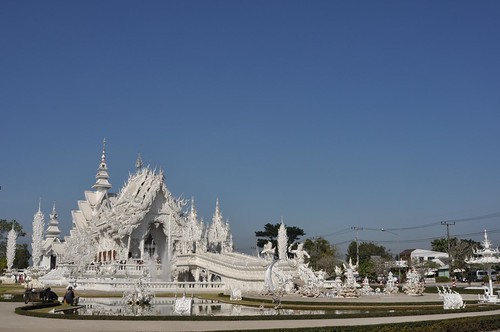
While I am not a proponent of Buddhism, I have had the opportunity to visit is an interesting temple about 10 miles south of Chiang Rai often referred to as "the white temple".  The artist/creator of the temple makes an interesting contrast.

The temple is divided into two sides.  One side is very ornate with lots of interesting sculptures and such which draw the eye.  It is quite beautiful in many ways.

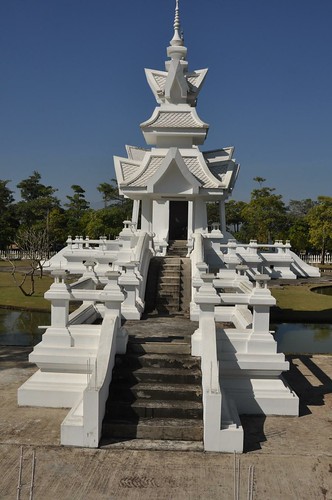
The other side is quite plain and almost boring.

The two sides are reached by bridges from a central structure.  One starts their journey there and has to decide: "Which side shall I choose.  Should I choose the beautiful and ornate side?  Or should I choose the plain and boring side?"

The catch here is that the "beautiful" side is side of karma-the endless cycle of birth, suffering and death.  The "plain" side is the side of Nirvana.

Many years ago, two men representing two large, extended families stood at a crossroad.  Their combined families were too big to be raising their livestock together and they needed to separate.  The older man said to his nephew, "take your pick, you go one way, I'll go the other."

The nephew looked one way and saw barren, rocky hills.  He looked the other way and saw a lush fertile plain.  He said to his uncle, "I think I'll head down to the valley over there."

The older man took his cattle to the barren hills.  God blessed him and he prospered.  The younger man found himself living among people whose only purpose in life was having a good time.

Eventually the older man had to rescue his nephew from the destruction of the city. The younger man ended up spending the rest of his life in a cave.  The older man prospered and became a great nation. (Genesis 13; 18:22-19:38)

Sometimes, that which appears soft and cuddly is in fact prickly and poisonous.

When you come to the crossroad, which side will you choose?

White Temple 9
Wat Rong Khun (วัดร่องขุ่น) - the 'hell" side


White Temple 11
Wat Rong Khun (วัดร่องขุ่น) - the "heaven" side

Tuesday, April 7, 2015

The Walled City

And the mountains shall be thrown down, and the cliffs shall fall,
and every wall shall tumble to the ground.
 Ezekiel 38:20b (ESV)


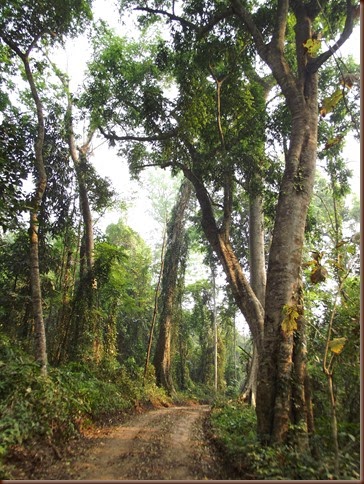
Soon after we moved to Wiang Kaen, we discovered a forest near our home that still had a lot of very large, old trees.  We were surprised because there aren't a lot of old native trees left in Thailand, especially near towns.

Satan Boran Forest scenes 8
Road through the forest

Looking at Google maps, we noticed that this Forest was fairly large in size.


Another thing that struck us when we moved here is the name of the place: Wiang Kaen. “Wiang” is a term used to describe walled cities, and we certainly didn't seem to be any walls around that we could notice.

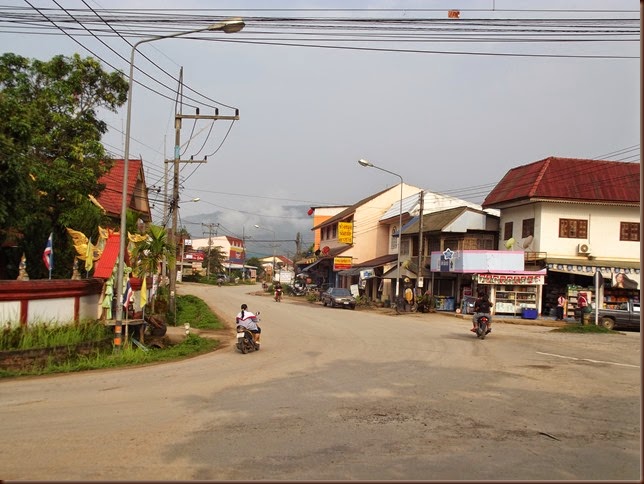
Downtown Wiang Kaen
Wiang Kaen today: Where's the wall?

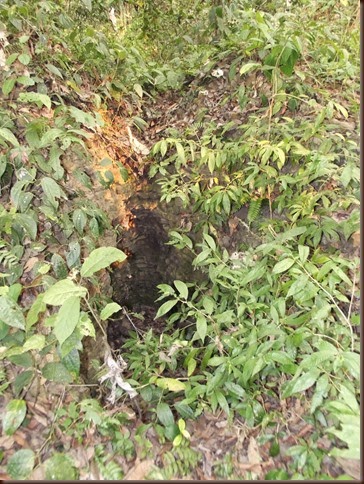
Recently, they have been doing some cleaning up around the old forest, and in the process we have discovered something—the reason that this old forest still exists is because it is the old, walled city—it’s just that the forest have covered up a lot of the walls and moats and other historical landmarks in the place.  But now there is a map that shows the general layout.  Knowing this we have become aware of the old moat, quite deep in places and often near the present roads, but obscured by brush and trees.

The name of this place is “Boran Satan Wiang Kaen” (โบราณสถานเวียงแก่น which roughly translates: ancient Wiang Kaen) or “Wiang Kaen Forest” (ดงเวียงแก่น).  The old city was founded about 700 years ago.


Boran Satan 3
Map of the old city

The general pattern of the border is an exterior wall, then the moat, then a larger, interior wall.  Below are two photos of where the interior wall has been cut for a road.

Satan Boran Wall 1
The cut through the wall looking into the old city

Satan Boran Wall 1b
The cut through the wall looking out of the city

The moat is so grown over with vegetation, it is usually hard to notice that it exists.  In the photos below, I traced the approximate cross section of the moat.

Satan Boran Moat e
The moat


The Moat


The are a few small “hills” which are the remains of old chedis.  The one below is labeled #3 on the map.  It has been opened up so that you can see some of the old bricks inside.


Satan Boran Point 3 Chedi 2
One of the old chedis

Satan Boran Point 3 Chedi 8
Looking down into the chedi

Another old chedi is across from the present, simple, Buddhist temple.  This one has a large tree growing in it.

Boran Satan Point 4 Chedi
Another remains of an old chedi

The are other, interesting relicts scattered about the forest.  This Buddha image of uncertain vintage is along a mostly overgrown trail.  Some “lucky bamboo” plants in front of it show that it seems to have received some attention in recent times.

Boran satan Buddha image 1
Old Buddha image with newer
planting of lucky bamboo

The Buddhist temple is a bit different.  It is constructed like an ordinary building instead of using the usual ornate architecture.  The entrance is a roll-up steel door.  Often it is closed.

Muang Yai Forest Temple 1
The temple

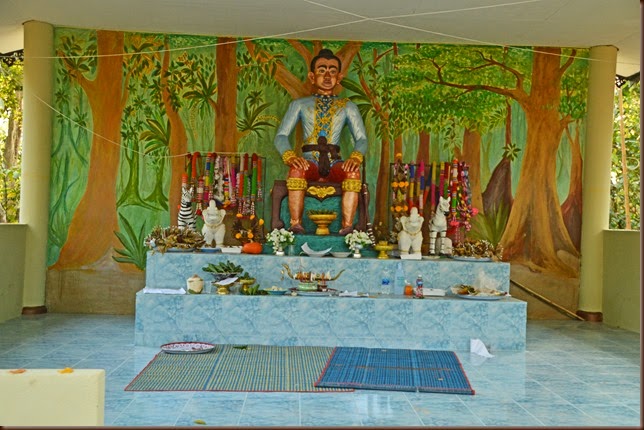
There is a shrine to the “Lord (spirit) of Wiang Kaen” (เจ้าหลวงเวียงแก่น).  A new one has just been built in the last couple of months; it is adjacent to the old one.

Jao Luang Wiang Kaen Shrine
Shrine of the "Lord of Wiang Kaen"

It's interesting to look back at this old city and see what it has become.  I'm sure that the people of the old city thought that what they built would endure for ages, but instead all that remains are a few mounds of dirt.

In the same way, we often behave like or think that the things we see around us, the product of the labors and imaginations of mankind, will last forever.  In reality, we really have no idea what our hometown will look like in 50 or 100 years.

Only God is the eternal, unchanging one; He and His word will remain forever.


Why spend money on what is not bread,
    and your labor on what does not satisfy?
Listen, listen to me, and eat what is good,
   and your soul will delight in the richest of fare.
Isaiah 55:2 (NIV) 

For he is the living God
   and he endures forever;
his kingdom will not be destroyed,
   his dominion will never end.

Daniel 6:26b (NIV)