Sunset Over the Mekong River

Showing posts with label Wiang Kaen. Show all posts

Wednesday, January 6, 2016

Top Twelve 2015

This is my annual review of the year, by picking my favorite photo from each month.
Well--I cheated this month and picked two from November, so call it a baker's dozen.

The photos are not necessarily picked for their artistic quality, but more for special memories from that month.

January

In January, we made our first trip across the river to Laos.  We were only there a couple of days.  The first day we took a speed boat down the Mekong River south from Houay Xai.  The second day we made a road trip north, stopping in several Khmu, Lao Lue and Hmong Villages.

Our last stop was at a Hmong Village called Huay Dom Dam.  Just as we were pulling away, this young woman carrying her two children gave us a beautiful smile.  The picture is not as sharp as I would like, because we had already started moving.
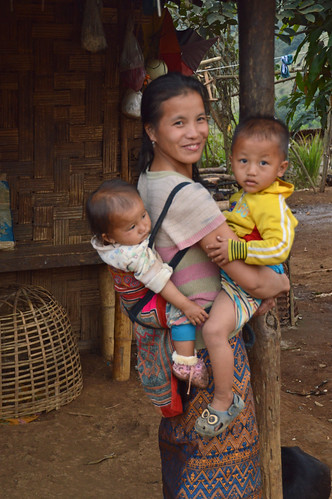

Huay Dom Dam Hmong Village

February


Every Saturday afternoon, we open our house for young people to come to practice English and hear Bible stories.  Sometimes we mix things up a bit.  Since Saturday fell on Valentine's day, we had the students decorate cookies, then we told the story of St. Valentine after which we made Valentine's cards.

Since it is an English class, we had the students make their cards in English.  (Except me--I made one for my sweetheart in Thai.)  The young people had lot's of fun and got to bring some cookies home as well.

Our Saturday activities with the youth are our favorite time of the week.  To be with these young people who are eager to learn is a gift for those of us who like to teach.  And it contrasts with much of our week when we are with people who seem like they know everything already.

Several of the young people in this photo will be headed off to university later this year, and it reminds me how valuable is our time with them to teach and show them about the love of Jesus.
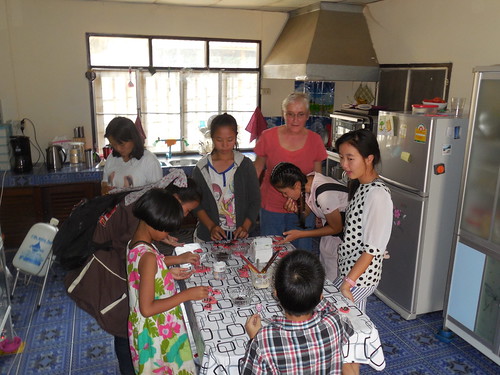
Making Valentines Cookies

March

In March, we had to head to Chiang Mai for some meetings.  While we were there, we took an afternoon and went to visit the Siam Insect Zoo.  This is a small institution located north of the city.  While there was a lot to see in the way of insects, they also had some non-insects to observe.  This horned lizard probably likes living in an insect zoo, because there is plenty to eat!

While we were intent on observing the various critters in the zoo, this one looked equally intent on observing us.
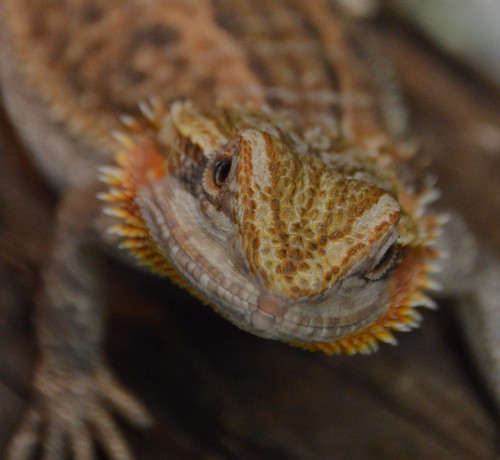

Insect zoo-horned lizard

April

In April, we were invited to a house dedication in Huai Jaw--the nearest Khmu village to where we live.  When we got there, we could not find where the house dedication was supposed to be.  Instead we got invited to where a wedding dowry ceremony was taking place.

There were lots of interesting things being presented.  An official dowry inspector was there to make sure everything was of sufficient quality.  Here, the inspector is checking the chicken legs and wish bone to see if they are auspicious.  The father of the bride, in the blue shirt, looks on.
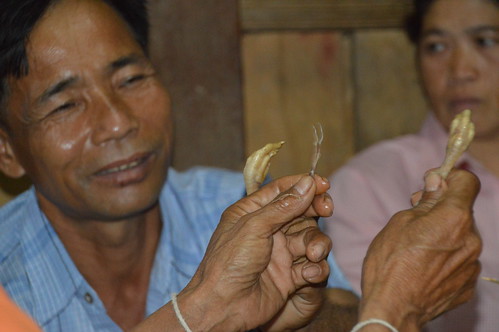

Wedding dowry ceremony in Huai Jaw

May

One of the bike rides I like is a windy, forested road that leads to a forest temple about 9 km southwest of where we live.  As one approaches the temple, the vegetation changes from wild forest to a mix of wild and ornamental plants.

In that mix of plants one day, I was delighted to find see this beautiful flower spike.  It was hard to miss, because the spike itself is about a foot long and sat atop a four to five-foot long stalk.  While I had not seen this particular bloom before, it is closely related to galangal, which is commonly planted all around Thailand.  I don't know an English name for it, the Thai name translates "wild galangal".
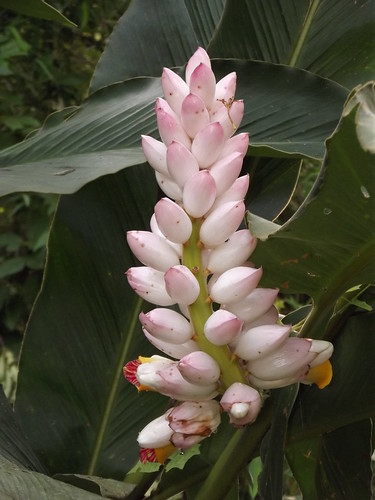

Alpinia malaccensis (Burm.f.) Roscoe Zingiberaceae Alpinieae-ข่าป่า

June

One of the most attractive fruits in Thailand is the dragonfruit.  The beautiful pink fruit belies its very bland flavor.  The dragonfuit is a type of cactus.  One hardly sees the open blooms, however, because they open at night.  During the day, the blooms wilt and eventually turn brown.

One day I was fortunate in that the clouds seemed to have fooled this particular dragonfruit plant, and its blooms were still open even at about 10 am.  The blooms are several inches across and have an interesting palm-tree shaped pistil surrounded by many stamens.
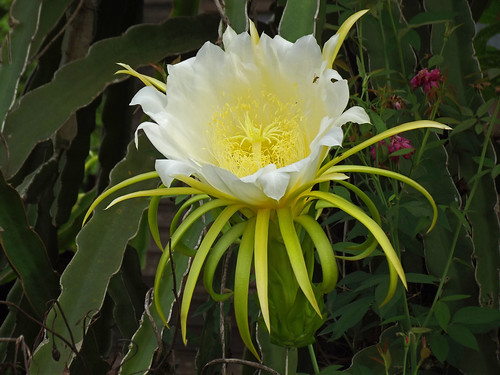

Hylocereus undatus (Haw.) Britton & Rose-Cactaceae: Dragonfruit, แก้วมังกร

July

In July, a team of college students from the US descended on our training center in Wiang Kaen.  This group of young people visited several nearby churches to put on activities for children.  In Huai Ian, the team was leading some songs.  Jake was playing percussion.  He invited one of the local men, Wat, to join with them.  Wat was thrilled at the opportunity.  Though Jake could hardly speak a word of Wat's language, his smile communicated all that was necessary.
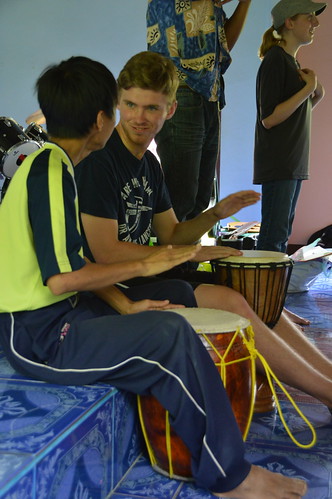

Action Team in Huai Ian 2015-7-11

August

I was on my way back from a few days in Mae Salong, and I saw a sign, in Thai, for a waterfall park.  I'm usually somewhat leery about such things, because sometimes destinations noted on such signs can be a long ways away or perhaps the road or trail doesn't go through anymore.  But this time I decided to investigate.

Huai Kang Pla did not have any large falls, but there were some small and medium sized cascades.  I was the first one in the park that day.  It was quite humid and I was soon drenched with sweat as I wound up the trail to the waterfalls.  It was the last day of my short vacation and I was trying to keep my brain in vacation mode.

The vendors at near the park gate were setting up as I got back.  They said the falls are more popular in the winter when people stop on their way to the mountain areas, or in the hot season, when people go to cool off in the pools.
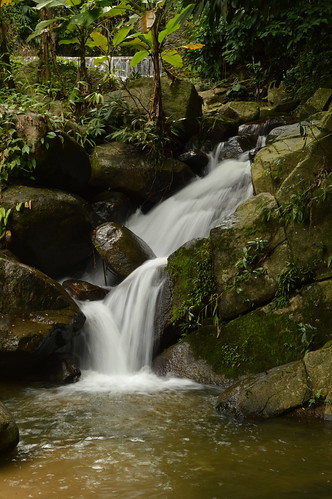

Huai Kang Pla Waterfall Park 5

September

One day we made a rather spontaneous decision to take an afternoon trip and head 25 km up the road to a small cave.

Pha Lae Cave functions more as a religious shrine than a natural resource.  The cave itself is small and it has quite a few Buddhist worship elements in it.  However, it is located in a pretty spot along the Ngao River so it is a nice place to relax.

We got there just as the monks were putting out bananas for the monkeys.  They must have known it was feeding time, because they had begun to amass even before the bananas were set out.  There were monkeys of all sizes, from tiny babies to big papas.  I thought it was cute how this baby was snuggled up to momma as she kept a watchful eye.


Macaca fascicularis (Raffles, 1821) Cercopithecidae-crab-eating macaque-ลิงแสม

October

Pha Tang Creek flows out of the mountains that border the country of Laos.  As the creek nears its confluence with the Ngao River, it gets a bit flatter and these areas are formed into terraced rice paddies.  The creek itself is diverted into irrigation canals such as the one seen here.

On this day I decided to take a drive down the rough dirt track at the far end of my bike ride.  There butterflies were out enjoying the sunny day.  I paused to relax and reflect that this is one of the things I like about Wiang Kaen--the sleepy valleys surrounded by hills and mountains.

This particular area reminds me of parts of the Haut St. Marc, where we spent our first year in Haiti over 30 years ago.
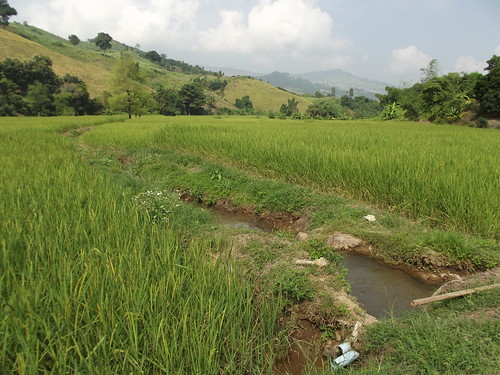

Rice Paddies in Pang Hat

November

In November we took our first real vacation together in a long time.  We decided to go to a resort area in the province of Krabi on the southern peninsula of Thailand.

What a beautiful area.   (That's why a posted two photos for November).

We stayed in Ao Nang.  Most evenings we had thunder storms and the mix of clouds made for awesome sunsets.  We would go for a walk to dinner and catch the sunset along the way.  Tourist season was just beginning and the beach would begin to fill with people watching the sky as the colors shifted with the drowning sun.

Most of the long-tail boats would be parked in a harbor a few miles north for the night.  But there were always a few moored on the beach.
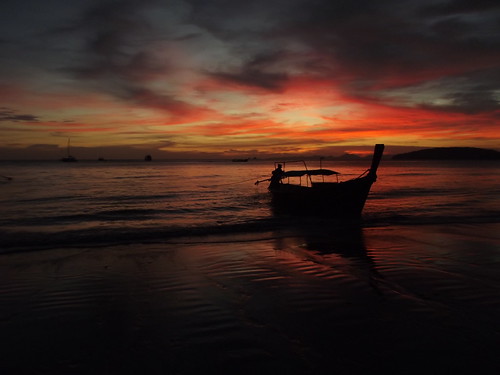
Ao Nang Sunset 2015-11-17

Many of the tourist activities involve being packed with hordes of people in a van or boat.  One day we decided we wanted something a little more free-form, but we did not know our way around enough.  So we opted in for something in-between.  We went on a guided kayak trip.  There was only us and two Korean couples in our group.  The Koreans opted to hire locals to paddle their boats.  We paddled our own (felt that for a few days).

We were in tidal channels in a mangrove forest in Bor Thor, on the north side of Krabi.  One of the channels went through a cave.  As we broke through the back side of the cave-tunnel with the light filtering through the green leaves, it was like a mix of romance and a scene from some kind of adventure movie.It was quite beautiful.  Now that we know the area, I think I would go back and just rent the kayak and go at our own pace.
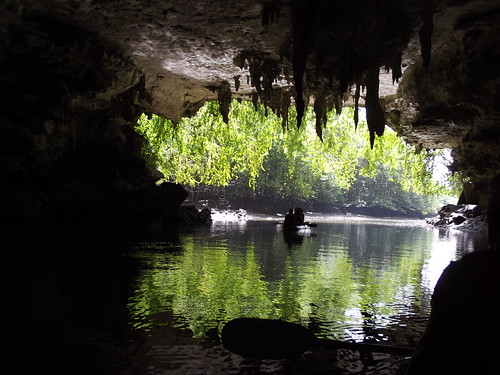

Lot Cave-ถ้ำลอด

December

December means Christmas activities.  Being associated with a group of churches means we can stay quite busy, even if we don't go to all of the events.

The Sunday after Christmas we were in Huai Jaw.  PK was giving a message in Khmu, so we did not understand all of his message.  I drifted outside with my camera and used it to break the ice with some children.  They would climb up this small tree then swing themselves off of it from the branch that they are holding in this photo.

The smiles from these kids help melt away the stress of a busy holiday season.
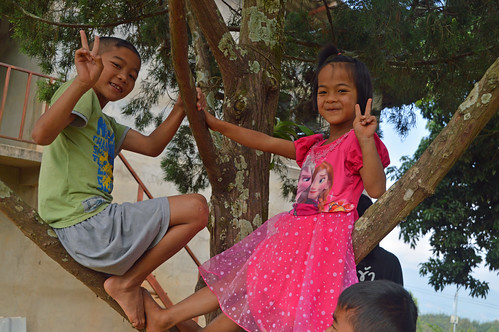
Huai Jaw Christmas Celebration

My work this past year, especially the latter half, have been quite difficult for me.  I'm grateful for those things that help to relieve some of the stress of life--going for a bike ride, studying a flower, hanging out with children, watching a sunset, paddling a kayak. In all these things, we can see the hand of the Creator.  And I am reminded just how great He is.


Ascribe to the LORD, O mighty ones, ascribe to the LORD glory and strength.
Ascribe to the LORD the glory due his name; worship the LORD in the splendor of his holiness.
The voice of the LORD is over the waters; the God of glory thunders, the LORD thunders over the mighty waters.
The voice of the LORD is powerful; the voice of the LORD is majestic.
The voice of the LORD breaks the cedars; the LORD breaks in pieces the cedars of Lebanon.
He makes Lebanon skip like a calf, Sirion like a young wild ox.
The voice of the LORD strikes with flashes of lightning.
The voice of the LORD shakes the desert; the LORD shakes the Desert of Kadesh.
The voice of the LORD twists the oaks and strips the forests bare. And in his temple all cry, "Glory!"
The LORD sits enthroned over the flood; the LORD is enthroned as King forever.
The LORD gives strength to his people; the LORD blesses his people with peace.

Psalm 29:1-11 (NIV) 

Saturday, January 2, 2016

Bookends 2015

Once again I make a kind of year summary by looking at photos from the first and last days that I took photos during the year.

On January first, I went on a bike ride up the Ngao River Valley (The district we live in is basically the Ngao River watershed).  This is usually a good time of year for biking because we don't have the clouds of rainy season and it is still relatively early in the burning season so the air is still somewhat clear after the morning fog burns off.

On this day I rode to to village of Chedi Thong (roughly translates: gold pagoda).  This is a Hmong Village and home of some of the teenagers that come to study English in our home, including a young woman named Lai, who has come to have a special place in our hearts.  (Lai won a very nice scholarship to study English overseas and last week she and 6 other students from across Thailand appeared on national television when they had an audience with the princess.)

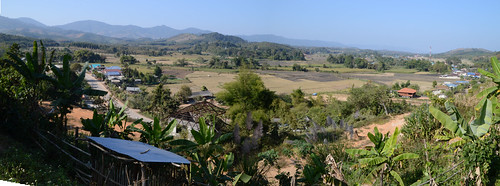
The photo is taken looking northwest.  (It's actually two photos stitched together.)  The hills in the back mark the border of Khun Tan and Chiang Khong districts.  On the valley floor are rice paddies, some of which are already black from burning.  The road winding through the photo is the main drag through our area.  It heads south from the Mekong River up through the mountains to Thoeng District.  It is a pretty drive, and the road on which most of my bicycling happens.

View from Chedi Thong

My photo from the last day of 2015 was taken just a few kilometers north of the first photo.

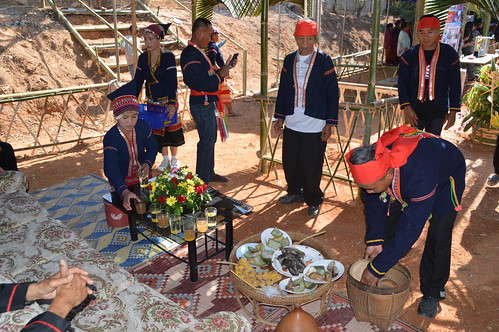
The village of Wang Pha was having a Khmu culture festival.  We had friends visiting us and we didn't leave the house until late morning.  By the time we got to the festival, it was almost over.  Many villages from the area participated and each village was charged with demonstrating some aspect of Khmu culture.  When we got there, the village of Huai Jaw was just finishing up showing a particular meal that is used for special occasions.

Uncle John (leaning over the baskets) is one of the leaders in our church in Huai Jaw.


Khmu Culture Festival in Wang Pha

Interesting that the two photos are connected to two of the hill tribe groups in our area.  The Hmong are the dominant ethnic group in our district.  The Khmu are one of the minor groups in the area but they are the people with which we spend most of our time.

While the ethnic diversity in our area is great, we serve a God who loves all of these people groups.  I, myself, have only a minor grasp of one of the languages of our area (Thai), but God understands them all.

People of all nations, celebrate God! All colors and races, give hearty praise! - Romans 15:11 (MSG)

Tuesday, April 7, 2015

The Walled City

And the mountains shall be thrown down, and the cliffs shall fall,
and every wall shall tumble to the ground.
 Ezekiel 38:20b (ESV)


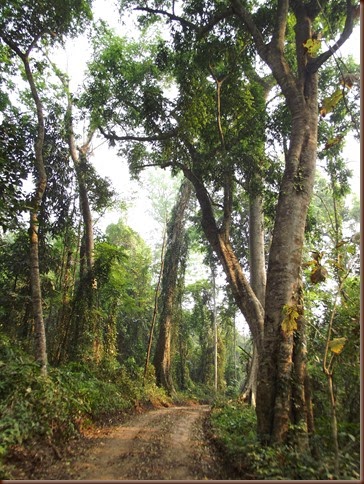
Soon after we moved to Wiang Kaen, we discovered a forest near our home that still had a lot of very large, old trees.  We were surprised because there aren't a lot of old native trees left in Thailand, especially near towns.

Satan Boran Forest scenes 8
Road through the forest

Looking at Google maps, we noticed that this Forest was fairly large in size.


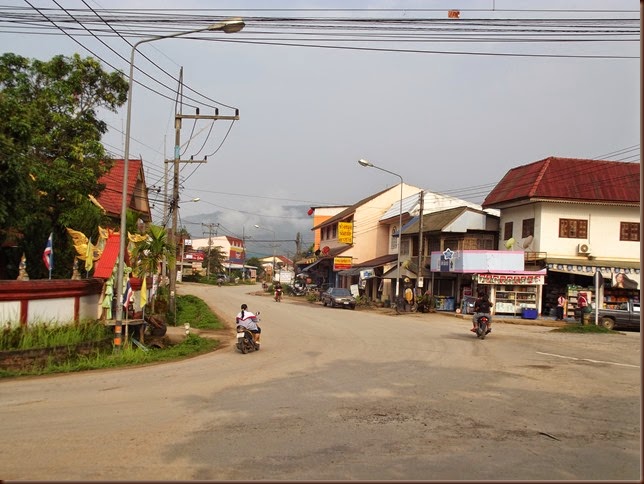
Another thing that struck us when we moved here is the name of the place: Wiang Kaen. “Wiang” is a term used to describe walled cities, and we certainly didn't seem to be any walls around that we could notice.

Downtown Wiang Kaen
Wiang Kaen today: Where's the wall?

Recently, they have been doing some cleaning up around the old forest, and in the process we have discovered something—the reason that this old forest still exists is because it is the old, walled city—it’s just that the forest have covered up a lot of the walls and moats and other historical landmarks in the place.  But now there is a map that shows the general layout.  Knowing this we have become aware of the old moat, quite deep in places and often near the present roads, but obscured by brush and trees.

The name of this place is “Boran Satan Wiang Kaen” (โบราณสถานเวียงแก่น which roughly translates: ancient Wiang Kaen) or “Wiang Kaen Forest” (ดงเวียงแก่น).  The old city was founded about 700 years ago.


Boran Satan 3
Map of the old city

The general pattern of the border is an exterior wall, then the moat, then a larger, interior wall.  Below are two photos of where the interior wall has been cut for a road.

Satan Boran Wall 1
The cut through the wall looking into the old city

Satan Boran Wall 1b
The cut through the wall looking out of the city

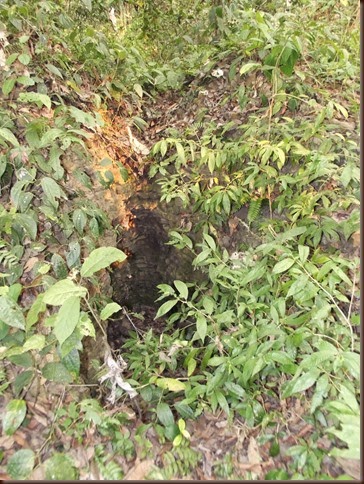
The moat is so grown over with vegetation, it is usually hard to notice that it exists.  In the photos below, I traced the approximate cross section of the moat.

Satan Boran Moat e
The moat


The Moat


The are a few small “hills” which are the remains of old chedis.  The one below is labeled #3 on the map.  It has been opened up so that you can see some of the old bricks inside.


Satan Boran Point 3 Chedi 2
One of the old chedis

Satan Boran Point 3 Chedi 8
Looking down into the chedi

Another old chedi is across from the present, simple, Buddhist temple.  This one has a large tree growing in it.

Boran Satan Point 4 Chedi
Another remains of an old chedi

The are other, interesting relicts scattered about the forest.  This Buddha image of uncertain vintage is along a mostly overgrown trail.  Some “lucky bamboo” plants in front of it show that it seems to have received some attention in recent times.

Boran satan Buddha image 1
Old Buddha image with newer
planting of lucky bamboo

The Buddhist temple is a bit different.  It is constructed like an ordinary building instead of using the usual ornate architecture.  The entrance is a roll-up steel door.  Often it is closed.

Muang Yai Forest Temple 1
The temple

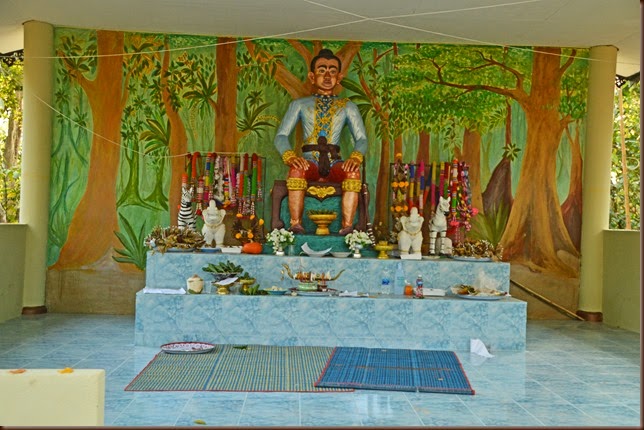
There is a shrine to the “Lord (spirit) of Wiang Kaen” (เจ้าหลวงเวียงแก่น).  A new one has just been built in the last couple of months; it is adjacent to the old one.

Jao Luang Wiang Kaen Shrine
Shrine of the "Lord of Wiang Kaen"

It's interesting to look back at this old city and see what it has become.  I'm sure that the people of the old city thought that what they built would endure for ages, but instead all that remains are a few mounds of dirt.

In the same way, we often behave like or think that the things we see around us, the product of the labors and imaginations of mankind, will last forever.  In reality, we really have no idea what our hometown will look like in 50 or 100 years.

Only God is the eternal, unchanging one; He and His word will remain forever.


Why spend money on what is not bread,
    and your labor on what does not satisfy?
Listen, listen to me, and eat what is good,
   and your soul will delight in the richest of fare.
Isaiah 55:2 (NIV) 

For he is the living God
   and he endures forever;
his kingdom will not be destroyed,
   his dominion will never end.

Daniel 6:26b (NIV)

Sunday, August 10, 2014

Don’t Judge a Book…

Just down the street from where we live is a large shed.  Until a short while ago, we had not seen any activity going there.  There was a large conveyor across the back of the shed, so we assumed it was for some kind of agricultural packing operation.

Then, we noticed that there was a refrigerated semi-trailer running beside the shed.  What kind of packing would they do that needs refrigeration?  Most produce here is shipped in open trucks.

So on the way back from an evening walk we stopped by and found out that they pack pummelos.  That night they were packing a load for China.  They also ship to other nearby countries like Malaysia and Indonesia.

(If you’re in the import business and would like to import some pummelos from Thailand, I can get you the contact info.)

Who would have thought that our little town would have such an operation.  A little shed in Wiang Kaen, the least populous district in Chiang Rai, is impacting the diets of people throughout Asia. How cool is that?

There is an English saying, “Don’t judge a book by its cover,” that seems to fit this situation.

The Bible, too, is full of examples of misjudged expectations.   King David is one of the prime examples.  Here he was, the smallest guy from a large, insignificant, family chosen to be king and also the one to take down a giant.

"Do not consider his appearance or his height,” LORD said to Samuel, “for I have rejected him. The LORD does not look at the things man looks at. Man looks at the outward appearance, but the LORD looks at the heart."
1 Samuel 16:7 (NIV)

Many of the surprising examples from scripture are women.  Rahab, a harlot, is instrumental in the fall of Jericho and becomes an ancestor of Jesus and David.  Just down the genealogical line, Ruth, an unknown woman from Moab, enters the same line.  And Jael, remember her?  Didn’t think so.  She took out Sisera, the commander of an army that was tormenting Israel.

In the New Testament, there is Mary, from an insignificant town in an unimportant place called Nazareth.  But now millions of people know about Nazareth because Jesus is from there—because Mary was from there.  Then there is that other Mary—the woman of the streets who anointed Jesus feet.  We don’t know the names of many of the important people of that time—but we know her name.

These people weren’t trying to make names for themselves—but we know their names anyway.  No one would have picked these people as “most likely to succeed,” yet their names have been recorded in history.  We know the names of these people, not because they were prominent people in their day or because they sought glory and fame, but because they chose to love and serve God rather than men.

Some people have a goal in life that they want to be famous.

A better goal is that we be found faithful.

Citrus maxima (Burm. f.) Merr. Rutaceae-khao yai pummelo, ส้มโอ พันธุ์ข้าวใหย่
Pummelos in plastic baskets waiting to be packed

Citrus maxima (Burm. f.) Merr. Rutaceae-khao yai pummelo, ส้มโอ พันธุ์ข้าวใหย่
Unloading pummelos from a pickup truck

Citrus maxima (Burm. f.) Merr. Rutaceae-khao yai pummelo, ส้มโอ พันธุ์ข้าวใหย่
Putting labels on pummelos prior to putting in boxes

Citrus maxima (Burm. f.) Merr. Rutaceae-khao yai pummelo, ส้มโอ พันธุ์ข้าวใหย่
A 2 kilogram pummelo

Wednesday, July 30, 2014

Beyond my Ability


Last week, during a break between rainstorms, we took Ingrid’s sister and niece on a drive into the mountains near here.  For the first 16 kilometers, the road generally follows the course of the Ngao River.  It has a fair number of very steep, but relatively short sections.  I’ve been bicycling that portion quite a bit lately for exercise.

But as we turned off the main road, I noticed that our path was becoming quite steep for sustained distances.  As we entered the first such section of road I said that, in regard to my bicycling, this was “beyond my ability”.

I’ve heard that there are those who ride their bicycles all the way to the top—to a small park called Pa Tang.  But I couldn’t see myself ever doing that.  Some parts even seemed a challenge for our truck.

But the other day I decided to try to attempt at least the first grade.  As I thought, it was quite hard.  I think I was pedaling about 5 km/h (3 mph).  The threatening clouds had me thinking maybe I should head back before I got to the top of that first grade.  But then a smidgen of sunlight would break through the clouds and I would keep going. And then, after what seemed like forever (but was probably only 10 minutes), the road leveled off at the base of this hill that protrudes awkwardly from the landscape.

Phitak Khiri bike ride 5e
The hill at the beginning of the road to Pa Tang with the first steep grade marked.

Suddenly what seemed so impossible now is doable.  (Who knows, maybe one day I’ll even get to the top—there are only about 12 more kilometers of the remaining 13 that are as steep or steeper than that.)

Our work in Thailand is often like this.  Sometime it seems impossible.  Truth be told, it even IS beyond our ability.  But it IS NOT beyond God’s ability.

I think of a recent occurrence here in Wiang Kaen.  Samyo is a young Khmu man who was born and raised in the US.  He was on an Action Team that spent about 2 weeks in our area.  The locals would tell you that his Khmu language skills are not that great.  But one Sunday morning he preached in Khmu in one of the churches.  God gave him Khmu words to speak that he didn’t think he knew.  People listened with rapt attention.  Some people decided that they want to believe in Jesus.  Praise God that Samyo did not let his lack of ability keep him from speaking that day!

One day, Jesus was chatting with a wealthy person who wanted to know how he could have eternal life.  After giving him some advice, which the rich person was loathe to follow, Jesus said to his disciples, “it is easier for a camel to go through the eye of a needle than for a rich person to enter the kingdom of God." (Matthew 19:24)

Get through an eye of a needle!  I have trouble getting into the pants I bought last year!

The disciples must have been on the same wavelength as me, for they said to Jesus, “Who then can be saved?” to which Jesus responded, "With man this is impossible, but with God all things are possible." (Matthew 19:26)

Some things are, in fact, beyond my ability, but they aren’t beyond God’s ability.  The challenge for me is to walk the same path Jesus is walking so that I can see the impossible take place.

Wednesday, July 23, 2014

A New Word

God.

How can we describe God?

How can we talk about God to a people who don’t even have a word for God?

I mean the kind of God who isn’t just a minor being like us, but that we can’t see.

Not the kind of god that can be confined to a building.

Not the kind of god created by a craftsman.

But the God who created the craftsman everything else in this world and who is over everything in the universe.

THAT kind of God.

We had the opportunity to introduce God to some school children last week during an English camp at Wannasorn Wittaya school in Wiang Kaen.  Many of these children have no sense of God in the way that we would.  An Action Team of six people helped us with this (Kelly, Samyo, Samson, Josh, Kim and Lorren).  Ingrid’s sister and niece (Ruth and Kaira) also helped out.

One of the ways we teach English is by telling stories.   Listening to and retelling stories gives people a chance to see how words connect together to convey ideas.   This is especially important in a country where children are taught lots of words but cannot think for themselves to create a new sentence.

The story we taught this last week was the creation story.  It’s a good teaching story because it has a nice pattern (Day 1, Day 2, etc) that help the children be able to put it back together.  AND it also tells them about a different kind of God than ones they have heard about.

Christina taught the creation story.  She was helped by Samyo and Lauren from the team.

English Camp at Wannasorn School 24
Samyo, Christina and Lorren telling The Story

We also taught using music, since music helps people retain words.  Samson and Kim did a great job getting the kids singing and dancing to English words.

English Camp Day 2 44
Kim and Samson following the lyrics


Ingrid and Ruth helped the children do crafts.  The children learned new words and got to practice using them in sentences (e.g. “May I have some scissors, please?”).  Pat, our office administrator in Wiang Kaen, also helped out.

English Camp at Wannasorn School 30
Ruth, Pat and Ingrid helping with crafts


Children also were able to practice English in the context of playing games.  Josh and Kaira took the lead here with some help from Boonsert, a intern from Laos who knows a little bit of English (along with Lao, Khmu, Korean and some Thai).

English Camp Day 2 18
Kaira and Josh supervising games


At the end of camp, we had a closing ceremony.  Even the teachers couldn’t help but join in as they danced to the lyrics of the Chaa Chaa song.


In the end, about 180 school children, along with their teachers, got to have fun while learning English.

And they learned a new word.

God.

In the beginning God created the heavens and the earth.
Genesis 1:1

Wednesday, June 4, 2014

Remembering Phawkham

Somewhere we once read that two of the ways to get to know a culture are to go to a wedding and go to a funeral.  This past week we became very familiar with one of these.

Last Thursday, our next door neighbor, Phawkham, died after a bout with lung cancer.

Phawkham and his wife lived with their only son and two grandchildren.   He had been sick some time and had been using oxygen for several weeks.  I first knew something was wrong when I saw his granddaughter running home from school with tears in her eyes.  Many others started showing up at their house and at 9am we went to see what was happening.  He had just died.

It was then that the frenzy of activity began that was to occupy the next few days.  Because of the very close proximity of our houses and the fact that Phawkham is a relative of our landlord, it became very much a part of our lives as well.

The rental company was there by 11 am to set up canopies, tables and chairs.  The canopy stretched to beneath the eaves of our house.

Funeral 029
The chairs set up between our houses

By afternoon, two construction projects were begun.  On the far side of their house a gazebo was constructed.  Then, between our houses, some trees were cut down or cut back in order to construct a small house.

Funeral 008
Constructing the house for the deceased

Throughout the rest of the day and for all of Friday, Saturday and Sunday, many people came to eat (3 meals a day were served to any who came), to assist the various projects, to pay respects to the widow, and make merit offerings for the deceased.

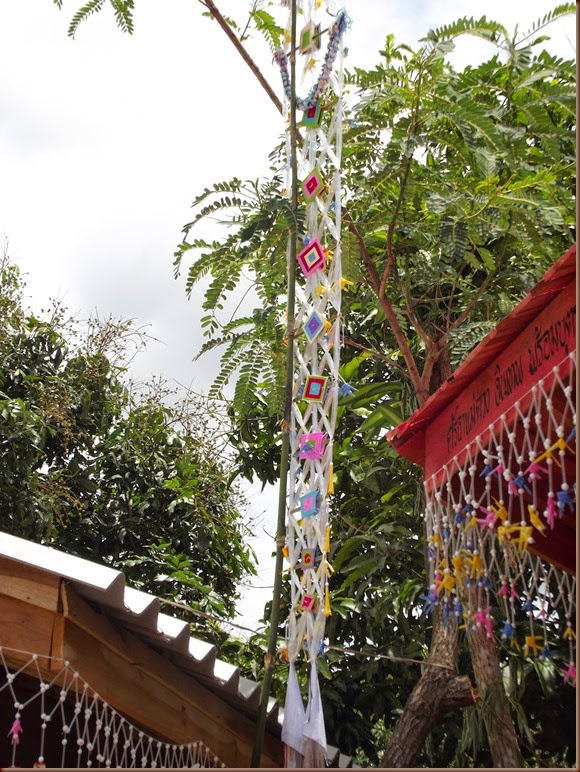
Besides work on the gazebo and house, others were involved in making the various decorations that were to be used on them.

Funeral 007
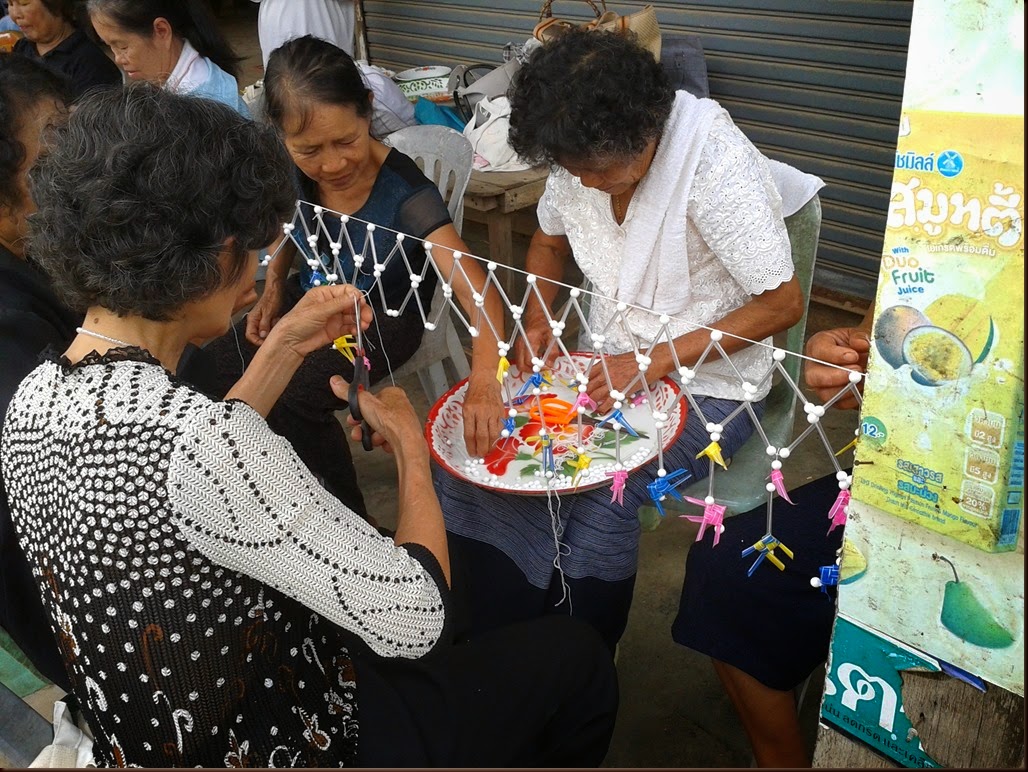
Making decorative garlands.  The "fish" are made from drinking strawas

Funeral 039
Another one of the handmade decorations.  Ingrid worked on some of this.

Still others were at work in the makeshift kitchen behind the house—it seems like there was someone working there almost 24 hours a day.

The widow would be sitting in the main room of the house almost all of the time.  The coffin was there, kept in a special refrigerated case that was bedecked with flowers.  There were pads for kneeling in front of it for those wishing to offer prayers of merit for the deceased.


Funeral 003
The widow and son in front of the refrigerated chest containing the coffin

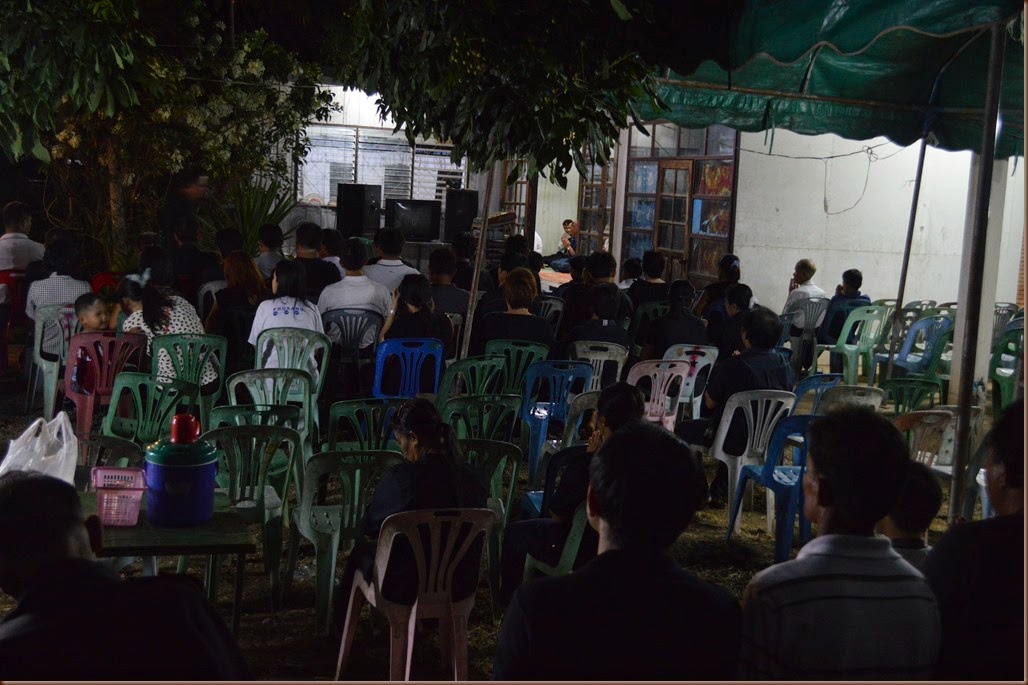
In the evening, somewhere between 8 and 9 pm, a group of monks would come and offer chants for a while.  After they left, the party began.  People would hang out and drink until all hours of the morning.  The loudest night was Saturday night, with partying going on outside our bedroom window until 4:30 in the morning.

Evening Chanting

By Saturday morning, the small house was completed.  It was filled as if someone were living there.  It contained a widescreen TV, refrigerator, mosquito net, fan, pillows and many other things.  A side room had a makesift (non functioning) squat toilet, washing machine and a dish cupboard.  Some of the kids would hang out here and watch TV.

A white string (สายสิญจน์) was attached to the front of the small house that had been built that ran into the main house where the coffin had been placed earlier.  This was to allow the dead person to move out of the main house and into the small one.

Funeral 038
The house for the deceased.  The white "sacred string" (สายสิญจน์) connects to the main house.

On Sunday evening the gazebo was set on a trailer and brought to the front of the house.  The casket was brought out of the case from inside of the house and placed in the gazebo.

Placing the coffin on the gazebo

An altar for offering incense and merit offerings was set up in front of the gazebo.  It was also a place for the family to make more formal photos of those who came.

Funeral 026
Standing by the altar in front of the gazebo

On Monday, even more canopies were set up across the street, blocking the entire side street.  A band was playing traditional music in front of their house.  Lunch was served early.

Funeral 033
The canopy across the street.  By lunch time this was full

After lunch, the string from the small house to the main house was cut so that the dead person could not go back.  The trailer with the gazebo was attached to the truck.  Two long ropes were extended out from the front of the truck so that the mourners could symbolically tow the coffin to the crematorium.

Funeral 040
Getting ready to tow the gazebo

The band moved to a waiting farm truck and started playing.  Some people got an early start and drove to the crematorium.

Funeral 043
Final preparations before the procession

Once things were in order, the procession began.  Two girls led the procession carrying the floral display that held a photo of the deceased.  Then came the mourners “pulling” the rope.  Then was the pickup truck which had a sound system playing sacred music while it towed the gazebo.

Lastly, the truck with the band followed.


A man carried a long bamboo pole with a fork on it to push up any low hanging wires or branches that might snag the top of the gazebo.

Funeral 049
Rounding the corner.  The bamboo pole is used to clear branches and wires out of the way

A humorous incident happened when the gazebo had trouble navigating between trees on the side of the road.

Funeral 050
Trying to navigate through the trees on the side of the road

Eventually we all got to the crematorium grounds.  The gazebo would normally have been rolled under a roofed structure in front of the crematorium, but it was too wide to fit, so it was placed in front.

Funeral 060
The gazebo arrives in front of the crematorium

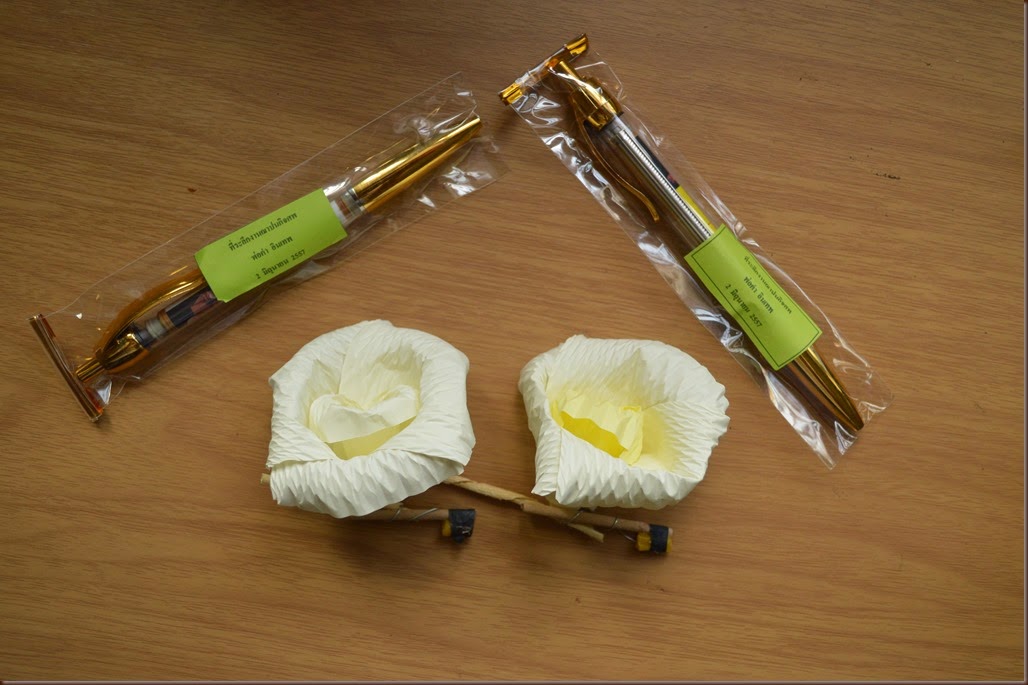
A group of school kids distributed cold water and orange drink to the hundreds that were gathered.  It was definitely appreciated on the hot day!  They also distributed special paper flowers and pens.  The flowers had a small piece of candle attached in order to facilitate burning.  The pens had a “scroll” that pulled out containing some Pali words that could be chanted every day.

Funeral 073
The pens and paper flowers that were distributed

The first order of business was to take official pictures of select groups of people.  Then, a group of people were called up, one at a time, to offer a ceremonial towel for the monks to use.  These were placed on a table in front of the gazebo.  When they were all piled up, a group of 7 monks came up to receive them. Next, a smaller group of people were called up one at a time to offer a special pedestal with a monks robe on it.  These were also placed on the table.  A smaller group of monks came up to receive this offering.

Funeral 066
Monks receiving the ceremonial towels
Funeral 067
Monks receiving robes and pedestals

Lastly, some words were spoken about the deceased.  Then the coffin was taken off the gazebo and placed into the crematorium.  The widow went up to place her paper flower on the coffin and then she was taken home in a car.  Next, all those assembled went to throw their flowers on the coffin.  Then then coffin was ignited.

Funeral 072
The crowd goes forward to place their paper flowers on the casket

The gazebo would be donated to a park or a school according to the wishes of the family.
Back at the house, the small house was carefully disassembled and placed onto a pickup truck.  It would later be brought to a temple and reassembled where it would serve as lodging for a novice monk.

A smaller crowd of people stayed on at the house to help clean up and socialize throughout the night.  Cleanup was complete by Tuesday evening and the widow began to settle down to life with a new normal.

It was a privilege for us to be included in all of these festivities, even though we did not participate in the chanting or merit-making aspects.  It was a great way to meet new people and it gave us an opportunity to tell how different it was from our Western way of doing things.  To some we also got the opportunity to explain why funerals are different for a Christian. 

Funeral 020
Remembering Phawkham-a good neighbor