Sunset Over the Mekong River

Tuesday, June 20, 2017

Pretty vs. Pretty

Ah! English!

What an interesting language I have grown up with.

In a tree in our yard, there are some pretty red flowers.
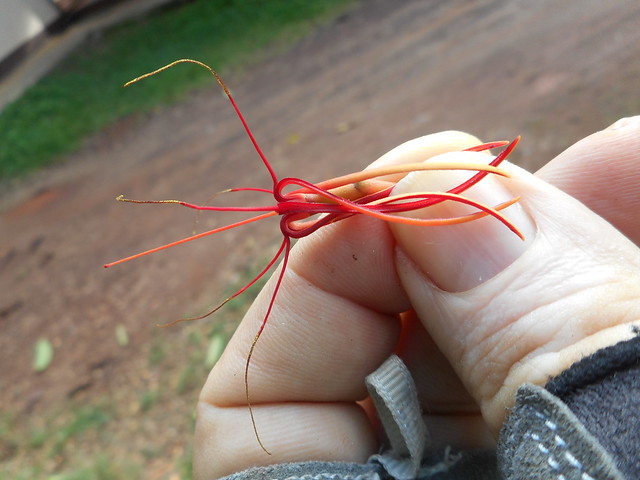

Ligaria sp. Loranthaceae 3
Pretty red flowers


The problem is that these red flowers are growing out of a mango tree.

But they are not mango flowers.  These are mango flowers:
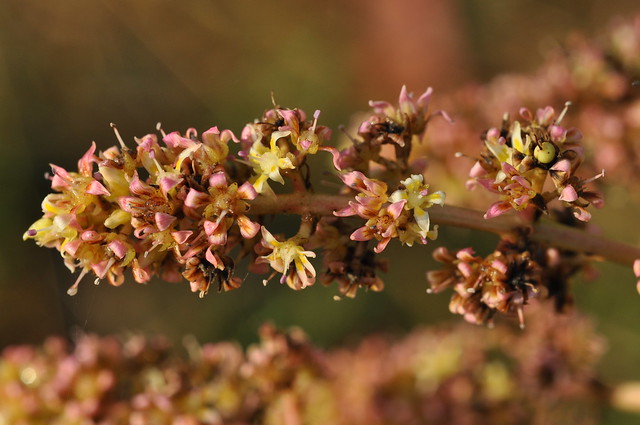

Mangifera indica L. Anacardiaceae: mango, มะม่วง
Mango flowers


The red flowers are growing on a parasitic plant.  This plant makes seeds that germinate on the branches of the tree and then tap into the trees vascular system of the tree for nutrients.  Let the host tree do all the work of making roots and getting water and nutrients from the soil.

So, pretty flowers, yes.

But pretty nasty as well.

(Somehow our language got to the point where "pretty" can end up being an adjective meaning "beautiful" and also an adverb meaning "very".  So we can say that one thing is pretty while another is pretty ugly, and they are opposites.  And why do we then say "very pretty" vs. "pretty pretty".  This is all pretty confusing.)

You see, the more pretty red flowers that the tree has, the fewer mangos it will have.  And I like mangos.  Mangos are my favorite fruit.  They're the reason I moved to Thailand.  (Well, not exactly, but close.)
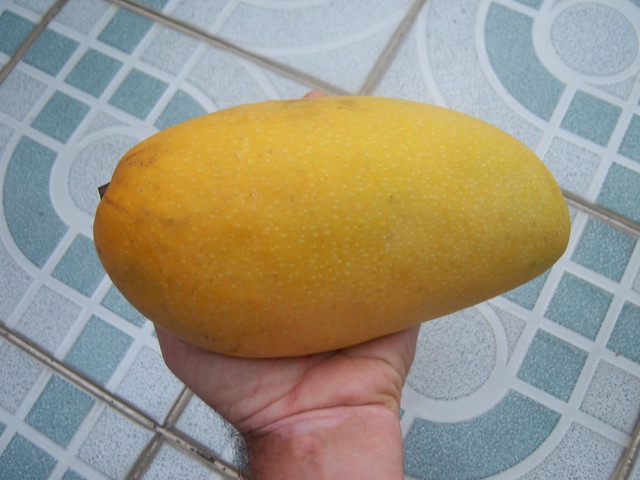
Mangifera indica L. Anacardiaceae: mango, มะม่วง
A lot of mango goodness here

So, I'm left with a choice.

Do I want some pretty red flowers?

Or do I want some pretty tasty fruit?

I could leave the parasites on the tree, and have both red and yellow (mango) flowers.  But the mango production would be reduced more and more with time.

Life is like that.  Often are choices aren't between good and bad or right and wrong.   The choices are often between one way and a better way.

The apostle Paul writes about about a "better way" in 1 Corinthians 12, and 13.  In 1 Corinthians 12, Paul is talking about the use of spiritual gifts in the church.  In the church, the body of Christ, we are each given different gifts in order to help build up the church.  1 Corinthians 12:31 we read:

But eagerly desire the greater gifts. And now I will show you the most excellent way.

And then Paul goes on to talk about love.

It's great to desire spiritual gifts, but if we don't use our gifts in love, we are just like resounding gongs or clanging cymbals.

Or pretty, parasitic flowers.

In Phon Phisai, we have this nice community of new believers.  Most of them knew nothing about Christ until just a few months ago.  One of the challenges we have now is helping them to discover and use their spiritual gifts to help build each other up in the body of Christ.  But it is so much more than that.  It is about loving each other and using our gifts, with that love, to help build each other up.   We want to have a church of people who give, not just take.  Pretty flowers that bear fruit, not just parasites.


Thursday, June 1, 2017

Nong

This past month we moved to the province of Nong Khai.  Nong Khai is one of a whole lot of places in Thailand, especially Isaan (Northeast Thailand), the has the term "Nong" in it.

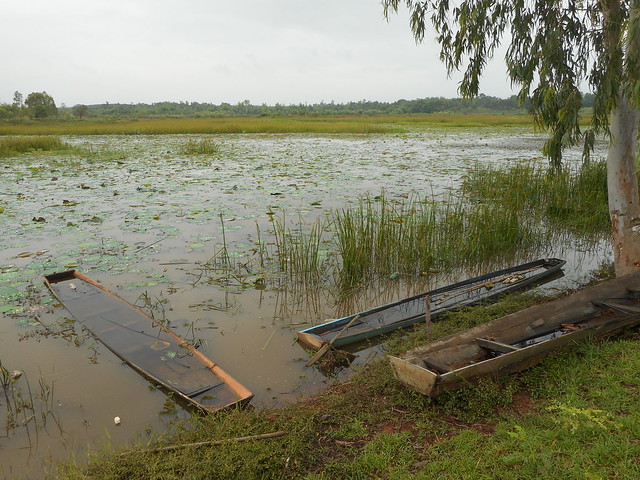
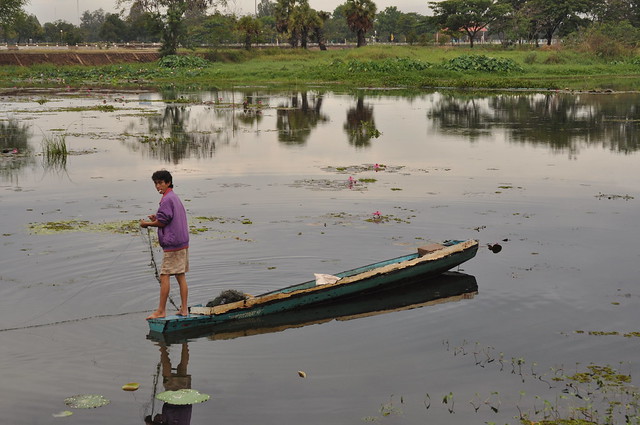
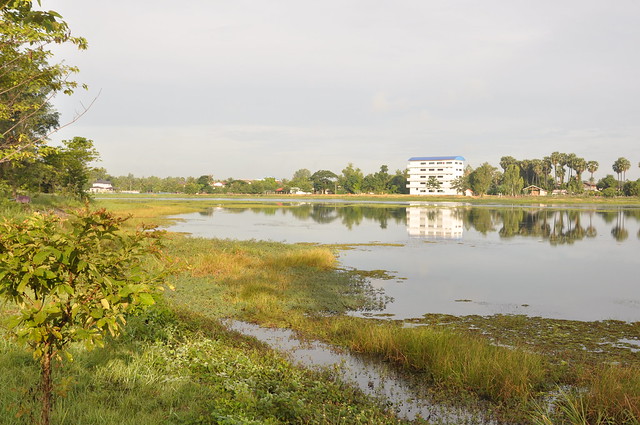
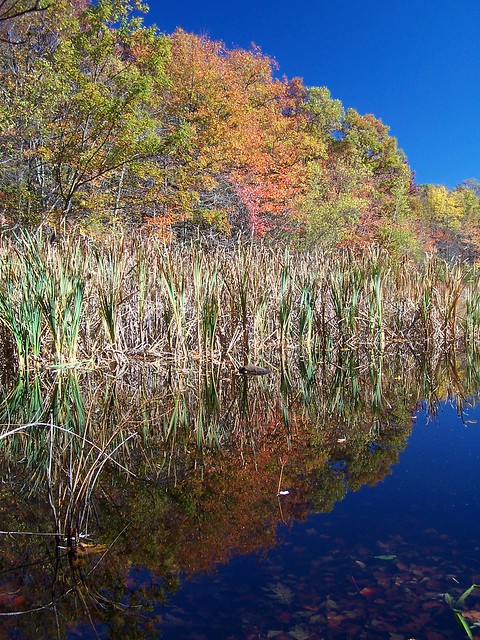
Nong has two meanings.  One meaning is pus.  The other meaning--the one for which many places derive their names--is a swamp or bog.

The Korat Plateau, which is the landscape on which Isaan is located, consists of mostly undulating, low-relief landscapes.  Because of this, there are many areas from which water drains slowly or not at all.  Consequently, there are lots of swamps and ponds (some ponds are made with a little help from humans).  The only two provinces in Thailand that are named after nongs are both in Isaan: Nong Khai and Nong Bua Lamphu.  Sometimes they will name the nong after the creek (Huai) that is dammed up to make it--though it looks a bit funny to me to see a pond called a creek.

One of the cuter names here in Isaan is Nong Song Hong (หนองสองห้อง), which translates: Two-roomed swamp.  It gets this name because there is a pond with two main chambers located in the town.

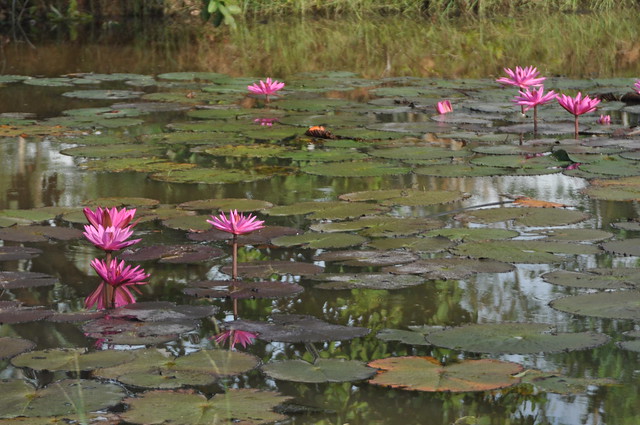
Many of these nongs in Thailand are adorned with water lilies or lotus plants.

Here are a few of the nongs in Isaan:

Nong 2
Huai Kan Luang Reservoir
A Nong in Phon Phisai created by putting a dam on a low, flat area.

Easter Morning at the Nong Mon 76
Nong Mon in Sakhon Nakhon Province


Nong Khrok
Nong Krok in Sisaket

Nong SaAng-Khu Khan-Sisaket 17
Nong Sa-ang in Sisaket


Even my back yard in Connecticut had a nong in it.

Russell Pond Fall 2007
Nong Russell in Wolcott, CT

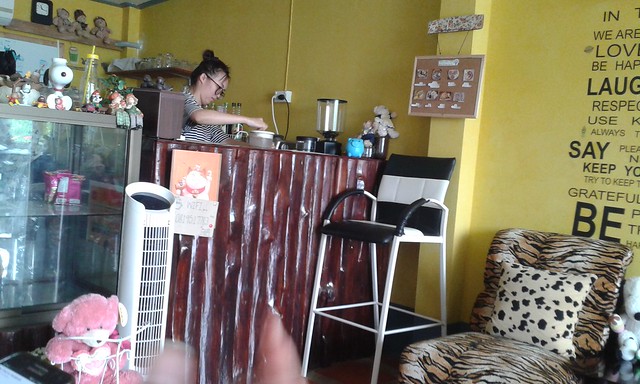
One has to be careful with how one says the word "Nong".  The pronunciation varies only very slightly (it has a similar, but different tone) from a very common term meaning "younger" that is used to refer to people younger than oneself or to servers in restaurants.  Even the firstborn of twins would refer to his younger twin as nong.

Forest Coffee
A "Nong" preparing my coffee
Probably doesn't want to be called "swamp" or "pus"

Since we are in our upper years now, a lot of people we meet are younger than us, so we use the term nong a lot.

I'm not sure that these younger people would appreciate being called "swamp" or "pus", but perhaps they would be forgiving of a foreigner.  I don't think I have made this mistake yet, but, being a foreigner, I probably have.  If so, forgive me.

I'd like to think we'd have mastered this tone thing by now, having spent 6 years in Thailand already, but that is not the case.  Learning the Thai language is a constant thing, and now we will attempt to learn some Isaan dialect as well.  It is not that we have a need to be experts, but we do want to be able   to explain the gospel clearly in a way that people can understand.

I can echo the words of Paul (except the part about the chains):

3 And pray for us, too, that God may open a door for our message, so that we may proclaim the mystery of Christ, for which I am in chains. 4 Pray that I may proclaim it clearly, as I should.
Colossians 4:3-4 (NIV)

Sunday, May 21, 2017

What Are We Called?

The adventure begins.

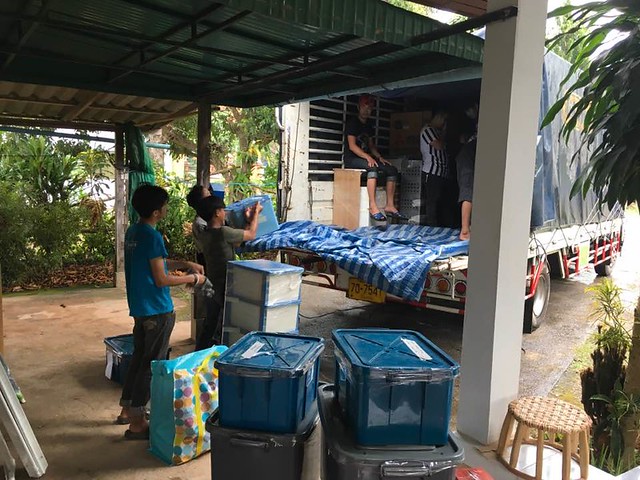
This has been a whirlwind of a week.  After spending a week going though our belongings, selling some things, giving other things away, the moving truck showed up.  That was only last Friday.

Loading the moving truck

After the moving truck left, we did some last minute cleaning--of the house and then our sweaty bodies--and then jumped in the truck to try to get to Phon Phisai before the moving truck--sometime the next day.  We spent the night in a hotel along the way, but were off by 4 am on Saturday.

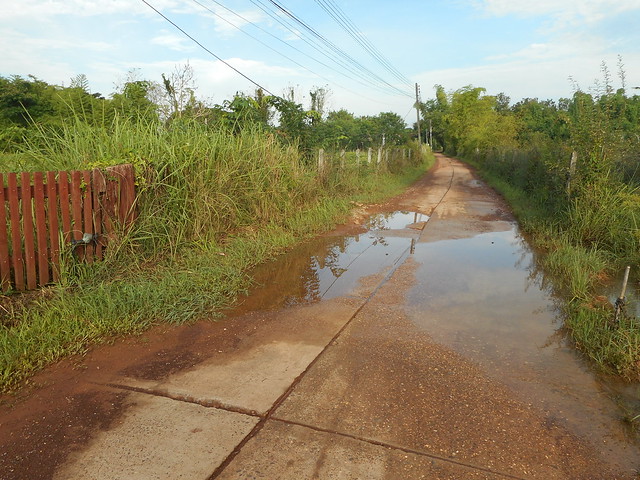
Arriving in Phon Phisai, we found that our road was flooded.  In places the water was over a foot deep (good thing it had gone down some, the neighbors said.).

Soi 11
Our road the day after the flood

When the truck arrived a few hours later, the church members helped us to unload.  Then we went to Nong Khai to buy a bus ticket, came back home, did some shopping for groceries, and then collapsed in bed.

On Sunday, after church, we took a van to Nong Khai (about an hour drive) and then got on the overnight bus to Chiang Mai.

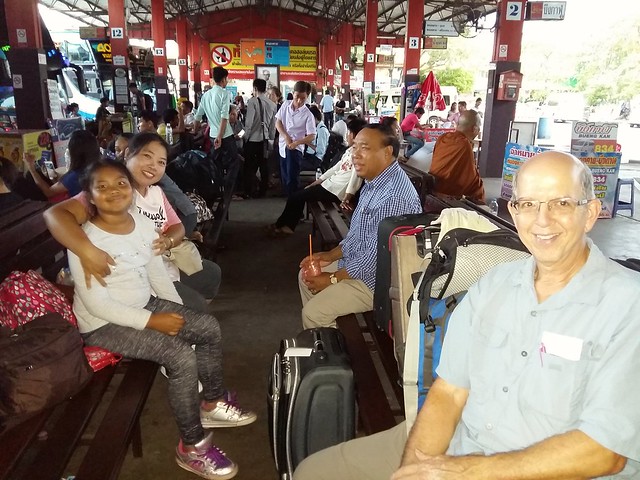
Nong Khai Bus Station
Waiting in the Nong Khai bus station


We were headed to Chiang Mai to formally launch our team and do some planning.  There were lots of questions to try to answer.  One question was, "what will we call the team".  Sorry--haven't answered that one yet.

But here we are.  The Isaan Team, Or Nong Khai Team. Or Phon Phisai Team.

The Unnamed team

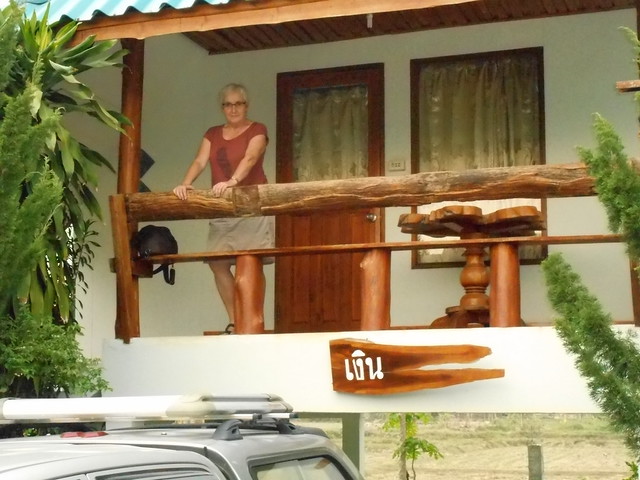
We also tried to decide on a name for the new church that has been started.  I tried to draw inspiration from a sign I could see across from the Hotel we were staying in.


But we figured that "support for wealth and peace" might send the wrong message.  So we decided on using the name of the village it is in: Ban Dawn Pho (Sacred Fig Hill Village) Church.

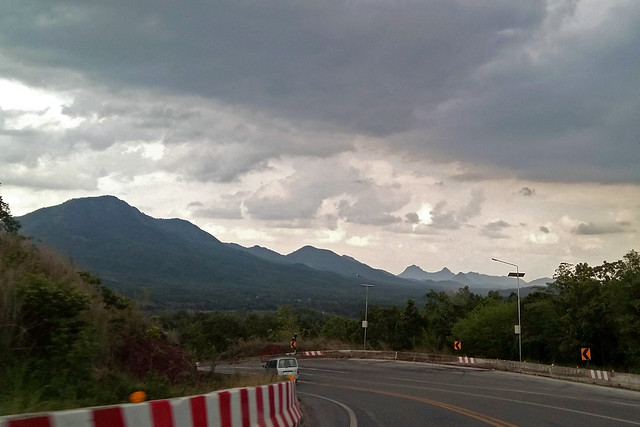
After a few days in Chiang Mai, we took a bus back to Chiang Khong, where Junji and Hitomi were waiting for us with our car.  We drove back to our old house to pick up some plants and then headed back towards our new home.  We drove a few hours on Friday, then all day Saturday, dodging some thunderstorms in the mountains of Loei province.


Misty Mountains
Stormy Weather in Loei Province


Now we are just a few hours away from home, having spent the night in the city of Nong Bua Lamphu.  This city draws its name from Nong Bua--Water Lily Pond--which is located in a park in the town.

Anyway, by whatever name our team is known, we are ready to head back to Phon Phisai to nurture the fledgling church that God is using Somdy to help begin.  This task of caring for the church seems a bit overwhelming.

The flock
Called to Care for the Flock


We are reminded of the prayer of Solomon:

Give me an understanding heart so that I can govern your people well and know the difference between right and wrong. For who by himself is able to govern this great people of yours? 1 Kings 3:9 (NLT)

The church may not yet be great in number, but we still need God's wisdom as we lead.


Thursday, April 27, 2017

Partial Fulfillment of Perpetual Wanderlust

I.e. On the road again

That's how it seems sometimes.

Today we are on a journey to Isaan to find a place to live for the next few years.  While I was planning the journey, I noticed that Google Maps traced out a route that was a bit shorter than using the more major roads.  It would cut about 2 hours of travel time.

But I was a bit dubious.  I was thinking that we would be ready to spend the night somewhere along that lonely stretch, and it did not look like there were a lot of options for lodging in the the small villages along the way.  I had pretty much decided not to go.

But then we made good time getting to the turnoff for the shortcut--and that in spite of stopping by the motor vehicle department to renew vehicle registration.  So I figured we should go for it.  A few miles in, we came to an intersection and as I rounded the corner, my brain made a mental jump.  A sense of adventure kicked in as we entered what  for us was new terrain.  This is not an area frequented by foreigners.  There are not many people to speak English to.

Eventually we made it to Nakhon Thai--or "Thai City", as it translates.

It was interesting looking for a place to stay.  We drove by one place that Google Maps showed, but the outward appearance was not too inviting.  So we turned around and went to another place we drove past earlier.  There was a registration booth, but no one was there.  There was a bell to ring, so we tried that. No response.  So we drove down the road further and saw the Petch (Diamond) Resort.  Like the previous place, there was no one around.  We rang the bell that was there.  No response.  But there was a phone number on the window, so we tried that.  That met with more success.

A few minutes later, a couple of people showed up on a motorcycle to help us with our rooms.  By this time, there were several of us waiting.  We decided to splurge and spend some extra dough for an A/C room--$15 altogether.


Diamond Resort 5
Is the pretty girl included with the room?
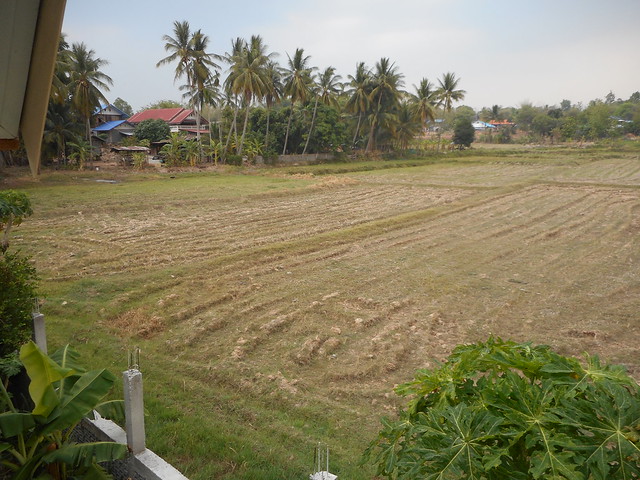
The resort might have more visual appeal at another time of year.  Right now it is the end of dry season and the fields are bare. A cow and her two calves were trying to scrounge up a few morsels in brown soil.   Soon, the paddies will be flooded and shortly after that they will be green with new rice.


Diamond Resort 3
View from our room


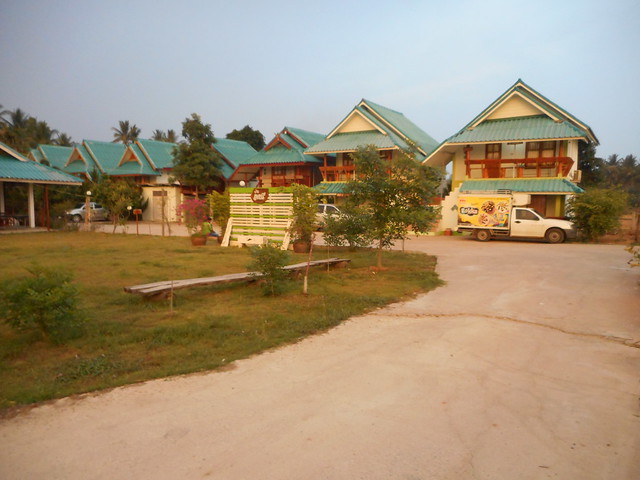
The better days of the Diamond Resort are behind it.  Still it is nice, quiet place.  Like the place we stayed a couple nights ago, the  rooms have names instead of numbers.  "Diamond."  "Gold."  We are in "Silver."


Diamond Resort 6
Diamond Resort


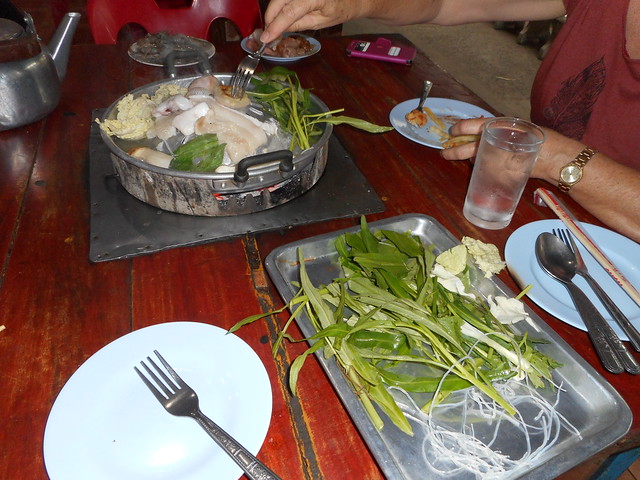
The resort is in a residential area with a lot of run down homes.  This is a farming community and it appears that there is not a lot of money to be had.  We took a short drive to the first restaurant we could find.  "End of the Sky" (Plai Fa) is a Thai style buffet where you cook your own food.  When we first arrived, we weren't sure the place was open because it was so quiet.  But soon the place was bustling.  Many people were getting take out, which means they would give you a bag and you can fill it for 200 baht (about $6).  So people were loading up their bags with raw meat and fish to take home.

We ate our fill and headed back to the resort, then went for a walk down some of the alleys. The people were friendly, although obviously not used to seeing much in the way of foreigners walking down their streets. One woman pointed out where the Seven Eleven is--I guess she figured that's where a foreigner would go to get food.  (She was right.  We had just been there to get some food for breakfast.)


End of the Sky
End of the Sky Restaurant


Tomorrow morning, we will head out towards Nong Khai.  We are about an hour drive from the Khorat Plateau--which is the region known as Isaan. Then it's about 4 more hours to our final destination. We are excited to be looking for a place to live.  We have no idea what we will find.

We are going to a District called Phon Phisai.  It is the next district to the east of the city of Nong Khai.  As we go to Phon Phisai, we are mindful that God is already there.  "For what great nation has a god as near to them as the LORD God is near to us whenever we call on him?" we read in Deuteronomy 4:7.  As we journey into what, for us, is the unknown, we are glad that God is near to us.  All we have to do is call on Him.


Wednesday, April 19, 2017

The best place places to camp

32“But even after all he did, you refused to trust the Lord your God, 33who goes before you looking for the best places to camp, guiding you with a pillar of fire by night and a pillar of cloud by day. 


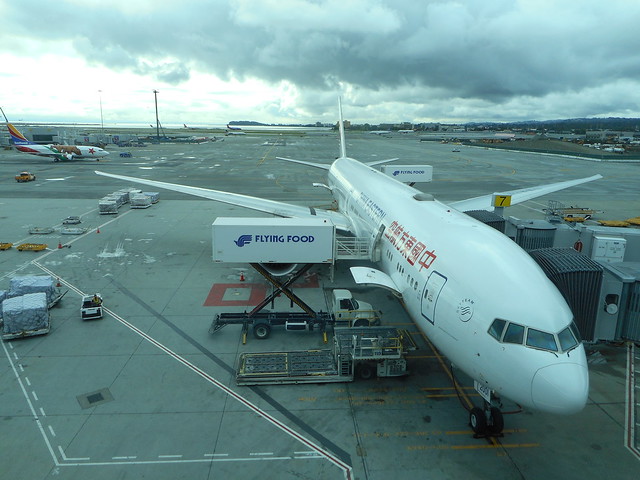
China Eastern Plane at SFO
Our plane for the first leg of our journey

Today marks the beginning of a new journey--a return to Thailand and a move to a new place.

While we know the city we're hoping to move to, there are a lot of unknowns.  And there is a lot to do to get ready for that move--flying to Thailand is the easy part.

As I was reading in Deuteronomy this morning, though, I was encouraged.  When Israel was wandering through the desert for 40 years, "the Lord their God went before them, looking for the best places to camp."

And this is our prayer as we go forward, that the Lord our God will go before us, looking for the best places to camp.  And that we will have the sense to follow whatever pillar of cloud or fire He sets before us.


Tuesday, April 4, 2017

Fresh Green

The LORD is my shepherd, I shall not be in want.
He makes me lie down in green pastures, he leads me beside quiet waters,
     Psalm 23:2

พระองค์ทรงทำให้ข้าพเจ้านอนลงที่ทุ่งหญ้าเขียวสด
พระองค์ทรงนำข้าพเจ้าไปริมน้ำแดนสงบ


San Joaquin River Gorge 1
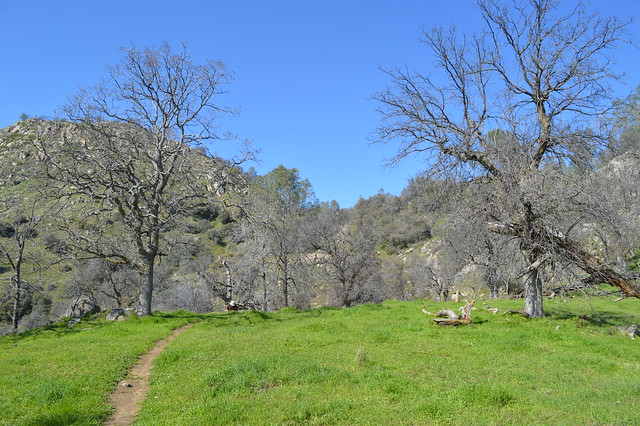
Green Pastures in the Madera County foothills

San Luis Reservoir View 13e
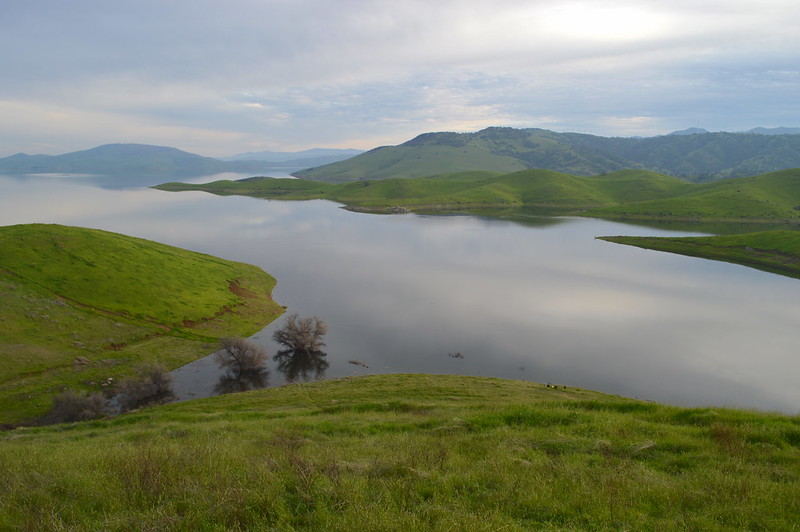
San Luis Reservoir-Still Waters in California

It has been wonderful for me to experience springtime in California this year.  It has been a long time since I've had the opportunity to go for walks among the lush green hillsides.  At times, it has been a bit dangerous--I told Ingrid that being here at this time of year makes me a bit reluctant to leave.  (It seems easier to leave in the summer when it is hot and everything is brown, or in winter when it is foggy and cold.)

When I walk among the wildflowers and green grass, I think of Psalm 23.  I particularly like the Thai version, where it says "fresh green fields".  David says that God, the shepherd, leads him to the green pastures. The sheep don't have to know where the lush pastures are as long as God does.

I, and I think also many North Americans, have a tendency to want to be in control.  To provide for myself.  To know where my next meal is coming from.  To know what our future looks like.

God, on the other hand, wants us to trust Him to lead us to green pastures, even if we have to pass through things like the valley of the shadow of death to get there.

Lately, I've been reading through Exodus and Numbers.  Here we have perhaps a couple million people hanging out at Mount Sinai for a year.  That is not a lush place.  How do you feed and water all those people? What will their livestock have to eat and drink?  This was not a problem for God.

The exact location of Mount Sinai is disputed, but it's not very lush
https://committeeforculturalpolicy.org/wp-content/uploads/2014/04/lossy-page1-800px-Mount_Sinai-110709_005.tif.jpg
     That evening vast numbers of quail flew in and covered the camp. And the next morning the area around the camp was wet with dew. When the dew evaporated, a flaky substance as fine as frost blanketed the ground. 
     The Israelites were puzzled when they saw it. “What is it?” they asked each other. They had no idea what it was. And Moses told them, “It is the food the LORD has given you to eat
     Exodus 16:13-15 (NLT)

God has amazing ways of providing for His people.

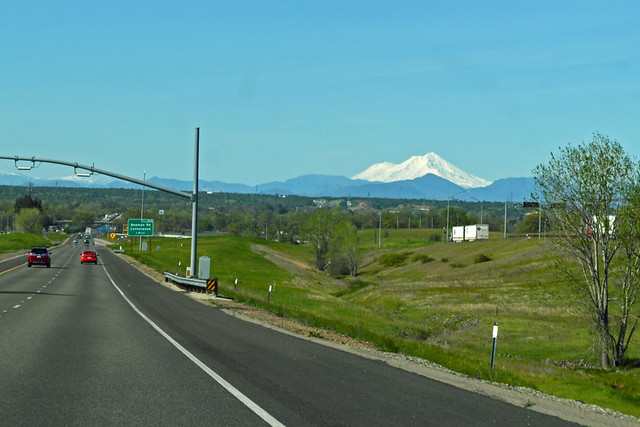
This week we have been on the road visiting people.  Our travels took us north through California into Oregon.  As we approached the city of Redding, we could see Mount Shasta, poking its white, snowy head into the sky.  The ingenuity of engineers has enabled us humans to store the snow as it melts, and send it all the way to Southern California, several hundreds of miles away.  Some is used for agriculture.  Some is for domestic use.  So when I see the snow, I think of how God is faithfully providing for mankind.


Mount Shasta
Mount Shasta rises above Redding, California

One of the names of God given in scripture is is Yahweh-Yireh--God Provides.  It is a name given to God by Abraham, after God provided an alternate sacrifice to Isaac (Genesis 22:14)

God provides for us.

How has God provided for you today?


Thursday, March 2, 2017

Mardi Gras Memories

Thirty years ago this month, I made a trip to a place called Trou Do.

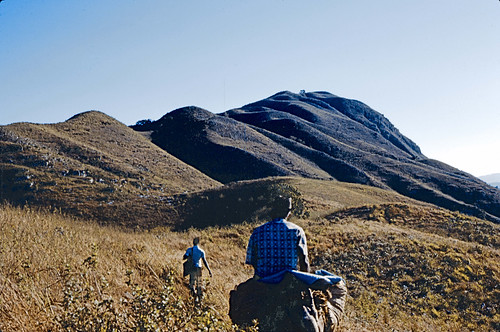
Trou Do is a remote village in the mountains above Tomazo (Thomazeau), about 30 miles northeast to Port-au-Prince, the capital of Haiti.  The mountain was visible from our home in Letan (l'Etang), but the village was on the back side of the mountain.

Trou Do (Trou d'Eau)
Looking up towards Trou d'Eau from our back yard


We left Tomazo for the trek early in the morning when it was still quite dark.  I could not see the trail when we first started, I was following the sound of the person in front of me (I could not see that person either).  A horse was leading the procession.


Riding a horse up the mountain
Pastor Raymond Jimenez riding the horse


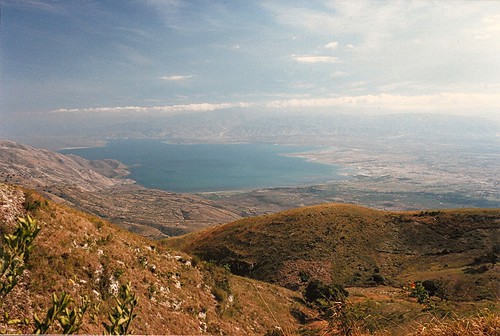
Eventually we got to where we had a beautiful view of our home in l'tang


L'etang Saumatre from mountain
Looking down l'Etang Saumatre
Our house is on the near shore of the lake


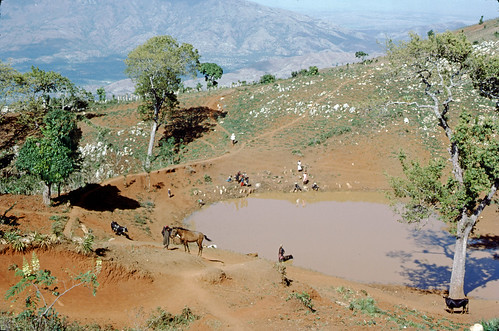
When we arrived in the vicinity, I could see why the place got its name.  Trou Do means "water hole" and the area was covered with sinkholes, several of which held water.  I counted to 19 and then gave up.  Some sinkholes were so close together, they shared sides.  Most were about a hundred feet across.

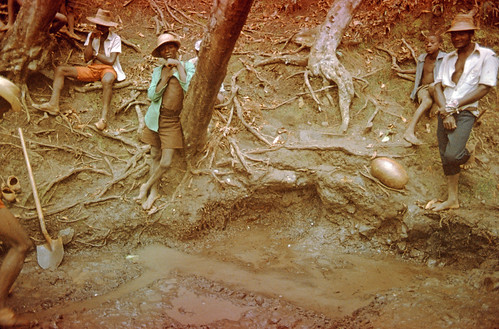
Sinkhole with muddy water
One of the many sinkholes in Trou d'Eau


This is a region that does not see many visitors.  The last white person to go to the area was my predecessor, who had gone five years earlier.  In many parts of Haiti, parents taught their children to be afraid of white people, so when a strange white person appeared, they would run.  But here, they did not know what to think.  When I walked into the village, a young boy, who had never seen a white person before, started jumping up and down screaming, "Wow, Mardi Gras!" over and over. It was early March, close to Mardi Gras season, when people would sometimes dress up in costume.  The boy did not know what else to think upon seeing this person with a white face carrying a back pack.


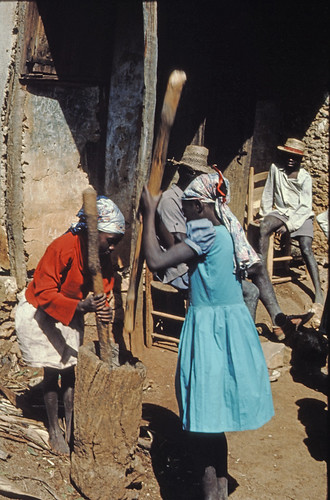
Pounding Grain with mortar and pestle
Children of Trou d'Eau


This is not a wealthy area.  The people lived in small huts.  But everyone was very friendly.  I think I spent a good hour just sitting in a chair holding a child contentedly in my lap.


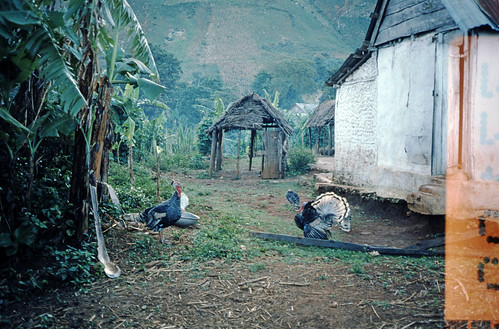
Turkeys in the yard
Turkeys in the yard


After we arrived, I was asked if I could help the people of the area with their drinking water problem.
Because of all the sinkholes, there was not a lot of good surface water for drinking.  Most of the rain was swallowed up in the sinkholes, disappearing into the porous limestone before making an appearance in a spring somewhere at the foot of the mountain.


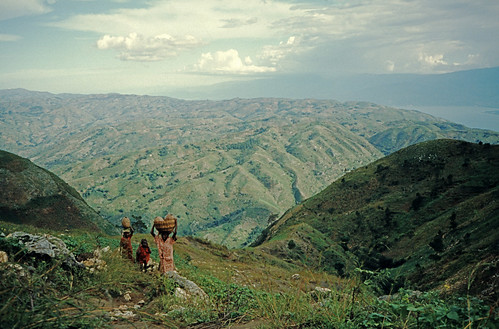
Carrying water
Carrying water back from the spring


So after resting for a short while, we were off, climbing over the top the mountain and down the other side a short ways.  On the way we passed some women carrying gourds of water up the mountain.

We eventually arrived at the spring.  There was this muddy hole with a small area of clear water.  Children would get up early in the morning while it was dark to come wait in line to dip their cups in the water and scoop water into their gourds.  Getting water took hours.


Muddy Spring in Trou d'Eau
The spring, after we cleaned it up a bit


So I told the leaders of the area that we could clean this up.  It would cost about $80 for materials.  So over the next while the people pooled their money.  I bought the supplies which they carried up the mountain, waiting for the big day.

When everything was ready I made another hike to Trou d'Eau.  When I arrived at the spring it was like a festival.  It seemed like the whole village was there. The women were cooking pots of rice and beans for the big event.  I asked if their were any masons around, and two men responded to that call, but they told me they've never capped a spring before. "That's alright," I told them, "I'm not a mason.  But together we can to this."

So we got to work. And when we were done, I took the first drink.  If the foreigner drinks the water, in their minds, it must be good.


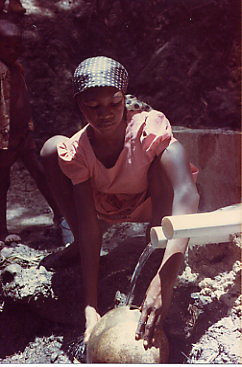
Spring Cap
Filling the gourd now takes only seconds


Two things happened that day. The people of Trou d'Eau got clean water.  And the people also got a great sense of pride. THEY did it.  THEY paid for the materials and brought them up the mountain and THEY did the labor.  I mostly had to just show up and eat lots of rice and beans.

Some of the best things I've ever done I didn't really do.  Life isn't about me or what I can do.  It's about God working through me to bless others.  My job is to listen to God and be available.

You make springs pour water into the ravines, so streams gush down from the mountains.
They provide water for all the animals, and the wild donkeys quench their thirst.
The birds nest beside the streams and sing among the branches of the trees.
Psalm 104:10-12 NLT