Sunset Over the Mekong River

Wednesday, April 12, 2023

In Summary - 12 Years, 14 Photos

As we look forward to a significant transition in the near future, one way to help prepare for it is to look back. An exercise someone suggested we do is one called a "timeline". There are different ways to organize a timeline; one person put forward the idea of breaking it up by location, particularly if one has moved around a lot. That seems to describe us. On one of my wake-up-at-2am-can't-fall-back-asleep moments, the idea came to me: can I sumarize our time in Thailand with a photo for each location? By three am, I think I had most of them figured out.

On another day, as I was reflecting on this process, I noted that all of my ideas had people in them, which is a good thing, I suppose, but there are also significant places we've visited along the way. So maybe I'll do one set with people and one without.

Since we've moved to Thailand in 2011 we've lived in six provinces in three regions. But there is a significant "almost"—where we planned on moving to but ended up not moving to. I felt a need to include this because there was significant time and energy devoted to this during our second year in Thailand.

The breakdown, then, is like this:

Where Region When
1 Bangkok Central April 2011-May 2012
2 "Almost" Sisaket Northeast February 2012-August 2012
3 Chonburi Central May 2012-December 2012
4 Chachoengsao Central December 2012-August 2013
North American Ministry September 2013-December 2013
5 Wiang Kaen, Chiang Rai Northern January 2014-October 2016
North American Ministry November 2016-February 2017
6 Phon Phisai, Nong Khai Northeast February 2017-December 2019
North American Ministry January 2020-January 2021-extended due to COVID
7 Kamalasai, Kalasin Northeast February 2021-September 2023 (planned)


Bangkok

Shortly after we arrived in Thailand, we moved to Bangkok. We're small town people, and moving to a mega-city was a bit of a challenge for us. (See more about that here). Even a person who is good at navigation like myself had a hard time finding my way around at first. Often we couldn't see the sun to navigate by because of the buildings. And there were no mountains to look up at to give directional clues. I had to learn to use different kinds of landmarks to find my way around.

We had moved to Bangkok to attend Union Language School. We found an affordable apartment about 2 kilometers from the school on the 22nd floor of Rachaprarop Tower Mansion. We started making some friends among the transient students at the language school—some of who we studied together with for most of the year that we were there. But we also developed some more relationships at the International Church of Bangkok. We became part of a small group there that would meet once a week for prayer Bible study. Our group had members from the USA, Australia, Japan, Thailand and probably some other places I can't remember. We would occasionally go on outings together as well. One time we ended up a a karaoke restaurant. Karaoke places are quite common here in Thailand (sometimes doubling as brothels), but for us it was a novelty. Our group got its own room and even Ingrid was brave enough to join with Rebecca for a song. This is an unusual picture because she is actually smiling while singing with a microphone.

Karaoke 12
Karaoke Night


One advantage of living on the 22nd floor was that we were above some of the pollution. We had a huge patio on one side with lots of potted plants including some small trees. We were close by the Baiyoke tower, the tallest building in Bangkok at the time, and it figured prominently in the skyscape visible from our apartment. We also got to see the sunrises and sunsets when the smog would permit. But what was really fun was when the storms came through. While we're not big fans of the concrete jungle, there was something awesome about watching the clouds and lightning over the city.

Storm over Bangkok 5
View of Baiyoke Tower on a Stormy Day From Our Apartment

"Almost" Sisaket


Our original plan was to work in Northern Thailand after we finished language school. In December 2011, we took a trip to the town where we eventually hoped to work in order to begin planning. But while we were there, the director of the work in our Thailand called us and told us to think about doing something else. He didn't have any other ideas, just that we weren't to pursue our original plan.

We had no idea what to do next. We explored some options but didn't feel God leading us in those directions. Eventually someone came up with an idea to join with another couple whose current ministry was coming to an end and pursue forming a team to work in Northeast Thailand, known as Isaan. Isaan is the poorest region of Thailand. It is the largest region, by area, and has the most people. But it also has the fewest number of churches and the least percentage of Christians.

We liked the idea, so we began meeting with Rob and Judy Griffeon to do team building. We made three trips to the Isaan region in March, April and July, visiting most of the provinces in the region and trying to decide where to work. We eventually decided we would work in the province of Sisaket. We made a fourth trip to that province in August to finalize plans. We decided that the Griffeons would settle in Sisaket City and we would move to the District of Utumphon Phisai, northwest of that.

On our third trip, we had met a hairdresser named Nat who worked in a small mall in Utumphon Phisai. As far as she knew, she was the only believer in the town. (You can read more about that here.) On our 4th trip to Isaan, we attended a church in the city of Sisaket. There we met a woman named Ying who was from Utumphon Phisai. God had called her from Bangkok to help bring the good news of Jesus to the Isaan people. This in itself was a great story, as typically people leave Isaan to go live elsewhere rather than the other way around. It was a joy to connect Ying with Nat while we were there.

Ingrid Nat Ying
Ingrid with Nat and Ying in Utumphon Phisai


A month after our fourth visit to Isaan, the Griffeons had health issues while back in Canada, and they ended up leaving our organization. (The currently lead an organization that helps the poor and oppressed in SE Asia, GNI Ministries.) This left us without a team. And while we were okay with the idea of moving to Sisaket and partnering with another organization, our country director wouldn't let us. (More on that later.) But the good news is that even though we did not end up moving to Utumphon Phisai, Ying was able to help start a church in that town. (Nat, however, moved somewhere else.)

While we were exploring Sisaket, we decided to take a day to enjoy one of the parks in the area. The province of Sisaket borders Cambodia to the south. The border follows the crest of a mountain range. There is a famous historic temple site on the border, the ownership of which has been disputed in the past. Current international court rulings place it in Cambodia, but at the time we were there, there was still some tension in the air about it. (The name of the site is often transliterated Phreah Vihear, but I write it as Phra Wihan as it better captures the pronunciation for English speakers.) We visited the park, and while we were not able to get to the temple due to border tensions, we were still able to enjoy the mountains and scenic views. There was a nice relaxed feel when we got there—one soldier even let Judy hold his unloaded assault rifle.

Phra Wihan Temple and Mountain Park 46
Khao Phra Wihan National Park

Chonburi

While we were in the process of exploring Isaan, we finished up our language studies in Bangkok. We along with the Griffeons were asked to look after affairs in Chonburi for a few months while two of the missionary families who would normally do this were back in North America. Chonburi is located southeast of Bangkok on the Gulf of Thailand. The work included helping at the Abundant Life Homes orphanage and with the administration of the foundation.

At one point, we were enlisted to help chaperone a trip to Siam City Park—a water park and amusement park located north of Bangkok. Ingrid and I looked after some of the younger kids from the orphange, which meant going on some of the lower key rides, which was fine with us.

ALH Siam City Park Trip 75
Trip to Siam City Park with Kids from Abundant Life Homes


We really didn't like living in Chonburi. It was a crowded city with lots of traffic, which made traveling anywhere a chore. Fortunately, the apartment we rented was almost across the street from our foundation office and a short walk to a mall where we could get groceries. During our time here, we bought our first vehicle from a used car dealer located halfway between our apartment and the mall.

We enjoy nature more than urban life. One nice thing about Chonburi was that there were still a few patches of mangrove forests left that had not been filled in and "developed" yet. There was actually a small area where they were trying to reestablish the mangroves that even had a boardwalk through it. We enjoyed our walks there and watching the mudskippers—amphibious fish that would use their fins to climb out of the water. While we would watch these creatures, there would be a constant popping noise coming from a type of shrimp that lived in the mangroves.

Mudskipper ปลาติน 11
Mudskipper in the Mangrove Swamp

Chachoengsao

After the Griffeons decided to leave our organization, we had to figure out what to do with the rest of our term. About that time we received word that Guy and Kaeo, a couple from Bethel Church in Chachoengsao, had gotten to the point in their lives where they could buy a house. So they purchased a townhouse in a subdivision called Ban Phrueksa. Now they were looking for someone to help them start a church in their subdivision. The work would be under the leadership of Ajan Nat, an emerging Thai leader in Bethel Church.

The idea of partnering with Thai nationals appealed to us, so we prayed and scouted and then moved in just before Christmas, 2012. Our job was to do things to help make connections with the locals while Guy and Kaeo did more of the evangelistic outreach, as they knew the language better than us. We had kids clubs in the park where we played games, taught English and shared Bible stories. Ingrid invited some of the neighbors to do baking. I taught guitar to some of the young people. The picture below is from one of the local children who raced down the street to welcome us home after we were away for two weeks. You can read more about that here.
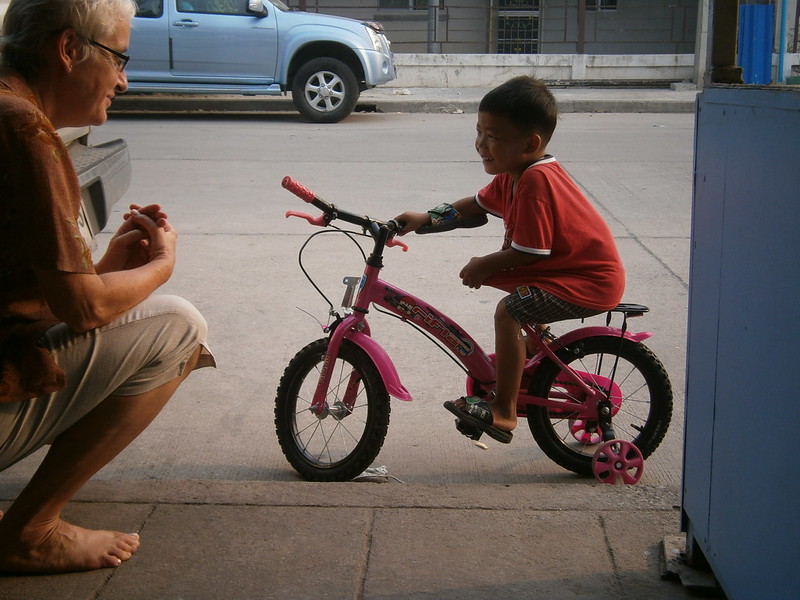
Ingrid chatting with child 2
Neighborhood Child Welcomes us Home


In the end, Guy and Kaeo ended up being too busy to help with the ministry. They were burdened with huge amounts of debt and worked long hours, six days a week, to make money. This is a common problem throughout Thailand. It is often too easy to borrow money and people have to work really hard to service their debt. (Read more about the debt problem here.)

In the meantime, we enjoyed the rural life surrounding our subdivision. The tract had once been a rice paddy and was still surrounded by rice paddies. And though we were only a fifteen minute drive away from Lat Krabang—that busy city that serves Bangkok's main airport—where we lived it was more of a rural agricultural area. We liked riding bikes or driving around the rice paddies. When the farmers would plough up the paddies, all kinds of wading birds would come hunting for creatures stirred up by the tillage. Typically, these would be Asian Openbill Storks or Egrets. But occasionally something more exotic would show up like pelicans or, pictured below, painted storks.

Wading birds in rice paddy 17
Painted Storks Hanging Out With the Egrets in the Rice Paddies


Wiang Kaen, Chiang Rai

While we were living in Chachoengsao, we heard rumor that some people among the Khmu churches we worked with in Northern Thailand were interested in helping start churches in Isaan. So we came up with a plan to move to northern Thailand for a while to see if we could help make that happen. So for our second term, we relocated to the Wiang Kaen District of Chiang Rai, where our organization has a training center on the banks of the Mekong River. The move happened on Valentine's Day, 2014. I remember because I was away from Ingrid that night, having flown to Bangkok to help the movers the next day while Ingrid waited in Wiang Kaen.

Our organization's ministry in the north was primarily with the Khmu people, one of the people groups that lives in the mountainous areas of Southeast Asia. The dominant ethnic group in Wiang Kaen District, however was Hmong. Also well represented were the North Thai, Haw Chinese and Lue people groups.

When we arrived in the north, we discovered that the Khmu churches weren't even to the point where they were supporting themselves, let alone being to able to send missionaries elsewhere. The person who had expressed interest in helping start churches in Isaan was just looking for a job—but he really wasn't even doing the job he was currently paid to do. So we figured that we would would stay and see if there was anything we could do to help improve their economic situation of the Khmu people. In the meantime, the person who was administering the training center left, and I ended up taking on that role, which I really didn't want to do. There were also other issues that came up along with that, which led to a lot of stress and, eventually, burnout.

There was one event that happened during this time which was to play a role in our future ministry in Thailand. One day I get a phone call from a person who identified himself as Somdy, who was visiting from Canada. He said he got my phone number from one of the other missionaries. He wanted me to pick him up later that day in Chiang Khong (the next district over from us) and take him to see the training center. So I make arrangements where to meet him. In the meantime, I called that other missionary to ask what he knew about that person, which wasn't very much. Somdy stayed a couple of days and then left, but I didn't think much more about it at the time.

What helped keep us going during this challenging time was our Saturday morning activities with youth and children. We taught English, played games, did crafts and shared Bible Stories. There was a core group of three teen girls who came to these activities. This picture was taken when they all came to visit after graduation from high school. You can read more about that here.

Kids CLub 2016-3-12 10
Visit From Our Girls


In the time since we left Wiang Kaen, Ching (left) went on to become a school teacher like she planned. Lai (center), whom we helped in her scholarship application, ended up getting a degree in hospitality management. Unfortunately, she graduated in the midst of the COVID crisis when the tourist industry collapsed here in Thailand. So she went on to join the police academy to become a teacher with the border police (the border police run many schools in remote border areas where regular teachers don't want to work). June (right) had planed to study law, but ended up switching to economics and now works at the stock exchange of Thailand. What a joy it was to play a role in these young women's lives.

We really liked the environment in northern Thailand. Wian Kaen district is comprised of the watershed of the Ngao River, which flows north into the Mekong River. The Ngao River flows down a narrow valley surrounded by mountains. The crest of the mountains to the east forms the border with Laos. There are two national parks on this mountain border, the one closest to us was called Doi Pha Tang. The Haw Chinese live in the villages near the park. From the summit, you can look down to the Mekong River. It's really stunning when the clouds blow up the valley to the crest of the mountains. For more pictures from Doi Pha Tang, see here.

View of Mekong River in Laos from Doi Pha Tang Park
View Into Laos and Mekong River from Doi Pha Tang National Park


Phon Phisai, Nong Khai

When our term was finished in Wiang Kaen, we went back to North America for a few months, not knowing what would be next. While we were in Canada, we found out that Somdy had joined our organization and was currently in training with his wife Jan and daughter Sarah. We happened to be in Abbotsford during their last week there so we visited with him to find out about his plans.

Somdy was planning on going to Isaan to start a church in the province of Nong Khai. We talked about the possibility of assisting him there then made a plan to join him after we returned to Thailand. Finally, we were going to make it to Isaan! Somdy and his family arrived in Phon Phisai in January, 2017. We moved there about 3 months after that.

Sarah attracted a lot of young people, so we ended up doing lots of activities with them. We taught English and did crafts with them. Ingrid was popular with the kids because she would invite them to our house to make cookies and other baked goods. I taught guitar. Kung Nang and Pla were cousins who lived close to the house that Somdy had rented. Both of them who would come to learn guitar. Of the two, Kung Nang was a more dedicated at coming to practice, but Pla had a more innate sense of music, though she was shy to perform in front of others. I wrote about Kung Nang's story here.

Also during this time, we would go to visit people to tell about the love of Jesus and to pray for healing of the sick. One woman we prayed for was Wari, who had a condition that made it difficult for her to walk. (More about her story here). God transformed Wari's life tremendously. I noticed that Wari had a very good voice, so I invited her to help lead worship.

What a joy it was to see these three people: Pla, Wari, and Kung Nang help lead Christmas songs together during our last Christmas in Phon Phisai.

Worship Team 2019-12-15 1
Pla, Wari and Kung Nang Helping Lead Worship


On some of our days off, we like to go exploring new places. There were several places that we found where we could make day trips from Phon Phisai. Phu Tawk was a great place to go for a serious stair climbing workout as wall as a test of one's nerves. Red Lotus Lake was a beautiful spot for a relaxing boat ride. But I think my favorite place was Phu Phrabat Historic Park. Phu Phrabat is the location of some interesting sandstone features that had been turned into places to live and worship several hundred years ago. Because of the historical features, the location was turned into a park operated by the Arts and History Ministry, rather than by the Department of Forestry. Folks in the arts deparment have a different perspective than those in the forestry department. The park has one of the fanciest restrooms I have seen in Thailand. And the trails are meticuously groomed, unlike the more rustic paths of most parks. There are lots of different trails, so one can plan as long or short a route as one wants to when visiting. Just bring lots of water to keep hydrated. We have been there in wet season and dry season, and the character of the place changes throughout the year.

Paths and Trails 8
Well Maintained Trails in Phu Phrabat Park-But Watch Your Head

Kamalasi, Kalasin

In January 2020, after that term in Phon Phisai, we went back to North America for a few months, but that few months turned into a year because of COVID. Somdy was still there for part of that time, but then he ended up having to leave as well. However, the church we started continued on even without us there. We were wondering what we should do when we went back, since it didn't seem the church in Phon Phisai needed us any more.

During one of my rumunations, probably in about September, I considered the possibility of going to Kalasin Province. There was a family we knew there that we had met when we were in Phon Phisai. Yai had a coffee shop and his wife, Rung Arun, was a high ranking police officer. Their daugther would sometimes come to our English classes. They eventually moved to Kalasin to Rung Arun's hometown. That was while we were still living in Phon Phisai. We even went to Kalasin to visit them at one point. But the challenge was that we had no other connections in the province and no one to join with us if we went there.

I think it was November when our supervisor had a zoom call with us and some others to discuss or remobilizing to Thailand. He said he wanted to talk about what was happening in Phon Phisai but that he also had another possibility for us. As soon as he said that, in my mind, I said to myself, "I hope it's Kalasin." So after chatting about the work in Phon Phisai for a while, he said, "Ajan Nat is wondering if you would want to help start a church in her home village in Kalasin."

By this time Ajan Nat had become one of the key leaders of the Mennonite Brethren in Thailand. She was still living in Chachoengsao, but had had a house built in her home village in the Kamalasai district of Kalasin. She eventually hoped to move back to her home village, in the meantime she wanted her house to be used for aministry center.

Long story short, in March, 2021, 10 years almost to the day from when we first moved to Thailand, we moved to the Kamalasai District of Kalasin Province. The district is adjacent to the one where Yai and Rung Arun live.

Working in Kamalasai has been quite challenging. There are a lot of people struggling with alcohol and drug addictions. Families are broken. Children are raised by grandparents or other relatives while their parents work in other parts of the country. There was an intern, Kung, who moved there a couple months before us to begin praying for and sharing the gospel with people in Ajan Nat's home village. Several people expressed an interest in following Jesus, but most ended up losing interest after a while. Kung ended up moving to the USA that July to marry and American.

But we persevered, doing outreach events, teaching English to children, baking things to give away, and teaching guitar, among other things. There was a group of three older people we met with on Sunday evenings who had expressed faith in Jesus, but who were still mostly Buddhist. This included Ta Ban, his wife Yai Thong, and his sister Yai Urai. After a year of mostly working on our own, with occasional visits from ministry teams from Chachoengsao (where Ajan Nat was still living), we were joined by another intern, Moe, a great-niece of Ajan Nat.

One of our routines was to visit people to pray for them and share Bible stories with them. Yai Urai developed a special fondness for Moe and looked forward to having her come and share Bible stories. Sometimes Yai Thong would join us as well. Yai Urai sits in front of her house every day making Dok Mai Chan or other things to sell for some income. Dok Mai Chan are flowers made from paper, bamboo or other things that are flammable that are thown onto the coffins of deceased people before they are cremated. Yai Urai has a great sense of humor and a beautiful smile, which makes it a joy to go visit her. In the photo below Moe is sharing a story with Yai Urai while Yai Thong listens in in the background. Ingrid is helping put together Dok Mai Chan.

Visit with Yai Urai 2023-1-26 5
Story Telling with Yai Urai


For us, Kamalasai has been a very pleasant place to live. It is on a broad flood plain and terrace system intersected by the Pao River and bordered by the Chi River. With all the water from the rivers and associated canals and all the flat land, it is an ideal area for rice growing. We enjoy biking or driving the windy roads of the area. And in rainy season, for entertainment, we like to go out storm cloud watching. One day, after we had gone on a storm chasing journey, we were talking with Moe. She had driven her motorcycle into the city to watch a movie the day before, just missing the big storm we had been following. I told her that instead of watching a movie, we had gone out watching a different kind of show—the storm—it's cheaper than going to the movies.😁)

Storm clouds over rice paddies in Kamalasai 2
Storm Clouds and Rice Paddies


In relating these snapshots of our journey, I have intentionally left out some of the negative experiences we have had. It has not been easy living in Thailand and I have passed through some of the darkest valleys of my life, one of which I alluded to here. But even these experiences are part of my story that God has used to form me.

Now we are coming to the end of our ministry in Thailand. Just a few more months and we will be moving back to California—at least that's the plan at this point. We don't know what's next up in our lives. As we look back at the convoluted path God used to get us to where we are in Isaan, I see how God was preparing us all along the way. But even all this time in we have spent in Thailand is still but preparation for what is to come next. What has God been preparing us for during our time here in Thailand?

Stay tuned!

Monday, March 27, 2023

When Money is the Problem and Not the Solution

This is the second of two stories that help give rise to how I think about missionary activity.
See first blog here.

One day some people came to our house in Letan, Haiti. They were from a village a couple of miles away and they told me that there was some insect pest devouring their sweet potatoes—which is the main crop they grow in the soils of that area. They asked if I would come look at it. So I walked there with Enoch, one of my friends (there were no roads in that area) to investigate.

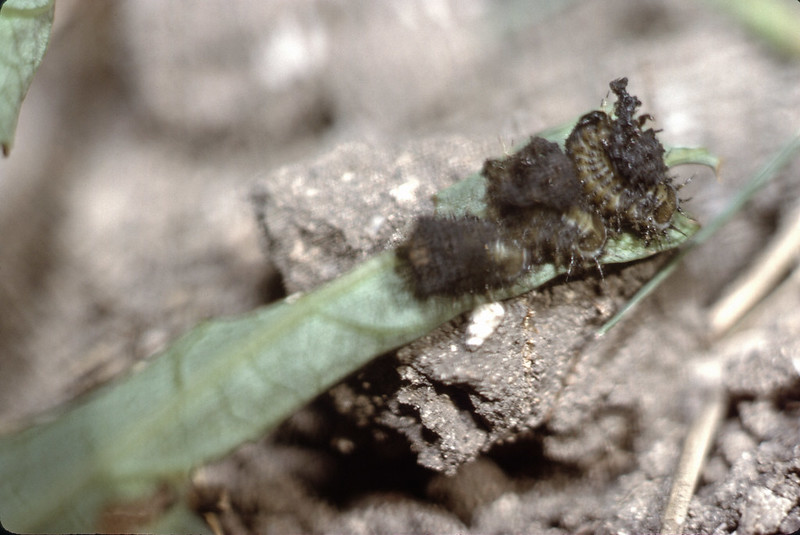
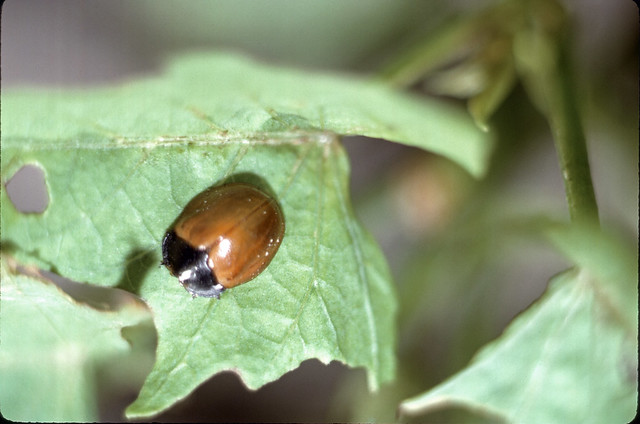
When we got there, we noticed that the plants were covered with reddish beetles and what appeared to be their larvae. I didn't recognize them, so I collected some to bring home and study a bit. I didn't see any reference to them in any of the books I had, so I put some specimens in alcohol to send to an entomologist at the University of Florida to see if they could help, but they didn't recognize them either. Meanwhile, I was raising these things at home to observe their life cycle. I did eventually find a reference to these insects in a 40-year old entomology text, which recommended spraying DDT to get rid of them. (That seemed to be the standard solution for all insect pest problems in the text.)

Sweet Potato tortoise beetle larvae Letan Haiti Mar 1990 Kodachrome
Sweet Potato Tortoise Beetle Larvae Carrying Excrement on Their Backs


Sweet Potato tortoise beetle Letan Haiti Mar 1990 Kodachrome
Sweet Potato Tortoise Beetle Adult


One of the reasons this beetle was so destructive had to do with the way that sweet potatoes are grown. When a crop is harvested, some of the vines are kept for their next crop. They would stick cuttings in the ground and they would take root to grow the next crop. However, if the vines they planted had these insects on them, they would finish eating the leaves before the plant had a chance to make roots.

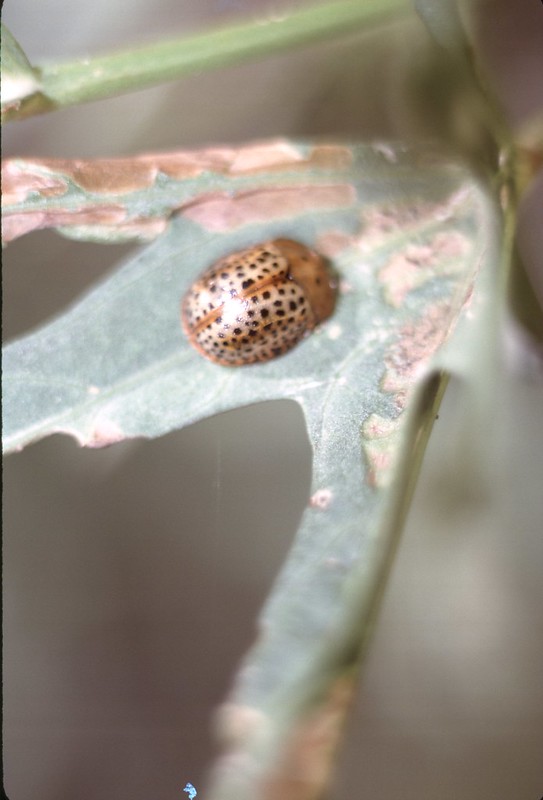
Chelymorpha cribraria (Fabricius, 1775) Chrysomelidae Coleoptera - Sweet Potato Tortoise Beetle - nymph
Sweet Potato Tortoise Beetle Nymph


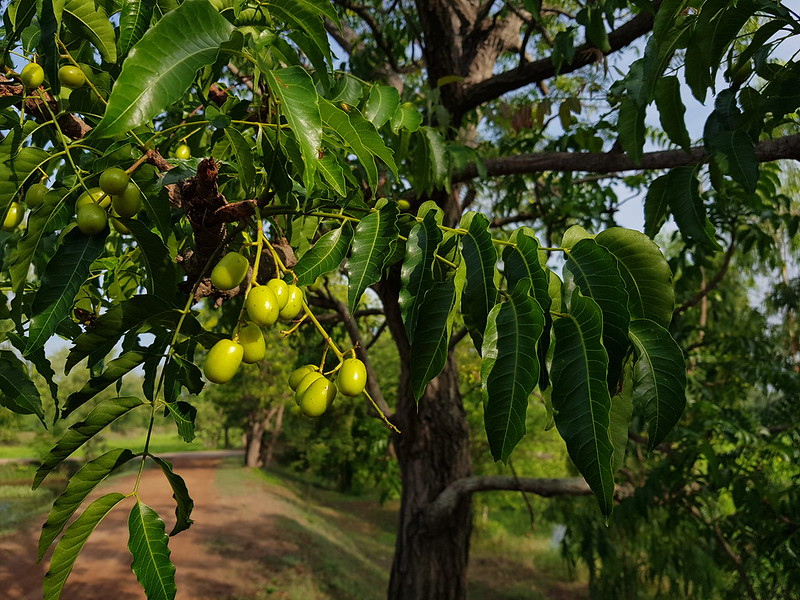
Since I was unable to find solutions from anyone else, I was trying to figure out something myself. We had in our area a non-native but extensively planted tree called neem. The seeds contained a chemical which was effective at killing larvae of many species of beetles and caterpillars. I ground some seeds and put them in water and found that if I dipped the tops in the solution before planting, it would kill enough of the larvae to keep them from doing economic damage. If a crop was already in the ground, some of the neem solution could be strained and then put in a sprayer to apply to the plants. It would kill enough of the insects in order to spare the crop.

Azadirachta indica A. Juss. Meliaceae Neem, สะเดาอินเดีย 2
Neem Tree Fruit


Armed with this information, Enoch and I made another visit to the area to talk to some of the sweet potato farmers. We explained to them some of the things we had discovered and some of the possible solutions we had. We told them we could provide neem seeds for them and could lend them a sprayer of they wanted to use one. After explaining this to a few farmers who had gathered they asked, "so when are you going to come do that for us?"

Apparently these farmers wanted to save their crop, but not badly enough so as to extend any effort to do so. The challenge in the area where were working was that we were to close to the capital city. (It was only about 20 miles away, but it could take over an hour to drive there in rainy season.) In the capital city were lots of organizations that were giving away food, clothes and medicine. It was a lot easier to go get this free food than to try to plant and care for a sweet potato crop in order to get a good harvest.

Towards the end of our time in Haiti, I came to the realization that we were the problem. By "we" I mean typically well-meaning organizations with good intentions, who just wanted to help out people who were suffering. (There were also plenty of organizations happy to use pictures of suffering people in order to raise money to enrich themselves.) But in the process, we had destroyed their dignity, damaged their livelihoods and diminished their desire to work to help themselves. Haiti was receiving enormous amounts of aid from other countries either from foreign governments or non-governmental organizations (NGOs), yet it continued to remain the poorest country in the western hemisphere. Somehow, the math didn't seem to add up.

I don't want to sound heartless, but I came to the conclusion that the best thing for the country would be for all the NGOs to pull out. It would be hard at first, because we had created such a dependency on foreign handouts. But eventually, I believe that the Haitian people would figure out a solution.

I realize that the perpetual poverty of Haiti has no simple solution. And I also believe there is a spiritual element to this situation that cannot be solved with money. However, seeing what was going on caused me—and still causes me—to ask myself, "Is there anything I am doing that is creating unnecessary long-term dependencies?" I say unnecessary because there will always be those who are unable to help themselves and I believe that we should contributing to help such people in one way or another. Throughout the Bible we see God's call for us to be generous with those in need.

While he was out telling people the good news of new life in Jesus, the apostle Paul was also doing some fundraising for the believers in Jerusalem who we suffering because of both famine and prejudice against Jesus-followers. In preparing the church in Corinth for this prior to his visit to them he wrote:

The point is this: whoever sows sparingly will also reap sparingly, and whoever sows bountifully will also reap bountifully. Each one must give as he has decided in his heart, not reluctantly or under compulsion, for God loves a cheerful giver. And God is able to make all grace abound to you, so that having all sufficiency in all things at all times, you may abound in every good work. As it is written,
  “He has distributed freely, he has given to the poor;
   his righteousness endures forever.”
(2 Corinthians 9:6-9 ESV)

In short, we have a generous God, so we also should be generous. If God blesses us from His resources (i.e. the earth and the things it produces), then we should bless others from the things with which He has blessed us. The things we have are not ours to be hoarded but are God's to be shared. But God does not just bless us with money, He may bless us with power. When we give in a way that creates dependency, we are sharing our material wealth, but not our power. Poverty comes not just from a lack of material resources, but also from a lack of power to do something about one's situation.

One of the ways to share power is through education. One of the things I especially liked about the Baptist Haiti Mission, the organization we worked with in Haiti, was their emphasis on education and schools. Enoch, whom I mentioned above, had several children who went to our mission's school in the area. After we left, one of them received further assistance in his studies and went on to become a doctor so he could help his people. That's just one example of how education can be a life-changer not just for the person educated, but also for the people impacted by them.

In the summer of 1992, one of the masons who worked at our organization's office in Fermathe, Haiti, wanted to talk to me. He had heard that I knew how to fix up water springs, and there was one in his area that needed some work. At the time I was having health issues (which I realized many years later was burnout), so I really had little physical strength to do anything, but I went with him to the spring and explained the things he could do to fix it up so that their drinking water source would be more reliable. I probably spent half a day with him and that was the last I heard of it for a while. In the meantime, we went back to North America on vacation during which I spent most of my days sleeping. We went back to Haiti, feeling strengthened and refreshed. Several months later, I ran into the mason who had showed me the spring. He was overflowing with thankfulness for me helping him fix up the spring. I asked him why he was so exuberant in thanking me because I really hadn't done anything. In fact, I felt like I had abandoned them. He said he was so thankful because I showed him how they could do the project themselves. He said that most people who knew something like what I taught them would keep it as a trade secret so they alone could profit from their knowledge. But that when I shared a trade technique with him, that gave him power to help solve a problem not just for his own benefit, but for the benefit of the community.

Instead of dependency, empowerment.

I would rather be wanted as a friend than needed as someone who another is dependent on. When I help empower someone, they may not need me anymore, but they can still be my friend.

When we were working in Haiti, a lot of people would come to us because they wanted a job. They didn't necessarily want to work, but they wanted a paycheck. And giving someone a job was a way to help people while still respecting their dignity. Because I liked working with Enoch, I offered him a job to help him financially, even though he was a leader in a church of another denomination than the one we worked for. After several months, he quit. He said, "I'd rather be your friend than your employee." That statement has stuck with me all these years. Being someone's friend doesn't necessarily take money. But it does require investment in the relationship though spending time together, helping each other, and listening to each other.

My present work involves helping start churches in Thailand. As I go about this task, I'm always thinking about how to best carry out our mission in such a way that any church that results can be run on a sustainable, long-term basis using local resources. I don't want to saddle them with something that they won't be able to maintain. Not everyone has the same background we do, where we have seen such negative effects of unnecessary dependencies, so we think differently about these things than many of our co-workers. Occasionally, there has been conflict. But we're happy now to be working with a Thai leader who has a similar vision to ours. And I hate seeing her stressed out when she has to try to deal with a mess someone else left behind who didn't share these values.

Eventually, we hope to be able to leave Thailand because we are no longer needed, while at the same time having many friends who wouldn't mind if we stayed.

Saturday, March 25, 2023

A Breach in the Wall

This is the first of two stories that help give rise to how I think about missionary activity.
See second blog here.


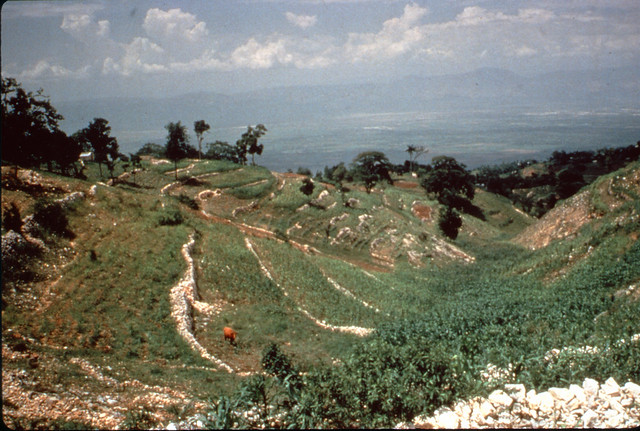
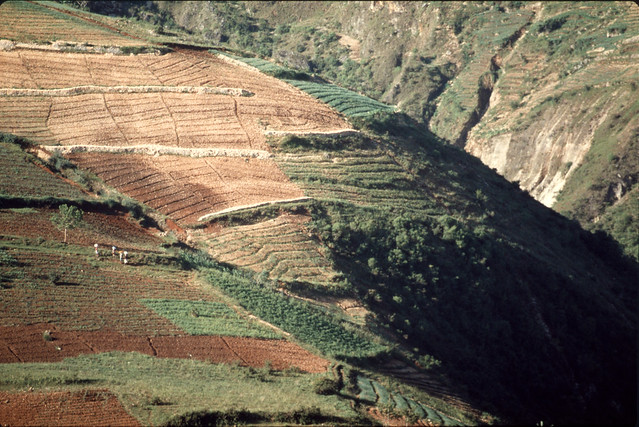
I was chatting with Abel, discussing how we could prevent some soil erosion and increase productivity in his gardens. We were standing on a steep hillside in central Haiti. On the ravine across from us were remnants of an old soil conservation project. Using a food for work program, the agriculture ministry had paid people in food to build stone walls on the contour. Me Sek, they were called in the Haitian language. In English they are sometimes called stone wall terraces. The idea was that rain would wash soil down slope and fill in behind the stone walls. Eventually there would be a less steep area of soil behind the wall, which would result in less erosion and increased productivity.

The problem was that in many places the walls had broken through, and the resulting gullies meant that the land was worse off than before the walls were put in. I asked Abel why the walls weren't maintained. He said that the walls were the government's walls and the government did not pay for them to maintain them, only to build them.

Ownership.

It's not that the walls were a bad idea, In fact, given the terrain and the quantity of rocks on the surface of the heavily eroded soil, it was quite a good idea. These kinds of things were used quite successfully in similar environments in other parts of the country. But it wasn't the idea of the people. They either did not see the need for the walls or understand why they were building the walls or both. They only knew that the government gave them remuneration for building them. In short, they didn't own the concept.

Stone terraces near Fort Jacque Haiti BHM photo Nov 1985
Functional Contour Stone Walls Near Fermathe, Haiti

It's not that the people couldn't come to the point where they would own the concept of building these walls to maintain soil productivity. But before one builds walls one must first build relationships and trust, along with some education about the whole thing. All of that takes time, and if you're in a rush, it won't happen. All over Haiti there were examples of broken down projects—things that weren't maintained because the people did not own the project or the process of doing it.

Mountains across from Fermathe Haiti Jun 1987
Stone Wall Terraces Across the Canyon From Fermathe, Haiti


At the time these conversations with Abel took place, we were in Haiti doing medical and development work. This was back in the 80's and 90's. Now we are working in Thailand, where we are working with Thai people to help start churches and train leaders. Even in this more religious-oriented work, I see examples of things failing for lack of local ownership. The outsider comes in with all their great ideas and grandiose plans. This outsider may be a foreigner or a Thai person. The outsider pushes their ideas on the people without involving them in the process of coming up with a plan. I remember one person complaining about why people weren't engaging in a certain activity. He said, "I gave them a detailed plan, all they have to do is follow it." At other times, plans never come to fruition because of resistance by the locals.

Sometimes these outsider-generated plans are enacted because they are funded by the outsider, but then they fail because the locals don't maintain what is done. This is what happened with the stone-wall terraces in Haiti. If the projects fail, the locals will typically blame the outsider. Worse than the failed projects, though, are relationships that are broken because the locals will not trust the outsider who brought the idea. It hurts me when I see this happen because these fractured relationships take a great deal of effort to mend.

There are times I end up participating in some of these activities because a person over me is doing it. In these cases, I often don't have great hopes for the project because of lack of local ownership, but I always figure I can use it as a teaching tool afterwards if things go awry.

Whether it be starting churches or training leaders or trying to keep hillsides from washing into the ocean, the key working with people to start things that will last is trusting relationships. It takes time to develop the relational connections necessary for long-term success. It also takes really listening to the people you are working with with. It makes no sense to try to fix a problem that people don't think that they have. We can help by guiding them as they figure out what the key issues are. And we may need to help educate the people we are working with as to why we are doing what we are doing and how to go about it.

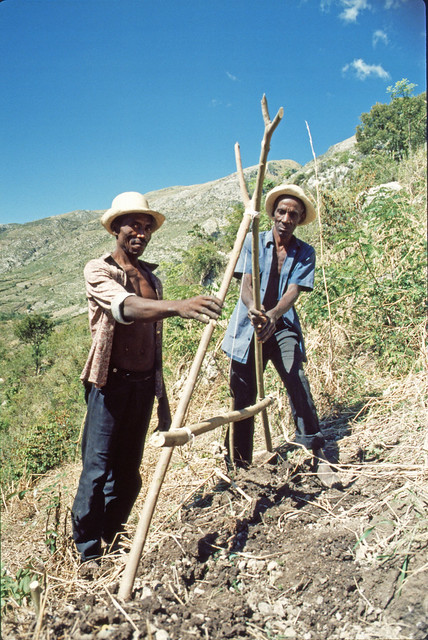
Back in Haiti, I had some ideas how Abel could acheive his goals for his hillside garden. I took him, along some others on a overnight road trip to to the Central Plateau where I knew others had developed solutions to the kinds of issues he faced. It wasn't very far, pershpas 60 miles, but it took all day to get to the location because the roads were so bad. Abel listened to other Haitians and saw the projects they were doing. In the end, I had very little to do. I only needed to show him a few techniques, but after that, he did all the work on his own. He owned the idea.

Soil Conservation in Ka Eli Apr 1988 3
Using an A-Level to Mark Out a Contour


Soil Conservation in Ka Eli Feb 1990 1
Abel Digging a Trench on the Contour for Planting a Hedgerow


At the end of the next cropping season, he was all excited: he was able to grow beans on that hillside for the first time. I no longer had to try to sell anyone on these ideas, Abel was so pleased, that he couldn't help but tell others.

For another example of where locals had ownership of a project, see the story about capping a spring on this page.

Saturday, February 25, 2023

Little Things

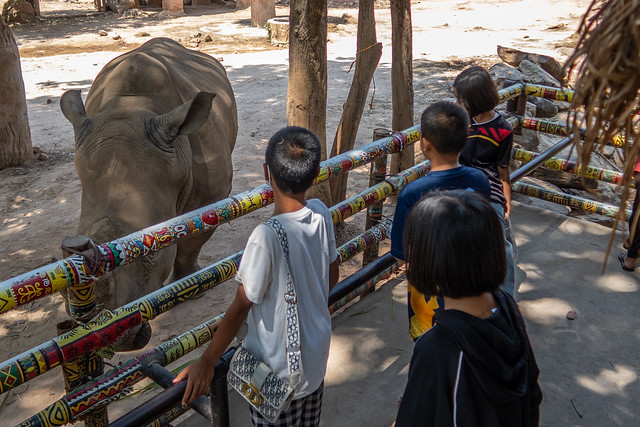
Khon Kaen Zoo Trip Rhinoceros 1


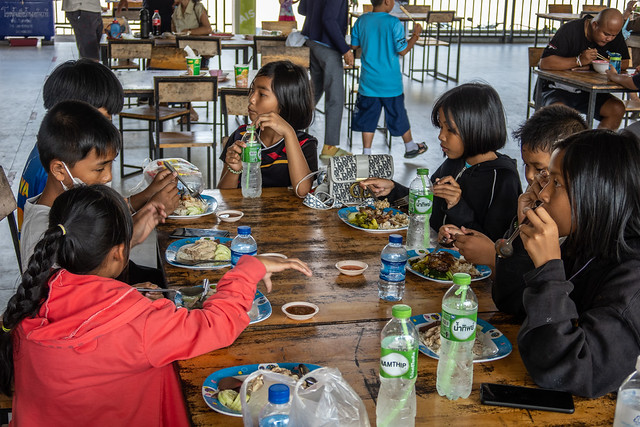
It was a simple gift of a trip to the zoo,
Seven children,
mostly from homes that are far from ideal.
Seven excited children,
"We don't need to take the tram they said,"
"We can walk the 5K loop."
Less than 1/2 kilometer passed under their feet
little Koi Kung—
THAT Koi Kung—
who flits here and there like a restless butterfly
that can't decide whose nectar is sweetest—
Slows down with one foot bare—her sandal's unglued.
The strap is broken—what can we do?
A couple of bandaids will hold for a while.
The gracious woman selling food for the birds
saw what was happening and spoke words of hope,
"you can find new ones, just up ahead."
Koi Kung dashed off on the bandaged footwear—
So much to see and do, birds everywhere.
A little bit further, as promised, a store—
and things for the feet, though mostly too huge.
Was it pride?
Was it grengjai?
    (that hard to describe cultural norm that causes one to refuse things)
Was it fear?
    (she could not repay for the expensive shoe—
    Three dollars—they're only 1.50 at home!)
We coaxed and cajoled till her fears were erased
and with new black and white flip-flops she was off for the chase.
Even though she's the smallest, she kept ahead of the rest.
A lot of bang for the buck, not much to invest.


A little thing. A big thing.


The sun beat down as half a dozen plus one
plodded into the food court—I think they were done.
"What should they eat?" they thought to themselves,
the change in their pockets wouldn't fetch much—
perhaps some "meat"balls grilled on a stick—
More ball than meat, but the price was right.
And then was the news, "order what you like,
don't think of the cost."
Fourteen eyes lit up—real food could be had!
There's chicken and pork and other good things.
And rice, lots of rice, it's not food without rice.
It's not much. It's a lot.
A dollar and change can revive a life.

A little thing. A big thing.

Zoo Trip Lunch 3

Wednesday, February 1, 2023

Beauty in Suffering

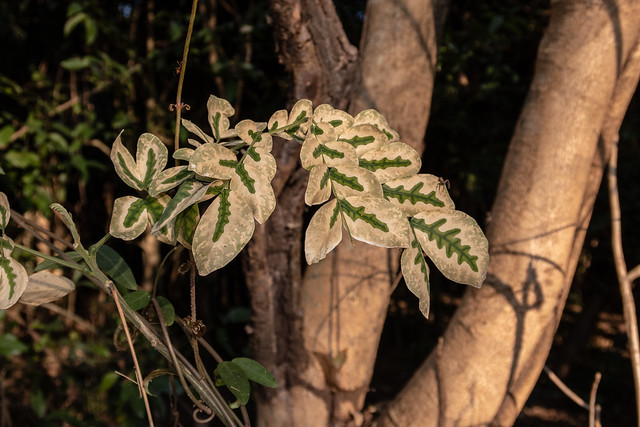
It's not what they're supposed to look like. In fact they look very unhealthy. I had caught a glimpse of some leaves to the side of the forest road in Kamalasai and noticed the sickly leaves. "But", I thought, "they are very pretty".

Leaf patterns from Insect Damage 1

The leaves appear to have some sort of disease that turned the edges white, but left a green pattern near the veins. There is beauty in the leaves that was brought about by the affliction. This got me thinking, what I am like when I am not well or when things are not going well? Do I get more beautiful? Or do I just turn withered and brown? Do I suffer gracefully? Or do I gripe and complain?

I always marvel at those who are inflicted with some kind of disability, but who seem to be consistently joyful. I'm not sure I could pull that off. There is a scripture related to this that I find particularly challenging. James writes, "My brothers and sisters, consider it nothing but joy when you fall into all sorts of trials." (James 1:2 - NET) Paul writes in a similar vein, "in everything give thanks. For this is God’s will for you in Christ Jesus." (1 Thessalonians 5:18 NET)

In everything, really?! In good times AND bad?

When I read these verses, I'm tempted to answer, "No! I don't want to." For me to respond any other way definitely requires the work of the Holy Spirit in my life, and I don't always pull that off successfully.

It's interesting that the Bible's most famous book on the topic of suffering addresses this very point. When Satan was going to test Job, he said to God, "But extend your hand and strike everything he has, and he will no doubt curse you to your face!” (Job 1:11 NET). Job's response to the temptation was, "Naked I came from my mother’s womb, and naked I will return there. The LORD gives, and the LORD takes away. May the name of the LORD be blessed!” (Job 1:21) And the writer adds this commentary to it: "In all this Job did not sin, nor did he charge God with moral impropriety." (Job 1:22)

From this we see that the non-sinful response to trials is to respond with grace. The implication is that to respond in another fashion could be sinful.

God, by Your Holy Spirit enable me to go through trials with grace. May may life become more beautiful in the face of challenges, like these leaves I saw in the forest.

Saturday, January 28, 2023

Burned in Memory

Ever have one of those things happen that it so engrained in your memory that your can't forget the date it happened? Things like, "what were you doing on September 11, 2011?"

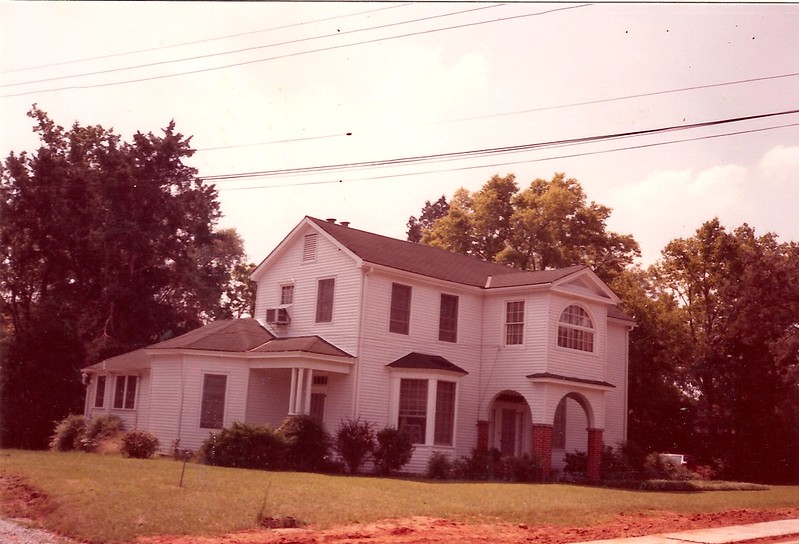
One such occasion for me was January 28th, 1986. We were in process of moving to Haiti after living in Alabama for several years. We had rented a U-haul to bring our belongings down to West Palm Beach. We had wanted the smallest truck they had. The local dealer was a fellow from our church. There were none of the smallest trucks in stock so he let us rent what he did have for the same price—it was a 24-foot truck—one of those old stick-shift trucks with a huge horizontal steering wheel. On the way down, we had to stop at an insepction station in Florida. When we opened up the truck, the inspector gave us a weird look—our things did not even completely cover the floor of the truck!

Our Second Home in Marion Alabama
The House we Left in Alabama


We brought our belongings to the air terminal to be loaded onto the plane. Then we rented a car to enjoy the sights of Florida for a couple of days. We had reserved a small car and ended up with some fancy, bright red sports car. I almost crashed it leaving the parking lot. I had just driven the large truck and now I was now in a small car with a tiny, vertical, very responsive steering wheel. Instead of needing to put some effort into a large spin of the steering wheel like in the truck, all I needed was just a tiny movement in the the steering wheel to make my turn onto the highway—and I almost drove into the barrier on the side of the road instead.

Our flight was scheduled for January 26. We got to the airport early in the morning to board the DC-3 operated by Missionary Flights International for the 4-hour or so flight to Port-au-Prince. It was gearing up to be an eventful day in the skies over Florida, as the space shuttle was set to take off that same day carrying its first civilian crew member—Christa McAuliffe, a school teacher from New Hampshire—the same state where I attended university just a few years earlier.

Flying into Haiti on DC-3 28 Jan 1986 1
In the Air Approaching Haiti in the DC-3


We arrived at Port-au-Prince International airport about noon. After clearing through immigration and customs, we were met by Betty Turnbull, one of the missionaries working for the Baptist Haiti Mission. One of the first things out of her mouth was, "the Space Shuttle exploded."

It was so surreal. Here we were, excited to begin the next adventure in our lives. Yet on the same day in the same skies not far from where we were, it was a tragic ending for the seven-person crew of the space shuttle. That date became locked in my memory, and every year on January 28, I remember back to that day.

I don't know why it is that our brains can remember some things so well and other things, which may be more important, get lost in the gray matter. I always figure there are only two dates I really need to remember: our anniversary and my wife's birthday. I can also remember my own birthday, which is a good thing, because I often don't remember my current age off-hand, so I often have to calculate it.

And I do remember what I was doing on September 11, 2001 as well—not that it's important, I just do. A bunch of us soil scientists from California were in Davis for meetings and we were all staying at the same hotel. I went downstairs for breakfast and saw many of my fellow pedologists were in the bar—which seemed like an odd place to be, because that is not where breakfast was served. All eyes were glued to the television, watching the events unfold on the east coast. That, too, was surreal, because as awful as it was for those experiencing it, our lives went on more or less as normal, though I think we may have started our meetings a bit late that day.

As I get older, I cherish memories, good or bad, a bit more. In all of our moving, we have thrown away or given away much of the memorabilia we acquired over the years that had served as a reminder of our previous experiences. So it is fun to look at old pictures to remember the things that went on in our past that have made us what we are today. And also, in looking back, we have seen how God has been faithfully at work in our lives. This can help us in the present when difficult circumstances arise as the God who was with us then is still with us now.

Even in scripture, we see how God commands the Israelites to do certain things to help them remember His faithfulness to them. For example, Passover was implemented to remind them how God rescued them from slavery in Egypt (Exodus 12:14). When the Israelites arrived in the Promised Land, God had them put up a pile of stones to help them remember how they got there with His help. (Joshua 4:7) And for those of us who believe in Jesus, Communion is a time for us to remember how Jesus offered Himself as a sacrifice for our sins. (Luke 22:19; 1 Corinthians 11:24, 25)

One of the last things I got rid of before we came to Thailand was a special file folder. This folder contained all the donor statments from the time we lived in Haiti. I never really looked inside it, I just wanted to keep it so I wouldn't forget how God had faithfully provided for us during our time in there. Every once in a while I just looked at the folder and thought, "the same God who provided for us in the past will provide for us in the future."

January 28th is a date burned in my memory. On this day I am reminded to remember the faithfulness of God.

Friday, January 13, 2023

Bookends 2022

One way I like to look back at the year is to compare the beginning of the year with the end of the year using photos. They aren't necessarily the first and last photos of the year, but will be within a day or two.

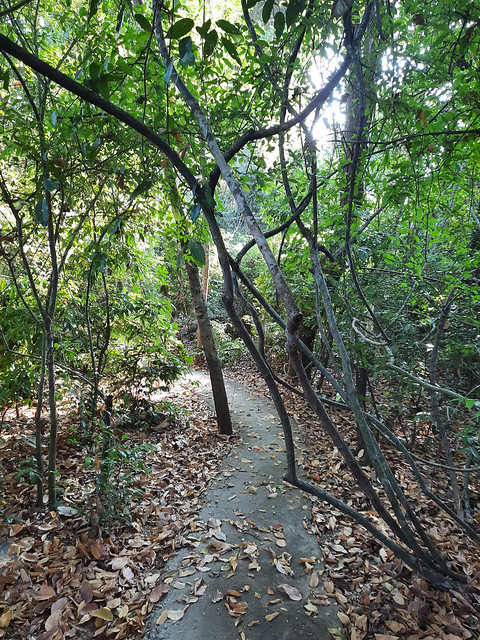
We started off the year with a bike ride. I took Ingrid on a journey to show her some of the places I discovered on some of my morning bike rides. About 6 kilometers west from our house there is a temple located close to the Pao River. Like many of the temples around here, there is a forest associated with it. Someone put a paved walkway through part of the forest. We decided to take our bikes down the trail, but it was a bit challenging because of all the vines crossing the path—the one's pictured here weren't the worst. A few times we had to get off our bikes to get around the convoluted stems crossing the path.

Forest Trail at Wat Anoma Nathi 6
Path Through the Forest Temple Grounds

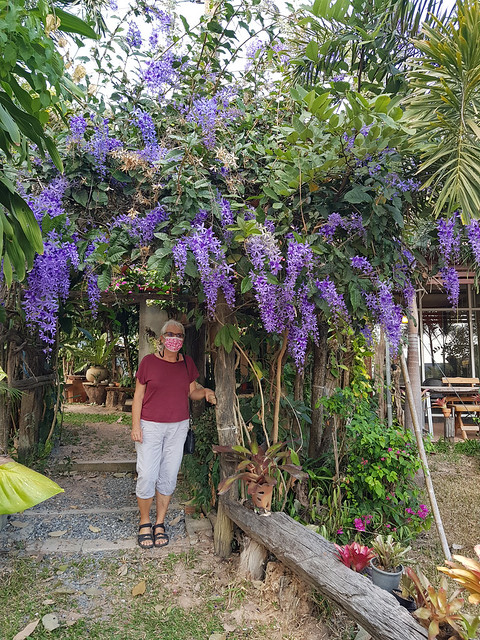
Later in the day, we went to Doi Chang Coffee that it is on the eastern edge of Kamalasai District. Their coffee is a bit more pricy than some places (though not near as much as Starbucks), but they have the best blended mocha around. There are lot's of pretty plants at Doi Chang coffee, and here we found another vine over the "trail." This time it was the pretty clusters of lavender-colored blossoms of Queen's Wreath (Petrea volubilis).

Doi Chang Coffee in Dong Ling 1
Queen's Wreath at Soi Chang Coffee in Dong Ling


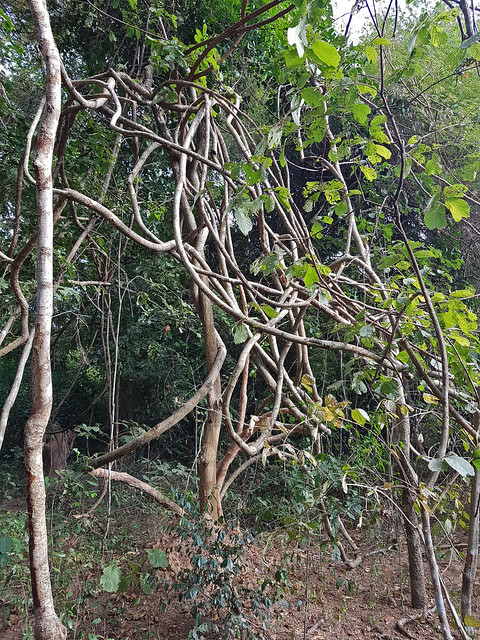
After leaving the coffee shop, we took a detour down a dirt road that runs along the edge of a nearby community forest. We parked the car and walked down a trail that we spotted. Here we encountered even more lengthy (and knotty) lianas.

Scraggly Vine in Dong Ling Forest 2
Vine Maze


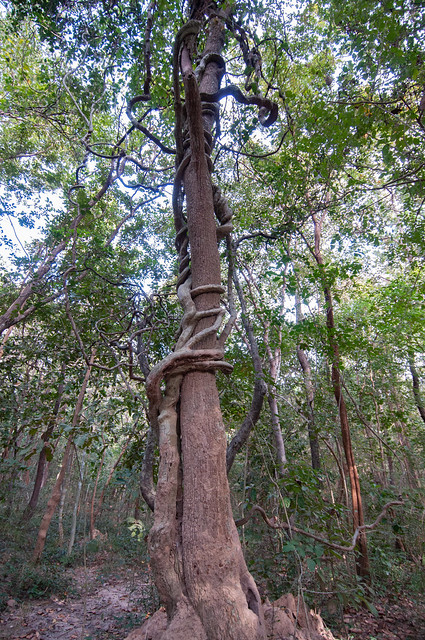
Sometimes the vines seem to bypass the tree trunks on the way to the canopies above, at other times, they seem to want to choke the trees like a woody boa constrictor. Or maybe it's just a love-hug.

Tree hugging vine in Dong Ling Forest 8e
Hanging on for Dear Life


Maybe the vines were supposed to be a metaphor for the year ahead—lots of twists and turns in the road but beauty to be found along the way.

  • We began the year working on our own, but in May and intern came to join us and help with the work.
  • We have periods of excitement when so many people are participating in our activities that it is hard to keep up. Then there are other times when there are just three or four of us gathered for times of worship and prayer.
  • On some occasions we are so frustrated we want to just go back to the "normalcy" of North America. And there there are times when we can't imagine leaving our adopted country.
  • There are times that we think we have identified a potential leader. And then comes the time when that person decides that there are better things to do than try to follow Jesus.

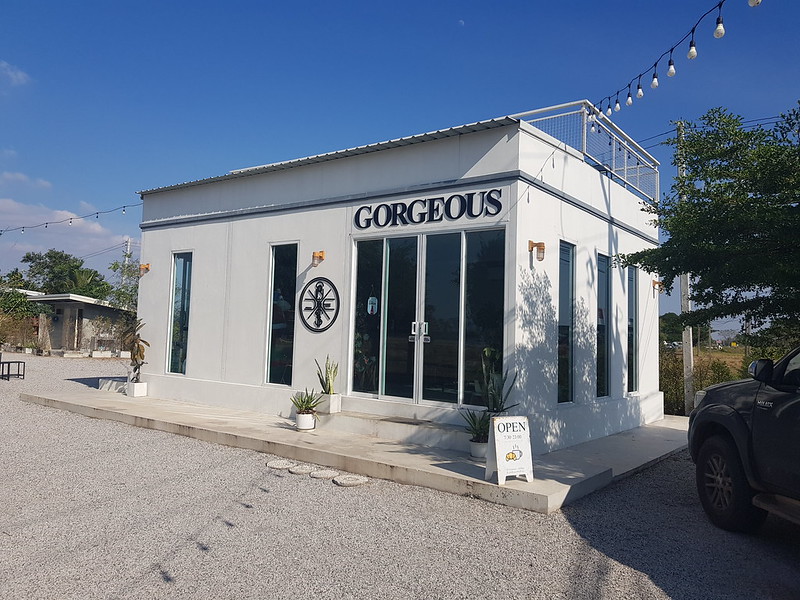
Amidst all the changes in activities, there is one constant, and that is my companion of the past almost 40 years. I don't know how my wife manages to get more beautiful each year, but somehow she does it. So it was only fitting that we end the year by checking out this new coffee shop:

Gorgeous Coffee 1
Gorgeous Coffee in Khong Chai


I'm not sure why they chose this English name for their coffee shop. They don't even have a Thai equivalent or Thai phonetic anywhere. But I suppose our going here also shows another constant in our life: coffee. Both our first and last day stories involve that wonderful beverage.

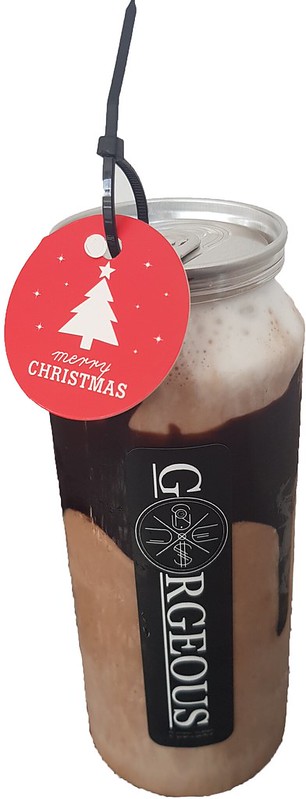
The flavor of the blended mochas at Gorgeous Coffee are as good as Doi Chang, but they were more watery. They also came in these weird pop-top containers that did not hold as much coffee, though the cost the same. While the idea of this sealed coffee is kind of cute, I don't really care for the resource heavy nature of it with heavier plastic and the aluminum lid.

Gorgeous Coffee
Blended Mocha from Gorgeous Coffee
Resource Heavy Packaging


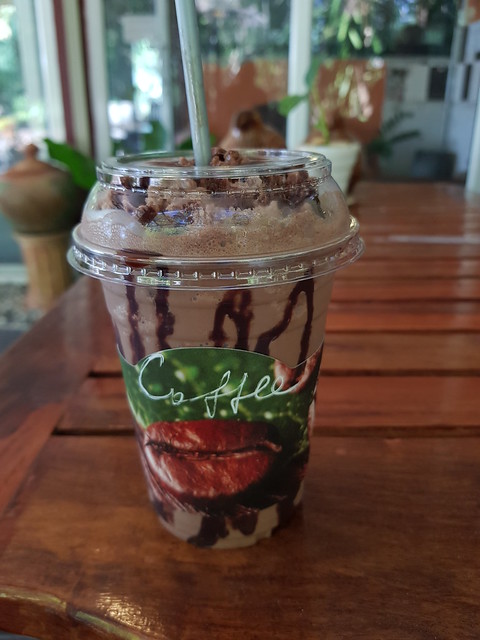
Here is the blended mocha from Doi Chang for comparison.

Doi Chang Coffee in Dong Ling 9
Blended Mocha from Soi Chang


So was last year. While I can't guarantee that the coming year won't have as many twists and turns as the last one—in fact, it will probably have more—the important thing for us is to be following the path God sets before us. And so we echo the prayer of the psalmist:

Show me your ways, O LORD, teach me your paths; guide me in your truth and teach me, for you are God my Savior, and my hope is in you all day long. Psalm 25:4-5 (NIV)

And we trust in the promise of God:

This is what the LORD says-- your Redeemer, the Holy One of Israel: "I am the LORD your God, who teaches you what is best for you, who directs you in the way you should go. Isaiah 48:17 (NIV)