Sunset Over the Mekong River

Saturday, April 20, 2019

Flambouyant Memories


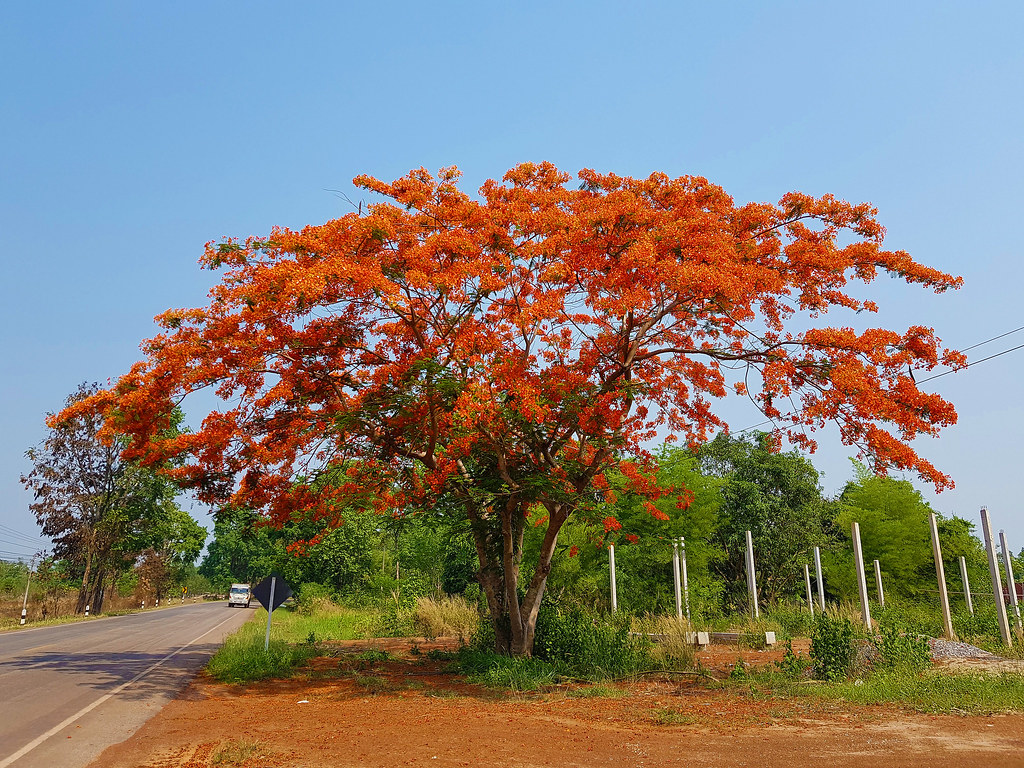
Recently, as we were driving back from Fao Rai district, where we were teaching English and guitar, we passed a beautiful tree.  The tree goes by a couple names, royal poinciana and, very appropriately, flamboyant.

Delonix regia (Hook.) Raf. Fabaceae Caesalpinioideae-flambouyant, royal poinciana, หางนกยูงฝรั่ง

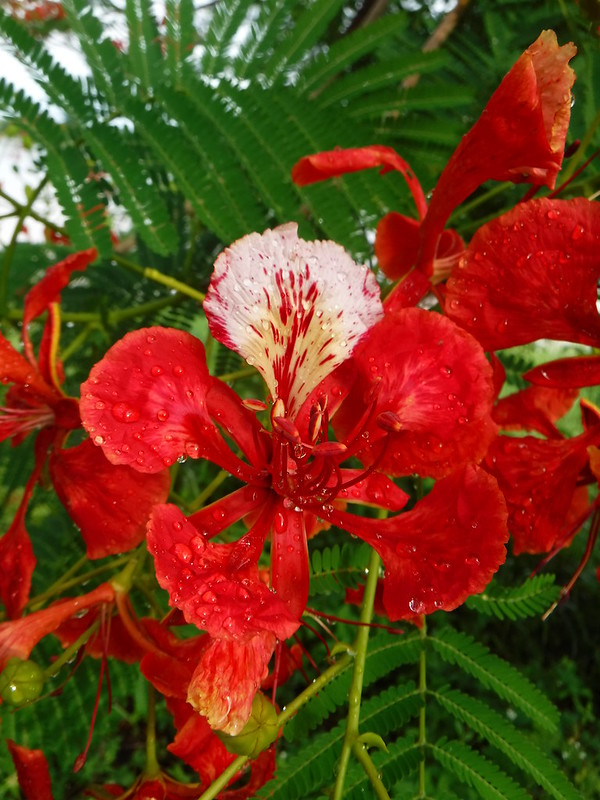
Viewed up close, the flowers are especially pretty. The white "banner" petal tends to turn more yellow as the bloom ages, giving the tree an orangeish hue as in the picture above.

Delonix regia (Hook.) Raf. Fabaceae Caesalpinioideae-flambouyant, หางนกยูงฝรั่ง

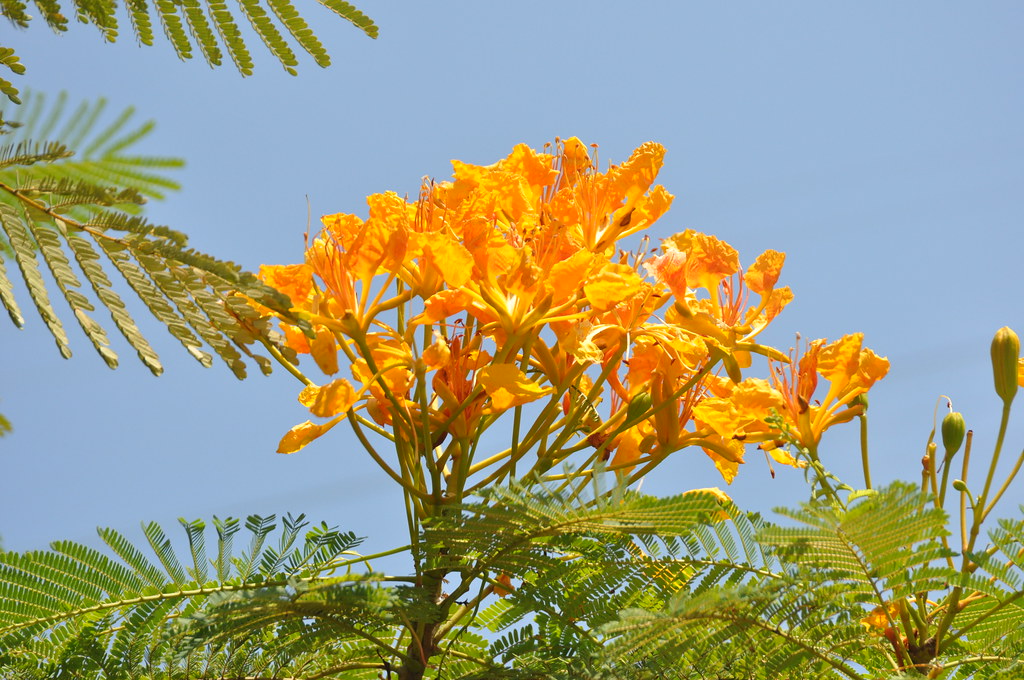
Occasionally, one might see and orange-flowered variety.

Delonix regia (Hook.) Raf. Fabaceae Caesalpinioideae: flambouyant, หางนกยูงฝรั่ง

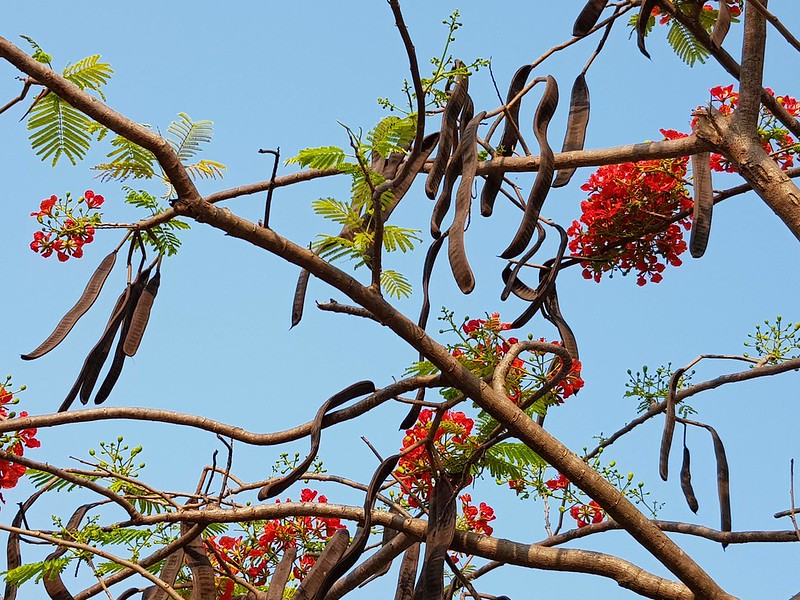
The seed pods are quite large (that is my size 14 foot).  The pods can be carved as handicrafts.  They can be used as musical shakers when dry.  The seeds are very hard and are used as beads.

Delonix regia (Hook.) Raf. Fabaceae Caesalpinioideae-flamboyant, หางนกยูงฝรั่ง


Delonix regia (Hook.) Raf. Fabaceae Caesalpinioideae: flambouyant, หางนกยูงฝรั่ง


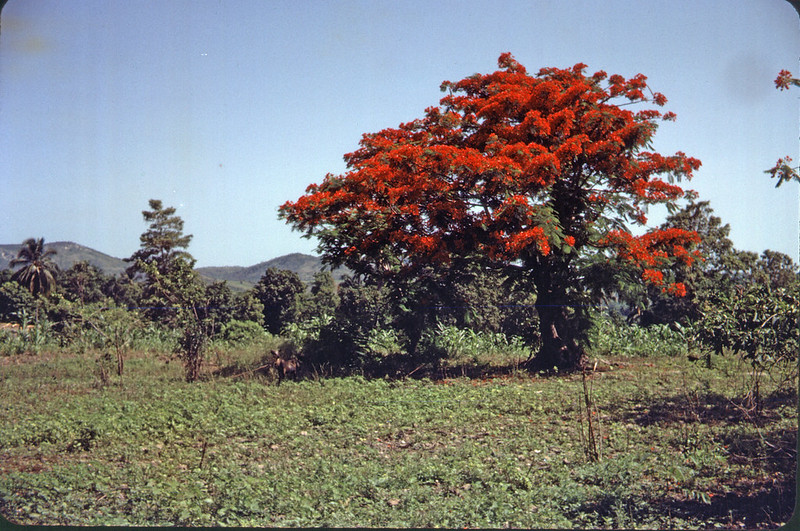
But what struck me today was a memory of the first time I ever saw a flamboyant tree.  In 1981, we would drive past a flamboyant tree on the way to Amani-y beach near the town of Saint Marc in Haiti.


Delonix regia (Hook.) Raf. Fabaceae Caesalpinioideae-flamboyant, royal poinciana, Haiti Aug 1981 หางนกยูงฝรั่ง
Flambouyant Tree on the Way to Amani-y Beach


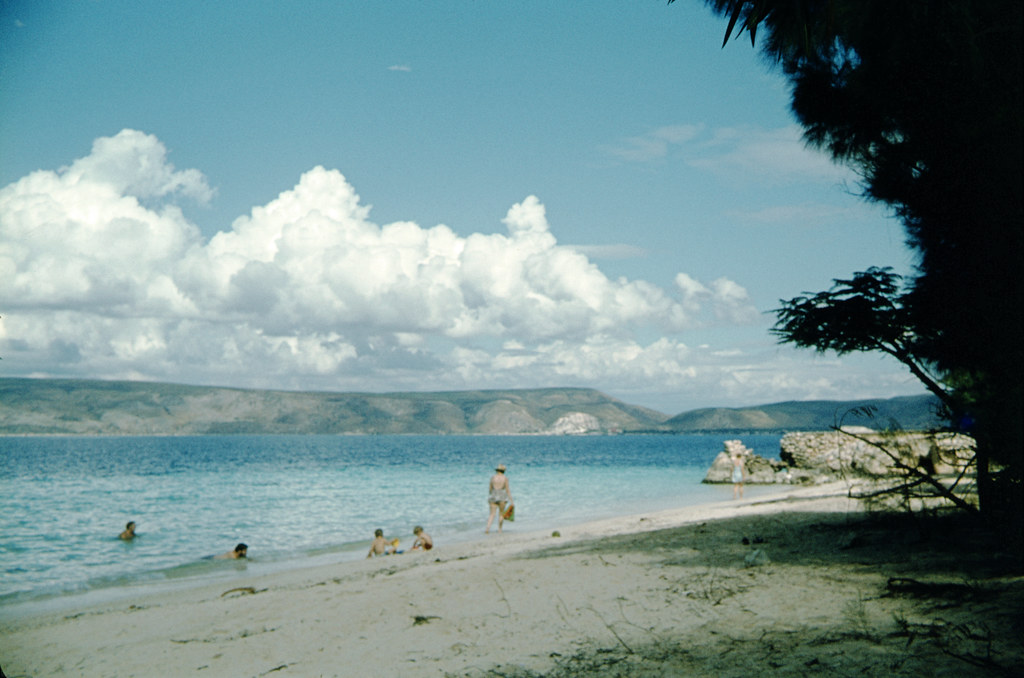
This beach was a place our team would go on occasion to take a break from working in a village above the town of Saint Marc.


Amani-y Beach January 1981 Agfachrome
Amani-y Beach


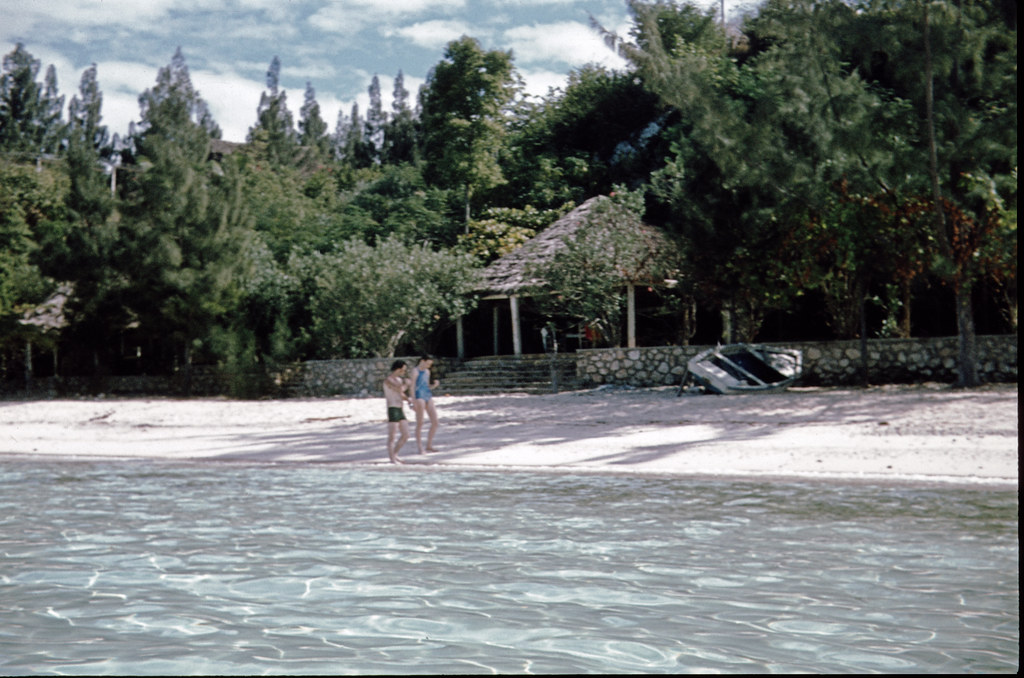
The infrastructure was not well maintained, but there were always people nearby to sell a soft drink or make lunch. Casuarina trees (Australian pine) had been planted which gave a little shade.


Amani-y Beach January 1981 Agfachrome


One of the amazing things about this beach, was that it was right on the edge of the bay.  The bay is quite deep and the water at the time was very clear.  At the north side of the beach, there is an underwater cliff and the water goes from about 2 meters deep to 25 meters or more deep.  In spite of the depth, you could still see the bottom.  I loved to snorkel over the top of the bluff.  The dark blue water in the background of the first photo is where the water depth changed.


Ingrid at Amani-y April 1981 Kodachrome
Best thing about the beach was the pretty girl


I have no idea what condition the beach is in these days.  When we returned to Haiti about 5 years after these photos were taken, the water was already getting cloudy from the soil being washed off the mountains.  But I'm glad to have memories of the time when the water was still nice.

Not only has Haiti changed a lot in the last 40 years, we have as well.  My hope is that, instead of worsening with time, we would become better.

Better is the end of a thing than its beginning, and the patient in spirit is better than the proud in spirit.  Ecclesiastes 7:8 (ESV)

Sunday, March 24, 2019

Nothing to Say

I have nothing to say
and hugs are too far away.

Then (Job's three friends) sat down with him on the ground for seven days and seven nights, yet no one spoke a word to him, for they saw that his pain was very great. -- Job 2:13

I have to admire Job's friends for their behavior. At least for the first week.  It could not have been very easy for them. Job was probably not a pretty sight with all his festering sores.  He was probably groaning a lot.  And wafting up from his wounds would probably be something that, to borrow a phrase from George Carlin, "could knock a buzzard off a shit wagon".

I remember the day I got a phone call from my mom, telling me my sister's husband was killed in a freak motor vehicle accident.  Since I was the sibling that lived nearest, I dropped what I was doing to make the 5 hour drive to her house.  When I got there, I don't think I said anything, I just wrapped my arms around my sister. There wasn't much use in my voicing what we would have agreed upon: "this really sucks."  It wasn't the time for platitudes.  It was the time to just be there.


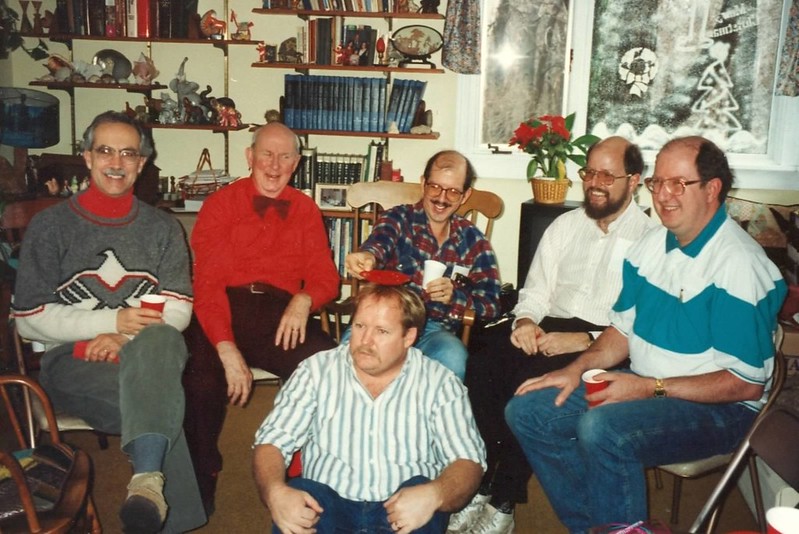
1994 Christmas in Wolcott family pic 4
The Russell clan men when Mike was a part of it

One of the disadvantages of our current vocation is that we are far from family.  There are times when we just want to be there with them.

Now my sister, who already lost one husband, is dealing with her second husband having a rare form of cancer.  Because this is not a common cancer, it is hard for doctors to give any prognosis.  No one knows how long my brother-in-law has left this side of heaven.  Whatever it is, from our perspective, it is not enough.  And while I can FaceTime my friends and relatives, it is not the same as being there.  And even when I FaceTime them, it's not like I want to say a lot.  I want to be in their presence as much as technology allows us from across the waves.  I would like just to be with my brother-in-law even at times when he hardly has strength to acknowledge me.


Christmas at the Haskins 51
Precious memories with George and Family

Last week, some of our co-workers were visiting a nearby country.  While driving one night, they struck another vehicle. One of our friends was killed.  Others ended up in a small hospital with not a great standard of care.  I just wanted to be there to comfort my friends.  Not to say anything in particular. Just to be there.

Remembering good times with some who have moved on to heaven

When returning home after a long journey, I have lots of stories to tell my wife.  But when we first get back together, the most important thing to be communicated doesn't require me to say anything. Words can wait.

There are many times when no words need to be spoken—times when words might actually disrupt important communication that needs to take place.  These are the times it is hardest to be away from family and friends. So we resort to using words, even though it is not our favorite option. And sometimes we may say something awkward because it is awkward to even say anything at all at that moment.

Meanwhile, we look forward to that day of great reunion—when being separated from loved ones will no longer be an issue.  When gestures of comfort will no longer be needed, for there will be no sorrow for which to receive it.

He will wipe away every tear from their eyes, and death will not exist anymore—or mourning, or crying or pain, for the former things have ceased to exist. (Revelation 21:4 NET)

Saturday, February 2, 2019

Red Protection

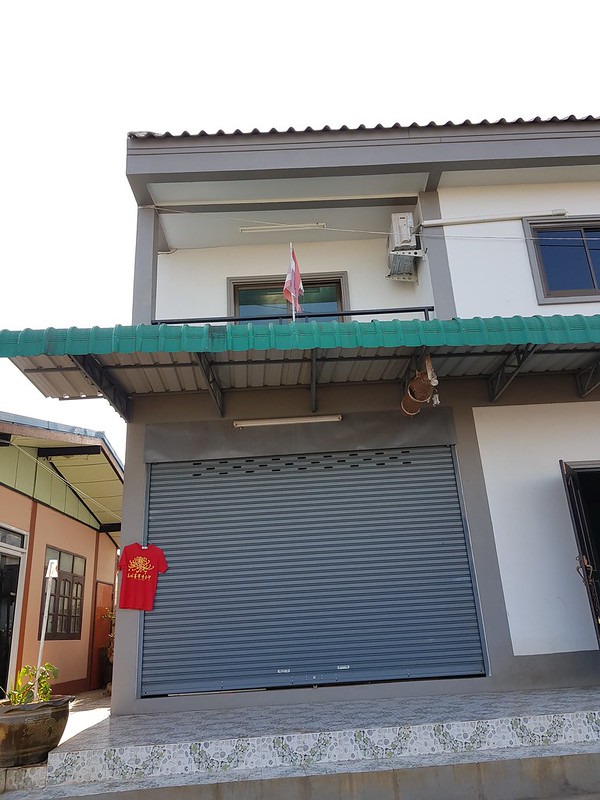
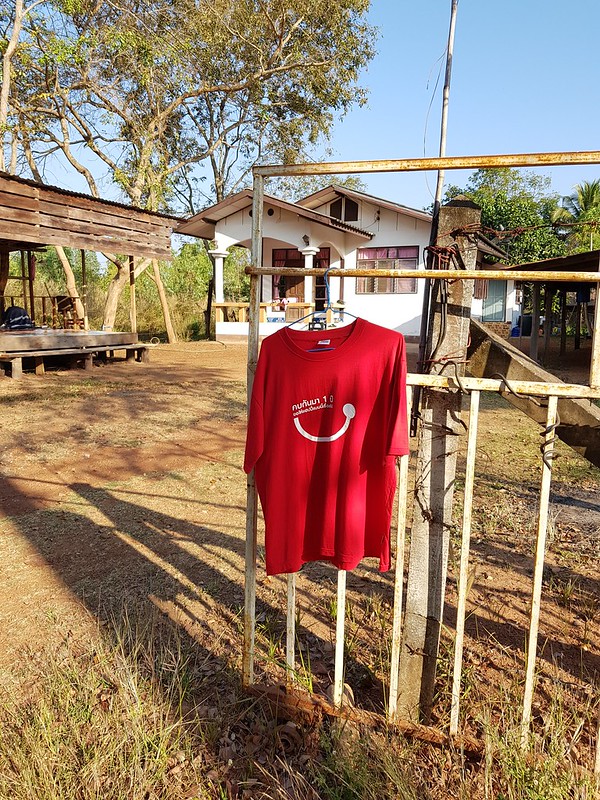
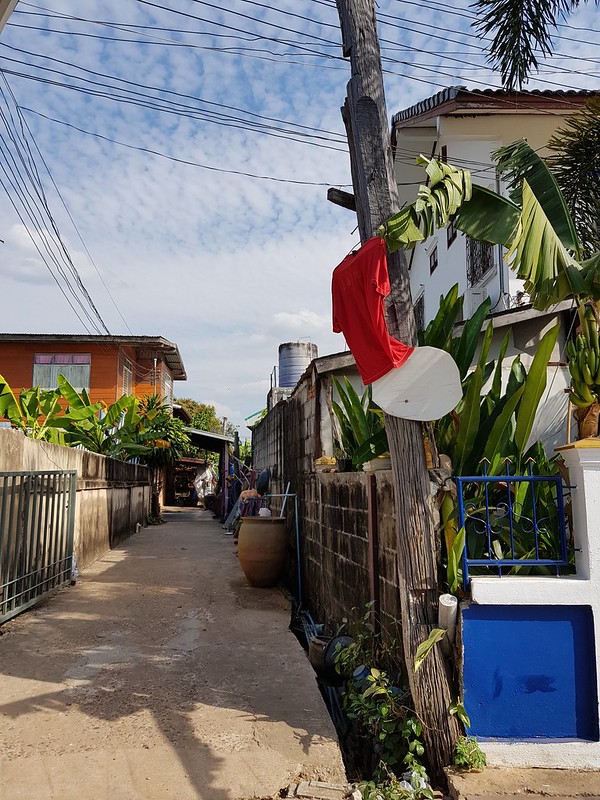
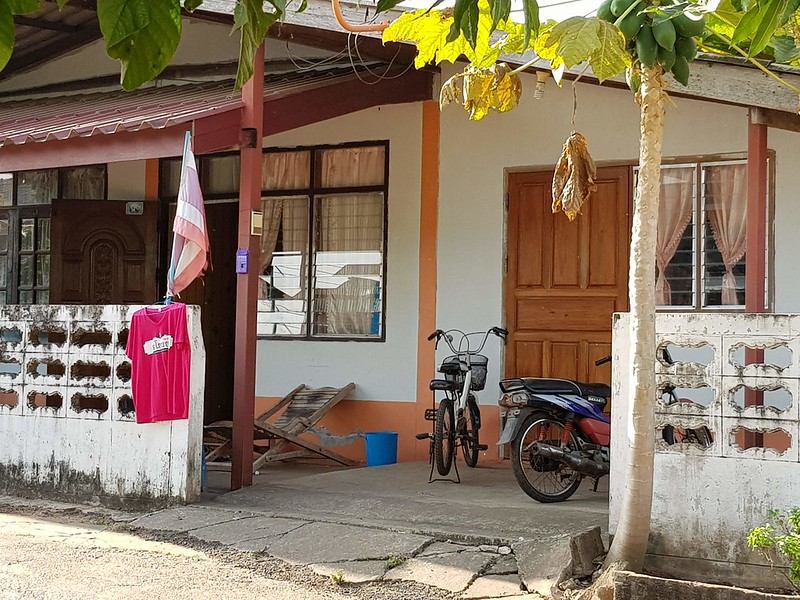
Late last week, while I was walking along the river, I noticed a red shirt suspended from someone's fence on a hanger.

Red Shirts to ward off the widow spirit-Phi Mae Mai (ผีแม่ม่าย)

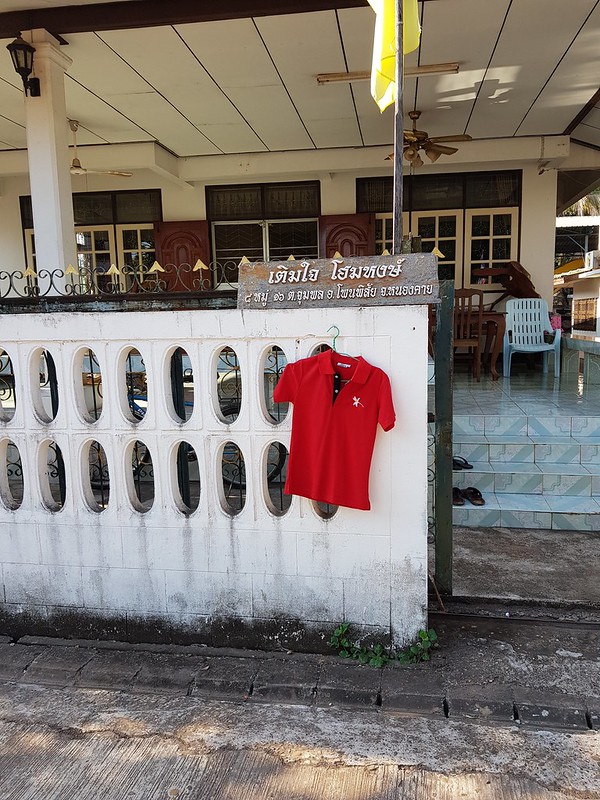
A few days later, a neighbor of ours hung a red shirt up on the fence by the gate to their property.

Red Shirts to ward off the widow spirit-Phi Mae Mai (ผีแม่ม่าย)

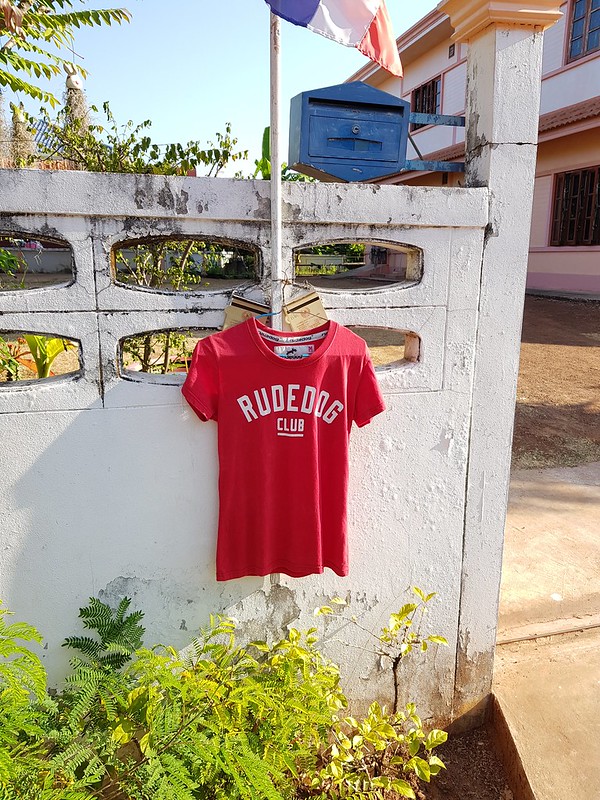
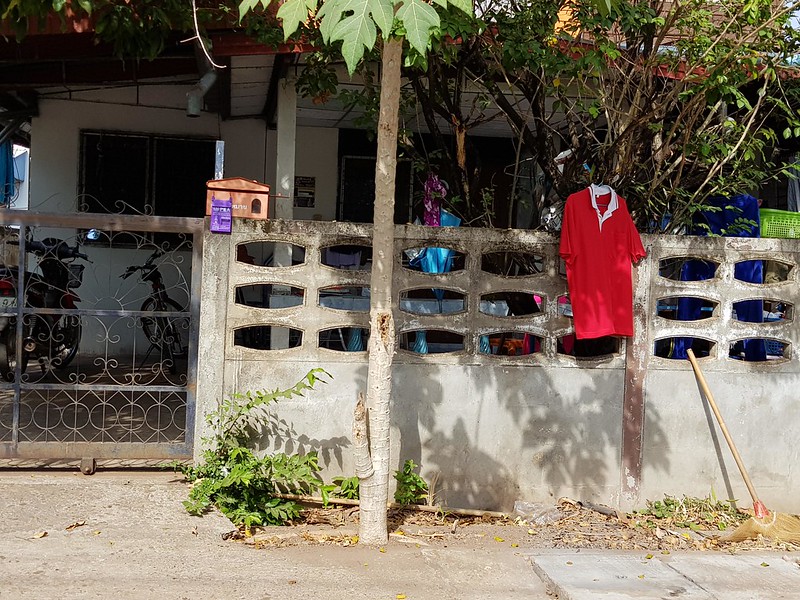
Then we noticed all over our village that red shirts were on display.

Red Shirts to ward off the widow spirit-Phi Mae Mai (ผีแม่ม่าย)


Red Shirts to ward off the widow spirit-Phi Mae Mai (ผีแม่ม่าย)


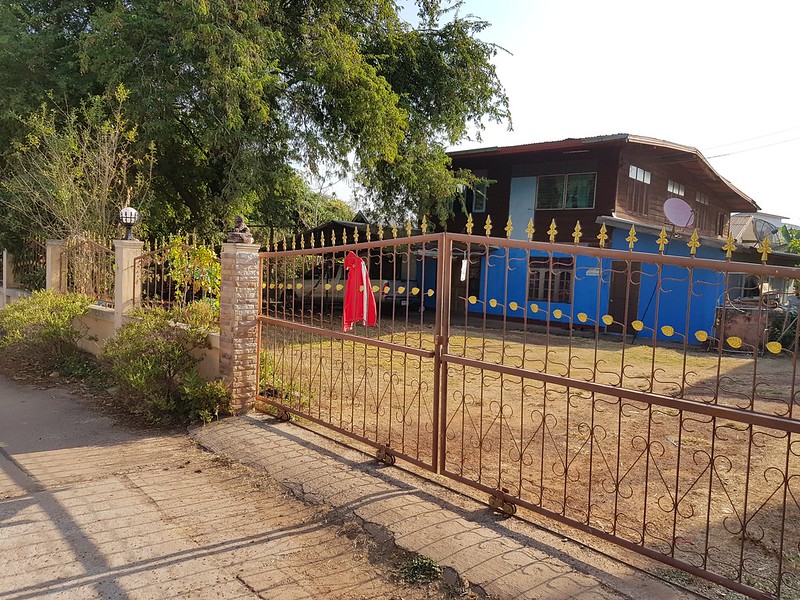
Red Shirts to ward off the widow spirit-Phi Mae Mai (ผีแม่ม่าย) 


Red Shirts to ward off the widow spirit-Phi Mae Mai (ผีแม่ม่าย) 


Red Shirt 7


Red Shirt 8

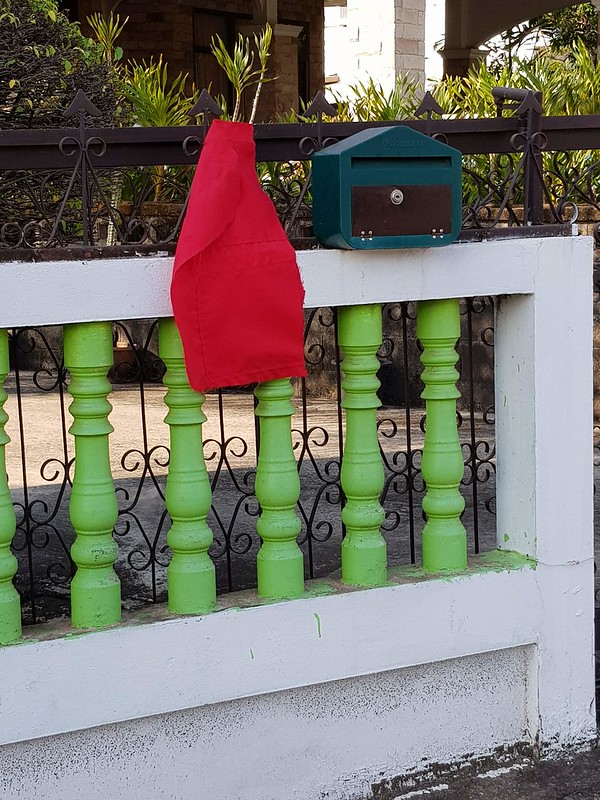
And, apparently, if you have no red shirt, you can use a piece of fabric.

Red Shirt 9

What's going on here?  Did we miss a memo?

Turns out there is a local belief in the Isaan region regarding the Widow Spirit, known as Phee Mae My.  When an seemingly fit individual dies unexpectedly in their sleep, the Widow Spirit is suspected.  Two weeks ago, in a nearby province, it was reported in the news that in one village, 3 healthy men, aged 47, 23 and 60, all died within a week's time.  When this happened, two local men recalled strange things that happened just prior to that.  One reported seeing an unusual light in the sky at night.  Another reported having a scary vision of a tall dark-skinned person.  In other reports I've read, people have reported seeing this spirit as a beautiful young woman dressed in white.

The local name for these nocturnal deaths Lai Tai, an Isaan term which roughly translates unconscious sleep death. Technically it is considered a version of Sudden Unexplained Nocturnal Death Syndrome (SUNDS).

At any rate, there are several precautions that households will take to keep the men of the house from suffering the fate of Lai Tai.  The most common and obvious thing is to hang red shirts at doorways or gates to yards.  Some will put up signs saying, "there are no men here".  Villages or individuals may put up red-painted phallic objects.  People will restrict evening activities outside of the house so the widow spirit will have less opportunity to encounter men while they are out and about.

We've heard that there have been three or four people who have died in our village that has caused people of our village to be concerned about the Widow Spirit.  The red shirts we've seen in this area have been confined to a single village.  We've not seen the use of phallic objects or signs declaring that there are no men around.

The Bible also records an instance of things being painted red to avoid death at night.  The night that Israel escaped captivity to Egypt, the people painted their doorposts with blood so they would not suffer loss when God killed the firstborn of all people and animals in Egypt. We read in Exodus 12:7 and 13:

Then they shall take some of the blood (of the passover lamb) and put it on the two doorposts and the lintel of the houses in which they eat it...
The blood shall be a sign for you, on the houses where you are. And when I see the blood, I will pass over you, and no plague will befall you to destroy you, when I strike the land of Egypt. 

Red is still able to keep us from death.  The cross was stained red by the blood of Jesus.  He was the Passover Lamb that was sacrificed for us, as we read in 1 Corinthians 5:7, "For Christ, our Passover lamb, has been sacrificed."

Because Jesus has been sacrificed for us,  we need not fear death. By his resurrection from the dead, Jesus has conquered death.

51But let me reveal to you a wonderful secret. We will not all die, but we will all be transformed! 52It will happen in a moment, in the blink of an eye, when the last trumpet is blown. For when the trumpet sounds, those who have died will be raised to live forever. And we who are living will also be transformed. 53For our dying bodies must be transformed into bodies that will never die; our mortal bodies must be transformed into immortal bodies.
54Then, when our dying bodies have been transformed into bodies that will never die, this Scripture will be fulfilled:

“Death is swallowed up in victory.
55O death, where is your victory?
O death, where is your sting?"
     1 Corinthians 15:51-55 (NLT)

We who know Jesus also do not need fear the Widow Spirit or any other spirit.  For to those who believe in Jesus, He gives His spirit, which is greater than all others.

2 This is how we know if they have the Spirit of God: If a person claiming to be a prophet acknowledges that Jesus Christ came in a real body, that person has the Spirit of God.  3 But if someone claims to be a prophet and does not acknowledge the truth about Jesus, that person is not from God. Such a person has the spirit of the Antichrist, which you heard is coming into the world and indeed is already here. 
4 But you belong to God, my dear children. You have already won a victory over those people, because the Spirit who lives in you is greater than the spirit who lives in the world. 
     1 John 4:2-4 (NLT)

We have authority over the spirits.  We do not need to be afraid of them.  We do not need red shirts to scare them away. We can go out at night without being afraid that we might inadvertently lead some demon back to our house.

19Look, I have given you authority over all the power of the enemy, and you can walk among snakes and scorpions and crush them. Nothing will injure you.  20But don’t rejoice because evil spirits obey you; rejoice because your names are registered in heaven.
     Luke 10:19-20 (NLT)

Praise be to God, because Jesus is enough...
     ...enough to free us from the power of death
     ...enough so that we need not fear the spirits.

Monday, January 7, 2019

Unconventional

I have an awesome wife.

On New Year's Day, I asked her if she wanted to go check out some swamps, and she agreed.

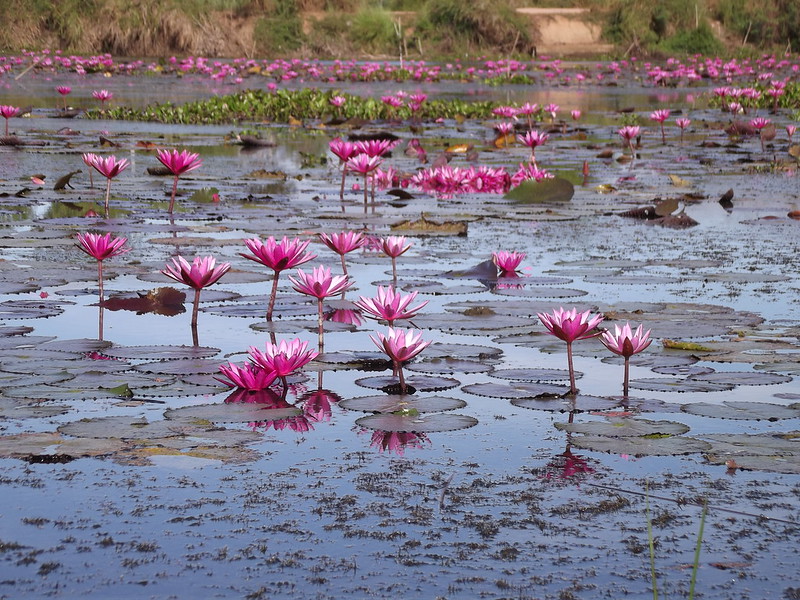
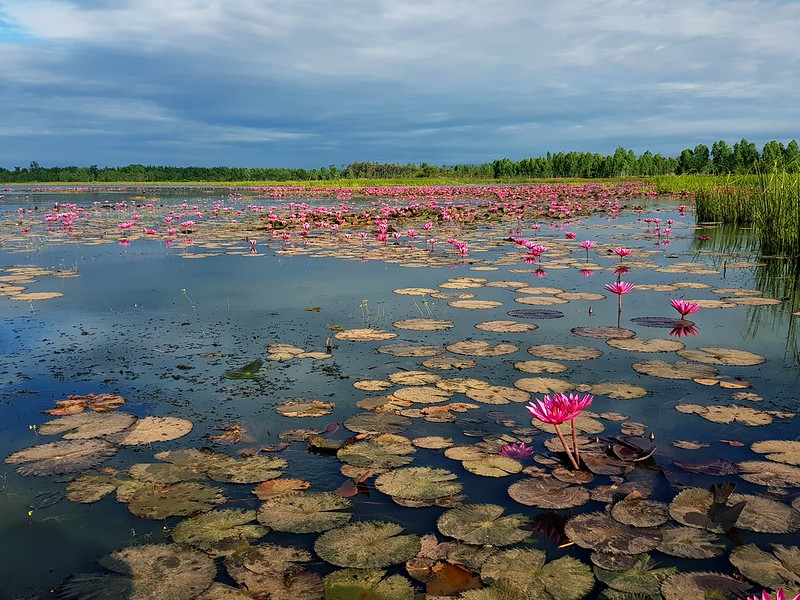
So off we went.  Our first stop was Huai Ngeum Noi (ห้วยหงีมน้อย)--and no, that's not as easy to pronounce as it looks.  At this time of year, Huai Ngeum Noi is covered with pink water lilies.  Pink water lilies (Nymphaea pubescens) are native to south and Southeast Asia.  It's not unusual to see ponds covered with these water lilies.

Nymphaea lotus L. Nymphaeaceae-Water Lily 8
Pink Water Lillies in Huai Nguem Noi


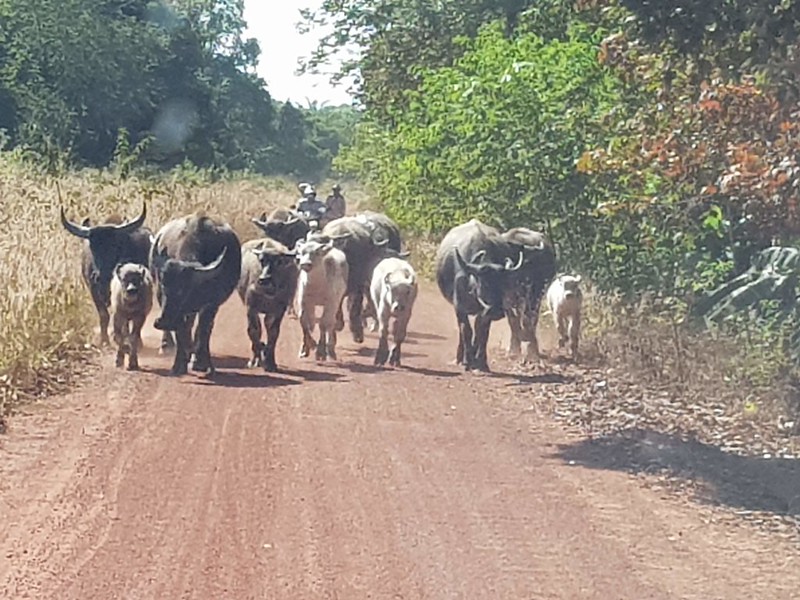
After a while, we left Huai Nguem Noi to head to another swamp.  Along the way we had to pause to let some water buffalo pass.

20190101_102436
Water Buffalo on the road


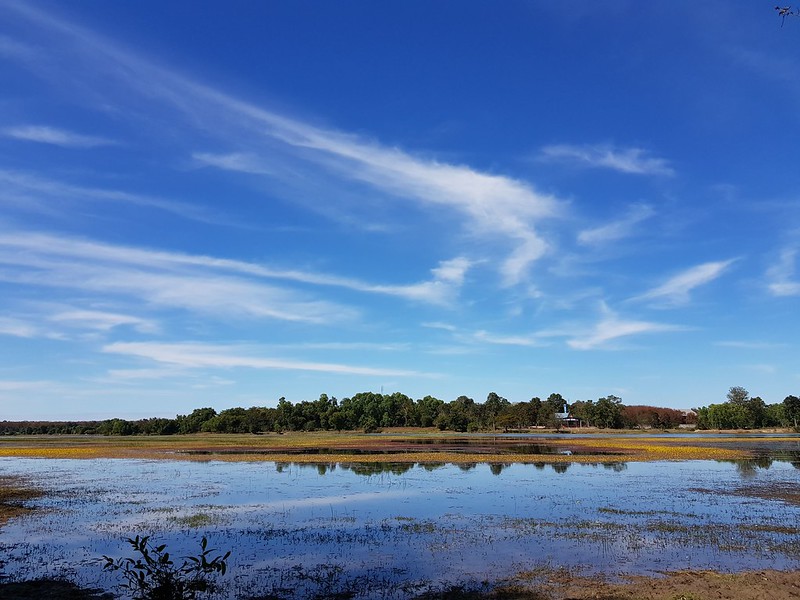
Eventually we got to Huai Plaeo Ngueak (ห้วยเปลวเงือก), which means something like "Mermaid Fire Swamp).  This reservoir is quite shallow--if there are any mermaids in it, they must hibernate in the mud during the dry season.

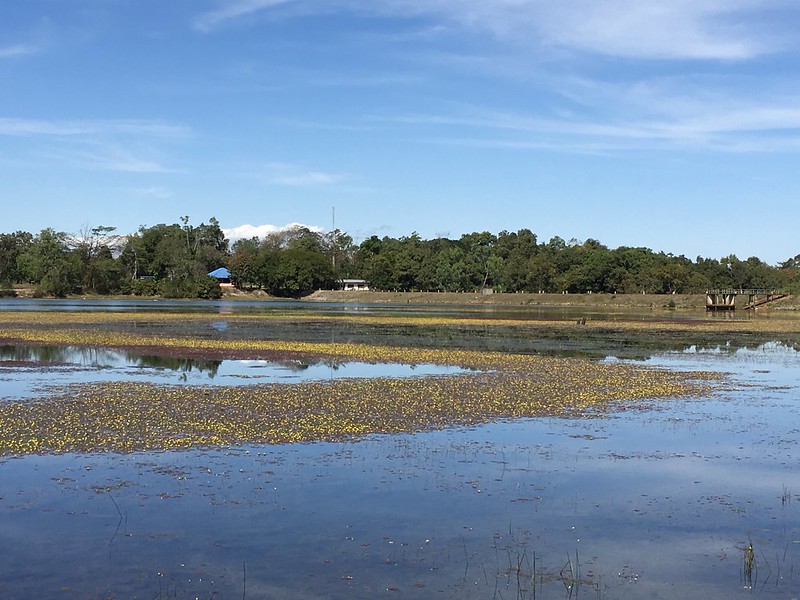
The first thing we noticed were the swaths of yellow flowers all over the pond.

Huai Plaeo Ngueak 2
Huai Plaeo Ngueak


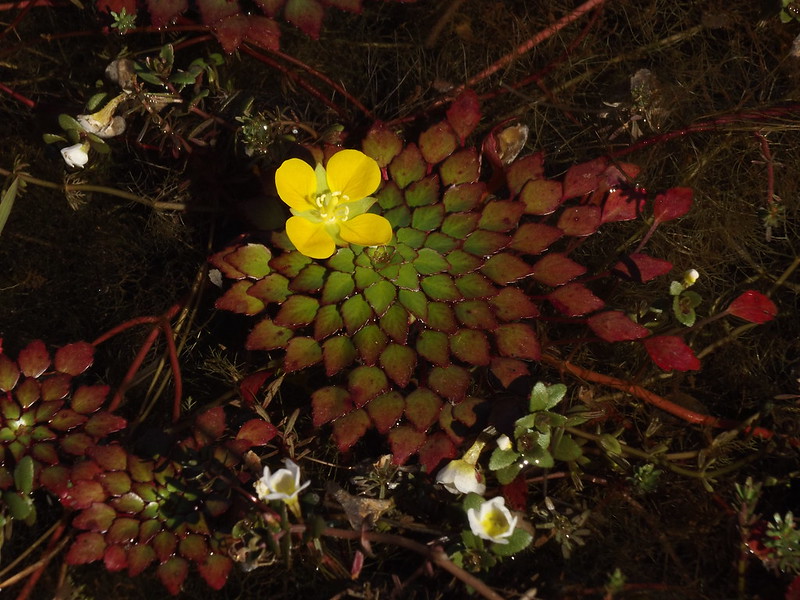
These yellow swaths were from the mosaic flower-an aquatic plant in the evening primrose family (Onagraceae). Like most plants in the evening primrose family, the mosaic flowers have four petals.  But it's the leaves of this plant that have a very special character.

Ludwigia sedioides (Humb. & Bonpl.) H.Hara Onagraceae-mosaic plant 3
Mosaic plant (Ludwigia sedioides - กระจับแก้ว


Huai Plaeo Ngueak 4
Mosaic plants curving through the swamp


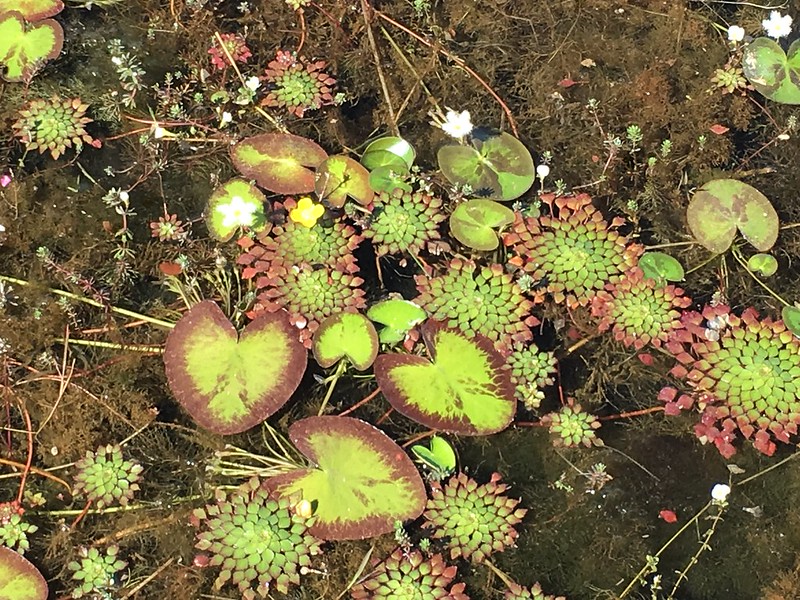
The mosaic flowers are just one of many flowers growing in Huai Plaeo Ngueak.  The mix of the blossoms and leaves can be quite pretty.

Mixed aquatic plants in Huai Plaeo Ngeuak 3
Variety of flowers


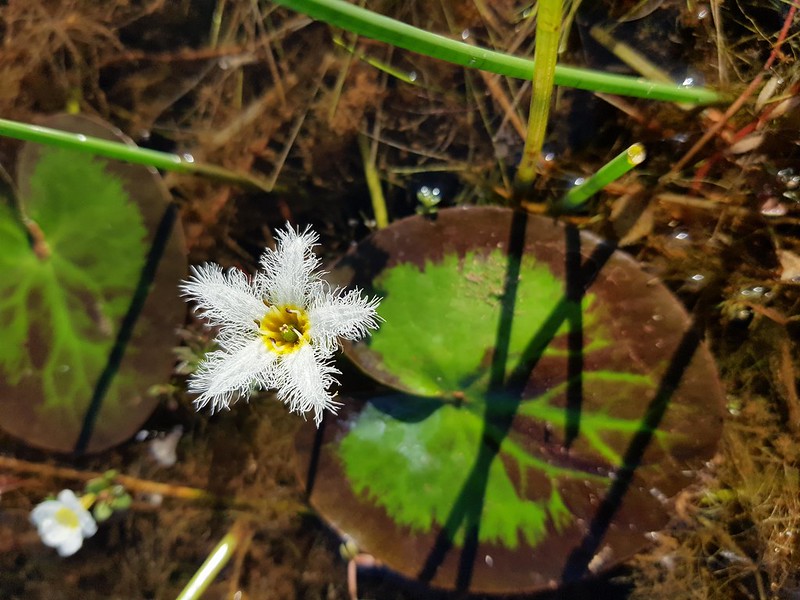
Perhaps one of the showiest flowers in the pond is the water snowflake.  If has a beautiful bloom and cute, heart-shaped leaves.

Nymphoides indica (L.) Kuntze Menyanthaceae-water snowflake, บัวบา 5
Water Snowflake (Nymphoides indica - บัวบา)


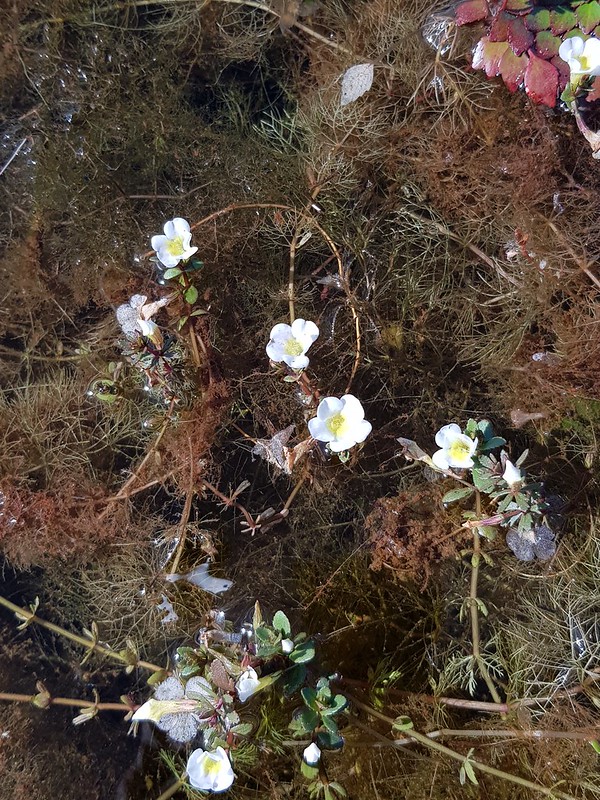
Another interesting flower is on a plant in the Gratiola genus in the plantain (Plantaginaceae) family.  I first thought it was a kind of monkey-flower.  These plants were once classified in the same plant family as monkey flowers (Scrophulariaceae), but with recent genetic studies, they have been reclassified.


Gratiola sp. L. Plantaginaceae (formerly  Scrophulariaceae) 4
Gratiola sp.


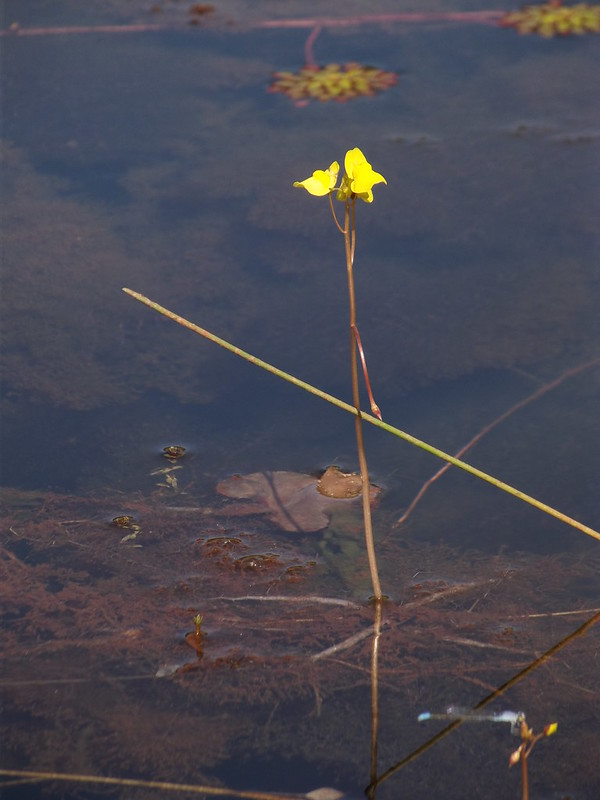
Golden bladderwort (Utricularia aurea) is a carnivorous flower.  A non-vegetarian vegetable, so to speak.  They are widely scattered throughout Thailand, but seldom in great numbers.

Utricularia aurea Lour. 1790 Lentibulariaceae-golden bladderwort 2
Golden bladderwort (Utricularia aurea  - สาหร่ายข้าวเหนียว)


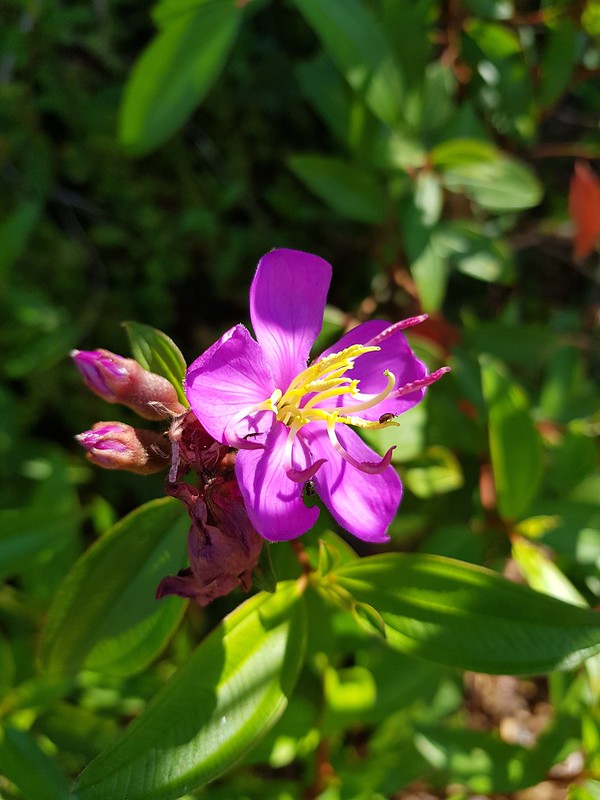
There were some other flowers present in the lake as well.  But we left the water and looked on or near the shore at some of the other things blooming.  At the edge of the high water line were lots of pinkish/purple flowers. (The camera makes the flowers seem less blue than the eye sees them.) These are what is known as straits rhododendron (Melastoma malabathricum - โคลงเคลง).  These showy flowers are not related to the rhododendrons we know of in North America.


Melastoma malabathricum L. Melastomataceae-Straits Rhododendron 3
Straits Rhododendron (Melastoma malabathricum - โคลงเคลง)


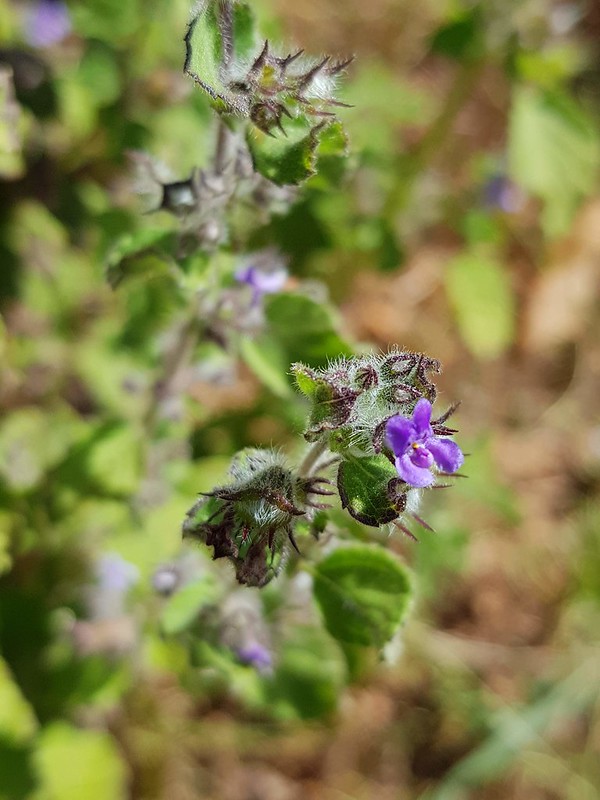
A little higher up from the lake was a very fragrant shrub.  I don't know what the name of this plant is, but it appears to be something in the mint family (Lamiaceae).

Unidentified fragrant lamiaceae shrub with purple flowers 4
Sage-like plant


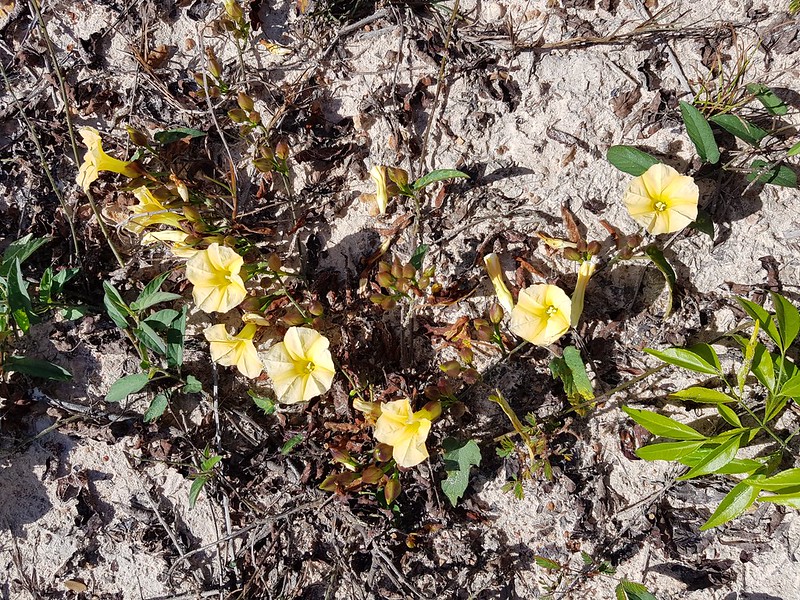
A little higher, on a dry, sandy, knoll, we found these pretty morning-glory-like flowers that somehow manage to thrive in a not very lush environment.

Unidentified yellow Convolvulaceae a7
Yellow morning glory-like flowers


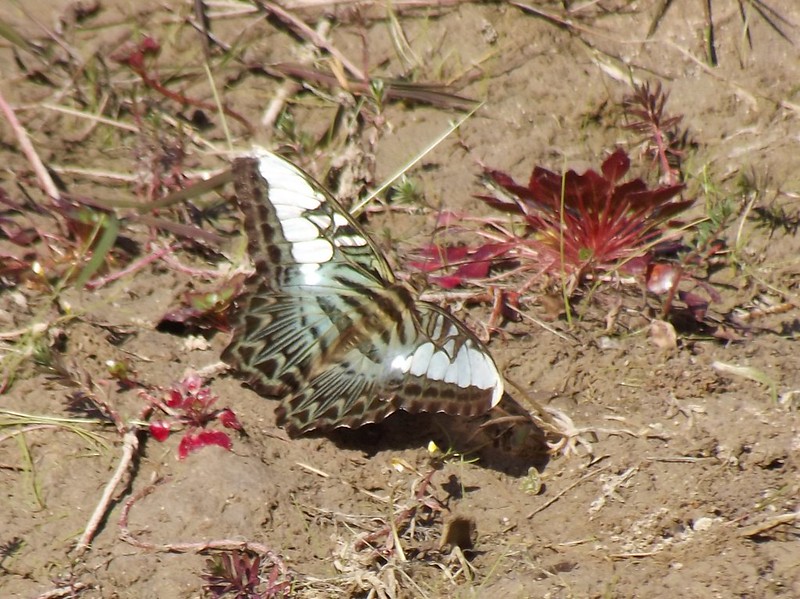
As we walked back to our car from the knoll with the yellow morning glories, we were escorted part of the way by a clipper.

Parthenos sylvia apicalis (Moore, 1879) Nymphalidae-Parthenini-Clipper-ผีเสื้อช่างร่อน
Clipper Butterfly


And so we started our year with a reminder of the creative genius of our God.  The diversity of things that one can find on a small piece of real estate is amazing.

You make springs pour water into the ravines,
  so streams gush down from the mountains. 
They provide water for all the animals,
  and the wild donkeys quench their thirst.
The birds nest beside the streams
  and sing among the branches of the trees.
You send rain on the mountains from your heavenly home,
  and you fill the earth with the fruit of your labor.
You cause grass to grow for the livestock
  and plants for people to use.
Psalm 104:10-14

Wednesday, January 2, 2019

Bookends 2018

How do we look at life? Are we pessimists or optimists? Are we stuck in the past or are we hopeful about the future?

For the past several years I've done a blog with photos from the beginning and ending of the year.  As I was looking through photos, trying to decide what to pick, I realized that my choices show how I look at my life.  Someone else might have chosen different pictures.  (A saying I have is: There are two kinds of journalists.  Those who are biased and recognize what their bias is--and tell others.  And then there are those who are biased and don't think they are.)

I could have done nearly-identical pictures.  On January first, we had several of the youth over from church to make fritters or, as some call them, New Years cookies.  On December 31st we were making a batch for a New Years eve service at church.  These would be people oriented photos.

But I decided to use some different photos. I'm not a great people photographer.

While we tend to choose our sandwiches based on what is in the middle, we also want to choose our bread.  So while these photos don't represent the meat of what happened this year, they are like the slices of bread I choose to put the meat between.

January 1st falls close to my birthday. I told my wife that I don't really want to acquire things for my birthday. I'd rather just go to a park somewhere.  So we decided to go to Phu Phrabat Historical Park. It turned out to be the first of three trips to the park that year.

Phu Phrabat Park is focused around some interesting rock formations that were used as housing and places of worship many, many years ago.  There are even red-colored petroglyphs which have a character similar to those I would see in the American west.  If you want to see that side of things, as well as photos of the fancy restrooms, check out my flickr album from the park.

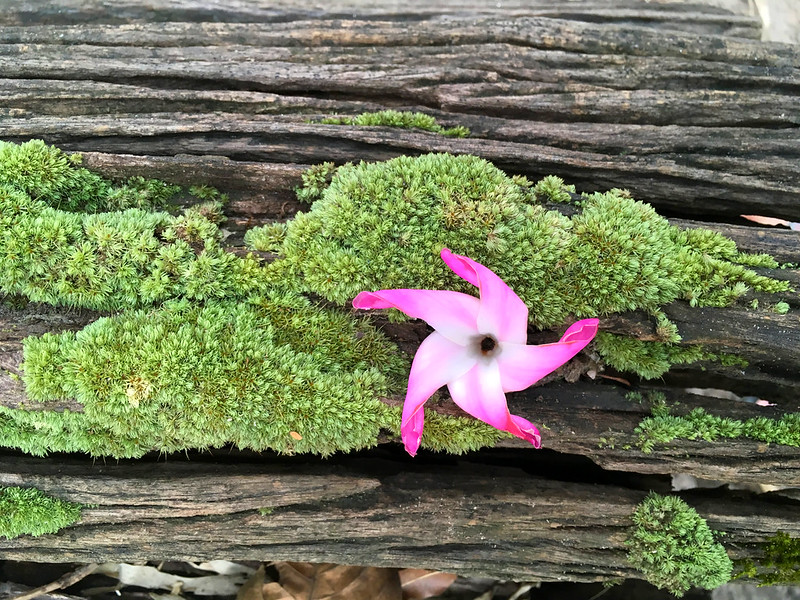
What I like about the park are the nice walking trails with varied scenery.  It just happened to be the season that some of the dipterocarp trees were blooming.  I picked up a blossom and stuck it in a mossy log, because I like the color contrast.

Dipterocarpus obtusifolius Teijsm. Ex Miq. Dipterocarpaceae-ยางเหียง
Dipterocarp flower on mossy log


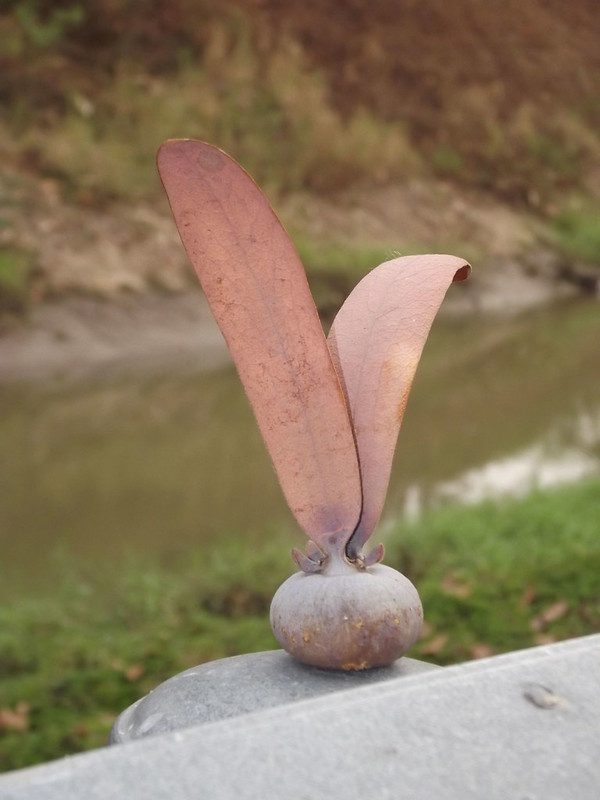
Dipterocarp trees were once very common in northern and northeast Thailand.  They grow in humid climates with long dry seasons.  They don't seem to be bothered by the fact that it doesn't hardly rain for six months.  They just drop their leaves to cope with the dry season much as trees where I grew up would drop their leaves to cope with the cold.  There are many species in the plant family Dipterocarpaceae.  Most have winged seeds; the seed pictured below is the same species as the bloom above.  We big kids sometimes enjoy throwing them in the air and watching them helicopter down.


Dipterocarpus obtusifolius Teijsm. Ex Miq. Dipterocarpaceae-ยางเหียง
Dipterocarp winged fruit

Most species of the Dipterocarp genus get quite tall and the branches tend to be clustered at the top. This can make recognizing species difficult because it is often hard to see the leaves on the tree-you have to look at leaves and flowers that have fallen to the ground.

One thing that is nice about the Isaan region (as opposed to central or northern Thailand) is that the farmers often leave native trees in their rice paddies.  So one sees perhaps more of the big giants that used to cover the region before they were all cut down to put in farms.  Sometimes I'll even see masses of the pink flowers that have fallen off a tree onto the road.

Which brings be to the photo for the end of the year.

While many of our Canadian friends and relatives might be whining about the cold at this time of year (I would be if I was there), here in Thailand we are enjoying the cold winters.  It's nice when the temps drop into the 60s (15-20 C) at night.

While I tend to ride my bicycle all year round here, it is perhaps most enjoyable in the winter.  And so I found myself doing a leisurely bike ride on New Years Eve day.  This day I was staying on the dirt roads as much as possible because of the very busy highways during the New Years Holiday season.

My trip this day brought me past an old oxbow of the Huai Luang river that they put a dam in to form Huai Kan Lueang Reservoir.  The reservoir is on both sides of a minor highway and right now they are excavating dirt on one side to make it deeper and using the dirt to fill in the other side.

A consequence of this dirt fill operation is that I can now get up close to water lilies that used to be in the middle of the swamp.  On this morning, it had started out cloudy, but the clouds were moving off to the west so the flowers were in the sun.


Nymphaea lotus  Nymphaeceae - Water lily, บัวแอง
Pink water lilies


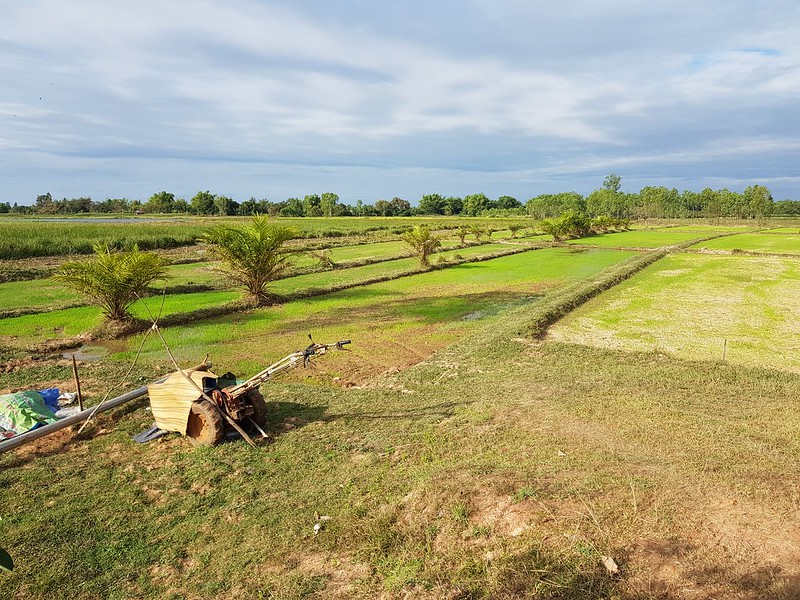
The water levels in Huai Kan Lueang have dropped considerably since wet season.  As the water levels drop, some of the area is used to grow rice, as pictured below.

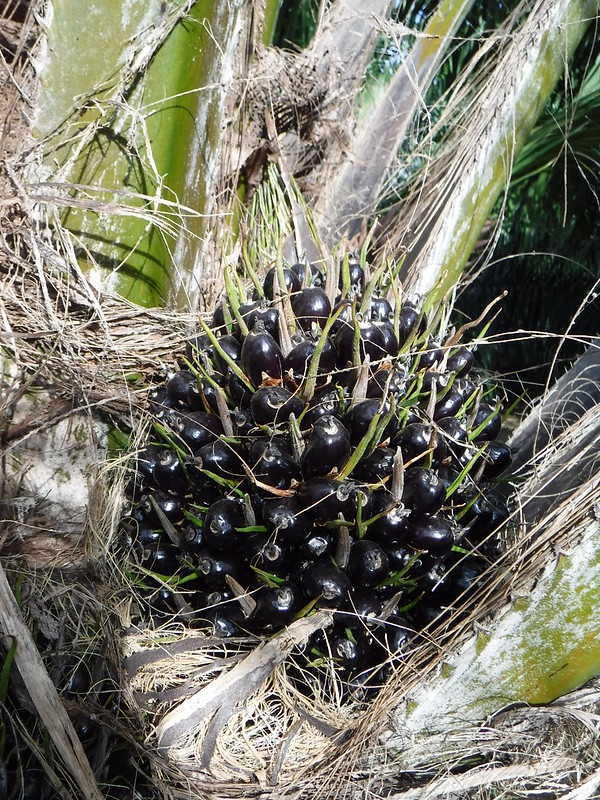
Ironic that this area was under water a few months ago. Now the farmer is using his tiller motor to drive a pump to irrigate his rice paddy.  Along one of the berms there are palm trees.  These are oil palms.  The fruits are are crushed to extract the oil. There is a significant acreage planted to oil palms in this part of Thailand.

Rice paddies in Phon Phisai 2
Rice paddies and oil palms


Elaeis guineensis Jacq. Arecaceae Palmae-oil palm, ปาล์มน้ำมัน
Oil Palm Fruits


And so my year has brought me from the forest to the field and lots of places in between.  But when I woke up on January 1st of this year, I was happy that some things did not change.  I woke up next to the same wife.  The sun rose again like it has everyday.  And God's great love for us was still there.

God showed how much he loved us by sending his one and only Son into the world so that we might have eternal life through him. This is real love—not that we loved God, but that he loved us and sent his Son as a sacrifice to take away our sins.  1 John 5:9, 10

Jesus Christ is the same yesterday, today, and forever. Hebrews 13:8


Sunday, December 30, 2018

Top Twelve 2018

It's time for my look back at the old year through pictures.  Picking out a dozen, or baker's dozen of pictures from a few thousand is a fun way to reminisce about the past year.  Pictures are not necessarily chosen for photographic quality but for special memories they evoke.

January - Red Lotus Lake
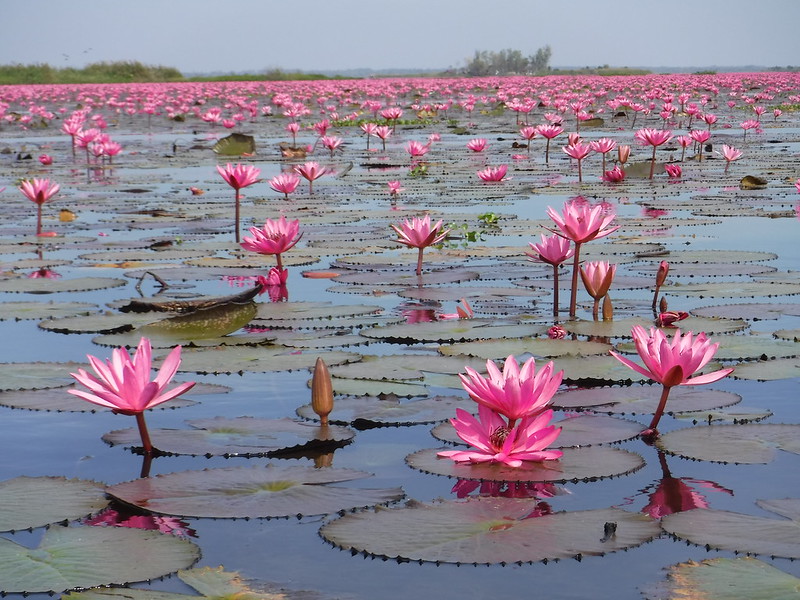
Nymphaea lotus L. Nymphaeaceae-Water Lily, บัวสาย

November through January is the best period to travel around Thailand.  The air is cooler and the smoke from all the burning usually has not built up much yet.  One of the travel bloggers in Thailand had posted pictures of a place in Isaan where there were lots of water lilies.  We did some research and found that the place is called Red Lotus Lake and is about a 2-1/2 hour drive from our house in the next province to the south. We didn't know much about the lake or what to expect, we just took off to investigate.

We arrived at the lake about 11 am.  We found out that it was almost too late in the day, as soon the water lilies would close up for the heat of the afternoon.  Nonetheless, we hired a boat and joined the myriad of people who were out on the lake,  It was really amazing to see all of the pink water lilies.  We ended up going back about a month later when we had some people visiting us.

If you're ever in Thailand between Mid-December through February, this place is worth a visit.  Perhaps a nice Valentine's date.


February - Baptisms
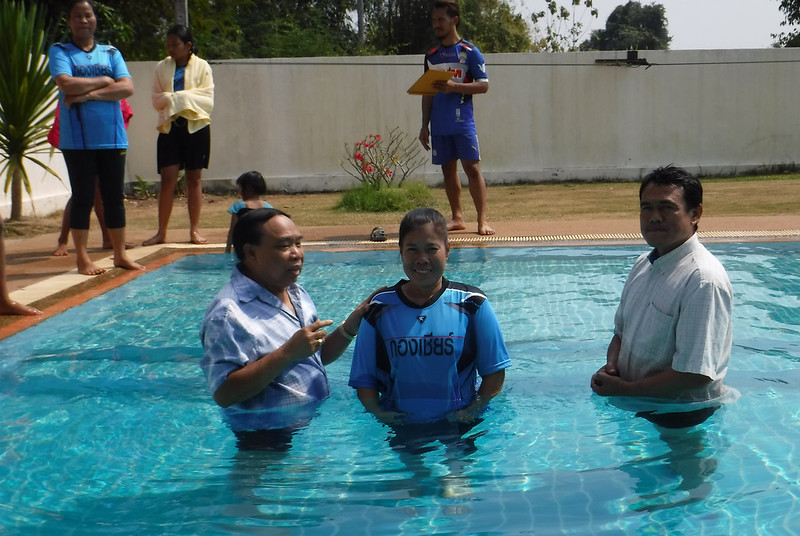
Baptism 2

For those in the business of church planting, one of the greatest activities one can have is baptisms.    We've had several baptismal ceremonies since coming here, but this one was a bit special because of the testimony of one of the people getting baptized.  Her story is one about how God is already doing a work and that we just join Him in what He is already doing.  You can read more about that here.


March - Torch Ginger
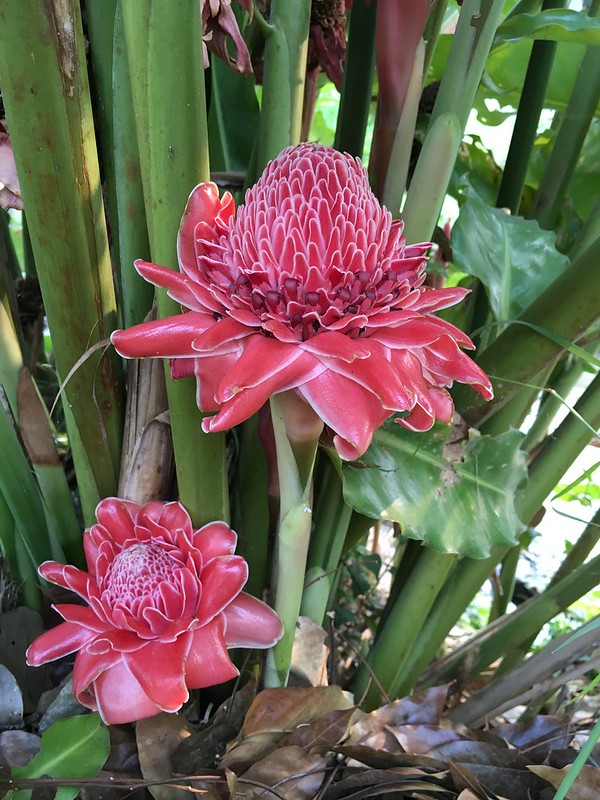
Etlingera elatior (Jack) R.M. Smith Zingiberaceae-Torch Ginger, ดาหลา

In March we had the opportunity to take one of our church members to some training in Chiang Mai.  The training was called "Multiplying Disciples" and we enjoyed having our friend meet some of the many others in Thailand in a situation similar to his.

The training was at a place in the mountains with nice landscaping throughout.  As is my usual practice, I like to get up early and go for walks and enjoy the wonders of God's creation.  I found a little used path and was pleased to discover a small grove of torch gingers that had been planted.  The blooms on these plants can be quite spectacular.

The ginger family is one of my favorites because of the diversity of styles of flowers.  I just wish I had a place to plant them all!


April - Team Hope
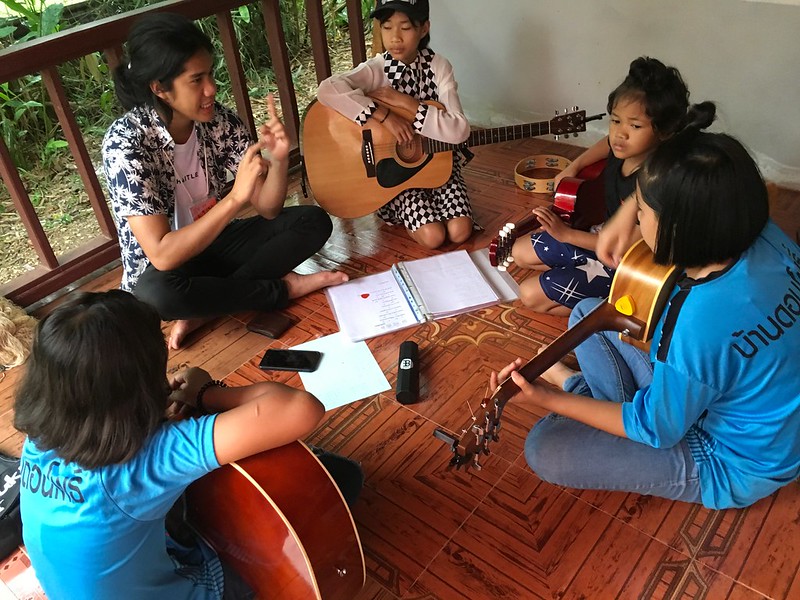
Team Hope

One of the parts of my job that I enjoy is being a catalyst.  I don't necessarily have to do everything myself, but I can help facilitate bringing people together who can help each other.  In April, we were pleased to bring a team from the Hope Center in Chachoengsao up to Phon Phisai to do some training.  These are people we know well from having worked there in the past.  This group of mostly young people came up to give training in various things.

One type of training they gave was guitar and music.  Boat is a young man who studied music at university.  While I sometimes have difficulty getting the young people in our church (mostly female) to come practice music, Boat, being young and single, had no problem getting them to come.

They even remembered some of the stuff he taught after he left!

May - Phu Phrabat Historical Park
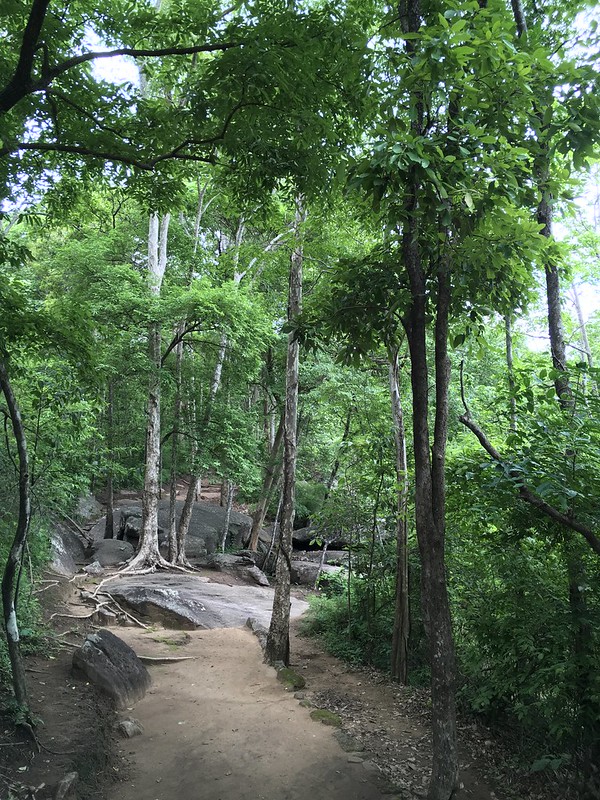
Forest Trail ทางเท้าในป่า

It was our day off, and we were looking for a new place to explore.  We made plans to go to a park a few hours drive to the south, but due to road construction, we lost a lot of time in the city of Udon Thani.  So we changed plans and decided to head to Phu Phrabat Historical Park.

We had been to the park before, which is mostly known for its interesting rock formations.  There are also lots of trails, and we decided to try some we had not been on before.  There had been some early wet season rains, and things were a lot greener than during our previous visit during dry season.  We hardly saw anyone on  the trails that we followed.

Phu Phrabat Park, being an historical park, is not under the Forestry Department, but is under the Ministry of Arts and Culture.  They have a bit of a different take on things.  While most parks tend towards rustic, this one has the fanciest restroom I have seen in Thailand that even has piped in classical music!


June - Rice Planting
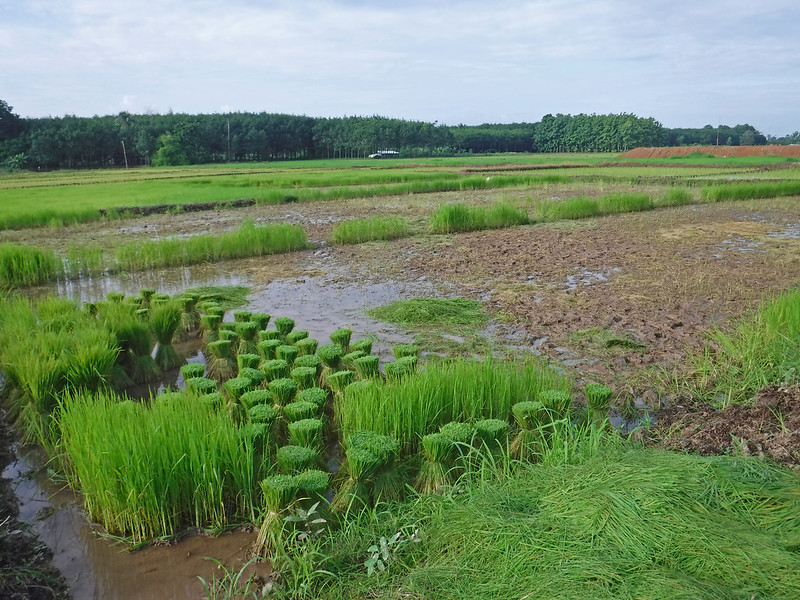
Rice seedlings being pulled 5

One day I decided to try a bike route I had not been on before.  This trip took me to the next district north called Rattanawapi and a village called Nam Pe.  It was the beginning of wet season, which means it was time to plant rice.  Most people start their rice plants in nurseries and then transplant out.  Here I passed and area where they were gathering up the seedlings to be brought to the paddies where they would transplant them.  Young rice plants have a intensely bright green color, which doesn't always capture well in photographs.

July - Mango Baron
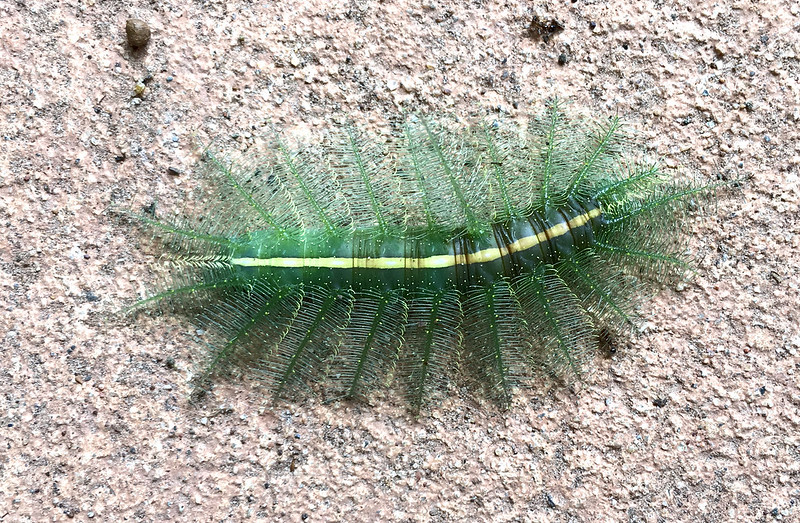
Euthalia aconthea (Hewitson, 1874) Nymphalidae-Limenitidae-common baron, mango baron-ผีเสื้อบารอนหนอนมะม่วง

Sometimes we see things and, at first glance, aren't sure what to think.  Is it a plant or an animal? If an animal, what kind is it?

Turns out that this particular creature is a caterpillar that favors mango trees.  It is covered with lots of fine hairs which, if touched, can be quite painful.  Or so I've read.  I wasn't really wanting to test that theory because I've had run-ins with venomous caterpillars before and I am quite amazed at how much pain a tiny little hair can cause.  While venomous, the mango baron caterpillar is at least pretty to look at.

August - Boat Race Practice
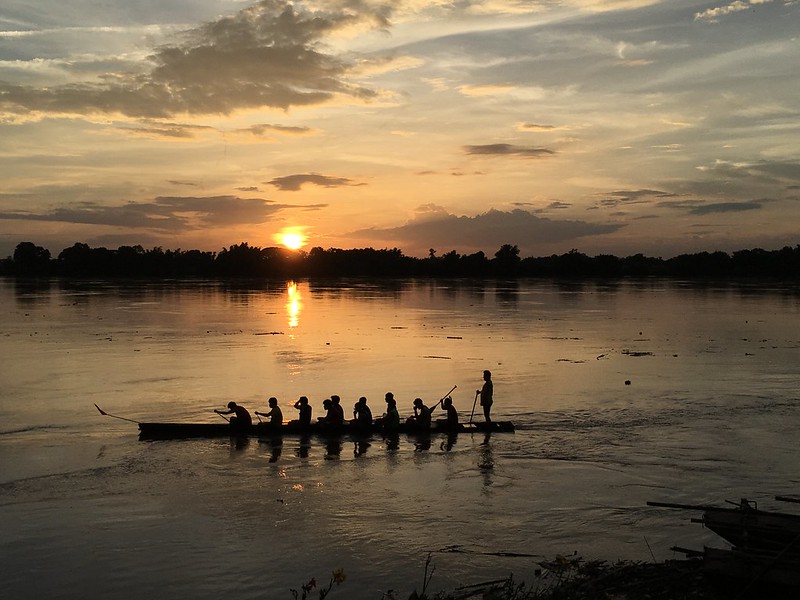
Paddling on the Mekong 2

One thing we like to do when we have the opportunity is to go for an evening walk along the Mekong River.  It is only one kilometer to the river from our house.  During the rainy season, if there are breaks in the clouds, the sunsets can be quite spectacular.

On this particular day, we happened upon the boat racing team practicing.  They have long-boat races every year in October during the Naga festival at the end of Buddhist lent.  It's a lot of work to paddle these boats, but I'm even more impressed at the coach who balances himself on the very narrow tail of the boat.  I may not be able to paddle a boat very well,  but I can sooner do that than stand in the coaches place.


September (Thailand) - Phon Phisai Flooding
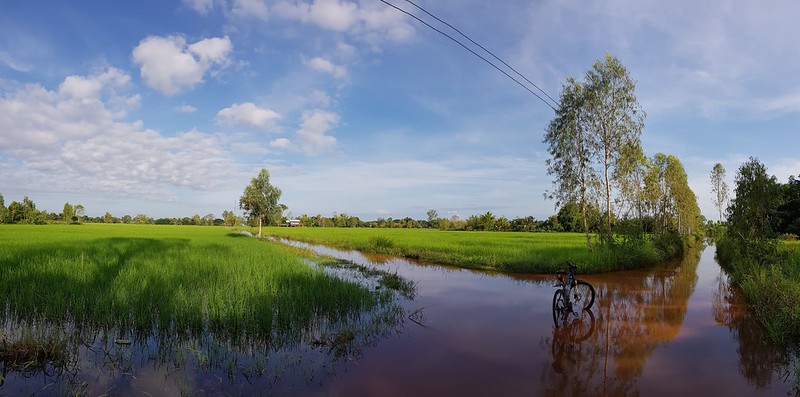
The Big Puddle

Wet season was extra wet this year.  There is an area north of our house that does not drain very well when the Mekong River is running very high—and this year it was the highest it has been in at least 10 years.  So we had a very big puddle—about 1 kilometer wide and two kilometers long.  The puddle came up to the edge of the property we live on, and onto our road just a little bit.  Other places did not fare so well.

I would bicycle through the puddles if they weren't too deep, but it's not so much fun if my foot goes under water with every turn of the crank.  The house in this photo (to the right of the tree near the middle), actually had a boat tied to its stairway.  At least the owners were smart enough to have a house on stilts.

September (Europe) - Brienzersee
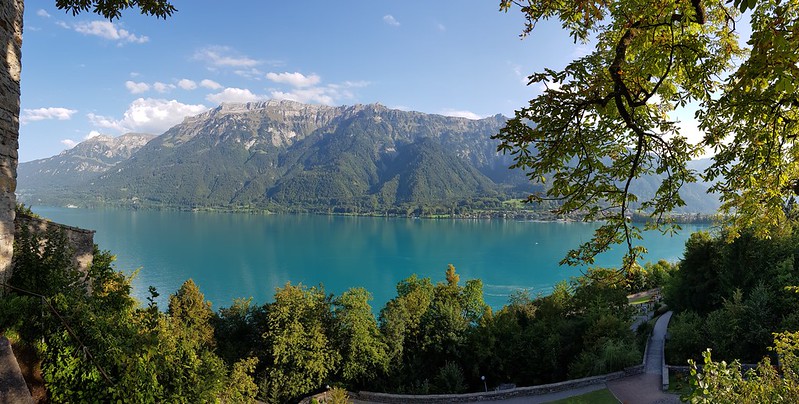
Ringgenberg Scenes 9

I'm cheating and adding a second photo from September from our trip to Europe.  I had the opportunity to attend a men's conference in Switzerland along with another of our missionaries from SE Asia.  My wife and I went a week early to celebrate our 35th anniversary.  Picking only one picture from that trip was quite a challenge.

We didn't know much about the area we were going to and we were looking for an affordable place to stay near Interlocken.  We found a small village nearby named Ringgenberg whose better years were behind it.  As for us, we enjoyed the nice quiet atmosphere of the town.  We stayed at the Hotel Bären (Bear), whose host was quite friendly and helpful. There was even a small grocery/bakery across the street from our hotel where we could get nice breads, cheese and chocolate (the essentials of life).

Ringgenberg is on the northwest shore of Lake Brienz (Brienzersee).  One evening we walked up to an old castle turned Protestant Church overlooking the lake.  We had the place to ourselves.  It was so quiet and clean.  The blue-green color of the lake was amazing.

We had initially only booked two nights in Ringgenberg, because we did not know what it would be like.  We ended up staying four nights.

October - Sam Roi Yod
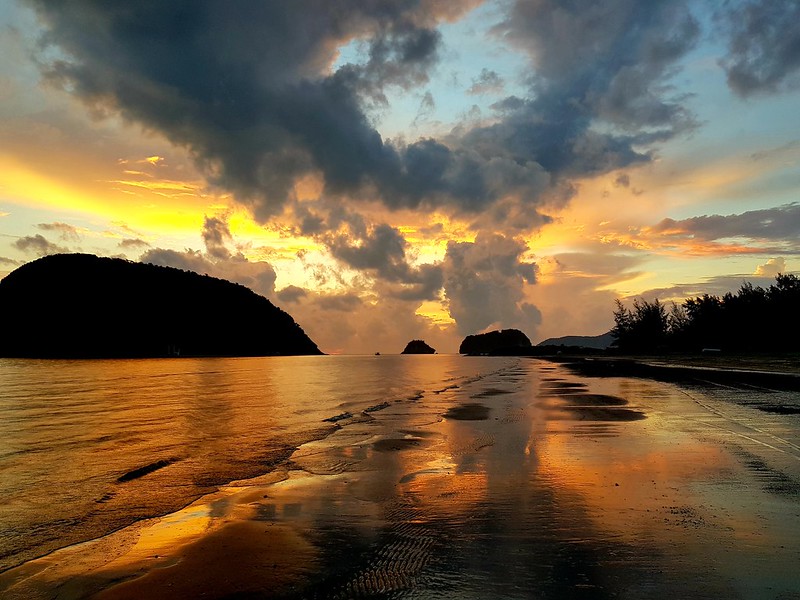
Sam Roi Yod beach sunrise 2018-10-25 12

Each year, all of us MB missionaries from Thailand gather for a time of resting, connecting and encouraging one another.  The place we meet varies from year to year.  This year, the organizers decided to go to Sam Roi Yod, which happens to be one of our favorite places in Thailand.  We were quite happy with that.

My usual habit when in Sam Roi Yod it to go for a morning walk and watch the sunrise from the beach. On this particular day, the tide was out and the wind was still so there was actually nice reflections from the shallow water on the shore.  And the clouds were amazing as well.  Probably the most awesome sunrise I have seen from the beach.  Sam Roi Yod certainly did not disappoint.

November - Phu Tawk
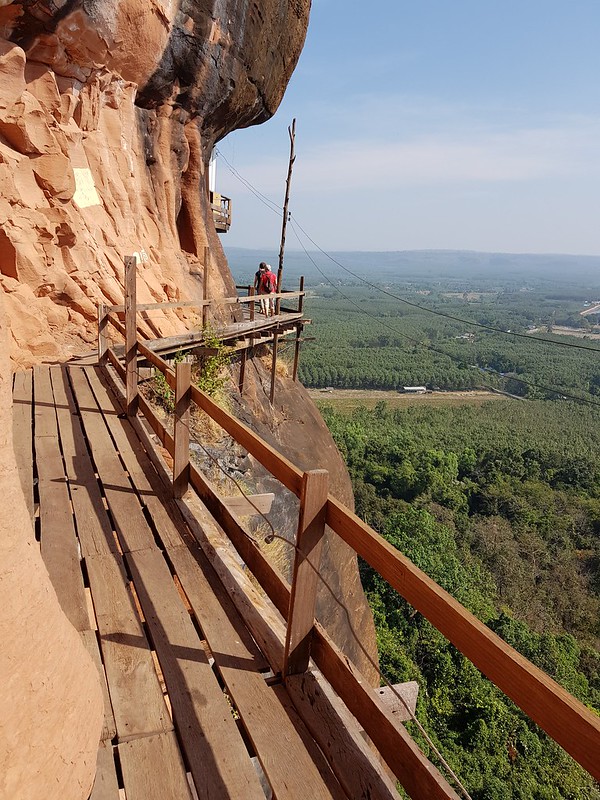
Phu Tawk 17

In November we had a visit from a second cousin whom we'd not met before.  Patricia stayed with us for a few weeks.  One day we took her to visit Phu Tawk, an interesting mountain in nearby Bueng Kan province.  It was our second time there—our first being during rainy season when the skies were cloudy and the humidity oppressive.  This time was quite different.

Phu Tawk is considered a sacred site and the monks have constructed seven levels of walkways on the mountain, a couple of which are tacked onto the side of the cliff.  This is not a great place to visit if you are afraid of heights.  Or if you don't like stairs.  There is an unbelievable amount of stairs to get to the top.

But for us it is worth the climb and the occasional dizziness from the drop-offs.  The views are awesome.

December - Nong Khai Aquarium
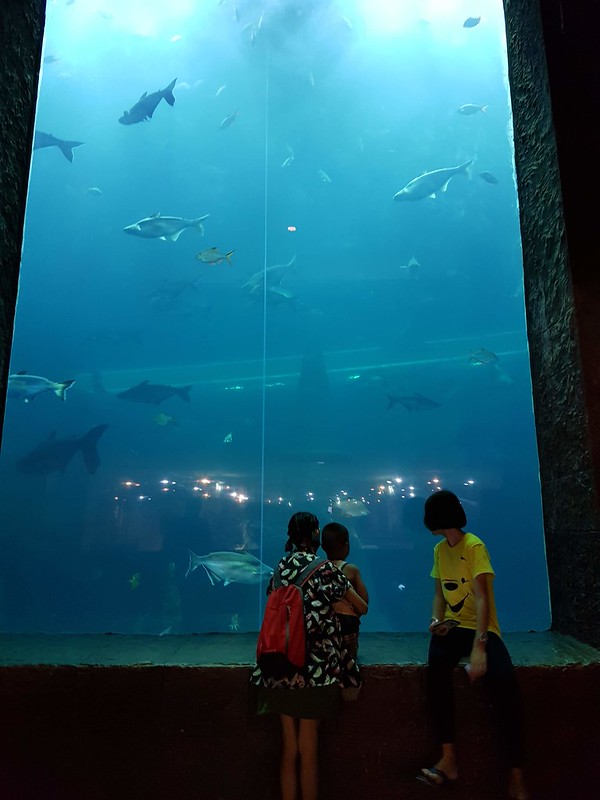
Nong Khai Aquarium - miscellaneous scenes 3

December 5th is the birthday of the previous king of Thailand and is regarded as Father's Day.  Since the kids have off from school, we asked if anyone wanted to go to the aquarium in Nong Khai.  Several were free and went with us.
The aquarium is on the Nong Khai campus of Khon Kaen University.  There are basically two categories of fish here—endangered fish species (both salt and fresh water) and fish that are endemic to the Mekong River and adjoining  waterways.

There is one big tank with a glass tunnel that you walk from top to bottom.  In the big tank are several  Mekong Catfish—the largest species of freshwater fish in the world.  (The world's biggest freshwater fish was caught in the Mekong River near Chiang Khong about 15 years ago.  It was about 9 feet long and weighed 646 pounds.  Imagine the fish fry you could have with that!)

It was fun to see the delight in the eyes of the young people as they marveled at the awesome creatures that our God thought to create.