Sunset Over the Mekong River

Friday, July 3, 2020

Cousins

Genealogy is a popular thing these days. There is something exciting about doing some detective work to research who your ancestors are. And now, affordable DNA tests can shed a little more light on your genealogical research.

When you've done your research, you can boast about your pedigree with phrases like, "Queen Elizabeth is my nth cousin x times removed."

The thing is, by using that formula, you can demonstrate that just about everyone who has ever lived who is not in your direct lineage (ancestor, descendant, sibling, aunt, uncle, niece, or nephew) is your cousin. You may just have to use some large numbers for n and x. You just have to go far enough back down you family line—maybe as far as Noah, or Adam, or, if you don't like the Biblical accounts, whoever is our first Homo sapiens ancestor couple.

Everybody is your relative. It doesn't matter if they share the same skin color or language or ethnicity. We're all related to each other. We're all family.

I was recently going through some old photographic slides and I found this photo I took of a billboard back in the early 1980's when I was living in Alabama:
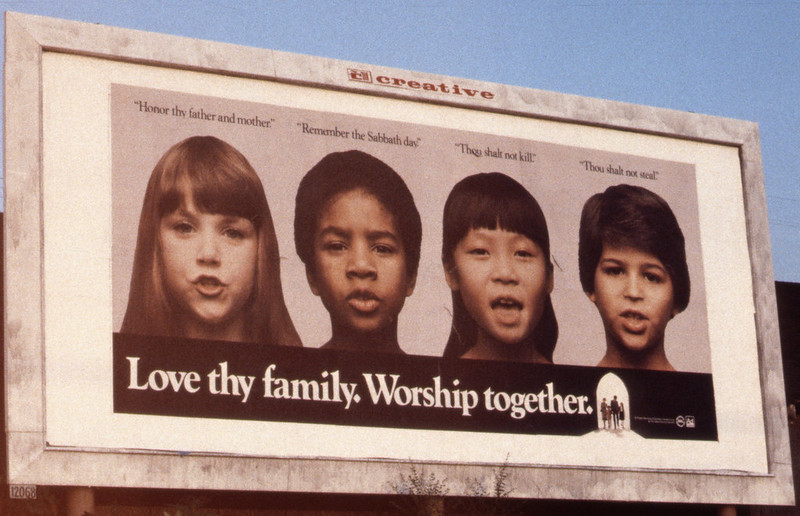

One Family - billboard in Alabama Sept 1983


I don't want to get too nit-picky about the commandments that were chosen for this billboard or the choice of commandments chosen to place over each person other than to say with a caption that talks about worship, I find it strange that the first commandment is not listed.

What struck me was that at the time, and particularly in the South, the idea of worshiping together with people of different ethnicity was almost unheard of. Even in recent days I have often heard the quote, "Sunday mornings are the most segregated time in America."

What I like about the billboard is the first part of the caption: Love thy family.
My family. My brothers and sisters and cousins of every shade of color and who speak one or more of 6500 different languages scattered all across the globe.

In these days in the aftermath of the George Floyd killing, we are hearing many stories about how people of color are looked upon differently and treated differently, and not in a good sense. It breaks my heart to hear about such things happening in my family. Because ultimately, George Floyd is a distant cousin of mine. And what's sad is that Derek Chauvin, the guy who knelt on his neck—well that's also another distant cousin. I suppose such violence between cousins should not be surprising when even siblings can sometimes get so upset about trivial things that they don't speak to each other.

For the past several years I have had the privilege of working with distant cousins in another country whose language and culture differ drastically from mine and whose skin color is a shade or two darker. I've learned how easy it is to offend, or be offended by, people I love due to misunderstandings in language and culture. And when these offenses have happened, we've had a choice to make. We could hang onto the offenses and let them simmer until we do something stupid and/or violent. Or we could take a different path involving humility, grace, forgiveness and reconciliation. The latter choice is not always easy, in fact, it can be very difficult. It's often easier to hang onto an offense than to humbly ask forgiveness for where we screwed up. And sometimes I would rather nurture a grudge than forgive someone who has offended me.

I'm grateful, though, that God doesn't struggle so much with these issues. Through the blood of Jesus, He forgives all of our sins—not holding onto grudges. How many times have I had to go to God, for the umpteenth time, for some silly sin I repeated again (redundancy intended). I'm glad God doesn't have a three strikes law, because there would be no hope for me. Jesus, when asked if we needed to forgive people for an offense as many as seven times, said that we needed to forgive 70 times 7 times; but the implication was that we need to be ready to forgive even more than 490 times. (Matthew 18:21, 22)

This same Jesus said that when we pray to God we should say something like: "And forgive us our sins, For we also forgive everyone who is indebted to us." (Luke 11:4 NKJV) In that prayer, we are asking God to forgive use based on how much we have forgiven others. If that is the case, do I want to be stingy with forgiveness?

There is a lot of talk these days about justice. Justice is a good thing, it means everyone gets what they deserve, no more and no less, and all are treated the same. The Bible talks a lot about justice—about not showing favoritism to different classes of people. The prophetical books in particular point out the injustice that was prevalent at the time: the rich and powerful used their money and power to the disadvantage of the poor and the weak. Does that sound familiar? In our day and age people are still treated less favorably because of the color of their skin, or their accent, or the shape of their eyes, or because of their age, or something else. But these people who look, talk and act different than us are still our cousins. Why should they be treated differently?

And while I like the concept of justice, there is another concept in the Bible I like more, and that is mercy. You see with justice, I get what I deserve. And because I'm a sinner, I deserve death. In Romans 6:23 we read For the wages of sin is death. But that same verse also points out the mercy option available in Jesus: but the free gift of God is eternal life in Christ Jesus our Lord.(Emphasis mine)

If we're really honest with ourselves, we'll admit that we don't want what we deserve, we want better than we deserve. We want mercy.

One time, King David screwed up really bad. He raped a women and had her husband murdered. If there was ever a case for the death penalty, this would probably qualify, and he knows it. David didn't appeal to justice, he appealed to mercy:

1 Have mercy on me, O God,
    according to your unfailing love;
according to your great compassion
    blot out my transgressions.
2 Wash away all my iniquity
    and cleanse me from my sin.
3 For I know my transgressions,
    and my sin is always before me.

Psalm 51:1-3 (NIV)

James makes a challenging statement about justice and mercy:

12  Speak and act as those who are going to be judged by the law that gives freedom, 13  because judgment without mercy will be shown to anyone who has not been merciful. Mercy triumphs over judgment! (James 2:12-13 NIV)

Mercy can be sorely lacking. We can be quite hypocritical about justice and mercy. When we are offended or when we stand to gain, we will cry for justice. We shout, "I want what's mine!" or "I want what's coming to me!," but deep down we have to admit we want more than we deserve. However, when the tables are turned, and we are the ones who owe, we appeal to mercy. We want others to pay up, but we don't want to have to pay up ourselves.

So if I am offended or hurt by one of my cousins, regardless of the color of their skin or their appearance or the language they speak, I need to think carefully about how I will respond. And if somebody does something wrong or commits a crime we need to consider our response.The offense may even be so grave that the person deserves to die, according to the law. But that doesn't mean they should be put to death or punished to the max. Instead, we can chose to respond with mercy the same way God shows us mercy.

Especially since they are family.

Sunday, May 3, 2020

Clothed in Splendor

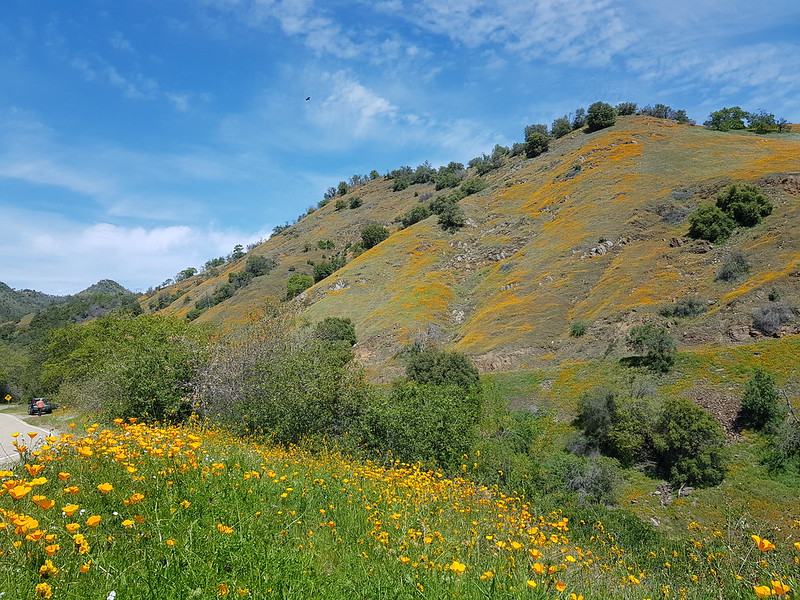
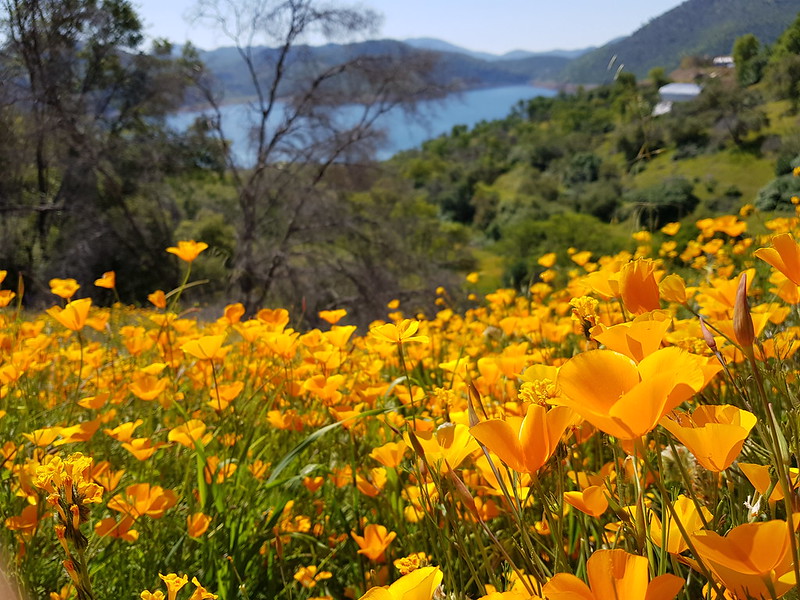
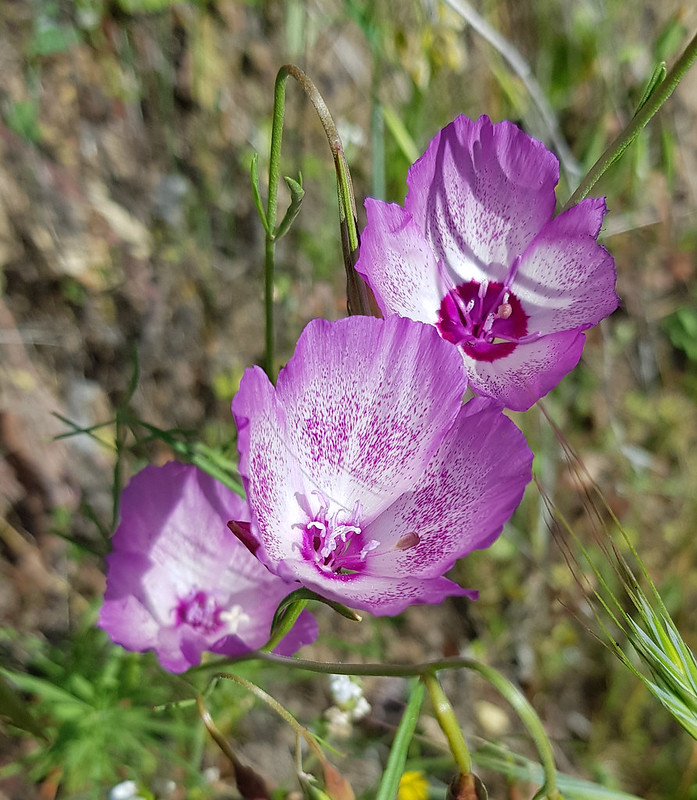
Springtime can be very beautiful in the foothills of California. The diversity of wildflowers is amazing. As the season progresses, the composition and colors of the landscape change. Early in the season, oranges and yellows from California poppies and fiddleneck dominate.

Wildflower scenes near Pine Flat Lake 10
Early Season Yellow Flowers

Eschscholzia californica (Cham.) Papaveraceae-California Poppy 10
California Poppy (Eschscholzia californica)

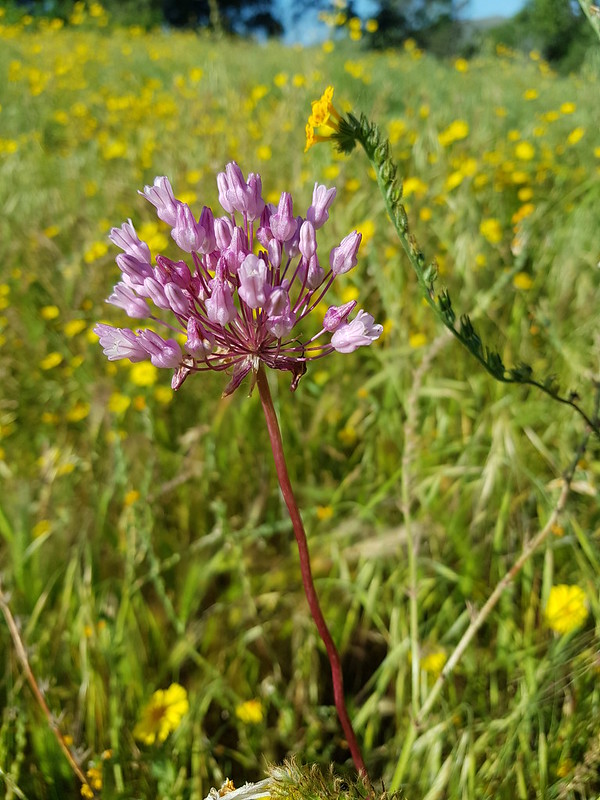
Dichelostemma volubile (Kellogg) A. Heller Liliaceae Amaryllidaceae- Twining snake lily 7
Fiddleneck (Amsinckia menziesii) introducing
Twining Snake Lily (Dichelostemma volubile)


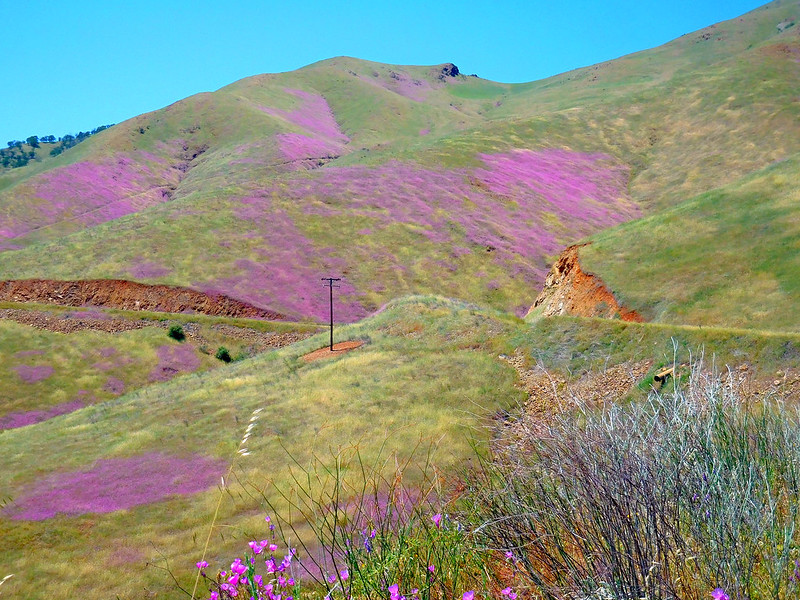
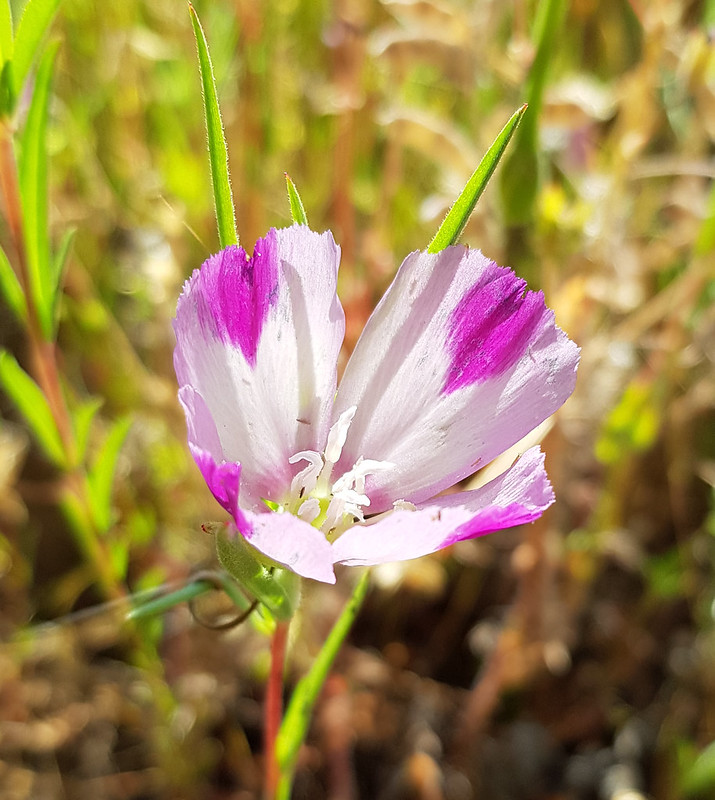
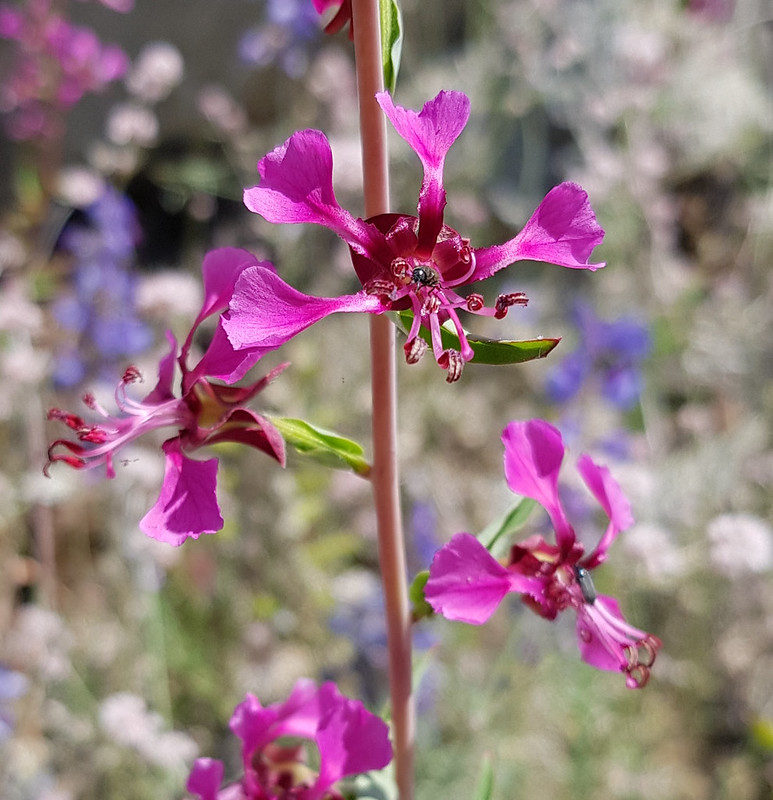
Later, varied shades of pink from different species of Clarkia prevail.

Clarkia sp. Onagraceae - flower landscapes 5
Pink Patches from Clarkia Flowers

Clarkia cylindrica  (Jeps.) F.H. Lewis & M.E. Lewis  Onagraceae-speckled clarkia 25
Speckled Clarkia (Clarkia cylindrica)
Clarkia purpurea  (Curtis) A.Nelson & J.F.Macbr. Onagraceae-winecup clarkia 14
Winecup Clarkia (Clarkia purpurea)
Clarkia unguiculata Lindl. Onagraceae-elegant clarkia
Elegant Clarkia (Clarkia unguiculata)

I find it hard to comprehend how all the colors of the rainbow can be combined with different shapes and textures to create a display that excites my eyes, whether viewed from far away or close by. But as majestic and overpowering to the senses as this is, it is nothing compared with the Glory of God. I think even the Psalmist struggled to describe it.

3Declare his glory among the nations,
     his marvelous deeds among all peoples.
4For great is the LORD and most worthy of praise;
     he is to be feared above all gods.
5For all the gods of the nations are idols,
     but the LORD made the heavens.
6Splendor and majesty are before him;
     strength and glory are in his sanctuary.

11Let the heavens rejoice, let the earth be glad;
     let the sea resound, and all that is in it;
12let the fields be jubilant, and everything in them.
     Then all the trees of the forest will sing for joy;
13they will sing before the LORD, for he comes,
     he comes to judge the earth.
  He will judge the world in righteousness
    and the peoples in his truth.

Psalm 96:3-6, 11-13

How do you describe God, the Creator of all that is? Every day, scientists all over the world publish papers trying to describe the things God has made and how they all work. Millions of pages are written, yet the job is nowhere near complete. And if it is that hard just to discover and catalogue these things, how can we begin to picture the One who imagined and spoke it all into existence?

How grateful I am, then, that this awesome God chose to reveal Himself to us by sending His prophets and His Son, Jesus, that we might know something about Him. And while we cannot know everything about God—indeed our minds are incapable of such knowledge—yet we can know everything that is important to know.

Thank you, God, for revealing yourself to us by sending Your prophets and the written word they recorded as well as sending Your Son, Jesus, that we might be able to know You.

Saturday, April 18, 2020

What is Worship?

Back about 20 to 30 years ago there began something that came to called worship wars in many churches. People would argue about what kind of music to play in the churches. This was serious business and many churches split as a result.

The problem I had with the worship wars was that, in my mind they weren't even arguing about the right thing. Why were they confusing music with worship? Even famed song writer Matt Redman was convicted by this and, somewhat ironically, wrote a song about it called Heart of Worship.

There are two common root words that are translated as worship in the Bible. One of those is to serve (Hebrew ʿāb̠ad̠ (‏עָבַד‎) and Greek latreúō (λατρεύω)).
The other more common term has to do with prostrating oneself (Hebrew sha̠hāh (‏שָׁחָה‎) and Greek proskunéō (προσκυνέω)). 

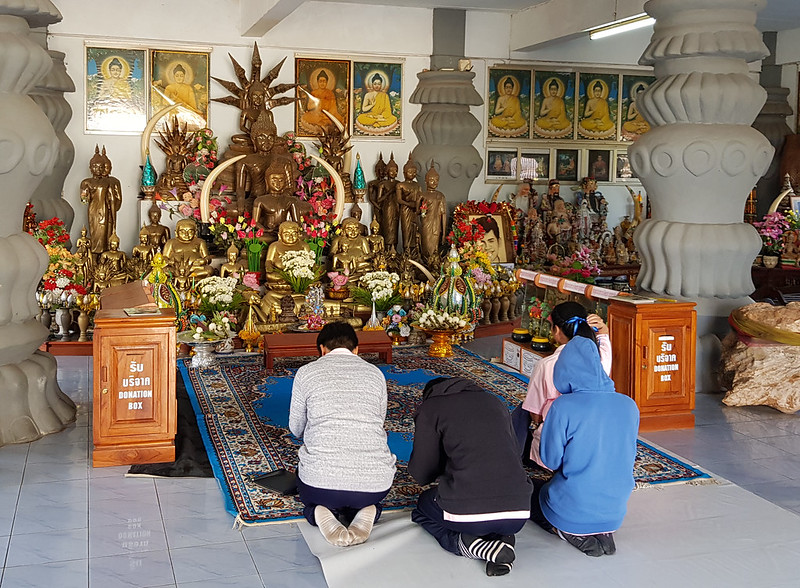
The concept of prostrating oneself does not seem very common in western culture. Perhaps it is because of our egalitarian bent that is uncomfortable with the idea of bowing to authority.  But it is not an uncommon thing in Thailand. For example, one would not go into the presence of the King with one's head held high, especially not higher than the head of the King.

The same is true in the religious culture. It is a common sight to see Buddhist worshipers bowing as they offer incense or prayers to Buddha. Even the term that Christians usually use to translate worship, namatsakan (นมัสการ) means to prostrate oneself as a way of showing humility and respect. Yet even in Thai Christian circles, the concept of namatsakan or worship has become confused with singing.

It's not that we can't worship in song, but worship is more than that. Jesus said, "God is spirit, and those who worship Him must worship in spirit and truth." (John 4:24) So if we don't come to God with a humble spirit, you might say that our worship (singing) is not truly worship.

The Heart of Worship
Matt Redman

(Verse 1)
When the music fades
All is stripped away
And I simply come
Longing just to bring
Something that's of worth
That will bless Your heart

   I'll bring You more than a song
   For a song in itself
   Is not what You have required
   You search much deeper within
   Through the way things appear
   You're looking into my heart

      I'm coming back to the heart of worship
      And it's all about You, it's all about You, Jesus
      I'm sorry, Lord, for the thing I've made it
      When it's all about You, it's all about You, Jesus

(Verse 2)
King of endless worth
No one could express
How much you deserve
Though I'm weak and poor
All I have is Yours
Every single breath!


Sala Kaeo Kou ศาลาแก้วกู่ 21
Worshipers at Wat Sothon Wararam Worawihan


Friday, April 17, 2020

Storms of Life

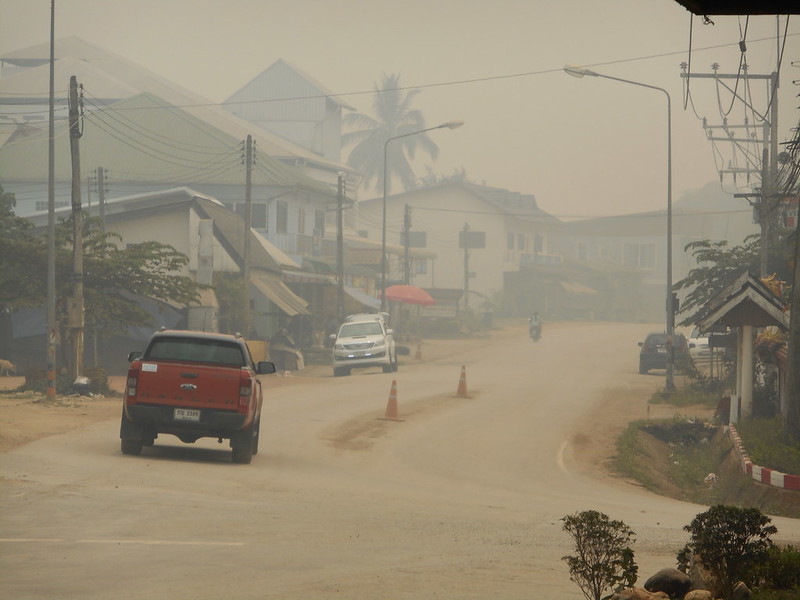
Recently I got word from friends that the air quality was so bad where they lived in Thailand that, even with an air purifier going, they were only able to get the pollution levels down to the lower side of hazardous—inside the house.

Smoky day in downtown Wiang Kaen 1
Smoky air in Northern Thailand


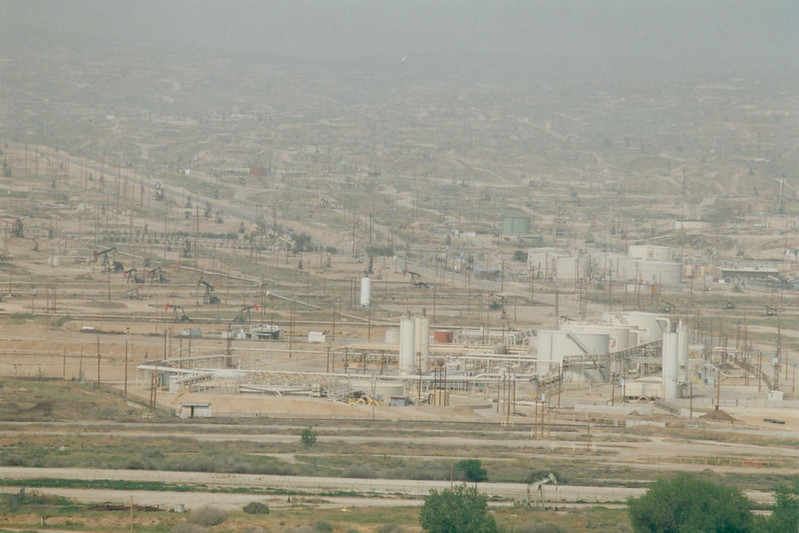
We are currently living in California. Some areas are notorious for air pollution. I remember when we moved here, we heard about this mountain range to the east they called the Sierras. I thought they were telling a joke.

Kern River Oil Field March 1997
Smog above the oilfields in Kern County


In both these cases, intentional human activities are the cause of the pollution. In Thailand it is people burning forests so that they can harvest a few mushrooms or burning their fields to control weeds. In California, the pollution tends to be from industrial sources or automobiles.

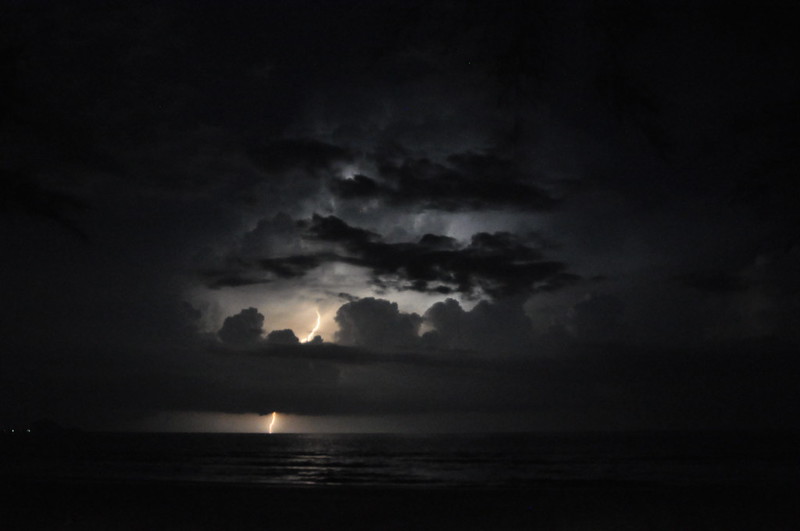
Recently, we had a big rainstorm come through where we are living in California. Storms can be scary things. There can be flash floods, which may result in death or injury. Winds can be violent and destructive. Sometimes, even lightning itself can be hazardous.

Saam Roi Yot 136
Storm over the Gulf of Thailand


One time I was hiking in the Sierras and a sudden storm cam up with hail and rain. Lightning was coming down all around us—which is especially scary when you are above tree line and you are one of the tallest things around.

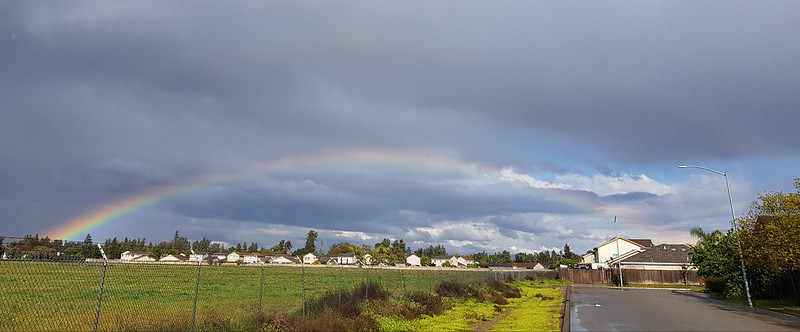
Sometimes, after a storm though, we get to see a rainbow. In the rainbow we remember the promise of God never again to destroy the earth with a flood.


Rainbow Fresno 2020-4-6
Rainbow in Fresno

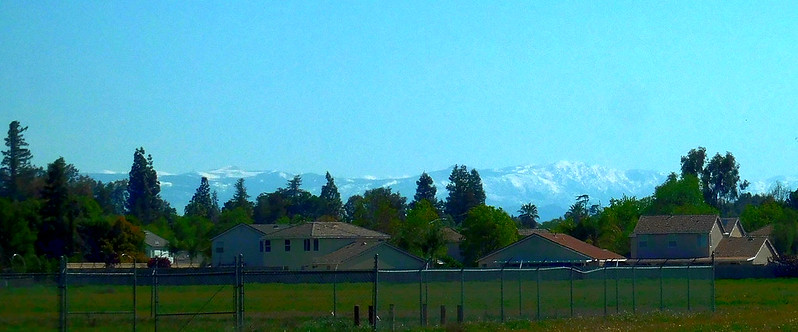
The nice things about storms is that they have a cleansing effect on the atmosphere. I remember after one of our first rainstorms in the Central Valley, California, I looked out the window and thought, "when did they install those mountains?"

View of the Sierras from Fresno 1
Sierra Nevada Mountains views from Fresno

In the Bible we read about several storms. One of the earliest involves a man named Jonah who hops on a boat to take him far away from where is supposed to go. A big storm comes up, and the sailors all fear for their lives. Jonah knows it's his fault the storm is happening. So he tells the crew to throw him overboard (Jonah 1:12), which they were reluctant to do, but eventually they did anyway. (Ever wonder why Jonah didn't just jump overboard? That's another lesson.) God arranges for Jonah a special, private, two-night cruise in a marine-world yacht.

In another story we read about Jesus and his disciples crossing the sea of Galilee and a storm comes up. The poor fisherman can barely keep up with bailing the water out of the boat, but Jesus is sleeping peacefully. The disciples wake Jesus up, thinking he doesn't care about their situation, but he does care, and he tells the storm to shut up--and it does. (Matthew 8:23-27; Mark 4:35-41; Luke 8:22-25)

(I always wondered why Jesus did it that way. He could have just told the disciples to go to sleep, that God would care for them through the storm as well. Could you imagine the story the next day. "We got caught in this huge storm and we thought we were going to drown. Jesus was asleep so we woke Him up and asked him to help us. He just told us not to be afraid and have faith and trust God. Then He went back to sleep. All of a sudden a big wave comes up, it's so huge that when it crashes over the boat, the boat is full of water up to the gunwales. Jesus is still sleeping, but now He was under water. The boat should have capsized, but it didn't. But God miraculously carried us through the storm and we all made it safely to shore.")

There is a third storm that we read about in Acts 27. Paul is one of several prisoners traveling on a ship that gets caught up in a storm. Eventually, the waves toss the ship into some rocks and is is broken to pieces. Miraculously, everyone survives and no one is even hurt. And this was in the days before they had airbags to protect them.

Three different storms with three different kinds of results.

Last week I was reflecting on suffering—the storms of life. It was passion week, the week when Jesus himself had to undergo great suffering.

On a previous occasion the Devil had given Jesus opportunity to come out as Messiah-King (Matthew 4:9). And on another occasion the people were ready to make Jesus King (John 6:15). And yet again on Palm Sunday there was yet another opportunity for Jesus to seize the throne and proclaim Himself as Messiah-King.

And He could have done it. On Palm Sunday; Jesus could have called upon legions of angels and he could have seized the throne and declared Himself Messiah-King.

But then, where would our hope of forgiveness and salvation be?

Jesus knew that the way to glory was the way of the cross. There were no shortcuts. Jesus chose the way of the suffering. And just like a rainstorm can wash away pollution, when Jesus passed through the storm of suffering, He was able to open the way for the world to be cleansed from the pollution of sin.

Our lives can be filled with all kinds of storms. Breakups of relationships. Death of a loved one. Illness. Childlessness. Theft. Hunger. Disease. Loss of home. Loss of a job. We don't like storms. We'd rather have our lives free of them. Sometimes Jesus rescues us from the storm, as in the case with the disciples, and sometimes we have to pass through the storm.

But even if we have to pass through the storm, Jesus will be in the boat with us. We read in Isaiah 43:2:

 When you pass through the waters, I will be with you;
and through the rivers, they shall not overwhelm you;
 when you walk through fire you shall not be burned,
and the flame shall not consume you.  

Even the famous Psalm 23 alludes to this in verse 4:

Even though I walk
  through the valley of the shadow of death,
I will fear no evil,
  for you are with me;
your rod and your staff,
  they comfort me.

Storms can have a cleansing effect on us. They can refine our character. We read in Romans 5:3-5: Not only so, but we also rejoice in our sufferings, because we know that suffering produces perseverance; perseverance, character; and character, hope.

And so sometimes for us there are no shortcuts. Our character is often refined by our suffering. As the road to glory for Jesus was through the cross, sometimes God is glorified by our suffering and perhaps even our death.

Currently, the whole world is caught up in a storm called COVID-19. We wonder what will happen to us in the midst of this storm. Is there a shortcut that doesn't involve suffering? Do we get rescued from it or do we have to pass through it? Will I end up being drawn closer to God or will I push God away? When it is all said and done, will I be better or bitter?

Already, our lives are messed up. We cannot do the things we came back to North America to do. And now we are unable to get back to our home in Thailand. We were supposed to arrive there today, but now we don't know when we will go back. This is hard on us. But our suffering is not nearly what  others have to deal with.

My prayer is that, however I have to pass through this storm, God will be glorified through my life.

Sunday, February 23, 2020

Translating words AND culture


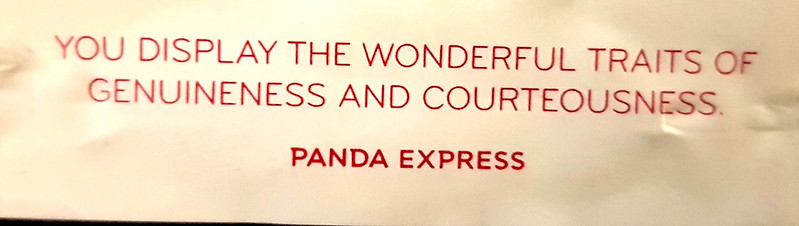
Not long ago, we stopped at Panda Express for lunch. It was our first time in Panda Express in a few years. I had forgotten about the fortune cookies that come with the meal. After consuming too much Bejing Beef, I cracked open my cookie to find the following:

 Panda Express Wisdom

"You display the wonderful traits of genuineness and courteousness."

This isn't much of a fortune, but a statement of character.  How did they know me so well?

All humility aside, I do at least try to be genuine and courteousness.

The problem is that, in some cultures, genuineness is not a wonderful trait to have. We've occasionally gotten into a lot of trouble in such cultures because we are too genuine. What is more valued is agreeableness and calmness. Always say, "yes", even if you don't really mean it. Smile, even if you're angry. Don't say what you think, say what you think the other person wants to hear.

This is really hard for us. Genuineness comes much easier.

I'm surprised that this statement came in a Chinese restaurant as I think they would have similar communication values as Thailand.

The apostle Paul counsels us to "speak the truth in love." (Ephesians 4:15) I would amend it:

Speak the truth in love in a culturally appropriate manner.

And maybe one day, we will be able to communicate without offending someone.

Saturday, February 8, 2020

A Prophetic Name and a Vision

It seems like a long time ago.

We had just moved into our rented townhouse in Chachoengsao province and we were having a time of worship and offering our house to God. A large group of people from our church and some fellow missionaries were gathered.

Someone asked if we had Thai names yet, to which we replied that we had not. The task of assigning the names fell to Pee Chin, who offered up the following:

Edd: Mahnah (มานะ) = perseverance; persistence; grit; tenacity
Ingrid: Neet (นิจ) = continued; stable; lasting; regular; constant; durable

When I heard the meaning of the names, I thought to myself, "he doesn't know me". I've always been a better starter than a finisher. Quitting has come easy for me—not so much that I can't finish, but because I get bored and distracted and start something else. If I have any persistence it's because my wife helps me to stay focused.

What I've learned over the past few years is that my name wasn't so much descriptive as prophetic.  During our time of debriefing at the end our term last month, we were congratulated: "You made it! You did it!"

Our previous term had not finished well. And this past term has been very challenging, as was expected. There were several occasions we were ready to pack our bags. But we made it to the end, exhausted, but feeling good about the fact that we hadn't given up. There had been challenges in our ministry and it was important that we stayed and worked through them and not give up.

Thai people, in general, are a lot like me. They are conflict-avoiders. Harmony is a strong value in their society. If there is conflict, one tends to just smile be agreeable (even if the really disagree) or to flee. We had wanted to do the latter on numerous occasions, but we didn't.

Towards to end of our term, there were some people in our church facing conflict. Some were wanting to run away from their problems. I could totally relate.

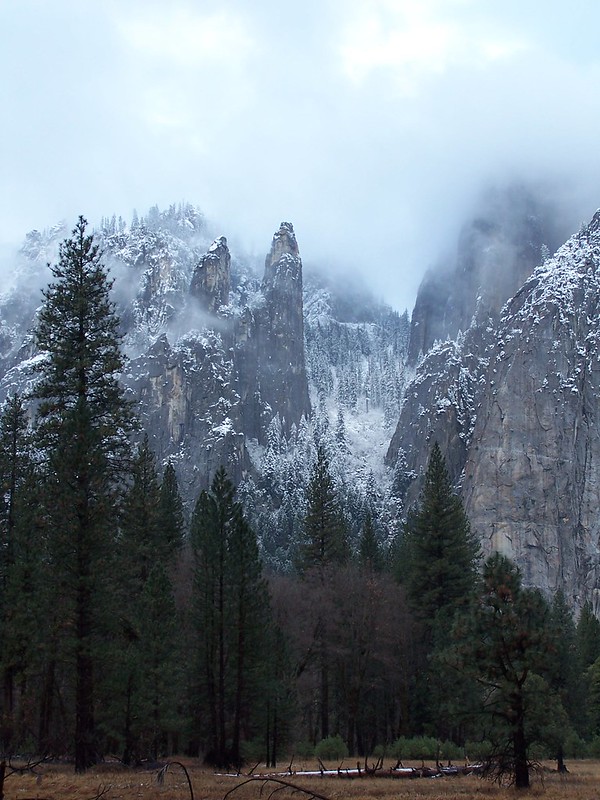
On our last Sunday in Thailand, we had a prayer time for any who felt they needed prayer for anything. As we were praying, a picture comes to mind. I'm not sure if it was for the church—or if it was a prophetic vision for me.


Snow falls on the west side of Yosemite Valley


In the picture in my mind, there is a rugged mountain. At the top of the mountain there is a huge treasure. But getting there is not easy. If you want to get to the treasure, you will have to work hard. There will be times when you will fall. You will suffer bruises and scrapes and maybe some broken bones.

The valley floor is flat. There are smoothing walking paths meandering all over the landscape. And scattered throughout Satan has placed some small piles of coins—not high value coins, more like pocket change. Not enough to thrive, but enough to survive. And from our precarious perches on the mountain, we can look down at any time and see them.

The meaning of the vision was that if one wants to see ministry bear great fruit, one will have to endure trials and suffering. But the enemy doesn't want our ministry to bear fruit. So he has put out these little rewards in plain view to draw us away. His message is, "You don't need to see a large, thriving church of people whose lives have been transformed by the power of the gospel. Be content with a small comfortable family."

Paul wrote: "Therefore we do not give up. Even though our outer person is being destroyed, our inner person is being renewed day by day." 2 Corinthians 4:16 (HCSB)

And again, "So let's not get tired of doing what is good. At just the right time we will reap a harvest of blessing if we don't give up." Galatians 6:9 (NLT)

We are planning to return to Thailand in a couple months, but we have no illusion that it will be easy. The last season was difficult, the next may be moreso. But we don't want to quit and give Satan the victory. And perhaps I will grow into my name: perseverance.

Tuesday, January 28, 2020

Outsider View

Two of my most appreciated photos from this month have to do with where people live. And what is kind of strange is that the photos are of ordinary things. These are things that the people who live in these homes see often yet, like so many things that are common place, they go unnoticed or unappreciated. Until...

Until an outsider comes along and takes a picture.

Granted, there is something to be said for photography techniques, composition and post-processing. But a big part of the attraction of these photos is that I, as an outsider, take a picture of what is unusual for me, though commonplace for those who live in that environment.

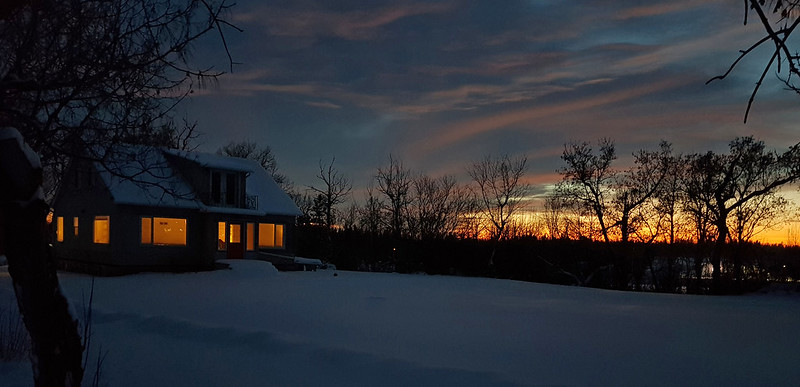
In this first photo, I was walking to the home of a family member. Two things struck me as I approached the home. One is that the glow from the windows matched the color of the sunset sky. But the main thing was the "warm" color of the windows looked particularly inviting as I was walking along the cold, snowy road. It was not just the warm temperatures I was looking forward to, but also I would soon be surrounded by the warmth of relationships with family.


Little House on the Prairie


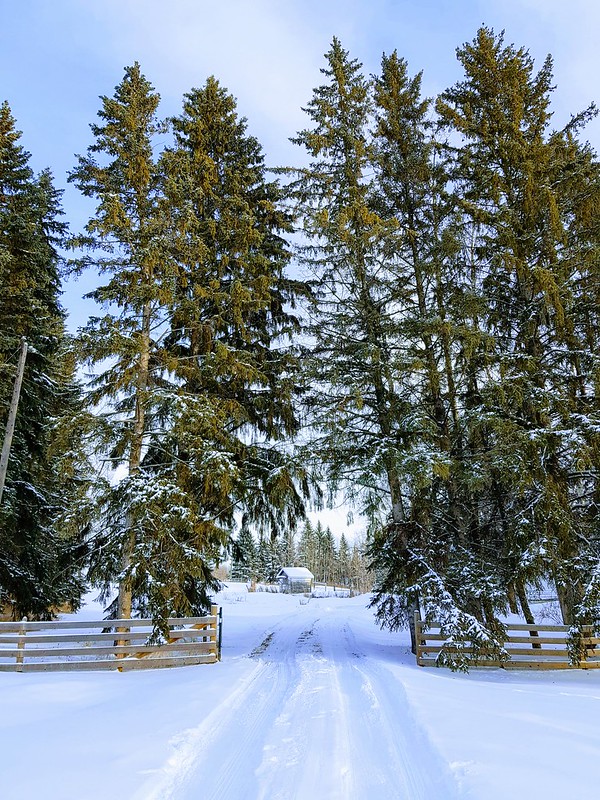
The next picture was also taken as I was walking toward the home of a cousin after parking the car at the beginning of the driveway. Because of the colder than normal temperatures, they had not gone out to clear the driveway of snow, which made it harder for driving into the yard. What was hard for the car, though, was nice for the photo, as there was lots of clean, white, snow to make for an idyllic scene. It was actually starting to get dark (mid-afternoon in northern latitudes) and I had to play with the photo a bit to bring out the colors.

Trip to Stan and Millie house 5


Where am I going with this?

I, as an outsider, can bring a different perspective.

Sometimes (often?) we find ourselves so surrounded by the problems we face and the situations we're dealing with, that we lose hope. We can't see a way out or a reason to continue going on. There may be light at the end of the tunnel, but we're still trying just to find the tunnel.

Then someone comes along, who is not having to deal with all the very real problems we have and, without diminishing the difficulties,  reminds us of all those other good things that are hard for us to see or, perhaps we just quit noticing.

There are many days when life and ministry can be quite challenging. I said to my wife recently, "I'm tired and I want to go home--except I don't know where that is, actually."

What helps me during these times is to hop on my bicycle and go for a ride among the rice paddies and rubber plantations with all the ponds and bogs that constantly interrupt the otherwise agrarian landscape. And as I'm pedaling past the paddies I find myself saying, "I can't believe I get to live here!" Because it really is quite beautiful, but I often don't have time or take time to appreciate that.

Sometimes, when even the bicycle ride is not enough to clear my vision, we'll get a visitor who'll point out these amazing things that we haven't noticed or that seemed inconsequential in our view. It really is helpful to have people in our lives that can give us an outside perspective.

When the photos above were taken, we were in Northern Alberta, Canada, to help some family members as they were dealing with some challenges in their lives. It was not a time of year I would typically pick to visit that part of the world. But in spite of the cold atmosphere and the chilling effect of life's events, there was still the warmth of family to be had. And it really is a pretty place to be. I'm just the guy who happened to have a camera at the right time to take a photo to remind us of those things. (But I am happy to be headed south to warmer climes.)

Proverbs 17:17 reads: A friend loves at all times (not just the good times), and a brother is born for adversity. (NIV, parentheses mine.)

I'm thankful for these friends and "brothers" who help us see from a different perspective.