Sunset Over the Mekong River

Wednesday, February 28, 2018

No Looking Back

Jesus said to him, "No one who puts his hand to the plow and looks back is fit for the Kingdom of God." Luke 9:62

I admire a person who can drive a tractor in a straight line, especially in hilly areas. The ground is seldom smooth and it takes a bit of skill to keep the tractor going straight.  I remember helping my father-in-law once with the harvest, driving the swather, which we had just repaired.  He chided me because my rows weren't straight (it was my first time doing something like this).  Crooked lines meant the possibility of having to make an extra run or two across the field, which cost time and  money.

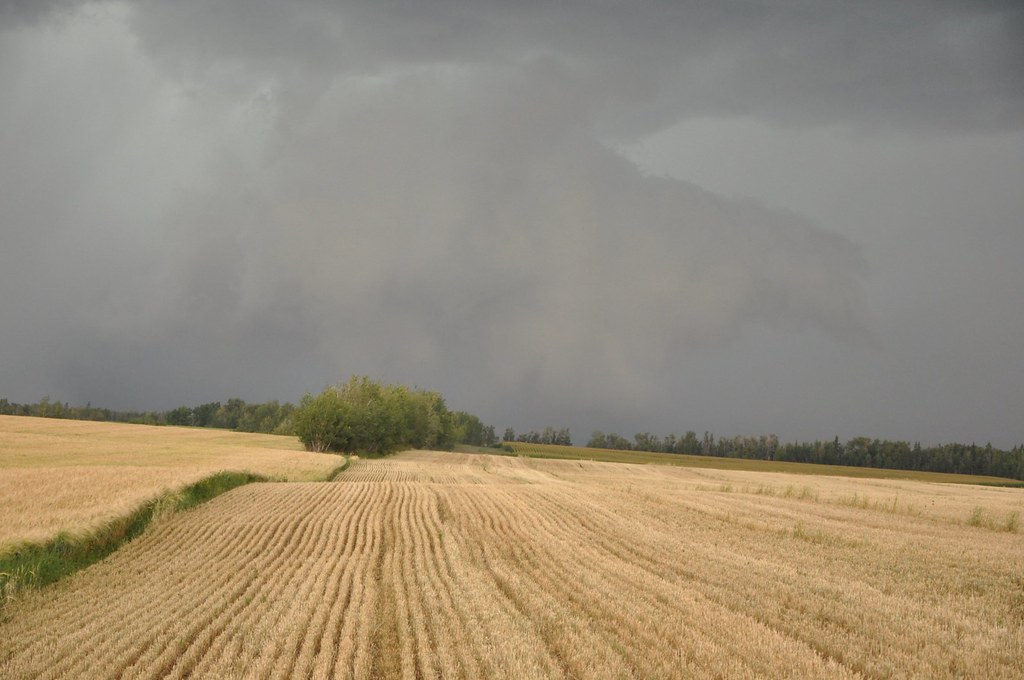
Engler Farm Freedom Alberta-Skies 6
Wheat fields on me father-in-laws farm

My father-in-law grew different kinds of crops, but in some places there was no fence or anything between them, there was only a marked pole on either end of the field.  Aim straight for the pole, and you get a straight line.  I could barely see the pole half a mile a way, let alone imagine tracking a straight line across the field to it.  And you couldn't let your eyes get distracted-if you turn around and start looking back, the tractor is liable to get off track. It's like what we were taught in driving school: "Where you look you will steer."  Or, as we read in Proverbs, "Let your eyes look directly forward, and your gaze be straight before you." (Proverbs 4:25 ESV)

So it was in Jesus' day.  Someone had told Jesus that he wanted to follow Him, but he told Jesus that he needed to say goodbye to his family first.  Jesus told him that a person who looks back is not fit for the Kingdom of God.

On the surface, the statement seems a bit harsh, but I can get the point.  If we're trying to go forward with Jesus, yet we keep looking back at what we're missing in our old life, we'll get off track, perhaps turned around completely.

The field is ripe and ready to harvest, Jesus said (John 4:35).  We need to direct our combine straight across the field.

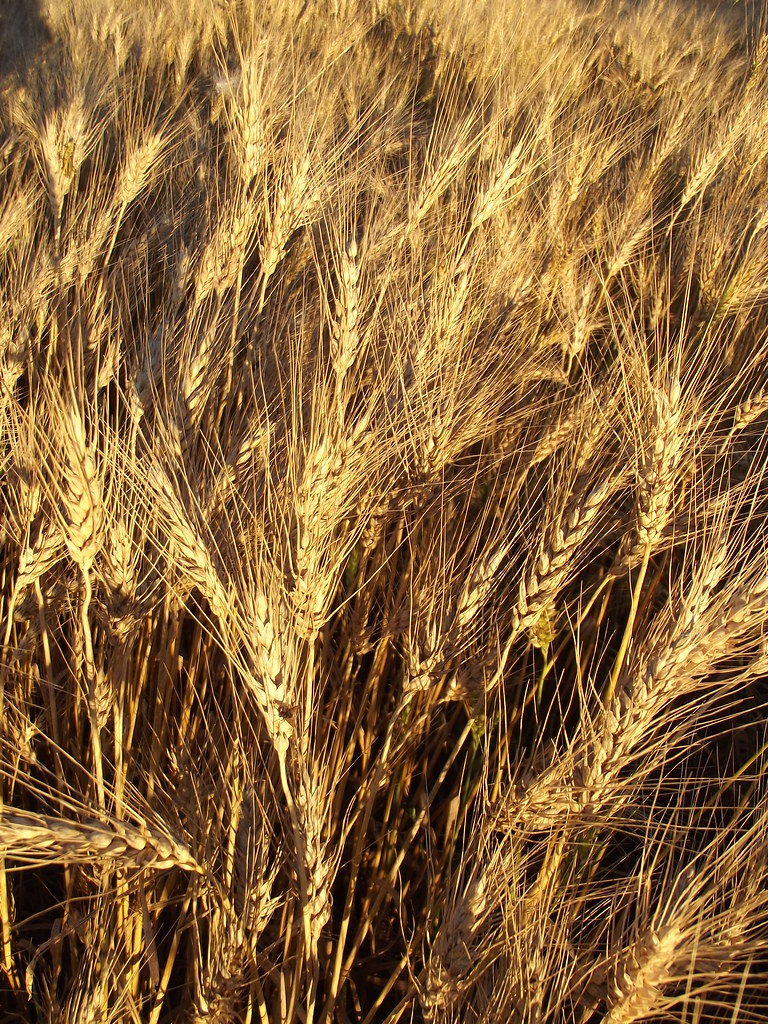
Triticum sp L. Poaceae Wheat 3
Abundant Harvest

I remember looking back once.  It was my mid-life crisis.  A lot of guys go through that kind of thing, usually when the're in their forties and they start comparing the life they are living with the life they hoped they'd being living at that point.

I had a mid-life crisis as well.  It was a difficult period of my life and I thought about ditching what I was doing and starting over.  But my mid-life crisis only lasted about 30 seconds. Because when I looked back—back to my life before I was a believer—I remembered how miserable I was then.  Why would I want to go back to that?  The present may not have been rosy, but it wasn't that bad.

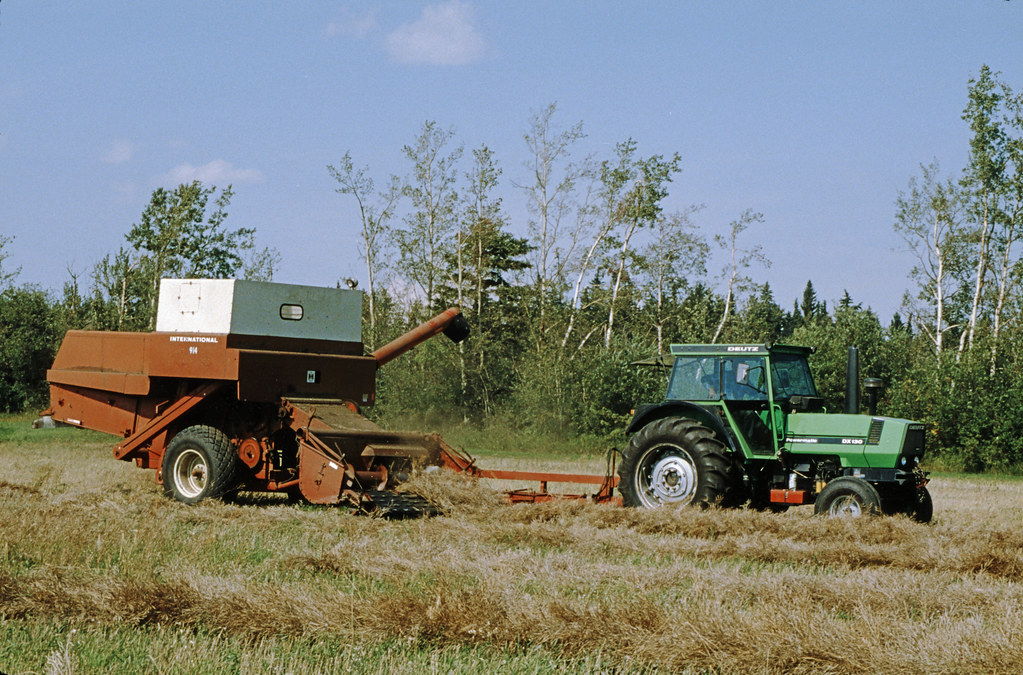
Combining in Freedom Sept 1987
Canola Harvest 1987


Now we're at the age when we might suffer from nostalgia.  They sometimes refer to this as looking back at the "good old days",  because we have a tendency to only remember the good times.  And there were good times to be sure.  It's fun to look at old photos and reminisce.  But we don't live there.  We rejoice that God allowed us to have those experiences in the past that helped us get to where we are in the present.  We were moving forward then and we're moving forward now.

Paul wrote, "12 Not that I have already obtained all this, or have already been made perfect, but I press on to take hold of that for which Christ Jesus took hold of me. 13 Brothers, I do not consider myself yet to have taken hold of it. But one thing I do: Forgetting what is behind and straining toward what is ahead, 14 I press on toward the goal to win the prize for which God has called me heavenward in Christ Jesus." (Philippians 3:12-14 NIV)

Saturday, January 6, 2018

Recycled

The length of our days is seventy years-- or eighty, if we have the strength;
yet their span is but trouble and sorrow, for they quickly pass, and we fly away.

Psalm 90:10 (NIV) 

This past week marked a significant event in my life, I celebrated my 5th cycle birthday.

In Thailand, there is a recognition of the Chinese zodiac, though the zodiac year begins on Sonkran (April 13) and not according to the lunar calendar as they do in China.  Because of this, cycles of 12 are more significant than the cycles of ten (decade) that we follow in the west.

I was born in the Year of the Rooster and this year is the Year of the Rooster (until April 12).  Maybe this explains why I naturally get up so early in the morning.

This year was even more special because 5 cycles coincides with 6 decades (5x12)=(6x10).

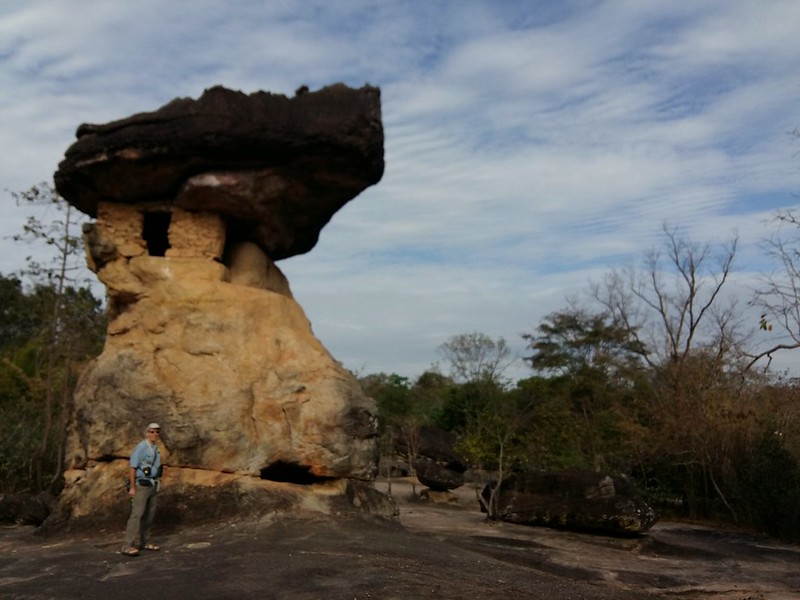
To celebrate this occasion we went to Phu Phrabat Historical Park, located in Udon Thani province, about a 2 hour drive from our home.  When you're walking around some features that were made by humans 2000 to 3000 years ago, you don't feel so old.  In this case, humans made modifications to some unusual geological features that were there already.

2018-01-05_10-58-16
Tower of Nang Usa, one of many ancient features in Phu Phrabat Hirtorical Park

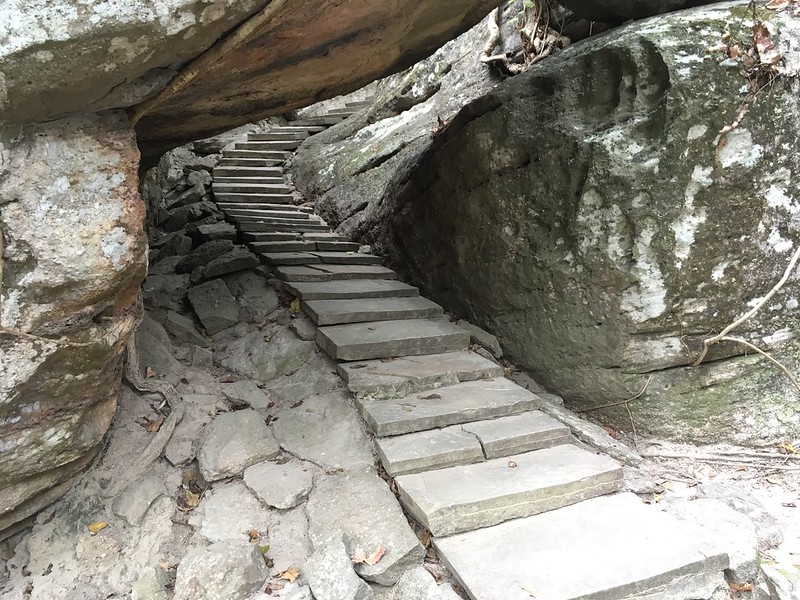
Paths and Trails 8
Section of trail in Phu Phrabat Park


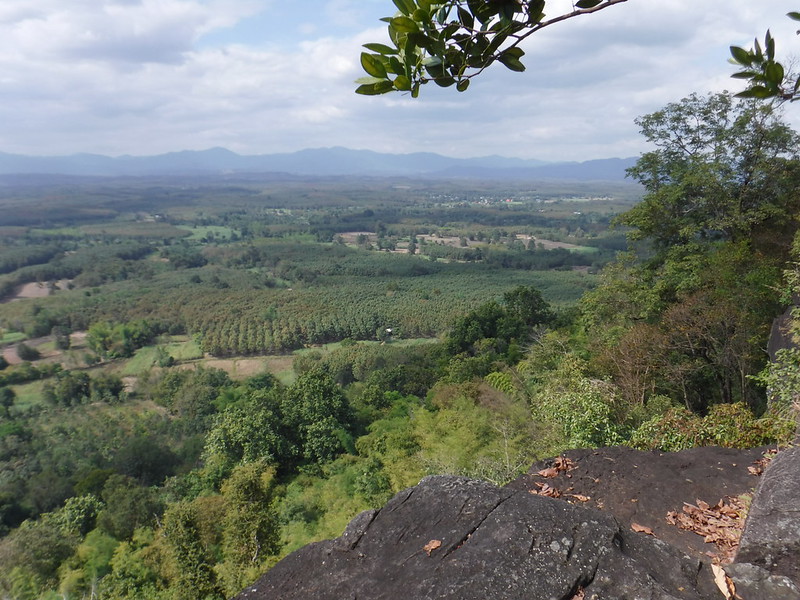
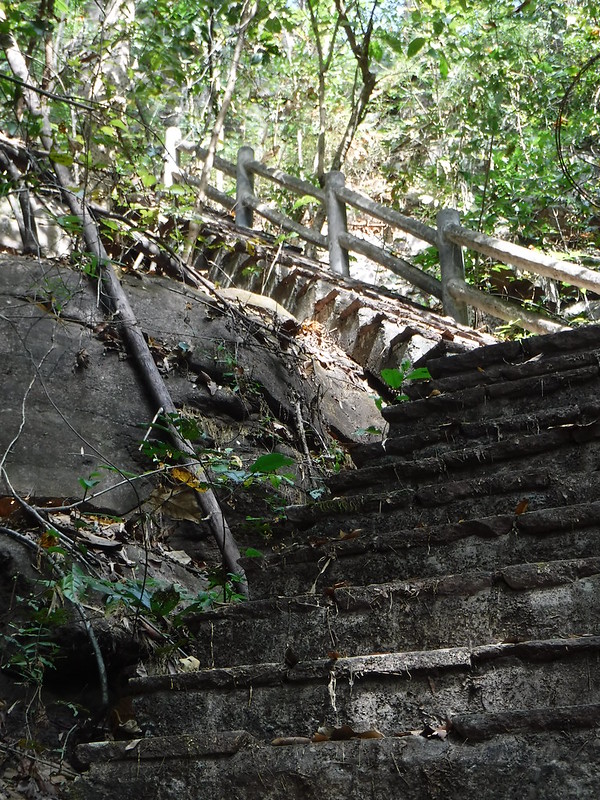
Following our morning at this park, we drove north about an hour to Nayung-Namsom National Park.  We had hoped to check out the waterfalls there, but they had already succumbed to dry season and they were now just cliffs in a canyon.  Still, the 2.5 km trail to the falls looped around to Pha Daeng Viewpoint.  We climbed a lot of stairs!

And because there was no water, the park was only kinda open, so we did not have to pay an entrance fee.  The parking area was at the Park Headquarters and one of the staff was very helpful in explaining things.

Phadaeng Viewpoint 6
Pha Daeng (Red Cliffs) Viewpoint in Nayung Namsom National Park


Trail scenes 4
After climbing a while, we got to the steep part.

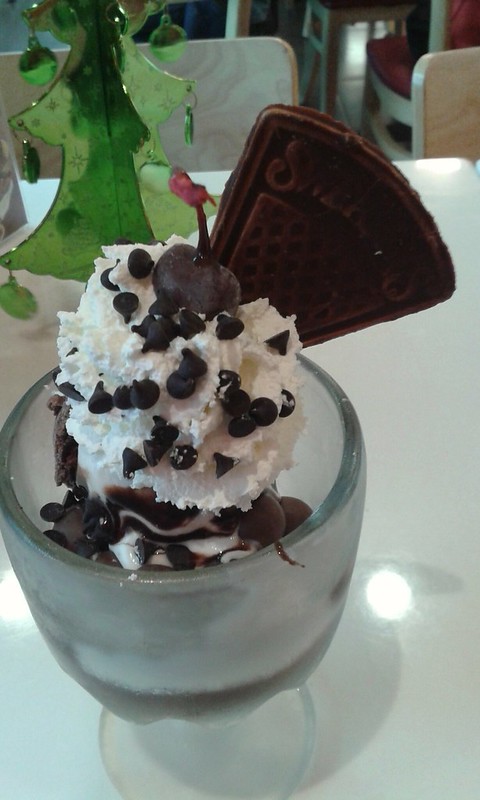
After the stair climbing, it was time to celebrate in style-stopping at Swensen's in Nong Khai on the way home.  Swensen's may no longer be a thing in North America, but there are quite a few here in Thailand.

I ordered their chocolate lover's sundae with the malted milk balls, because they didn't have what I really wanted.

Chocolate Sundae with Malted Milk Balls

What I really wanted was a chocolate and coffee lovers' sundae, which would be a modification of this, from top to bottom:

chocolate wafer and cherry
chocolate chips
whipped cream
chocolate covered coffee beans
kahlua
chocolate ice cream
whipped cream
malted milk balls
chocolate syrup
coffee ice cream
hot fudge

Now that's what I want for my birthday!
Are you listening Swensen's?


Tuesday, January 2, 2018

Bookends 2017

 Each year I like to look back at progress and change through the year by reviewing photos from the first and last days of the year.

January 1st 2017

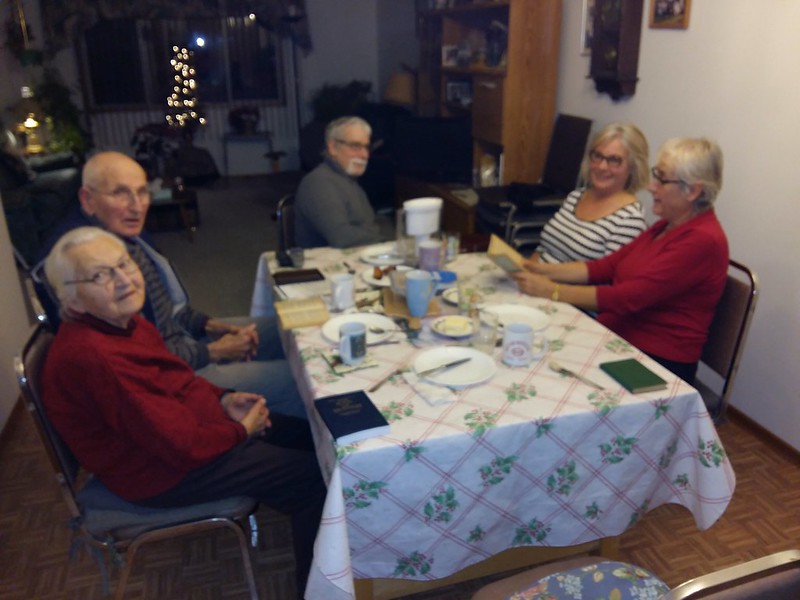
Our first day of 2017, we were in Barrhead, Alberta, Canada.  It was the last day of our holiday visiting family there. This first picture was taken at the home of Ingrid's sister, Karin, who is pictured here along with her husband, Christian and their parents.


Singing German songs

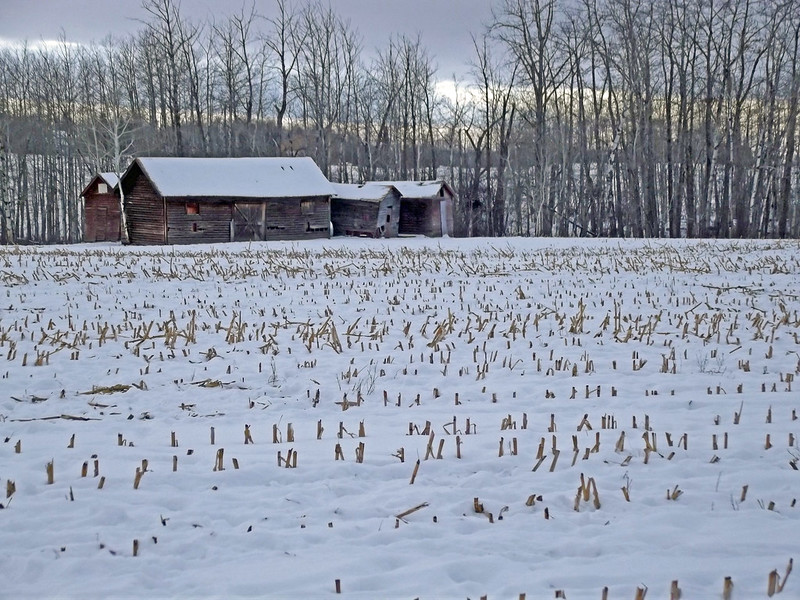
Winter is a bit colder in Alberta than Thailand or central California.  There wasn't a lot of snow, but the temperatures were usually below -15C.  I got used to taking walks on the snow roads and foot paths.  Barrhead is a small town, and one can walk around the whole place in a few hours.  Photo below is a rural scene on the west side of town.  The corn stubble from silage is poking through the thin layer of snow.  Nearby, cattle were feeding off of some hay that had been brought in.

Barrhead Pasture 2 and old barn

December 31, 2017

A year later the agricultural landscape is a bit different.  Below is a series of slides from a bike ride I took on the last afternoon of the year.  It was not a long ride because I was in recovery on a couple of fronts. First, my elbow was still healing from a hairline fracture I sustained about 10 weeks earlier.  This was only my second ride in over a month.

Second, I had a bad sinus cold for the past week, and in the middle of that, also a bout of food poisoning.  So I wasn't really energetic.

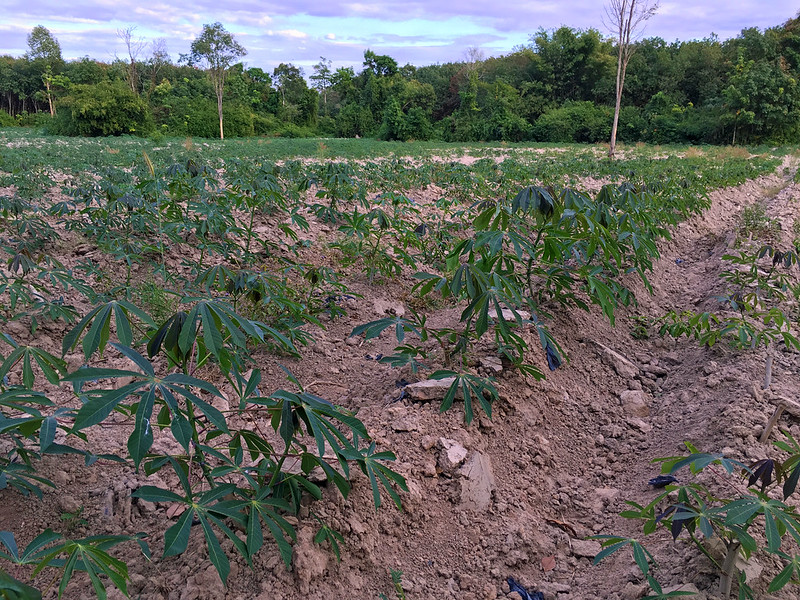
My first stop was at a tapioca (manioc) field. Manioc and rubber are often planted in non-irrigated areas here.  The soil is quite poor, especially in these gently undulating hill landscapes.

Manihot esculenta Crantz Euphorbiaceae-manioc, มันสำปะหลัง

Manioc and rubber are both in the plant family Euphorbiaceae.  This is a plant family whose members have a milky latex.  In the case of the rubber trees (below), that latex is used to produce rubber.

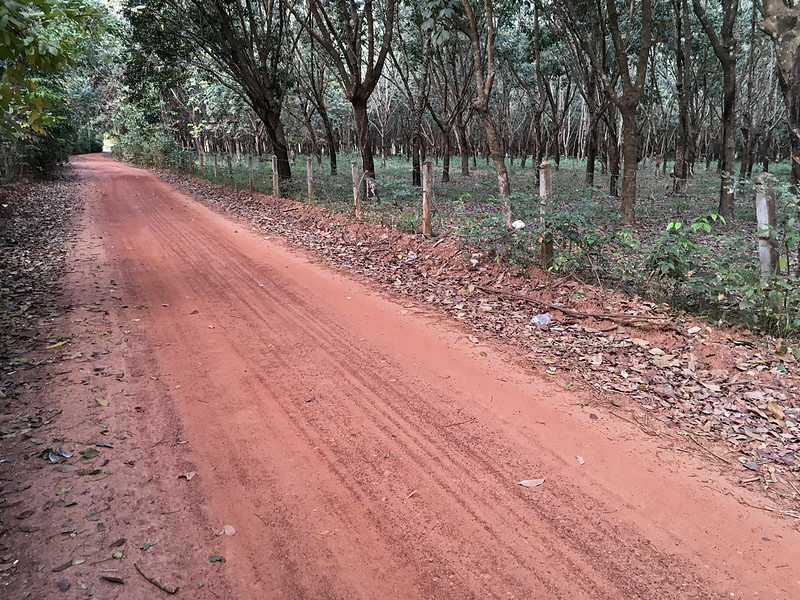
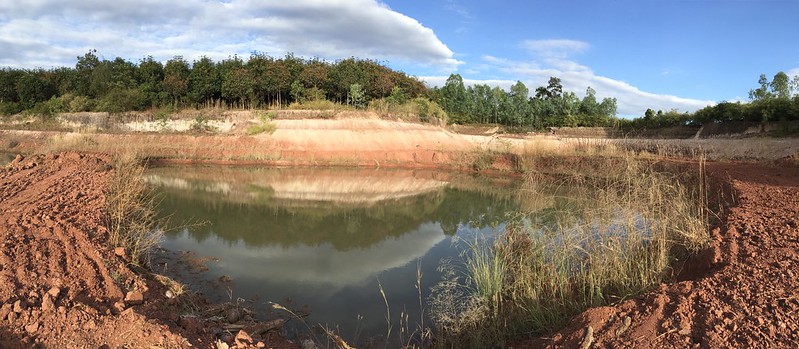
The roads around here are often red colored.  That is not typically the color of the native soil, which in these hilly areas is often white.  But, instead, the red material is mined from the deeper layers of the soil, which, when extracted, has the consistency of silt mixed with fine gravel.  Further below is a photo from one of the borrow pits where this stuff comes from.

Red Roads of Isaan

A more common plant in the Euphorbiaceae family that we know from Christmas time is the poinsettia.  Poinsettias grow wild in some of the mountains of Thailand, but around here we mostly see the hybrid forms sold at this time of year.

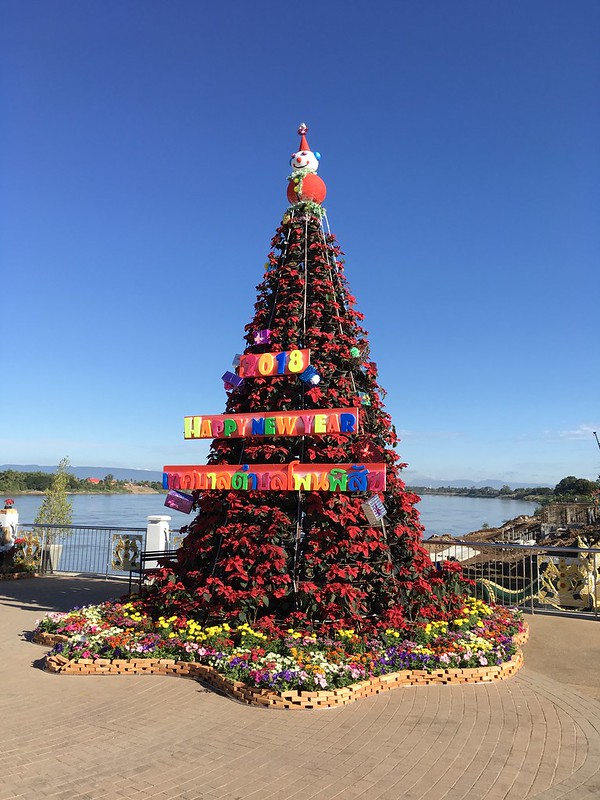
Christmas is not much of a holiday here, but the Thai people have borrowed some of the elements of Christmas to blend with their New Years celebration--which is one of the major holidays.  Below is a "New Years Tree" made of poinsettias set up along the banks of the Mekong River in town. (This photo was taken a day earlier)

The snowman reminds me of "Jack" from the commercials in the US.

New Years Decor in Jom Thong 3

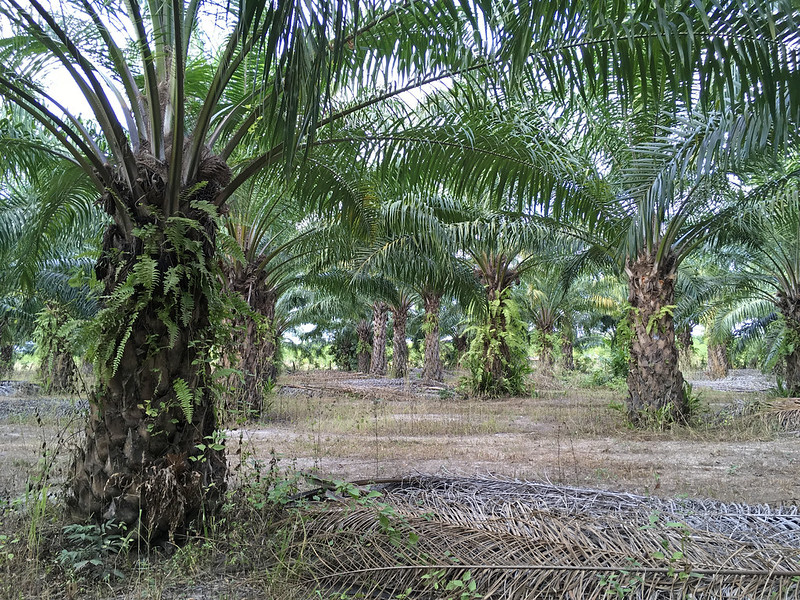
Another crop I bicycled through was oil palms. Oil palm trees are very pretty because ferns are typically found growing in the notches where the leaves attach to the stem of the tree.  It lends a lush, tropical feel to the landscape. (Or, in less euphemistic terms, it's a reminder that you are in a hot, humid part of the world.)

Elaeis guineensis Jacq. Arecaceae Palmae-oil palm, ปาล์มน้ำมัน

As I left the hilly area and was approaching town, I came to some old borrow pits that had been used for the red fill material one sees used so much for roads and building construction.  The pits are full of water and the clouds were reflecting nicely in the late afternoon.


Borrow pits

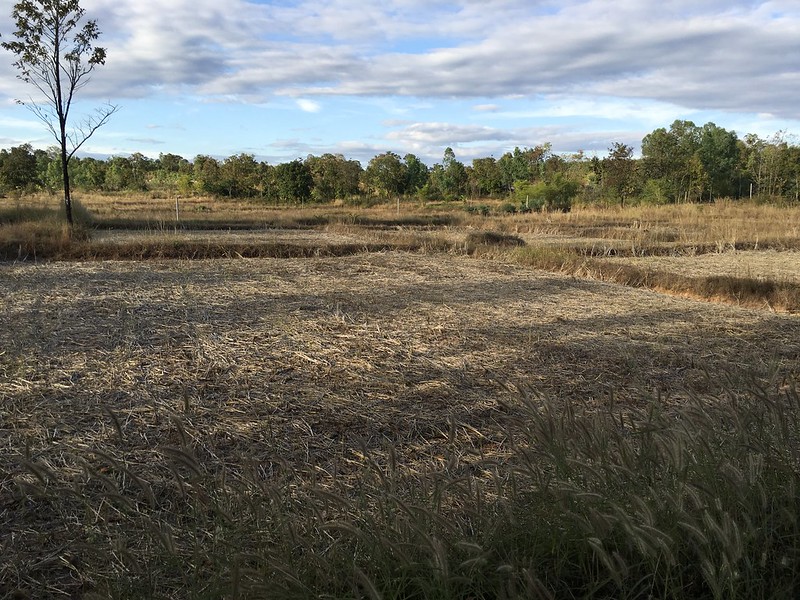
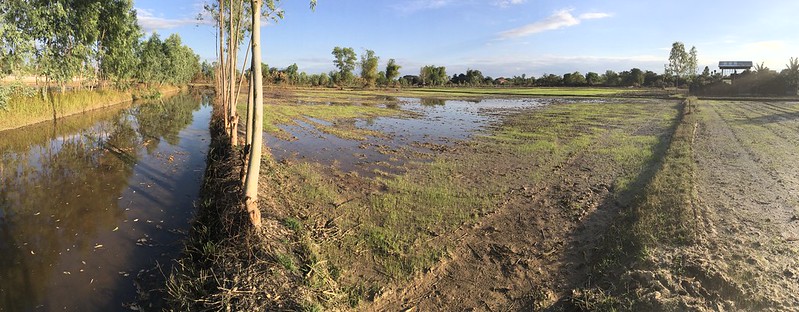
A bit closer to  town, I near the rice growing areas.  Much of Isaan is dependent on rainfall to grow crops.  The rainy season rice was harvested about a month ago.  Now these paddies sit idle, serving mostly as an area to graze cattle.

Dry Rice Paddy

A little lower down, irrigation water is available.  Here they will plant a second crop of rice.  These paddies were flooded a few days ago and, while flooded, were smoothed with a rototiller on a tractor.  Now, the weeds have come up.  I assume they will kill those off with herbicide before planting their next crop.  Soon, these field will be lush green with the new rice.

Almost home now--our house is behind the trees at the back of the rice paddies.

Rice paddies

Looking at the rice paddies I am reminded of the rhythms of life.  The farmer plows, then sows, then tends his crops and finally reaps the harvest.  These transient cycles stand in contrast to the permanence of God.


Our days on earth are like grass;
    like wildflowers, we bloom and die.
The wind blows, and we are gone—
    as though we had never been here.
But the love of the LORD remains forever with those who fear him.
    His salvation extends to the children’s children
of those who are faithful to his covenant,
    of those who obey his commandments!  
Psalm 103:15-18 (NLT) 

Sunday, December 31, 2017

Top 12 (or so) 2017

Let the whole earth sing to the LORD!
    Each day proclaim the good news that he saves.
Publish his glorious deeds among the nations.
    Tell everyone about the amazing things he does.
Great is the LORD! He is most worthy of praise!
    He is to be feared above all gods.
The gods of other nations are mere idols,
    but the LORD made the heavens!
Honor and majesty surround him;
    strength and joy fill his dwelling.

1 Chronicles 16:23-27 (NLT)

It's that time of year when I look back over photos from the past year and reminisce.  This year found us spending a significant amount of time on two different continents.  Traveling back to North America always brings back even more memories.

January-Nicolls Peak
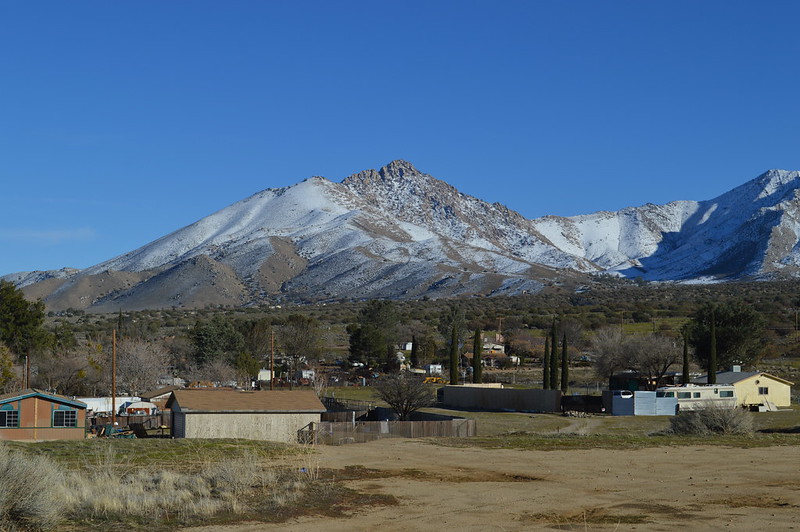
Nicolls Peak 3

I normally say that I don't have favorites of anything, but there are two places I especially like in California: Morro Bay and Lake Isabella.

Lake Isabella has special memories for us. After we left Haiti in 1993 and after I finished up the Apprenticeship in Ecological Horticulture, I applied for a job in Bakersfield.  I had never heard of the place before, but we got an opportunity to see it for the first time on the way to a conference in Anaheim.  We stopped by there to visit my cousin, Pat, who lived down the street from where this photo was taken.  I remember seeing this mountain for the first time and saying, "I want to climb that mountain," which we did several years later (we each brought some ticks home from that trip).

Our first year in Bakersfield, I drove up to Lake Isabella nearly every weekend.  We put in a garden in my cousin's back yard.  I was a tumultuous year for us.  New job, new town, new church and we were anticipating adopting a child right after we moved.  When the adoption ended up not happening, Pat was a source of comfort and encouragement for us.  She, too, was going through difficult times then.

This was our first visit to Lake Isabella since Pat died (about a year earlier). (More about that here.)  I perhaps felt the impact of losing her the most as I stood to take this photograph and all the memories came flooding back. During this trip, we stayed with her daughter and family, who now live right at the base of Nicolls Peak.

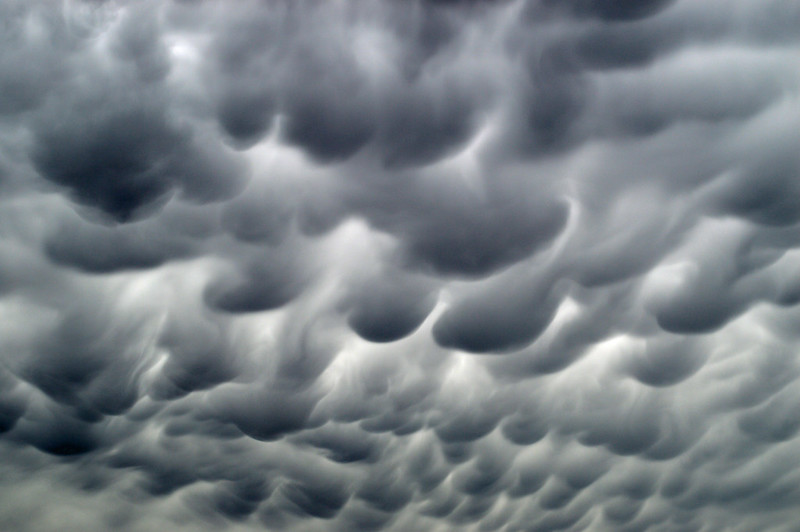
February-Mammatus clouds

Mammatus clouds over Fresno


During our time in California we were staying with friends in the southeast part of Fresno.  One evening, I was out for a walk and I noticed some strange clouds overhead. I rushed out to an open area so I could get a better view of them before they disappeared.

Turns out these types of clouds are called mammatus clouds which, according to Wikipedia, are are formed by cold air sinking down to form the pockets contrary to the puffs of clouds rising through the convection of warm air.

March-Chinualna Falls trail
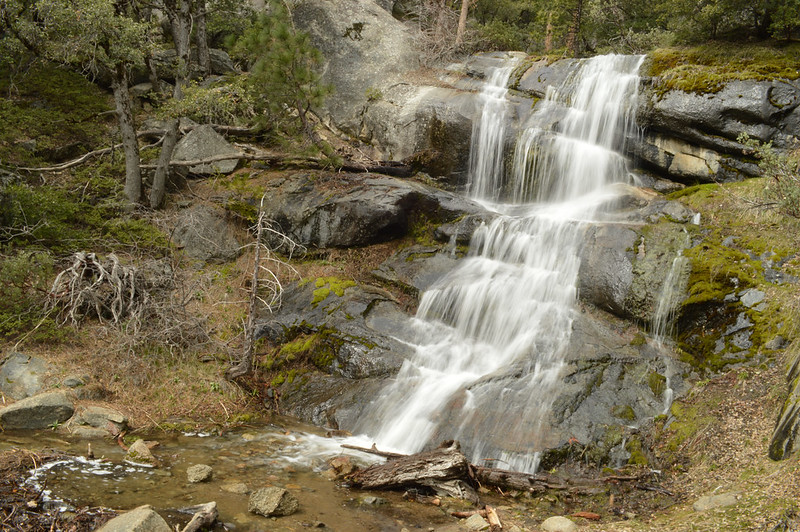
Weeping wall where ephemeral creek crosses trail

My favorite hike to take in Yosemite Park is the Chilnualna Falls trail.  I have been up this trail many times and in almost every month of the year.  Even though my back was acting up, I was determined not to return to Thailand before hiking this trail again.  It was quiet that day, and quite snowy at the top.  Along the trail, except in the dry part of the year, is a spot where a small creek cascades over some rocks before crossing the trail on its way to Chilnuala Creek.  I decided to view it from a different angle this time, stepping off the trail about 50 feet to take this photo.  I didn't have a tripod and had to brace the camera against a tree to get a slower exposure for this picture.

April-Yosemite Valley
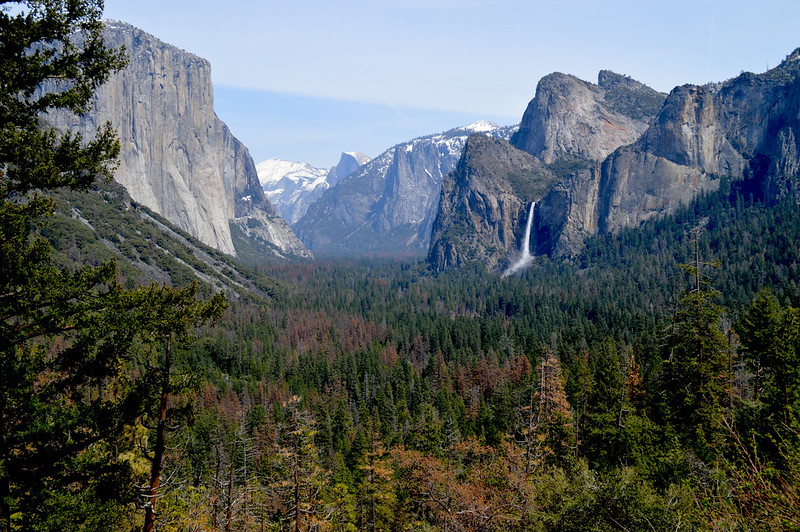
Yosemite Valley View 3

The photo for April may be old school and not really awesome as photos go, but it does mark the one time we got to Yosemite Valley during our time in California.  The rivers were running fairly full, and there was snow on the higher parts of our journey.  In a change from previous photos we have taken from this viewpoint, there are the patches of brown trees.  This is a reminder that even if you go back to places you remember from your past, they won't always be as you remember them.

When you live in one place all the time, you may not notice all of the changes because they may be subtle.  But when you only visit every few years, these things can be a bit more obvious.  Time marches on--we change and everything around us changes.

One of the hard things about our current ministry, when we only get back "home" every few years, is that we would like things to be the same as they were when we left.  But they aren't.  This trip to Yosemite made that clear.

May-Move to Phon Phisai
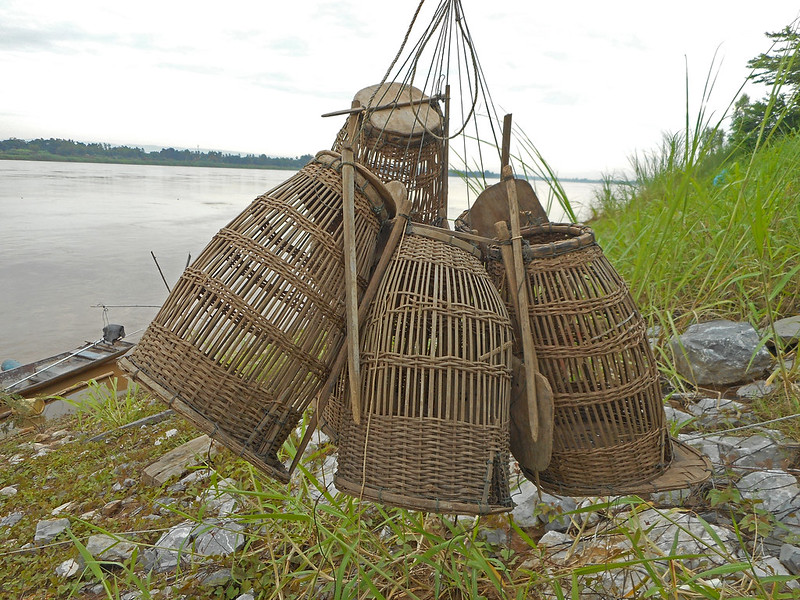
Fish Trap

April and May was a time of a lot of movement for us.  Fly back to Thailand to our old home in Wiang Kaen.  Travel by bus to Chiang Mai to pick up our truck.  Drive to Phon Phisai to look for a place to live.  Back to Wiang Kaen to pack our stuff. Drive back to Phon Phisai.  Hop on a bus to Chiang Mai for some team-building activities.  Then bus to Wiang Kaen, pick up our other car and drive back to Phon Phisai.

Then we were home.  Our new home--Phon Phisai at the confluence of the Huai Luang and Mekong Rivers.  Lots of boats.  Lots of different ways to catch fish.

And we were here to catch fish of sorts as well.  When Jesus called his first disciples, his call was, "Come, follow me, and I will show you how to fish for people!" (Mark 1:17 NLT)  So we, too, have come to fish for people--not to destroy them but to plant them in streams of life-giving water.

June-Dedicating a new church
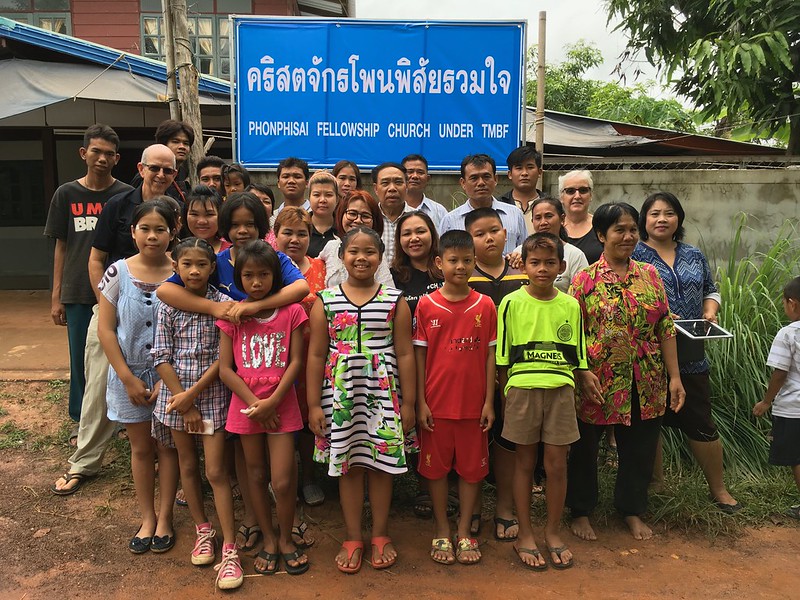
Phon Phisai Fellowship Church

What a great time of celebration.  Ajan Nat came up from Chachoengsao for the official kick-off of our new church in Phon Phisai.  After a time of worship and prayer in the morning, we headed to a local swimming pool for some baptisms.  Some of the faces in this photo are no longer in the church--some have moved to other places and others have moved away from Jesus.  But new faces have replaced them.

Some of the young people here are growing fast and it is fun to be a part of their lives as they mature.

We are grateful for the work God has done in the lives of these people and are thankful for those who have remained faithful to Him.

July-Mekong Sunsets
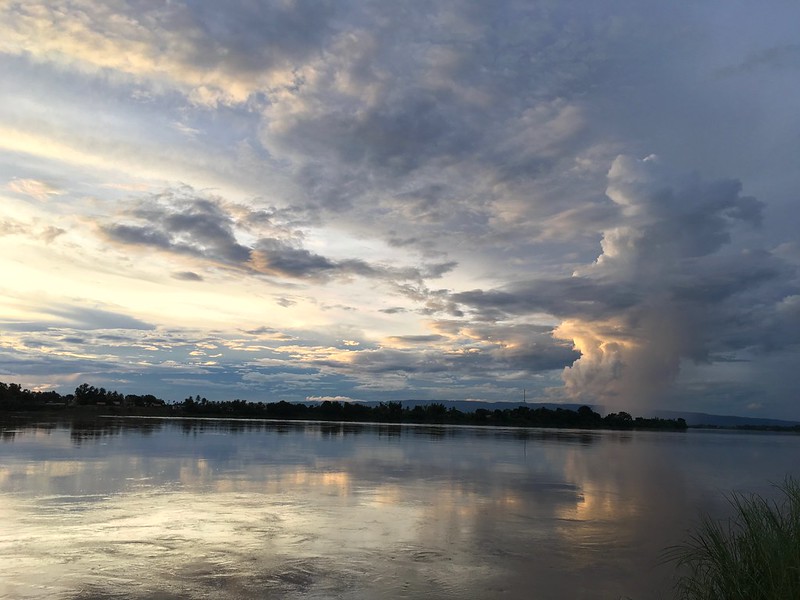
Evening Storm over Laos

There are a lot of things not to like about rainy season here: flooded roads, mud, oppressive humidity, and everything getting moldy, to name a few.  But there are some positives.  One of the nice things about rainy season is the cloud formations.  Often we go for sunset walks along the Mekong River to enjoy the sunset clouds over Laos. There is a lot of variability and it does not seem to get boring.

When I look at these awesome clouds that bring massive displays of energy in lightning and thunder, I am reminded of the awesome power of our God, which dwarfs all these things.

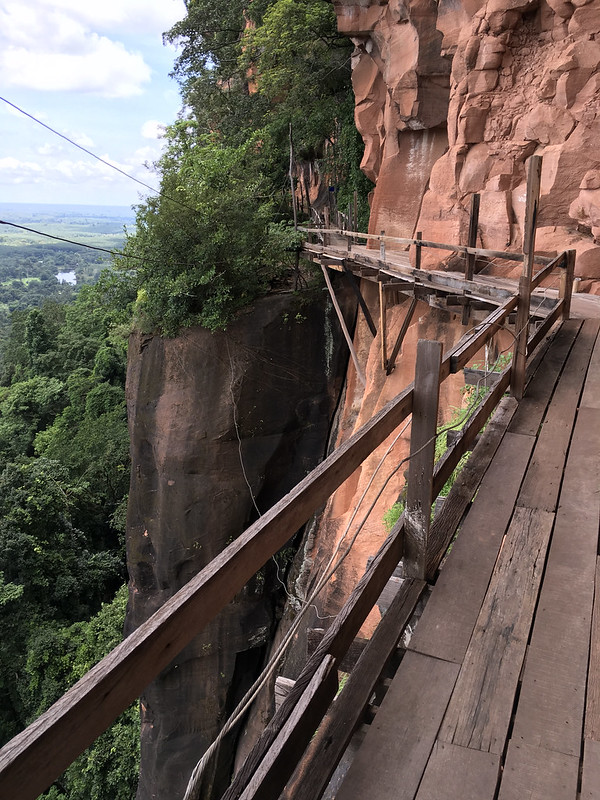
August-Phu Tawk

Phu Tawk 88

When you come to the main intersection in Nong Khai, there is a sign listing a few of the tourist attractions up ahead.  What it does not tell you is how far away they are.  One of the ones listed is only a few kilometers ahead.  Phu Tawk, on the other hand, is a few hours ahead in a different province.

We were unaware of this place, until we drove by it one time on the way to check out a waterfall in adjoining Bueng Kan province.  As we drove by this steep sided hill, we noticed the walkways on the side of it and we decided to go back on another occasion.

What an interesting place.  It is a Buddhist holy site with a temple on the main level and lots of shrines in various places.  there are several levels of walkways, and some look more sturdy than others.   I have no idea who came up with the concept, but if you aren't afraid of heights, it is a fun place to visit.

August-Sunrise in our backyard
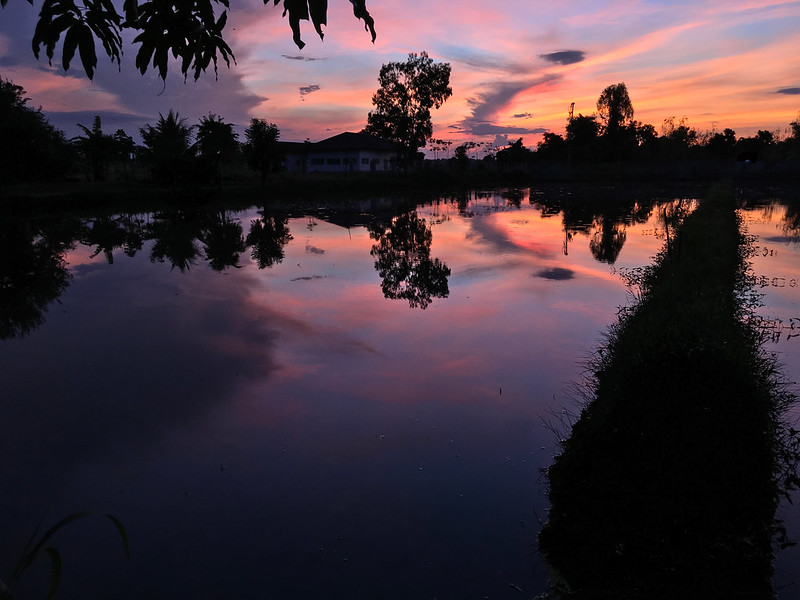
Sunrise in Phon Phisai 2017-8-13 14

I cheated and added a second photo for this month.  Adjoining our yard to the east is what was supposed to be a rice paddy.  However, due to changes in the land drainage, it is too wet for rice (more about that here), and so became a pond throughout the rainy season.

One morning I was sitting at my desk doing my Bible reading, when I noticed this pink glow in the living room.  I decided to investigate, an discovered this awesome sunrise display over the pond.

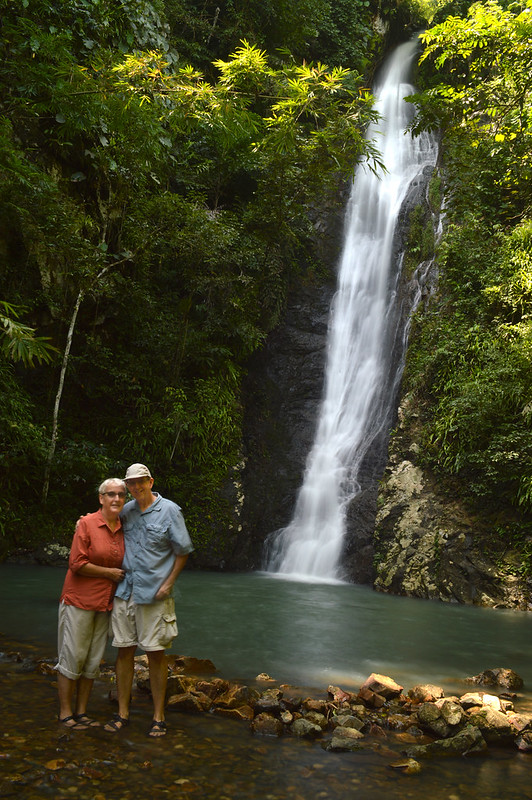
September-Than Thip Waterfall

Than Thip Waterfall น้ำตกธารทิพย์ 16


One thing we have lots of in rainy season is water.  It's a great time to visit some waterfalls (though some are too dangerous and it is better to visit them when things dry up a little).  On this occasion we traveled to the western extreme of Nong Khai province to find Than Thip Waterfall.  We arrived at the small park to find a deserted parking lot.  Apparently mid-week during the school year is a great time to visit.  We climbed the short trail and waded up the creek a little to get to this spot.  I set my tripod up in the water (happens a lot when you photograph waterfalls) to snap this photo.


October-air plant

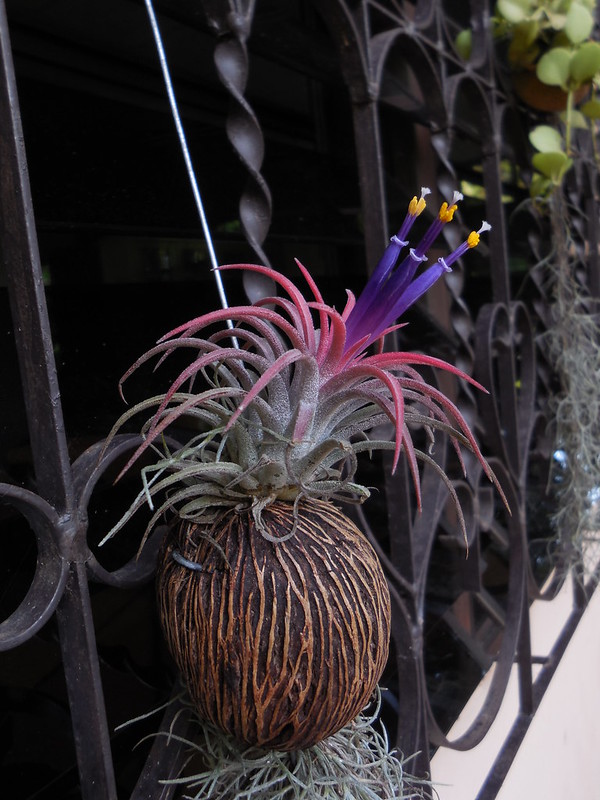
Tillandsia ionantha Planch. Bromeliaceae-air plant, ทิลแลนเซีย


Shortly after our arrival here in Phon Phisai, we bought some hanging plants to decorate our window exterior.  We found these interesting combinations of air plant and Spanish moss attached to the seed of a pong pong tree (Cerbera odollam).  Both of the plants belong to the same genus: Tillandsia.  We had no idea that the air plants would ever flower, but were amazed at the purple and yellow combination when they came out.

November-Meeting Lai
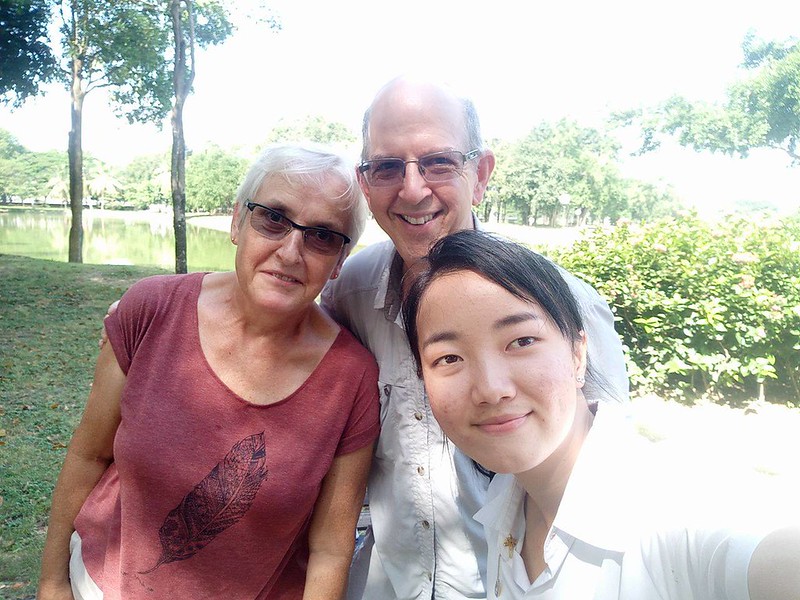
Us with Lai

I didn't take this photo, but I wanted to include it as an extra for November, because it marked a memorable occasion when we were able to visit our friend, Lai, for the first time in over a year.

More about this encounter here.


November-Sam Roi Yod Beach
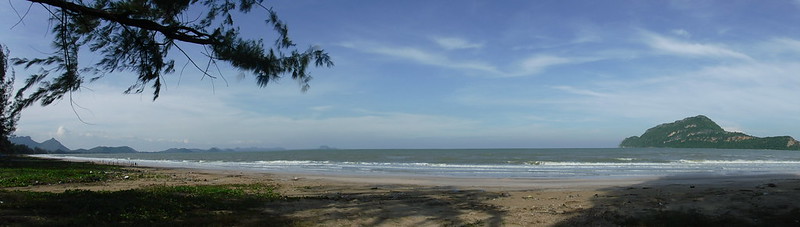
Sam Roi Yod Beach 7

November is not the greatest time to visit Sam Roi Yod, because it can be the stormiest time of year.  Indeed, the red flags were flying on the beaches during most of our stay.  Still, it is our favorite place to hang out in Thailand because it is quiet and mostly undiscovered by tourists.  There is a nice mix of mountains, beaches, mangroves, freshwater mashes and rivers.

It seems like there is never a good time to take a vacation, but I learned during our last term that burnout comes too easily if we're not careful.  This was our first break since returning to Thailand and all the stress of moving, saying goodbye, making new friends, learning our way around new places and learning how to work with new team members had caught up to us.

While we stayed in Sam Roi Yod, we got to meet missionaries from other countries and even some fellow missionaries from another part of Isaan that we had not met before.

December-Christmas Celebration
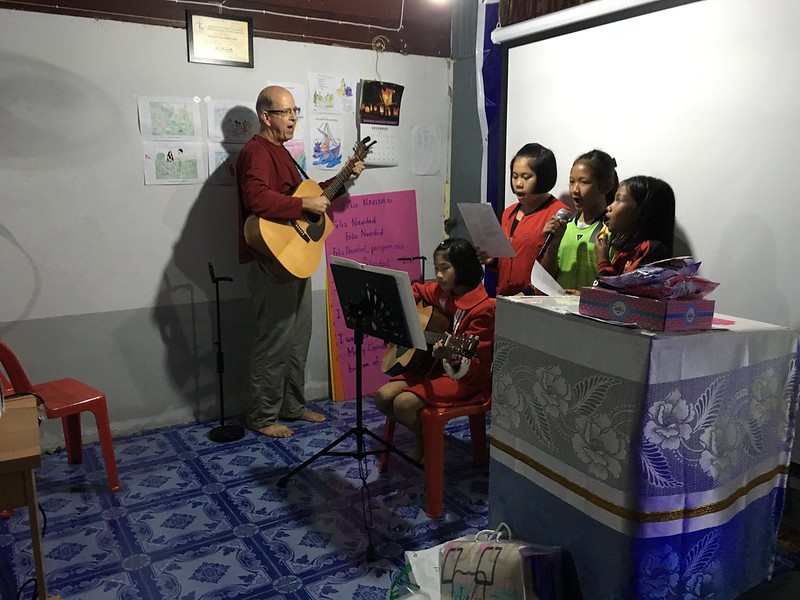
Christmas Outreach

One of the interesting things about our job is that you never know who you may end up working with.  Here in Phon Phisai, God has placed in our lives a group of pre-teen girls who have been interested in learning English, learning about Jesus, baking cookies and, for two of them, learning to play guitar.

On December 27th, our church had its first-ever Christmas outreach event.  About 60 people came that evening.  What a joy it was to hear there girls get up and sing some songs about the birth of our Savior in both English and Thai (and even a little Spanish).  And while the vocals may not have been the highest quality (we still have time to work on that), there was lots of enthusiasm. (Some more about that evening here.)

What a great way to finish up a year.


Friday, December 29, 2017

Overcoming Obstacles

So encourage each other and build each other up, just as you are already doing.
1 Thessalonians 5:11 NLT

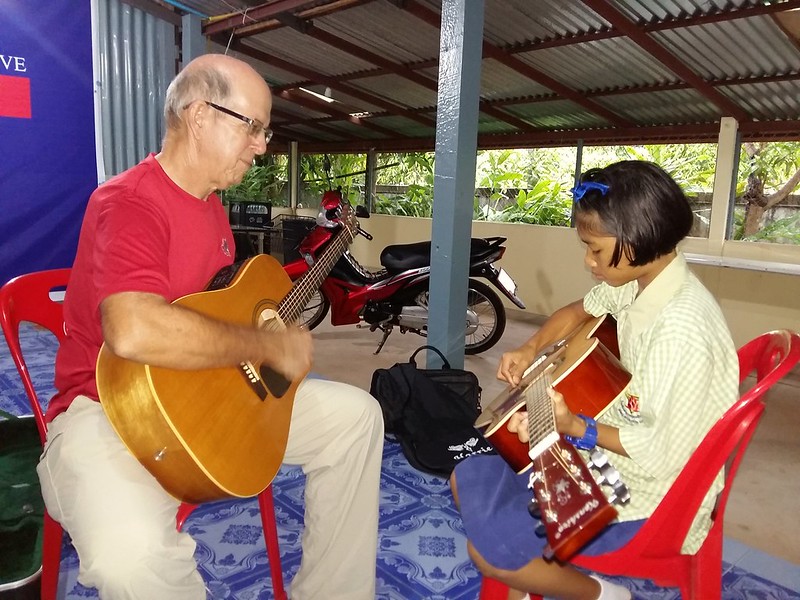
One of the things I enjoy doing in Phon Phisai is teaching guitar.  I've had several people show interest in this, by my most faithful student has been Kung Nang.

Teaching Guitar

It's been a challenge for Kung Nang to learn guitar.  I thought the biggest obstacle would be her tiny hands.  But that has not been so much of an issue.  Instead, there have been two main obstacles.

First, and this is true for many of us, the biggest obstacle we have to overcome is ourselves.  Lack of confidence and slow progress can cause us to get discouraged.  Several times, Kung Nang would say "I can't do that." I would tell her not to say, "I can't," but instead to say, "I can't do that yet" or, better still, "I can!"

The second obstacle I discovered Kung Nang was facing was that one of the reasons for her discouragement has been family.  One time while we were practicing, her mother came in and was talking with Ingrid.  Her mother said, in her hearing, something like, "she should quit trying to learn guitar, she is so slow in learning."

To help Kung Nang overcome these obstacles, we've had to offer a generous supply of encouragement.  A turn around came a few weeks ago.  Normally in our church services, we have an opportunity to give thanks to God.  Often—based on the amount of people who share during these times—it seems people have little to be thankful for.  But this time Kung Nang spoke up, "I thank God that I am learning to play guitar well!"  I had a hard time holding back my tears when she said that.

Earlier this week was our church's first ever Christmas outreach. I was feeling a bit run down because of a lack of sleep induced by a cold.  But I managed a small burst of energy that lasted through the celebration.  Part of what kept me going was looking forward to the closing songs, to be sung in English (and a little Spanish), by some of the girls from the church.  Kung Nang played guitar publicly for the first time for two of the songs.  This was an encouragement not only for her, but for all of us.

Christmas Outreach
The girls singing the closing songs for our Christmas celebration.

We all face challenges in our lives.  At these times it is wonderful if someone comes along and cheers us on.  And how difficult it would be if people kept yelling, "Loser! You can't do that!"

Churches face challenges as well, especially in places like Phon Phisai where there are so few believers.  A lot of what the people need, then, is encouragement, and this is a major part of what we do.  Sometimes, though, we inadvertently say or do things or even behave in such a way that causes discouragement.

God, make us aware of how or words and actions affect others. Help us to identify those things that might be a source of discouragement to others and replace them with things that would cheer others on as we try to live out our lives together for Jesus.


Friday, December 8, 2017

Defining boundaries by relationship

Where do I belong?

We often think about boundaries as things delimited by a border or line.  Things inside the line belong with other things inside the line. But, historically, this has not always been the case. 
In the Bible, when the land was being divided up, it is often described by terminology like "Heshbon and her towns."  The areas outside the towns were described using words like, "these cities and their pasturelands."

The boundaries of a land were described by its cities, the towns associated with the cities, and the farmland and pastureland associated with the cities and towns.  The people in the towns would graze their animals in areas often without clear boundaries.  The ownership of this land was then associated with whoever was using it.

Thailand gives one of its claims to fame that it has never been colonized.  Yet, it did not have an actual boundary until the early 1900's, when the kingdom had already been around for a few centuries.  Before that time, it was more like the Biblical system, with the kingdom consisting of whatever cities were under the rule of the king along with their associated towns and rural lands.  The cities under the rule of the King of Siam varied with time, as there was often conflict with adjoining kingdoms and a given city might belong to different kingdoms over time. "Borders" between kingdoms thus tended to have very jagged edges. Trying to put lines up between two countries becomes problematic, because the lines break some of these relational connections. Stability happens when all of most of the people living within a given physical boundary claim allegiance to the same ruler (or to the same rules, in a constitutional state).

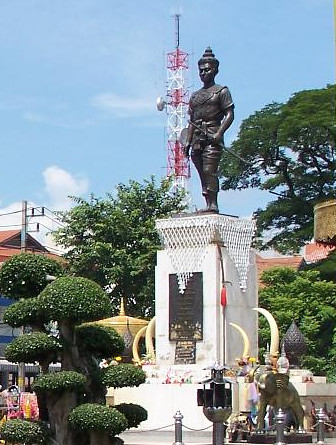
King Meng Rai Monmument, Chiang Rai, Thailand
Statue of Mengrai the Great in Chiang Rai
First King of the Lanna Kingdom
(Northern Thailand)


Even in present-day Thailand, you still see this fuzzy boundary system to some degree.  When you drive around the rural areas, you may pass through a village, then you typically pass through 4 to 6 kilometers of farmland until you get to the next village, with no clear demarcation dividing the two.

The political boundaries here are fairly well structured.  Each province is divided into districts, districts are divided into sub-districts and sub-districts are divided into villages.  Along the road you may see a sign marking when you enter a village, but I often wonder, when I am in farmland, to which village does a piece of land belong.  It may be less related to proximity than to other forms of connectedness.  If the main access road goes to one town, the land may be considered (practically, if not legally) as belonging to that town instead of one that is closer.  Transportation corridors that form this connectedness may be roads, paths or waterways.

When I was young, I lived in what was called a bedroom community.  Wolcott did not have much business of its own and most people worked in the adjoining towns of Waterbury or Bristol.  Even though we lived only 1/2 mile from Bristol, we were Waterbury people.  My father worked in that city and we went to church in that city.  We did most of our business there.  My aunt and uncle down the street were Bristol people.  My uncle worked in Bristol and they went to church in Bristol and they did a lot of their business in Bristol.

A few years ago, we lived in the province of Chachoengsao.  But the village we were in was close to Bangkok and most of the people worked in Bangkok and we did most of our shopping in Bangkok.  Because of this, our circle of relationships was different than that of our teammates who lived closer to the city of Chachoengsao. So even though we legally lived in Chachoengsao, for all practical purposes we lived in Bangkok.  The line on the map had little impact on our daily life.

In my previous occupation, we often looked at things on a watershed basis.  With this method, whatever waterway draining a piece of real estate became the common factor determining relationship.  I actually like this method a lot, and one of the first things I like to know when I go someplace is where the water flows.

When we lived in Wolcott, there was a pond in our backyard. This pond was the headwaters of the Mad River, which drained south into Waterbury.  Along the way, it passed through Cedar Swamp Pond, that actually was half in Bristol.  So even those people living along the edge of the pond in Bristol had a relationship with Waterbury.  The nutrients leaking from their septic systems went into the lake and the downstream into Waterbury, eventually flowing into the Naugatuck River.

Just beyond the rise east of our pond was some forested swampland.  This swamp was the headwaters of Roaring Brook which flowed east into Southington where it joined the Quinnipiac River.  Even though we lived in the Mad River watershed, my favorite place to hang out was in the undeveloped forest land on the east side of town that was in the Quinnipiac River watershed.  And I tended to hang out with people who lived there as well as my circle of friends was a youth group from a church in that area.

Connecticut Watershed Map
from http://www.ct.gov/deep/cwp/view.asp?a=2719&q=325628&deepNav_GID=1654%20


This relational-defined boundary has applications in our spiritual lives as well.  When Jesus came to earth, he talked a lot about the Kingdom of God.  The Kingdom of God or Kingdom of Heaven (not all Christians consider these to be the same, but I do) consists of all those who submit to the Kingship of God.  This is not a geographically defined kingdom but one defined by relationship.

Some of us are reluctant to declare a relationship with only one king.  Just as, in the past, a remote city might pay homage to two kings to hedge its bets, so we like to have both a relationship with ruler of the Kingdom of God and a relationship with the god of this world. 

Paul tells us that Satan is the god of this world.

Satan, who is the god of this world, has blinded the minds of those who don’t believe. They are unable to see the glorious light of the Good News. They don’t understand this message about the glory of Christ, who is the exact likeness of God.
2 Corinthians 4:4 (NLT)

The picture we have then is of two kingdoms, and we need to decide which one we want to be a part of.  Will I declare allegiance to the creator of the universe or will I declare allegiance to the rebellious leader who wants to claim this world as his own?

Changing allegiances can be difficult.  If a person in this part of the world wants become a part of the kingdom of God, he or she will be surrounded by and greatly outnumbered by those claiming allegiance to another kingdom.  It would be like a city in the middle of a country rising up in rebellion and claiming allegiance to a different country.  All the cities around it might not be too happy about it. Pray that the new believers here remain strong in their new allegiance.

Greetings

Greet one another with a holy kiss
          Romans 16:16

Many years ago, when we lived in Bakersfield, the church we were attending closed its doors, so we were looking for a new place to fellowship.  This was in the early days of the internet, so the main way to find churches was through the Yellow Pages (r) or newspaper listings.

One day we visited a church in the southeast part of the city.  When we drove up, we thought the pink color was a bit out of the ordinary.  But it was far more ordinary than what happened next.  In this church, everybody greeted everybody else with a hug.  There must have been an unwritten rule that you couldn't enter the building unless you hugged everybody first.

I am NOT a hugger person.

I was VERY uncomfortable.

Before we even got inside, we had pretty much decided this church wasn't for us.  It was interesting that many of the people in the congregation played the tambourine during the music times, while the pastor played congas.  We were grateful that they decided to have an extended prayer time afterwards, which gave us an opportunity to sneak out without having to hug everybody all over again.

Last month we had our annual missionary gathering.  One of our fellow missionaries who was there is a hugger.  I finally indulged him, but I may have  subconsciously tried to to avoid him after that.

I'm good with hugging my wife.  I've even got used to hugging family members.  And I'm not too bothered by hugging little kids.  But that's about it.

Part of my reticence in the area of hugging is related to my personality.  Another part is cultural—not wanting send the wrong message—either to the person being hugged or to other people around.  One of the things I like about Thailand is that the normal greeting here is a wai (pronounced "why")—two hands pressed together above the upper chest. No hugging.  No touching.  Not even a handshake. Yes!!  I am IN my comfort zone.

The "wai" greeting


About a week after our missionary gathering, we attended an English speaking church in the town of Hua Hin. I think that they must have visited the pink church in Bakersfield.  I tried to get away with greeting people with only a wai, but only the teenage girls seemed to indulge me.  Everyone else wanted a hug during the greeting time.  This was especially unusual in Thailand, where unrelated people of the opposite sex don't usually hug each other in public.  We decided to skip eating lunch with the church and snuck out of during the closing song.

Fast forward another week.  We are on our way back home and we stop to visit Lai, young woman who had studied English with us back when we were in Wiang Kaen.  Our lives intersected with hers at a time that was critical for all of us.  Lai was trying to win a special scholarship for which the competition was very tough.  We were trying to find a way to reach out to young people in our community.  We helped Lai prepare for her scholarship application, which she won.  She and some of her friends became key members of our English club, which was a bright spot during a difficult time in our lives.

Now Lai was attending her second year of university and we had not seen her in over a year.  She was very excited that we were going to make an effort to visit her.  When we met up with her she gave Ingrid a hug.  Then, there was an slight hesitation as if she was trying to decide what was appropriate, and then she decided I should get a hug, too.  (I was not going to initiate in this culturally sensitive area.)  After all, she is like family to us.  In fact, we were the first visitors she's had from "home" since she started her studies there.  (She is a Christian and ethnic Hmong, and she is on a campus with few, if any, Christians or Hmong people, so she gets homesick sometimes.) No wonder she was so happy to see us!

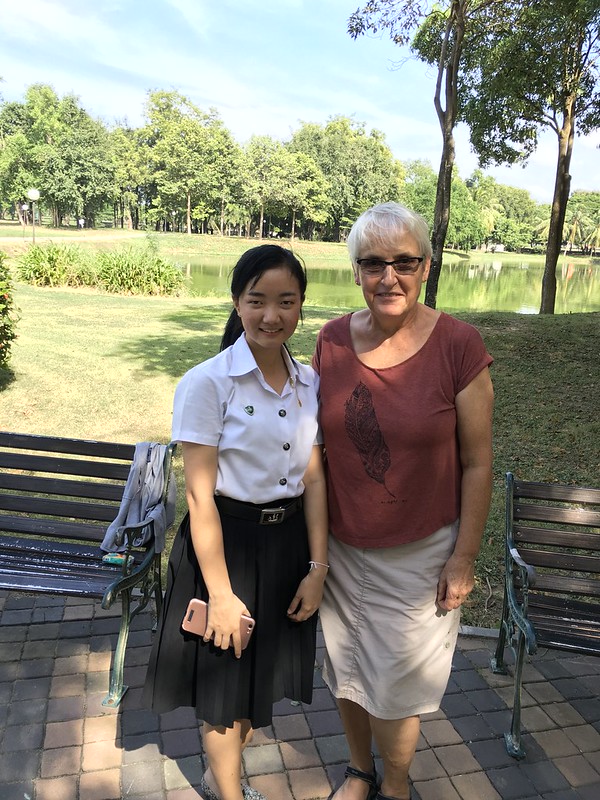
Lai and Ingrid
Ingrid and Lai at
Kasetsart Kamphaeng Saen University

So, if I greet you some time, and I seem a little aloof, it's not that I don't like you. I'm just more comfortable to greet you with a wai.