Sunset Over the Mekong River

Wednesday, January 6, 2016

Top Twelve 2015

This is my annual review of the year, by picking my favorite photo from each month.
Well--I cheated this month and picked two from November, so call it a baker's dozen.

The photos are not necessarily picked for their artistic quality, but more for special memories from that month.

January

In January, we made our first trip across the river to Laos.  We were only there a couple of days.  The first day we took a speed boat down the Mekong River south from Houay Xai.  The second day we made a road trip north, stopping in several Khmu, Lao Lue and Hmong Villages.

Our last stop was at a Hmong Village called Huay Dom Dam.  Just as we were pulling away, this young woman carrying her two children gave us a beautiful smile.  The picture is not as sharp as I would like, because we had already started moving.
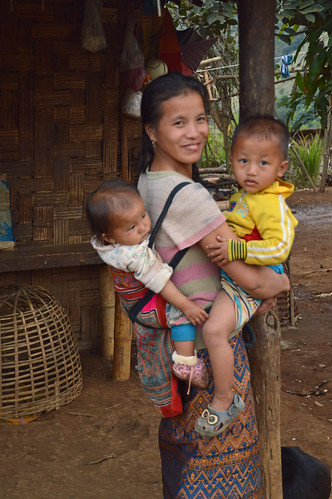

Huay Dom Dam Hmong Village

February


Every Saturday afternoon, we open our house for young people to come to practice English and hear Bible stories.  Sometimes we mix things up a bit.  Since Saturday fell on Valentine's day, we had the students decorate cookies, then we told the story of St. Valentine after which we made Valentine's cards.

Since it is an English class, we had the students make their cards in English.  (Except me--I made one for my sweetheart in Thai.)  The young people had lot's of fun and got to bring some cookies home as well.

Our Saturday activities with the youth are our favorite time of the week.  To be with these young people who are eager to learn is a gift for those of us who like to teach.  And it contrasts with much of our week when we are with people who seem like they know everything already.

Several of the young people in this photo will be headed off to university later this year, and it reminds me how valuable is our time with them to teach and show them about the love of Jesus.
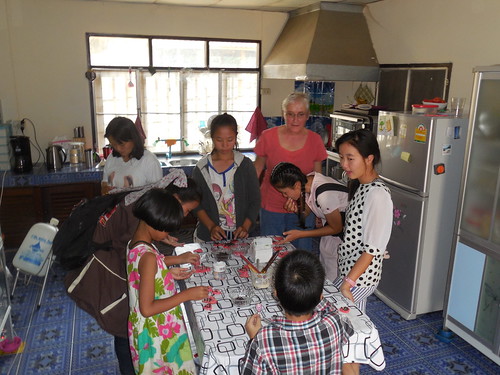
Making Valentines Cookies

March

In March, we had to head to Chiang Mai for some meetings.  While we were there, we took an afternoon and went to visit the Siam Insect Zoo.  This is a small institution located north of the city.  While there was a lot to see in the way of insects, they also had some non-insects to observe.  This horned lizard probably likes living in an insect zoo, because there is plenty to eat!

While we were intent on observing the various critters in the zoo, this one looked equally intent on observing us.
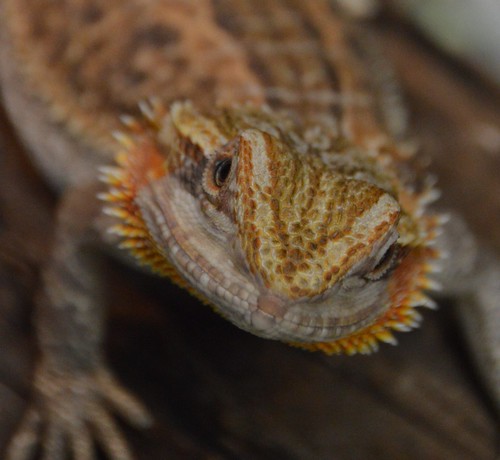

Insect zoo-horned lizard

April

In April, we were invited to a house dedication in Huai Jaw--the nearest Khmu village to where we live.  When we got there, we could not find where the house dedication was supposed to be.  Instead we got invited to where a wedding dowry ceremony was taking place.

There were lots of interesting things being presented.  An official dowry inspector was there to make sure everything was of sufficient quality.  Here, the inspector is checking the chicken legs and wish bone to see if they are auspicious.  The father of the bride, in the blue shirt, looks on.
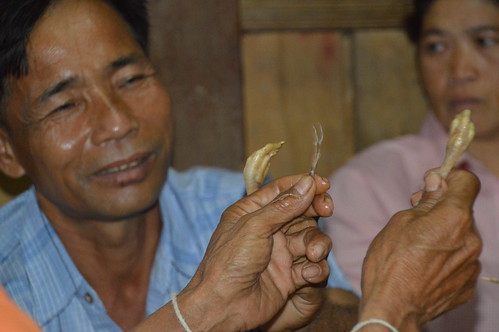

Wedding dowry ceremony in Huai Jaw

May

One of the bike rides I like is a windy, forested road that leads to a forest temple about 9 km southwest of where we live.  As one approaches the temple, the vegetation changes from wild forest to a mix of wild and ornamental plants.

In that mix of plants one day, I was delighted to find see this beautiful flower spike.  It was hard to miss, because the spike itself is about a foot long and sat atop a four to five-foot long stalk.  While I had not seen this particular bloom before, it is closely related to galangal, which is commonly planted all around Thailand.  I don't know an English name for it, the Thai name translates "wild galangal".
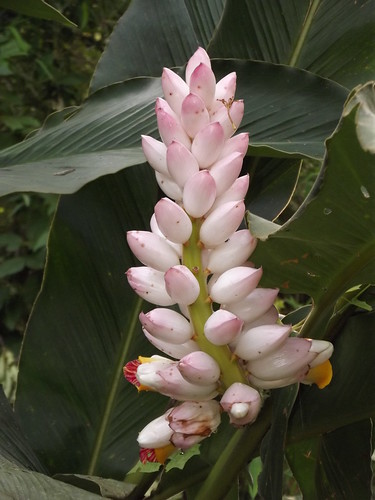

Alpinia malaccensis (Burm.f.) Roscoe Zingiberaceae Alpinieae-ข่าป่า

June

One of the most attractive fruits in Thailand is the dragonfruit.  The beautiful pink fruit belies its very bland flavor.  The dragonfuit is a type of cactus.  One hardly sees the open blooms, however, because they open at night.  During the day, the blooms wilt and eventually turn brown.

One day I was fortunate in that the clouds seemed to have fooled this particular dragonfruit plant, and its blooms were still open even at about 10 am.  The blooms are several inches across and have an interesting palm-tree shaped pistil surrounded by many stamens.
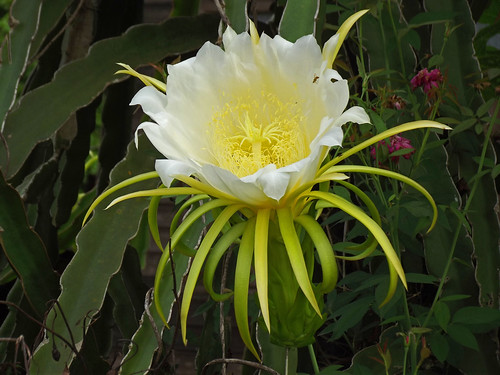

Hylocereus undatus (Haw.) Britton & Rose-Cactaceae: Dragonfruit, แก้วมังกร

July

In July, a team of college students from the US descended on our training center in Wiang Kaen.  This group of young people visited several nearby churches to put on activities for children.  In Huai Ian, the team was leading some songs.  Jake was playing percussion.  He invited one of the local men, Wat, to join with them.  Wat was thrilled at the opportunity.  Though Jake could hardly speak a word of Wat's language, his smile communicated all that was necessary.
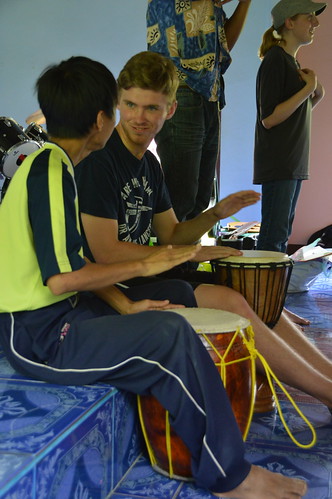

Action Team in Huai Ian 2015-7-11

August

I was on my way back from a few days in Mae Salong, and I saw a sign, in Thai, for a waterfall park.  I'm usually somewhat leery about such things, because sometimes destinations noted on such signs can be a long ways away or perhaps the road or trail doesn't go through anymore.  But this time I decided to investigate.

Huai Kang Pla did not have any large falls, but there were some small and medium sized cascades.  I was the first one in the park that day.  It was quite humid and I was soon drenched with sweat as I wound up the trail to the waterfalls.  It was the last day of my short vacation and I was trying to keep my brain in vacation mode.

The vendors at near the park gate were setting up as I got back.  They said the falls are more popular in the winter when people stop on their way to the mountain areas, or in the hot season, when people go to cool off in the pools.
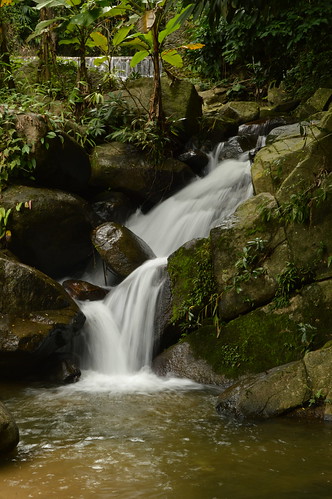

Huai Kang Pla Waterfall Park 5

September

One day we made a rather spontaneous decision to take an afternoon trip and head 25 km up the road to a small cave.

Pha Lae Cave functions more as a religious shrine than a natural resource.  The cave itself is small and it has quite a few Buddhist worship elements in it.  However, it is located in a pretty spot along the Ngao River so it is a nice place to relax.

We got there just as the monks were putting out bananas for the monkeys.  They must have known it was feeding time, because they had begun to amass even before the bananas were set out.  There were monkeys of all sizes, from tiny babies to big papas.  I thought it was cute how this baby was snuggled up to momma as she kept a watchful eye.
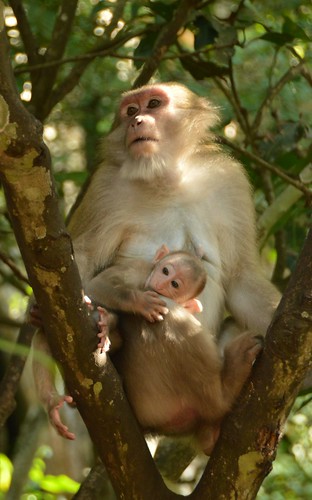

Macaca fascicularis (Raffles, 1821) Cercopithecidae-crab-eating macaque-ลิงแสม

October

Pha Tang Creek flows out of the mountains that border the country of Laos.  As the creek nears its confluence with the Ngao River, it gets a bit flatter and these areas are formed into terraced rice paddies.  The creek itself is diverted into irrigation canals such as the one seen here.

On this day I decided to take a drive down the rough dirt track at the far end of my bike ride.  There butterflies were out enjoying the sunny day.  I paused to relax and reflect that this is one of the things I like about Wiang Kaen--the sleepy valleys surrounded by hills and mountains.

This particular area reminds me of parts of the Haut St. Marc, where we spent our first year in Haiti over 30 years ago.
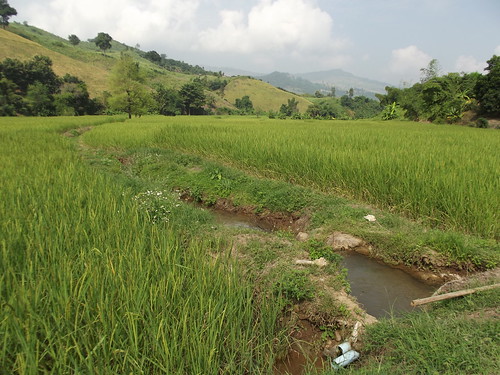

Rice Paddies in Pang Hat

November

In November we took our first real vacation together in a long time.  We decided to go to a resort area in the province of Krabi on the southern peninsula of Thailand.

What a beautiful area.   (That's why a posted two photos for November).

We stayed in Ao Nang.  Most evenings we had thunder storms and the mix of clouds made for awesome sunsets.  We would go for a walk to dinner and catch the sunset along the way.  Tourist season was just beginning and the beach would begin to fill with people watching the sky as the colors shifted with the drowning sun.

Most of the long-tail boats would be parked in a harbor a few miles north for the night.  But there were always a few moored on the beach.
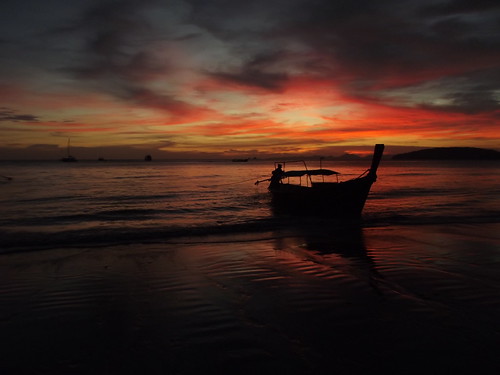
Ao Nang Sunset 2015-11-17

Many of the tourist activities involve being packed with hordes of people in a van or boat.  One day we decided we wanted something a little more free-form, but we did not know our way around enough.  So we opted in for something in-between.  We went on a guided kayak trip.  There was only us and two Korean couples in our group.  The Koreans opted to hire locals to paddle their boats.  We paddled our own (felt that for a few days).

We were in tidal channels in a mangrove forest in Bor Thor, on the north side of Krabi.  One of the channels went through a cave.  As we broke through the back side of the cave-tunnel with the light filtering through the green leaves, it was like a mix of romance and a scene from some kind of adventure movie.It was quite beautiful.  Now that we know the area, I think I would go back and just rent the kayak and go at our own pace.
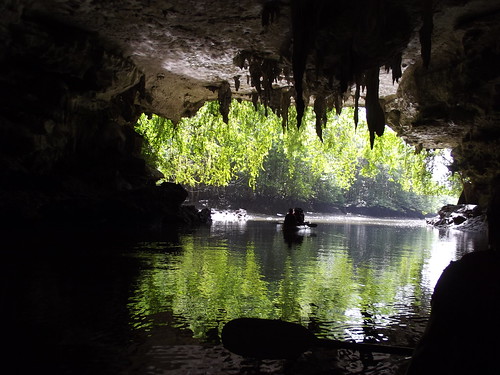

Lot Cave-ถ้ำลอด

December

December means Christmas activities.  Being associated with a group of churches means we can stay quite busy, even if we don't go to all of the events.

The Sunday after Christmas we were in Huai Jaw.  PK was giving a message in Khmu, so we did not understand all of his message.  I drifted outside with my camera and used it to break the ice with some children.  They would climb up this small tree then swing themselves off of it from the branch that they are holding in this photo.

The smiles from these kids help melt away the stress of a busy holiday season.
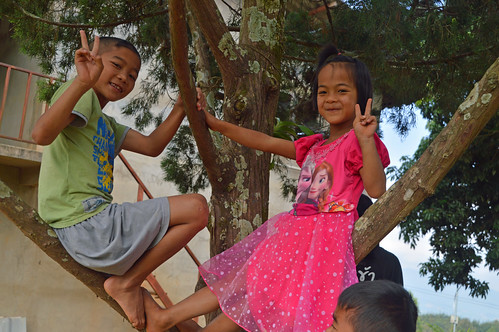
Huai Jaw Christmas Celebration

My work this past year, especially the latter half, have been quite difficult for me.  I'm grateful for those things that help to relieve some of the stress of life--going for a bike ride, studying a flower, hanging out with children, watching a sunset, paddling a kayak. In all these things, we can see the hand of the Creator.  And I am reminded just how great He is.


Ascribe to the LORD, O mighty ones, ascribe to the LORD glory and strength.
Ascribe to the LORD the glory due his name; worship the LORD in the splendor of his holiness.
The voice of the LORD is over the waters; the God of glory thunders, the LORD thunders over the mighty waters.
The voice of the LORD is powerful; the voice of the LORD is majestic.
The voice of the LORD breaks the cedars; the LORD breaks in pieces the cedars of Lebanon.
He makes Lebanon skip like a calf, Sirion like a young wild ox.
The voice of the LORD strikes with flashes of lightning.
The voice of the LORD shakes the desert; the LORD shakes the Desert of Kadesh.
The voice of the LORD twists the oaks and strips the forests bare. And in his temple all cry, "Glory!"
The LORD sits enthroned over the flood; the LORD is enthroned as King forever.
The LORD gives strength to his people; the LORD blesses his people with peace.

Psalm 29:1-11 (NIV) 

Monday, January 4, 2016

Milestones

One day this past week brought the concurrence of two significant events.

First of all, it was my birthday.  Another opportunity to look back at the past twelve months while also looking forward to the next.

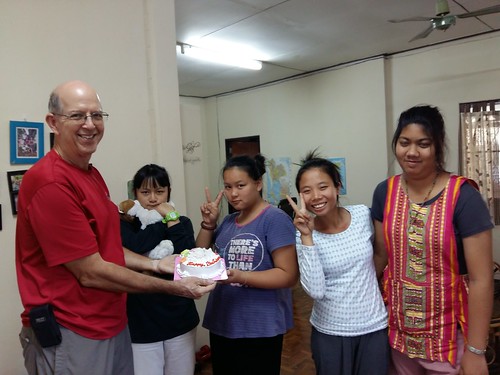
A nice spin for my birthday this year (though a day early) was a surprise birthday cake brought by some of the teenagers who study English and the Bible with us.

Edds surprise birthday cake

One of the young women in the photo above, while she would not yet profess to be a Christian, is eager to hear stories from the Bible.  She and one of the others will be graduating this spring and are hoping to go on to university in Chiang Rai.  We've missed them some these past weeks because on Saturdays they have been going to Chiang Rai to take college entrance exams.  Pray that our time with these young people will be of benefit to them not just intellectually, but also spiritually.

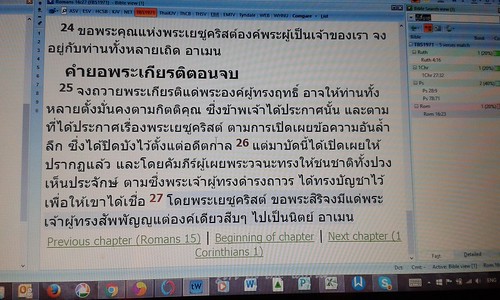
Another event that occurred on my birthday, though I had not planned it this way, was that I finished reading through the Bible in Thai for the first time.

A few years ago, I figured that reading the scripture in Thai would be helpful for both ministry and for language-learning.  So I just started where I was in my regular reading, and tried to read a chapter a day (some days I did not get through a whole chapter).  I typically read on my computer, as I can make the fonts big.  (I have issues with my eyes that make deciphering the small curly-q's of the letters in the printed versions a bit difficult.)

Scripture Screenshot

It is interesting that the completion of this reading was marked with a beautiful doxology, which makes a fitting close to the end of one year and the beginning of another:

Now to him who is able to strengthen you according to my gospel and the preaching of Jesus Christ, according to the revelation of the mystery that was kept secret for long ages but has now been disclosed and through the prophetic writings has been made known to all nations, according to the command of the eternal God, to bring about the obedience of faith-to the only wise God be glory forevermore through Jesus Christ! Amen.  (Romans 16:25-27 ESV)


What a great doxology!  It talks about a message of good news (the gospel)...made known through revelation (scripture)...to all nations...so that God may be glorified.  That is why we are here in Thailand.  May this be my prayer and continued focus of this next year of my life.

Saturday, January 2, 2016

Bookends 2015

Once again I make a kind of year summary by looking at photos from the first and last days that I took photos during the year.

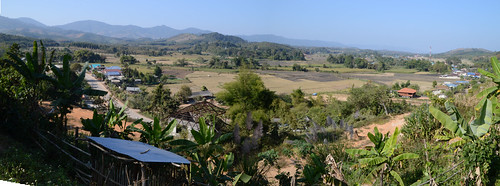
On January first, I went on a bike ride up the Ngao River Valley (The district we live in is basically the Ngao River watershed).  This is usually a good time of year for biking because we don't have the clouds of rainy season and it is still relatively early in the burning season so the air is still somewhat clear after the morning fog burns off.

On this day I rode to to village of Chedi Thong (roughly translates: gold pagoda).  This is a Hmong Village and home of some of the teenagers that come to study English in our home, including a young woman named Lai, who has come to have a special place in our hearts.  (Lai won a very nice scholarship to study English overseas and last week she and 6 other students from across Thailand appeared on national television when they had an audience with the princess.)

The photo is taken looking northwest.  (It's actually two photos stitched together.)  The hills in the back mark the border of Khun Tan and Chiang Khong districts.  On the valley floor are rice paddies, some of which are already black from burning.  The road winding through the photo is the main drag through our area.  It heads south from the Mekong River up through the mountains to Thoeng District.  It is a pretty drive, and the road on which most of my bicycling happens.

View from Chedi Thong

My photo from the last day of 2015 was taken just a few kilometers north of the first photo.

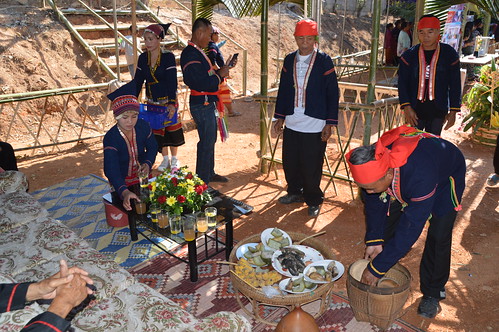
The village of Wang Pha was having a Khmu culture festival.  We had friends visiting us and we didn't leave the house until late morning.  By the time we got to the festival, it was almost over.  Many villages from the area participated and each village was charged with demonstrating some aspect of Khmu culture.  When we got there, the village of Huai Jaw was just finishing up showing a particular meal that is used for special occasions.

Uncle John (leaning over the baskets) is one of the leaders in our church in Huai Jaw.


Khmu Culture Festival in Wang Pha

Interesting that the two photos are connected to two of the hill tribe groups in our area.  The Hmong are the dominant ethnic group in our district.  The Khmu are one of the minor groups in the area but they are the people with which we spend most of our time.

While the ethnic diversity in our area is great, we serve a God who loves all of these people groups.  I, myself, have only a minor grasp of one of the languages of our area (Thai), but God understands them all.

People of all nations, celebrate God! All colors and races, give hearty praise! - Romans 15:11 (MSG)

Sunday, December 27, 2015

Read the fine Thai print

Recently we were shopping in a bakery supply store and I noticed that they had some canned ripe olives at a good price.  Since I had not had them in a while, I decided to try them.

Looks kind of like olives


Looks not quite like the olives I know

Several days later, we opened the can, and I looked at the fruit that looked a bit different from the usual black olives.  So then I decided to read the label more closely.  The label listed the main ingredient in English as “olives” but in Thai it was written as หนำเลี้ยบ (namliap), not the word that I knew for olive, มะกอก (makawk).

But it says "olives"

I decided to look this up on the internet and found that the fruit we had bought are not even related to olives!  The taste was quite salty, so salty it is hard to distinguish from the salted plums that you can find in Mexican grocery stores in the states.

Not your usual olive pit

So it is that not everything is at may at first seem to be.

So it is with our work here in Thailand.  When we first visited MB Mission’s work here in Northern Thailand, it appeared to be a certain way.  Upon being here a while, we find that beneath the surface, things are not always what they appeared to be at first.  They are not necessarily better or worse, just different.

If we were to have made decisions based on appearances, we may have made decisions that might not have been appropriate.  Which is why during our first year here, we did not do much teaching; mostly we were just listening and observing.

And still there is a lot yet that we don’t know.  It’s not always easy to know how to respond to situations we encounter.

Jesus warned his disciples when he sent them out into a world where things are not always as they seem, to be, “wise as serpents and innocent as doves”. (Matthew 10:16)


May this be our prayer.

Sunday, September 27, 2015

Our Helper?

Recently, one of the Buddhist temples in our area erected this interesting idol with multiple arms.  It is an interesting looking idol, but I wasn’t quite sure what the significance is of this latest idol was.

Guan Yin-เจ้าแม่กวนอิม
Guan Yin เจ้าแม่กวนอิม

But last week, while I was out bicycling, I noticed that there were several young monks out working in the yard by the statue.  So I detoured and chatted with them a few minutes.

The first inquiry I made was concerning the name of the god depicted by the statue.  I found out that this was the goddess Guan Yin (เจ้าแม่กวนอิม).

Next I asked why this goddess had so many arms.

I found out that Guan Yin has so many arms because she is a helper goddess.  The term they used was Phu Chuai (ผู้ช่วย), the same term the Bible uses to refer to the Holy Spirit.

Interesting that since this idol was erected, it has yet to move from where it was made in order to go help anyone. And even though it has 12 pairs of hands, it has yet to lift a finger to provide assistance to those who come.  And even if it could move and wiggle its fingers, 12 pairs of hands is not going to make much of a dent in assisting however many billion people live in the world.

I think, if I wanted a god that could help me and the rest of mankind, this god would first have to be a living entity, not a bunch of stones and mortar formed by another person.  Secondly, this god should not be bound by human limitations, such as a finite number of arms.

And this is what Jesus promised us.

And I will ask the Father, and he will give you another Helper,  to be with you forever, even the Spirit of truth, whom the world cannot receive, because it neither sees him nor knows him. You know him, for he dwells with you and will be in you. (John 14:16, 17 ESV)

So I won’t be posting any pictures of the True Helper.  Because if the Holy Spirit were small enough to be photographed, He would not be much help. And if the Holy Spirit were a visible physical entity, He would not be able to dwell in the people of God in order to change their lives.

It is interesting that the Buddhists recognize the need for a helper.  In a religion that tells them that according to the laws of karma, you get what you deserve, there is a recognition that perhaps they need more or better than what they deserve.  Unfortunately, this hand-crafted idol won’t be able to help them much
.
I thank God for the Holy Spirit, Who was able to make changes in my life that I was powerless to do.  I thank God for grace that says it is possible to get more or better than I deserve.

Men, why are you doing these things? We also are men, of like nature with you, and we bring you good news, that you should turn from these vain things to a living God, who made the heaven and the earth and the sea and all that is in them. (Acts 14:15 ESV)

Wednesday, September 23, 2015

The Circle of Christ

The other day Andy, Jamie and I were out on a bike ride.  Andy proceeds to make a joke to Jamie about the meaning of the Thai word for bicycle: chakkrayan (จักรยาน).

DSCF2866
Bicycle: Wheels and Spokes

Interestingly, I had less than half an hour earlier explained to Jamie that the way I learn (and remember) languages is by noting relationships between different words and phrases.  I had commented, then, that I learned more from reading because I could see relationships in spelling that aren’t always apparent in the spoken Thai. 

Andy’s comment about the meaning of the word chakkrayan triggered this analytical impulse in my brain.

The core syllable of the word chakkrayan is chak which has an atypical spelling in Thai (จักร) that comes from the Pali language.

So, within seconds, I’m thinking about other words that contain this syllable.  The first one that came to mind was Thamacak (ธรรมจักร) or “Wheel of Dharma”

Wat Phratat 12 Rasi 1
Dharma Wheel: Wheels and Spokes

Do you see any similarities?

Wheels and spokes.

The next word that came to my mind was Khrittacak (คริสตจักร)
Khrittacak is the Thai word for church.  I had never really thought about it that way before.  The Thai word for church means “circle of Christ”.

What a beautiful picture.

A circle of believers connected to each other and each person connected to Christ who is at the center.

For some illustrations; click here

As I shared this with Andy, our minds both took a a similar turn.  Andy used the phrase “church in a circle”, an idea that had been floating my head for some time.

But before I go on further about the Circle of Christ, I should give a little background.

Christ’s Values vs. Cultural Values


The main task of our current work fits under a category our agency calls capacity building.  We are not so much directly involved in starting new churches as we are helping existing churches find a way to better reach out to start new ones.

As part of that process, one needs to look at what has been done, what is working, what isn’t working, what can be improved, etc.  The special challenge in this is dealing with cultural differences.  We are not here to make Western Christians and we aren’t trying to change the local culture insofar as it doesn’t conflict with the teachings of Jesus and scripture.

One of the dominant features of Thai society and many of the other cultures in this area is the concept of class or status.  While class may not be as obvious here in Thailand as it is with the caste system in India, it is deeply en-grained.  When strangers meet, they ask questions that may seem to be a bit intrusive to us Westerners (age, salary, job) in order to figure out their relative status so that they may know how to relate to each other. (For more on this subject see my post: How Old are You?)

Unfortunately, this cultural value has been carried over into the church.  And it fits well with the professional clergy model that was brought over by Western Missionaries.  Mix this in with a little sinful pride, and we see some people who want to be called by the title Pastor, or a local title Ajan, but who don’t have a pastoral heart.  They want the status that the title brings but not necessarily the job that goes with it.

This problem is certainly not unique to Thai culture.

An additional complication working with the Khmu people is that they are used to a family/clan society that has a strong and influential leader.

But what does the Bible have to say about this?

A couple of weeks ago, I was in one of our churches and the leader asked if I had anything to share.  I got up, and they told me to go up and speak from the platform.  Instead, I picked up one of the chairs that was on the raised platform in  the front of the church and set the chair in the front center of the platform. I then said that I wanted the most important person in the church to come sit in that chair.

Fortunately, no one did.  One person even mentioned that Jesus would be the one to occupy the chair.

I then had someone read from 1 Corinthians 12:12ff about the body of Christ.  Next I asked them which body part was the most important and, via several examples, pointed out how physiologically each organ is interdependent on the rest.  I carried this analogy over to the church.  Paul make the point in the chapter that while we have different roles in the church, there is not one class of members that is better than or superior to others.

While we may say that we believe that we are equal brothers and sisters in Christ, do we act that way?

A common title for teachers and leaders in Thailand is Ajan meaning master or teacher.  This title is often applied to me, though I prefer to be called uncle, a pronoun that merely gives respect due to age, or by the more generic pronoun khun.

Just a couple of weeks ago, I was reading Matthew 23, and I was troubled by verse 8: But you are not to be called rabbi, for you have one teacher, and you are all brothers.

The Thai word where the English has  rabbi is than ajan. (“Than” is a pronoun meaning “you”).

Why is our most popular title a title that Jesus says we should not use?  Are we letting culture triumph over Christ?  I’m still not sure where to go with this.

Serving vs. Serving


Recently I was having to deal with an employee over performance issues.  I was trying to be gentle about it and I wanted to see if perhaps his performance was related to his personal goals versus the nature of what he is employed to do.  So I started with the question: “What is your career goal?”

His answer was: “I want to be a servant.”  The Thai word he used was Phu Rap Chai.
Phu Rap Chai is an interesting word.  While it means “a person who serves”, it is a common, self-effacing term used by those in Christian ministry to title themselves.

I found this employee's use of the term rather interesting, because we were actually paying him to serve and he wasn’t doing it.  So I questioned him further and I found out that his idea of “serving” was being a paid preacher.

This concept of servant is not unique to this individual.  While I can name many true servants of God in our churches here, there are also many “servants” who do not have a servant heart.  Among young people, the main ministry people want to get involved in is preaching or being on a worship band. They want to serve in ways that put them in the front of the church. Few want to do things like teach children, cut the grass, or wash the toilets. (I'm sure there is plenty of this kind of feeling in my home country.  I, too, wanted these kinds of roles in my younger years.)

This stands in stark contrast to how Jesus taught the concept of service by doing one of the lowliest jobs possible at the time: washing his disciples feet. (John 13:1-15) 

Spiritual Gifts and Status Gifts


If an outsider were to visit one of our church services, and we were to ask him what he thought the most important positions in the church were, he would probably reply: “preacher and music leader.”  The activities of preaching and listening to music probably take up the bulk of our church services. (As I write that I find that the term “church service” itself is a bit problematic as it implies we go to church to get served.)  And we place the preacher and worship leaders up front on a platform.  It is a church based on watching, not doing.

What is interesting, that if you go through the lists of spiritual gifts in Romans 12, 1 Corinthians 12, and Ephesians 5, you will find neither “preacher” nor “music leader”.  It’s not to say that these aren’t valid roles.  It’s just that they seem to take a dominant role at the expense of the exercise of the gifts that are listed.

Preaching vs. Teaching


I, personally, wonder about this whole preaching thing in church.  When I look in scripture, I don’t see Jesus preaching to His disciples.  He preaches to the masses.  He teaches His disciples with words and by giving practical ministry experience.  Jesus discipled his disciples.

When I was young, I longed to have someone disciple me.  But our North American church didn't offer much of that.  As I grew older I found myself of being asked to disciple others, but I felt ill-equipped to do so because I had not been through it myself.

Spectator Church


Going to “church” then becomes not much different that going to a football game.  We cheer (sing songs) and watch (listen to the preacher) while the team up front does all the work.  And if it is a good experience we go out saying “we won”, even though we didn’t actually do anything.

The Circle of Christ


I’ve simplified the issues we are dealing with in our churches here quite a bit.  And I still have way more questions than I do answers.  But I’m thinking if we start with a foundation of khrittacak, it can help us move away from a spectator based church.

For several months now, I’ve been toying with the idea of “church in a circle” in my brain.  What would it look like if we designed our church gatherings as a community of equals?  Having everyone on the same physical level would be a reminder that we are all equal before Christ.  Being in a circle would be a reminder that we all bring something to the church and we are equally participants--not spectators.  Not that all have the same role.  Not that all are equally spiritually mature.  But all are essential members of the body of Christ.

I’ve thought of volunteering to “preach’ and then go and rearrange the chairs before I start.  But unless the people change their mind about what the church is, something so radical would probably not be adopted as a regular practice. It would also be difficult to adopt because it would be viewed as odd compared to what other churches are doing.

In our Khmu villages where family and community are so important it would be nice to have churches based on a way of doing family and community life rather than reduced to going to a meeting to watch people “serve” once or twice a week.

I'm not an authority on any of these things.  I still have more questions than answers.  But I do like the idea of khrittacak-the Circle of Christ.

For some illustrations; click here